The Telangana High Court has affirmed that while public order concerns may justify restrictions on religious processions, such restrictions cannot be imposed arbitrarily or through inaction. The judgment mandates a structured, transparent, and time-bound decision-making process when authorities decline permission for religious assemblies, reinforcing constitutional protections for freedom of religion and expression.
Background & Facts
The Dispute
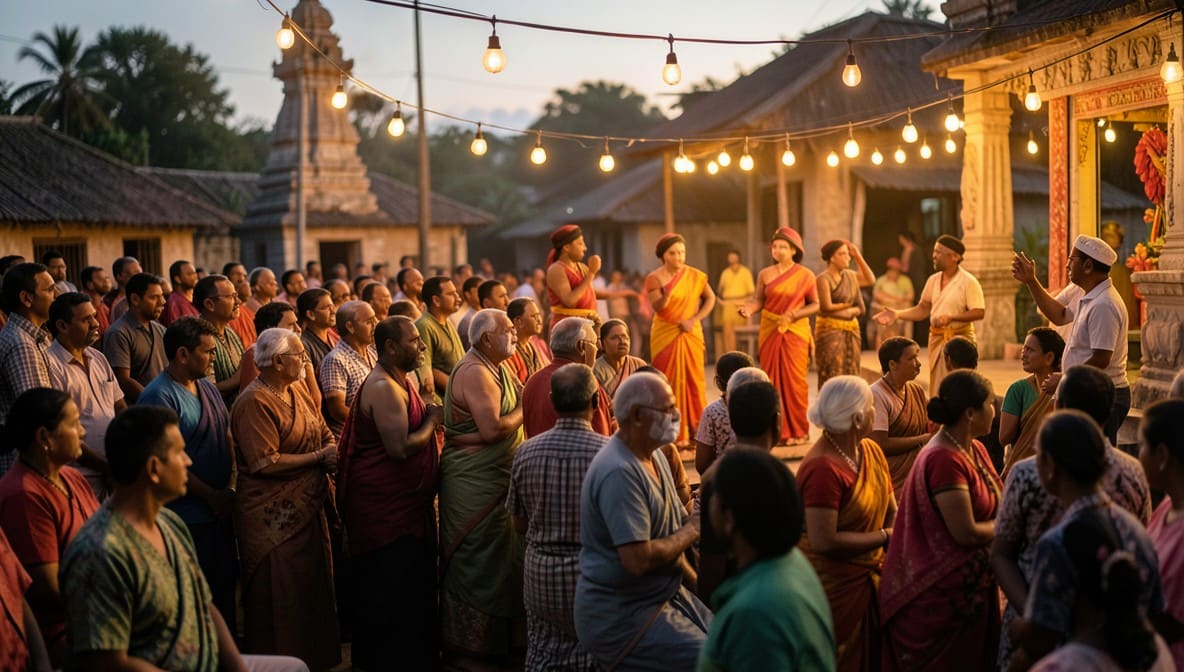
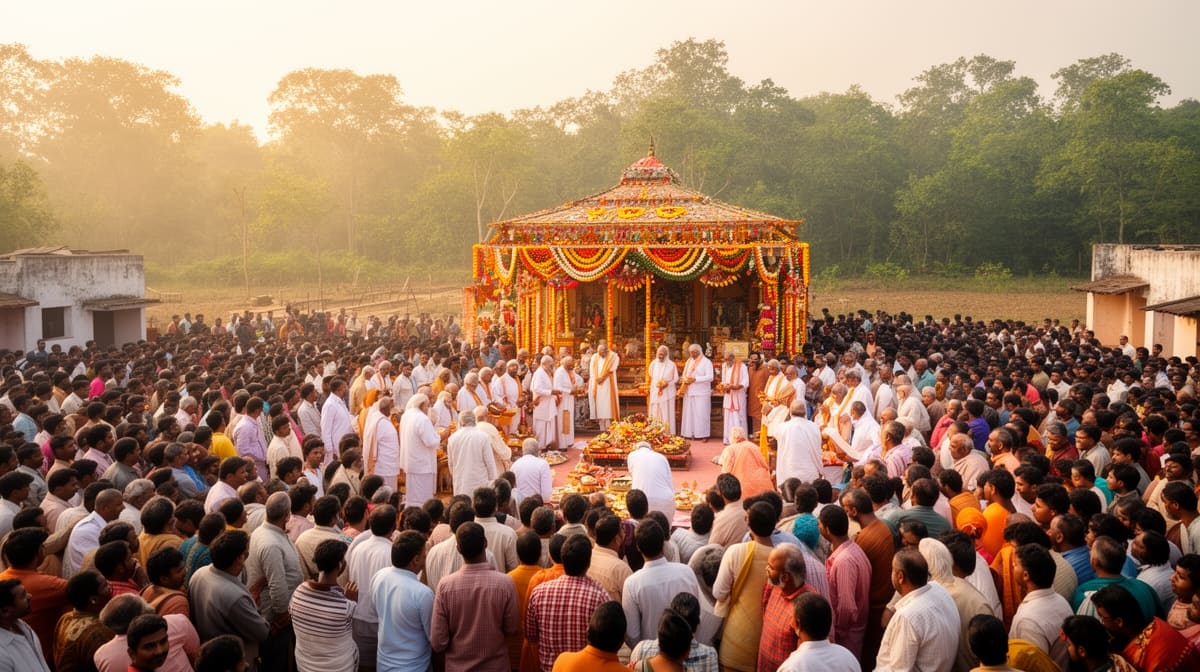
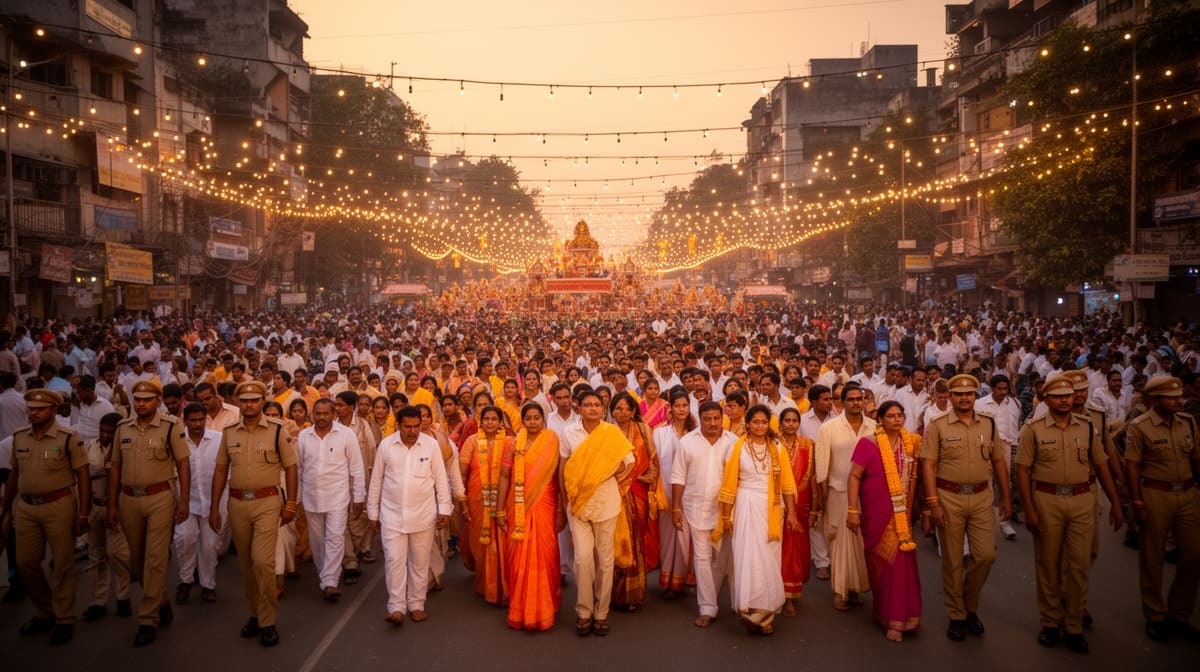
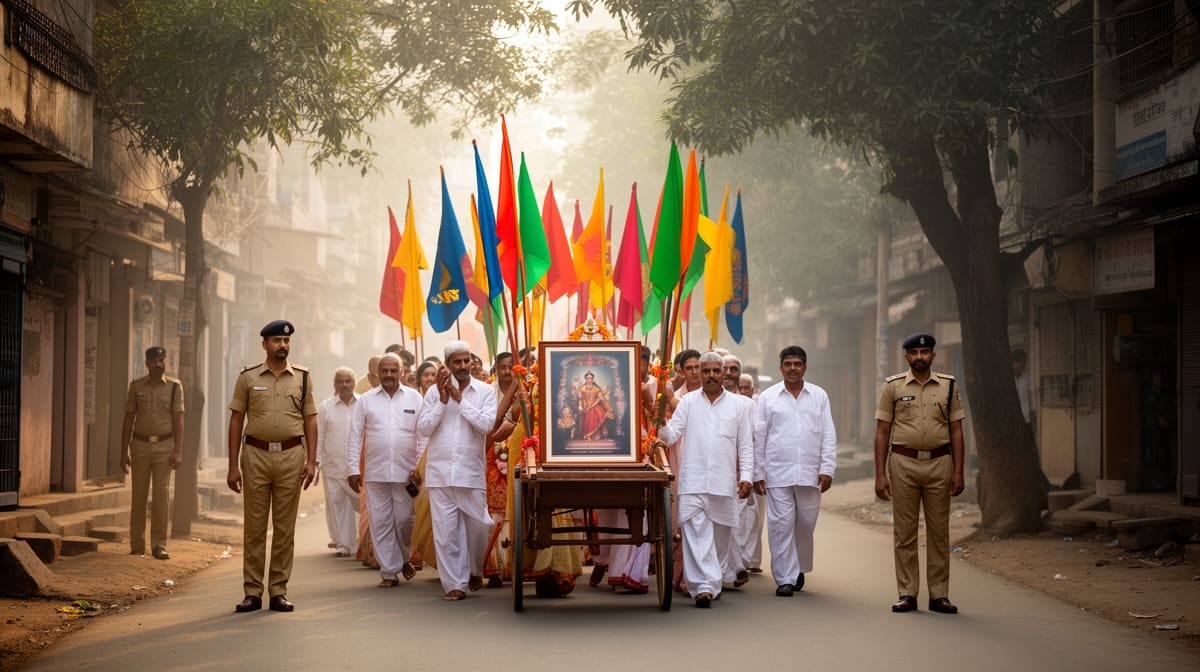
The petitioner, a religious priest and custodian of the Shree Shyam Baba Temple in Hyderabad, seeks permission to conduct the annual "Shree Shyam Baba Nishan Yatra," a small religious procession involving 50-70 devotees. The event, held on Phalguna Ekadashi, begins at Laldarwaza and concludes at the temple in Kachiguda. Participants carry colorful flags and a photograph of Lord Shyam Baba on a horse-drawn chariot, singing bhajans along the route.
Procedural History
The petitioner submitted an application on 01-02-2026 (Application No. 15210102261559328091) to the local police authorities (Respondents 6 and 7) seeking permission for the procession with necessary police bandobust. No formal response was issued within the stipulated timeframe. The petitioner then filed a writ petition under Article 226 of the Constitution, alleging violation of Articles 14, 19, 21, 25, and 26(b). The respondents did not file a detailed counter-affidavit but relied on prior incidents to justify non-decision.
Relief Sought
The petitioner sought a writ of mandamus directing the authorities to grant permission for the procession scheduled for 27-02-2026, or alternatively, to issue a reasoned order rejecting the application with full opportunity of hearing.
The Legal Issue
The central question was whether the state’s failure to decide on a religious procession application, citing potential public order risks from past incidents, constitutes a violation of Article 25 and Article 19(1)(a), and whether such inaction can be justified without a reasoned, procedurally fair determination.
Arguments Presented
For the Petitioner
The petitioner’s counsel argued that the right to organize religious processions is protected under Article 25 as an essential practice of faith. He emphasized that the application was complete, submitted well in advance, and sought police assistance to ensure order - not to evade it. He cited T.M.A. Pai Foundation v. State of Karnataka to assert that religious expression cannot be suppressed on speculative grounds. He further contended that administrative silence amounts to constructive denial, violating Article 14 and the principle of natural justice.
For the Respondent/State
The Assistant Government Pleader argued that similar processions in the past had led to violations under the Bharatiya Nagarik Suraksha Sanhita, including public nuisance and obscenity charges, with a criminal case (Crime No. 112 of 2025) still pending. He relied on Maidan Incident v. Home Secretary, Union of India to assert that prior disturbances create a legitimate basis for heightened scrutiny. He maintained that the application was under consideration and that a decision would follow after consultation with senior officials, thus no violation of due process had occurred.
The Court's Analysis
The Court rejected the notion that administrative inaction can substitute for a reasoned decision. It held that while public order is a valid ground for restricting religious assemblies under Article 25(1), such restrictions must be proportionate, non-arbitrary, and procedurally fair. The Court emphasized that the state cannot rely on past incidents alone to deny permission without evaluating the specific circumstances of the current application.
"The right to freedom of religion under Article 25 is not contingent upon the absence of prior disturbances, but upon the reasonableness of the restriction imposed in the present context."
The Court distinguished between preventive action based on concrete evidence and speculative deterrence based on historical patterns. It noted that the petitioner had not been charged with any offense, nor was there a court order restraining him. The Court further held that Article 19(1)(a) and 19(1)(b) protect the right to assemble peacefully and express religious beliefs, and that any restriction must be narrowly tailored.
The Court also underscored that the absence of a decision within a reasonable time is itself a denial of rights. It rejected the state’s argument that "pending consideration" sufficed, stating that constitutional rights cannot be held hostage to bureaucratic delay.
The Verdict
The petitioner prevailed. The Court held that administrative silence on religious procession applications violates constitutional rights and directed the Deputy Commissioner of Police (South Zone) to decide the application expeditiously after providing a hearing to the petitioner and stakeholders, with a reasoned order grounded in law and proportionality.
What This Means For Similar Cases
Due Process Is Non-Negotiable
- Practitioners must now insist on written, reasoned orders for denial of religious procession permits
- Silence beyond a reasonable period (e.g., 7 - 10 days) constitutes a violation and can be challenged via writ
- Authorities must document specific, objective grounds for refusal - not rely on vague references to past incidents
Past Incidents Require Contextual Evaluation
- Authorities cannot invoke prior disturbances as blanket justification for denial
- Each application must be assessed independently, considering: (a) nature of the proposed event, (b) location, (c) security measures proposed, and (d) conduct of the applicant
- A pending criminal case against organizers does not automatically disqualify a permit application
Proportionality Must Guide Decision-Making
- The state must demonstrate a direct nexus between the proposed procession and a real, imminent threat to public order
- Less restrictive alternatives (e.g., enhanced police deployment, route modification) must be considered before outright denial
- Courts will scrutinize decisions that disproportionately burden religious expression without concrete evidence of risk