The Chhattisgarh High Court has affirmed that the State’s constitutional duty under Article 21 extends to providing rehabilitation to long-standing encroachers on public land, even where their structures lack formal authorization. This judgment clarifies that poverty and decades-long residence cannot be ignored when enforcing eviction, and mandates procedural fairness through defined timelines for housing relief.
Background & Facts
The Dispute
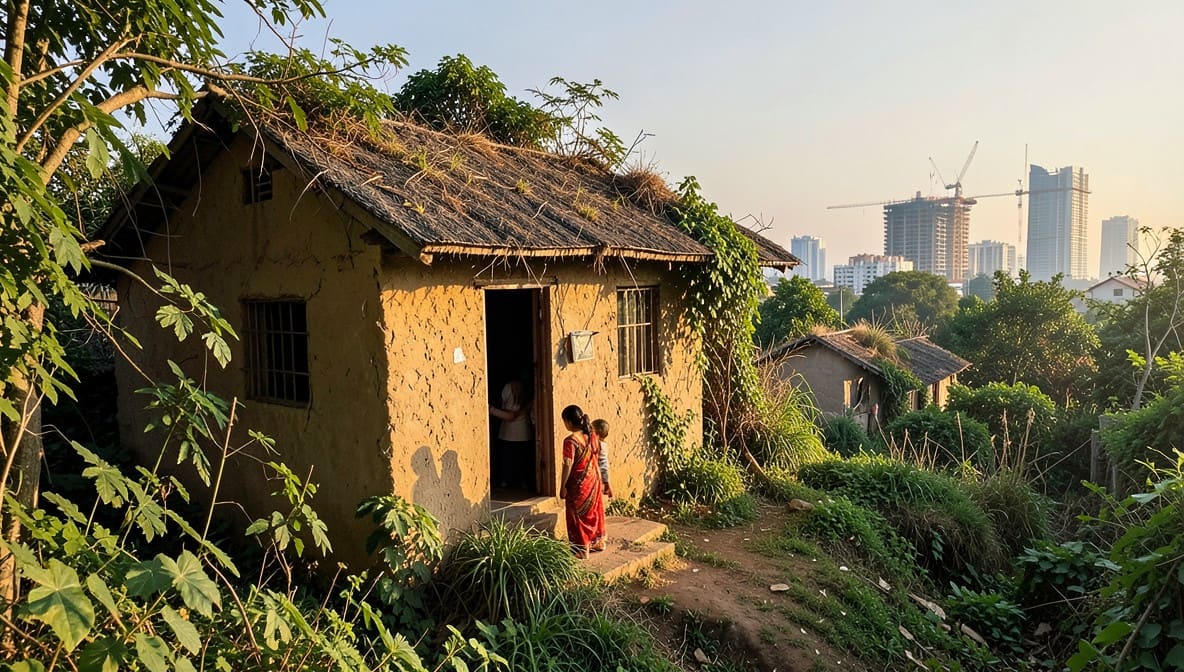
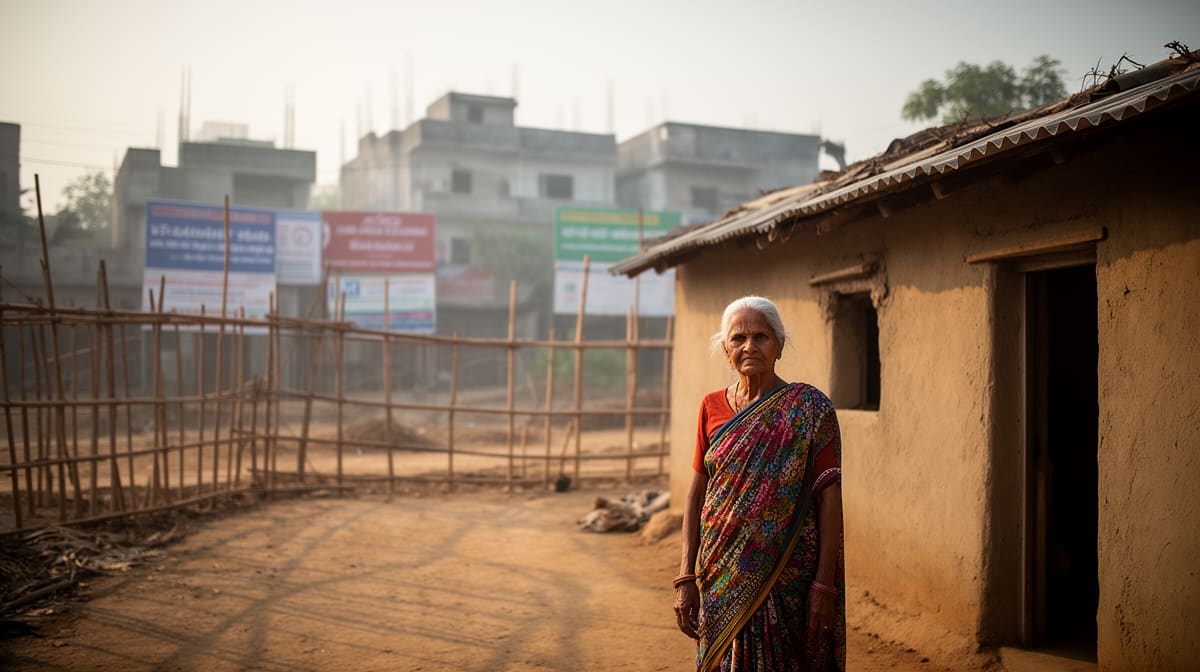
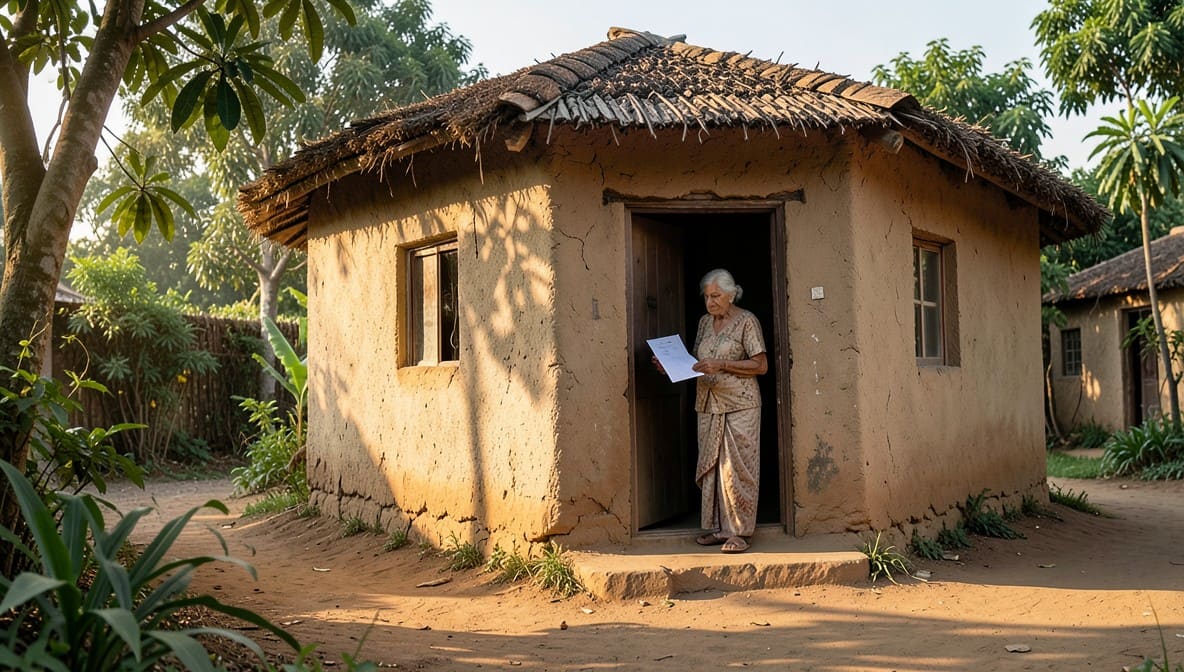
The petitioners - Kachri Bai, Brij Lal, and Dilip - are landless laborers who have resided in Village Paloud, Tahsil Mandir Hasaud, District Raipur, for approximately 40 years. They constructed kaccha (temporary) houses on land that is now claimed by the State as part of the Nava Raipur Atal Nagar Development Authority’s (NRDA) planned urban expansion. On 30.01.2026, NRDA issued notices to each petitioner demanding immediate evacuation of their dwellings. The petitioners submitted representations on 20.01.2026 seeking alternative accommodation or compensation, but no response was rendered.
Key Facts
- All three petitioners have lived continuously on the same land since the 1980s
- Their houses were built without formal permission but under the implicit understanding of non-interference
- The structures are kaccha (non-permanent) and lack basic civic amenities
- The petitioners are not beneficiaries of any government housing scheme to date
- NRDA’s notice dated 30.01.2026 (Annexure P-1) demanded eviction without offering any rehabilitation alternative
- Representations dated 20.01.2026 (Annexure P-4) remain unacknowledged
Procedural History
- 30.01.2026: NRDA issued eviction notices to all three petitioners
- 20.01.2026: Petitioners submitted written representations seeking rehabilitation
- 05.02.2026: Writ Petition No. 980/2026 filed by Kachri Bai
- 08.02.2026: Writ Petition No. 1097/2026 filed by Brij Lal
- 10.02.2026: Writ Petition No. 1099/2026 filed by Dilip
- 18.03.2026: Common hearing conducted before the High Court
The Parties' Positions
For the Petitioners: Counsel argued that the petitioners, as impoverished residents for four decades, are entitled to protection under the right to shelter recognized under Article 21. They emphasized that eviction without rehabilitation would render the right to life meaningless. They offered to file fresh applications for housing under NRDA’s existing schemes.
For the Respondents: The State and NRDA conceded that no formal rehabilitation process had been initiated but maintained that the petitioners were encroachers and that eviction was legally justified. However, they acknowledged the existence of rehabilitation policies for Economically Weaker Sections (EWS).
Relief Sought
The petitioners sought:
- Quashing of the eviction notice dated 30.01.2026
- A direction to NRDA to provide alternative residential land or housing
- Compensation for demolition of their homes
- Interim protection from eviction pending decision on rehabilitation applications
The Legal Issue
The central question was whether the State, under Article 21 of the Constitution, is obligated to provide rehabilitation to long-term encroachers on public land who lack alternative shelter, and whether eviction without such provision violates the right to life and dignity.
Arguments Presented
For the Petitioner
Counsel relied on Ahmedabad Municipal Corporation v. Nawab Khan Gulab Khan and Chameli Singh v. State of U.P. to argue that the right to shelter is an essential component of the right to life. They emphasized that the petitioners had no other residence, had invested decades of labor into their homes, and that the State had previously implemented rehabilitation schemes for similar cases. They cited NRDA’s own brochure and order dated 20.12.2017 as evidence of existing policy commitments.
For the Respondent
The State did not dispute the existence of rehabilitation policies but contended that the petitioners had no legal right to occupy government land. They argued that eviction was a lawful enforcement of land use regulations and that any relief must be granted through formal application processes, not judicial intervention.
The Court's Analysis
The Court examined the constitutional jurisprudence on the right to shelter, particularly the holdings in Chameli Singh and T.N. Godavarman Thirumulpad. It noted that shelter is not merely a physical structure but includes access to clean water, sanitation, electricity, and safe living conditions. The Court observed that the petitioners had resided on the land for 40 years without challenge, indicating tacit State acceptance.
"It would, therefore, be clear that though no person has a right to encroach and erect structures or otherwise on footpath, pavement or public streets or any other place reserved or earmarked for a public purpose, the State has the Constitutional duty to provide adequate facilities and opportunities by distributing its wealth and resources for settlement of life and erection of shelter over their heads to make the right to life meaningful, effective and fruitful."
The Court further examined NRDA’s own documents: the 2008 empowered committee meeting minutes (Annexure P-2) and the 20.12.2017 order (Annexure R-1), which explicitly provide for rehabilitation of encroachers in EWS categories. The Court held that the State cannot invoke enforcement of land laws while ignoring its own policy frameworks designed to protect the vulnerable.
The Court declined to adjudicate the merits of whether the petitioners qualify for housing, noting that such determinations require administrative discretion. Instead, it emphasized procedural fairness: the petitioners must be given a fair opportunity to apply, and the Authority must respond within a fixed timeframe.
The Verdict
The petitioners succeeded. The Court directed each petitioner to file an application for rehabilitation, alternative housing, or compensation before NRDA within 15 days. NRDA was directed to decide all such applications within 60 days of receipt, in accordance with applicable laws and its own schemes. Until such decisions are made, no coercive eviction action shall be taken against the petitioners. The Court explicitly clarified that it expressed no opinion on the merits of their claims.
What This Means For Similar Cases
Rehabilitation Is Not Discretionary, But Obligatory
- Practitioners must now argue that long-term encroachment (10+ years) triggers a State duty under Article 21, even without formal title
- Eviction notices issued without offering rehabilitation options are prima facie unconstitutional
- Authorities cannot rely solely on land ownership to justify displacement of the destitute
Policy Documents Bind the State
- Internal policy documents, brochures, and past orders (like NRDA’s 2008 scheme and 2017 order) constitute binding administrative commitments
- Courts will enforce these commitments when they benefit vulnerable groups
- Failure to implement stated schemes may be challenged as arbitrariness under Article 14
Procedural Safeguards Are Non-Negotiable
- Courts will impose strict timelines (15 days to apply, 60 days to decide) to prevent administrative delay
- Interim protection from eviction is automatic pending decision
- Petitioners need not prove entitlement upfront - only that they are vulnerable and have resided long-term