The Chhattisgarh High Court has affirmed that the State’s constitutional duty to ensure the right to shelter extends to long-standing encroachers on public land, even where their occupation lacks formal legality. In a significant ruling, the Court directed the Nava Raipur Atal Nagar Development Authority to adjudicate rehabilitation applications within a strict timeline, while prohibiting coercive evictions pending decision.
Background & Facts
The Dispute
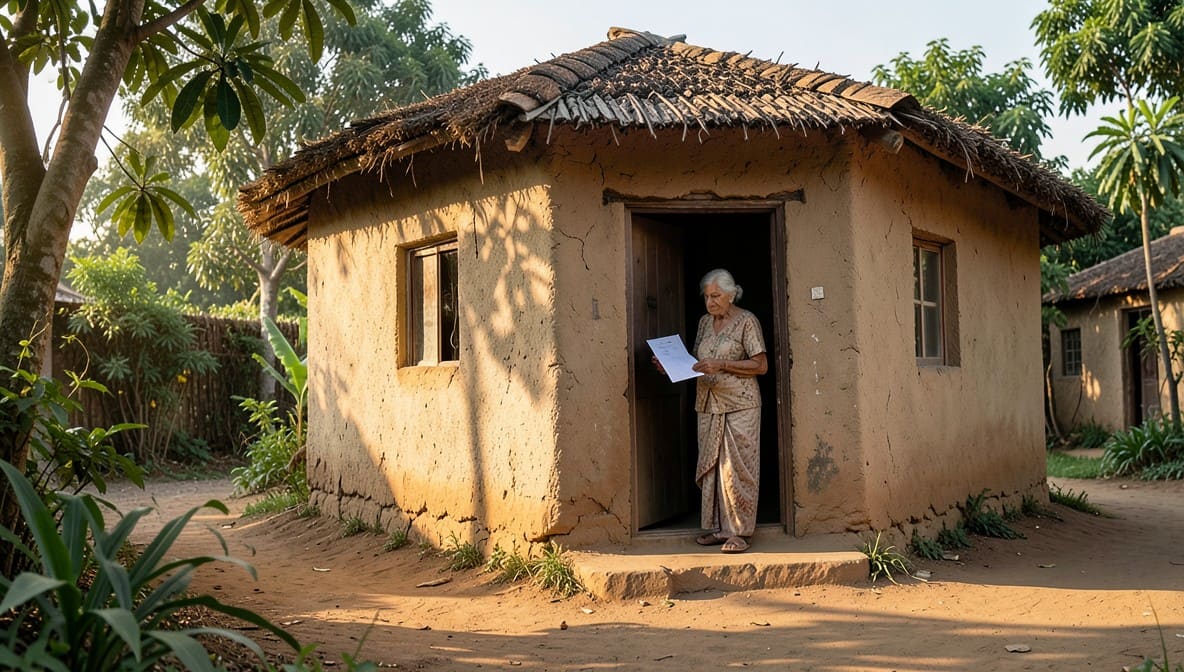
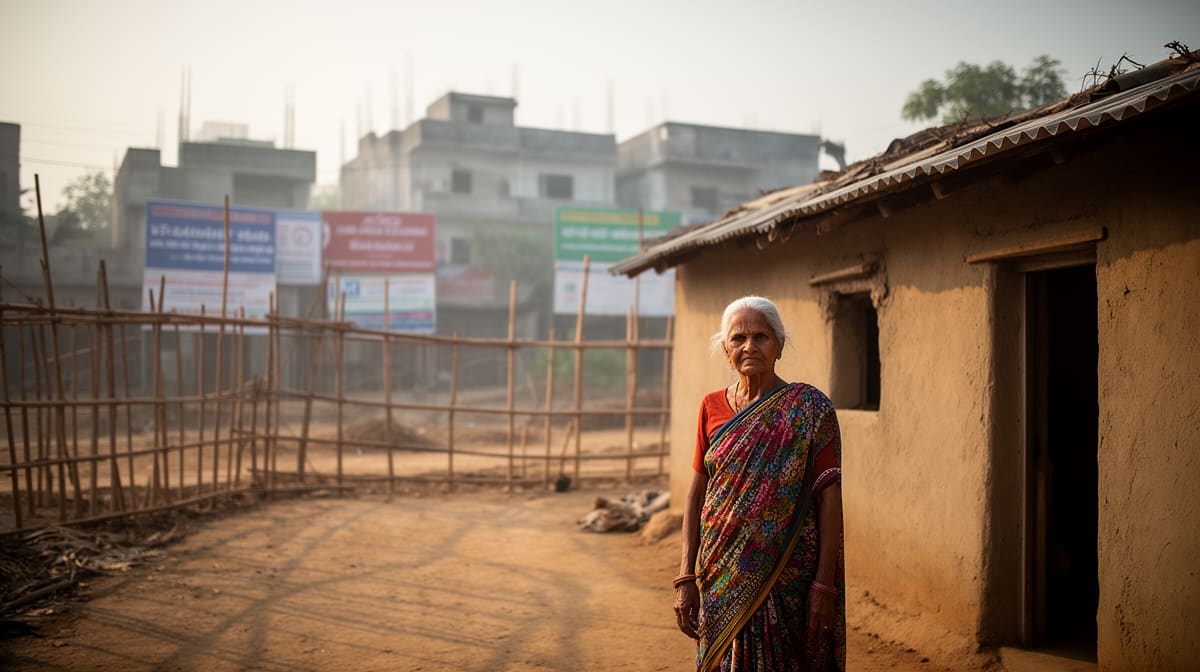
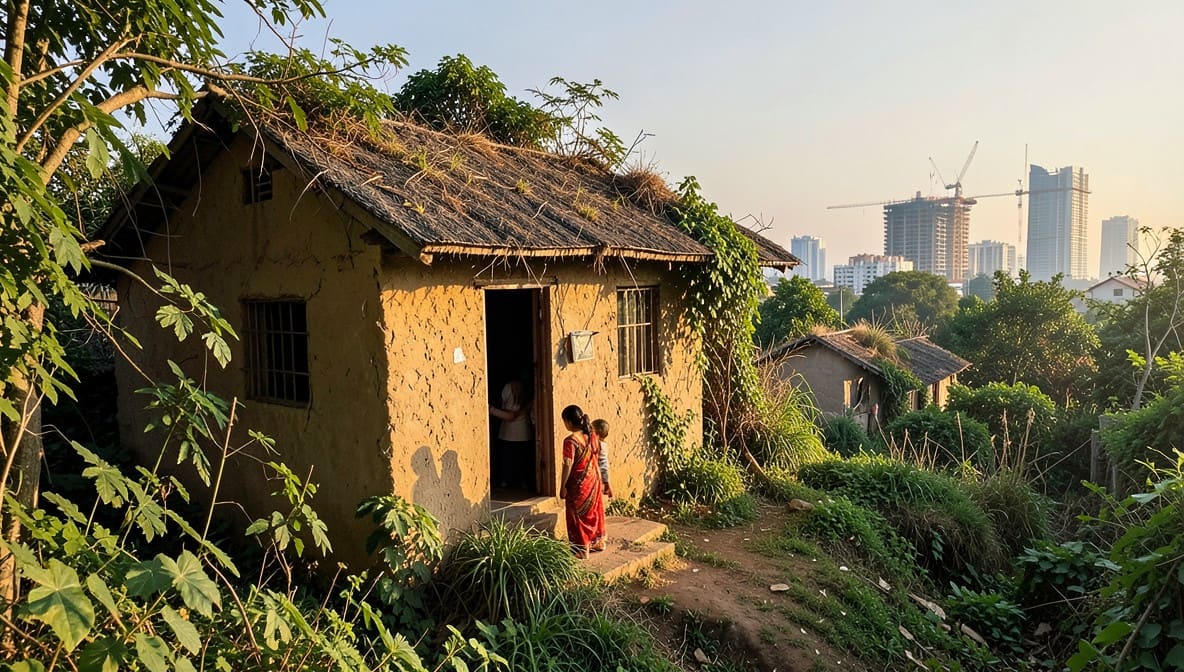
The petitioners - Ram Asara, Dharmin Bai, and Bhakta Vidur - are landless laborers who have resided in kaccha (temporary) houses on land in Village Paloud, Tahsil Mandir Hasaud, District Raipur, for approximately 40 years. They are not owners of the land, which is under the control of the State of Chhattisgarh and managed by the Nava Raipur Atal Nagar Development Authority (NRDA). On 16.01.2026 and 30.01.2026, NRDA issued notices to each petitioner demanding eviction of their dwellings, citing unauthorized encroachment on government land.
Key Facts
- The petitioners have lived continuously on the same plots since the 1980s, with no alternative housing available.
- All three petitioners submitted written representations on 20.01.2026 (Annexure-P/4) requesting rehabilitation, alternative land, or compensation, which remain unaddressed.
- NRDA has no record of providing any interim relief, relocation assistance, or procedural hearing to the petitioners prior to issuing eviction notices.
- Annexure-P/2, a brochure issued by NRDA, outlines rehabilitation schemes approved by an empowered committee on 10.09.2008, including provisions for landless families.
- The brochure, though in Hindi, specifies that families without any residential land or house shall be allotted 1200 square feet of residential plot.
- The brochure further provides differentiated allotment norms based on type of dwelling: 400 sq. ft. for kaccha houses, 600 sq. ft. for semi-pucca, and 800 - 1000 sq. ft. for pucca structures.
- An order dated 20.12.2017 by the Chief Executive Officer of NRDA confirms that the Authority provides Economically Weaker Section (EWS) housing to persons who have built houses on government land.
Procedural History
- 16.01.2026: First eviction notice issued to Ram Asara.
- 30.01.2026: Eviction notice issued to Dharmin Bai and Bhakta Vidur.
- 20.01.2026: Petitioners submitted joint representations seeking rehabilitation.
- 12.03.2026: Writ Petitions (WPC Nos. 1232, 1235, 1236 of 2026) filed before the Chhattisgarh High Court.
- 20.03.2026: Hearing conducted before Justice Naresh Kumar Chandravanshi.
Relief Sought
The petitioners sought:
- Quashing of the eviction notices dated 16.01.2026 and 30.01.2026.
- A writ of mandamus directing NRDA to allot alternative residential land or provide compensation.
- Interim protection from eviction pending disposal of their rehabilitation applications.
The Legal Issue
The central question was whether the State’s constitutional obligation under Article 21 to ensure the right to shelter obliges it to provide rehabilitation to long-term encroachers on public land, even in the absence of formal title, and whether the State’s own published schemes create enforceable expectations.
Arguments Presented
For the Petitioner
Learned counsel argued that:
- The petitioners have resided on the land for four decades, making their occupation de facto settled.
- The State’s own brochure and 2017 order confirm the existence of a rehabilitation policy for EWS families who encroach on government land.
- Denial of rehabilitation while issuing eviction notices violates the principles of natural justice and the right to life with dignity as interpreted in Chameli Singh v. State of U.P. and T.N. Godavarman Thirumulpad.
- The petitioners are willing to file formal applications and comply with any procedural requirements.
For the Respondent
The State and NRDA did not contest the factual assertions. Counsel conceded that NRDA has a policy to provide EWS housing to encroachers and acknowledged the 2017 order. However, they argued that no formal application had been processed and that decisions must follow due procedure under applicable schemes.
The Court's Analysis
The Court began by affirming the foundational principle that the right to shelter is an essential component of the right to life under Article 21. It cited Ahmedabad Municipal Corporation v. Nawab Khan Gulab Khan to emphasize that while no individual has a right to encroach, the State has a constitutional duty to provide adequate facilities for shelter to make the right to life meaningful.
The Court further relied on Chameli Singh v. State of U.P., which held that shelter is not merely protection from the elements but includes adequate living space, sanitation, clean water, electricity, and civic amenities.
"Shelter for a human being, therefore, is not a mere protection of his life and limb. It is home where he has opportunities to grow physically, mentally, intellectually and spiritually."
The Court noted that NRDA’s own brochure, approved by an empowered committee in 2008, explicitly provides for rehabilitation of landless families with kaccha houses. The 2017 order further confirms that the Authority has a functioning policy to grant EWS housing to encroachers.
The Court held that the petitioners’ four-decade-long residence, coupled with the State’s own policy framework, creates a legitimate expectation of rehabilitation. The issuance of eviction notices without offering any alternative or opportunity to apply for relief constitutes a violation of procedural fairness.
The Court explicitly declined to rule on the merits of whether the petitioners are entitled to land or compensation, stating that such determinations must be made by NRDA in accordance with its own schemes.
The Verdict
The petitioners succeeded in obtaining interim protection and a binding timeline for adjudication. The Court directed:
- Each petitioner to file a formal application for rehabilitation, alternative housing, or compensation before NRDA within 15 days from 20.03.2026.
- NRDA to decide all such applications within 60 days of receipt.
- No coercive action, including eviction, to be taken against the petitioners until NRDA has rendered its decision.
- The petitioners remain entitled to all benefits under NRDA’s 2008 scheme and 2017 order.
What This Means For Similar Cases
Rehabilitation Is Not Discretionary - It Is a Constitutional Obligation
- Practitioners must now argue that long-term encroachment (10+ years) on public land, especially by economically vulnerable groups, triggers the State’s duty under Article 21.
- Eviction without offering rehabilitation under existing schemes violates procedural fairness and the right to life.
State-Published Schemes Create Legitimate Expectations
- When a government authority publishes a rehabilitation policy and has implemented it in the past (as in the 2017 order), it cannot arbitrarily deny benefits to eligible persons.
- Petitioners can cite such documents as binding administrative commitments, not mere guidelines.
Procedural Due Process Is Non-Negotiable
-
Before initiating eviction, authorities must:
- Notify affected persons of available remedies
- Provide a reasonable opportunity to apply for rehabilitation
- Decide applications within a fixed, reasonable timeframe
-
Failure to do so renders eviction proceedings legally unsustainable.
-
Always request copies of all applicable housing schemes from the authority before filing a writ.
-
In cases involving encroachment by marginalized communities, invoke Chameli Singh and Godavarman to establish the State’s affirmative duty.
-
Demand written reasons for denial of rehabilitation applications to preserve grounds for appeal.