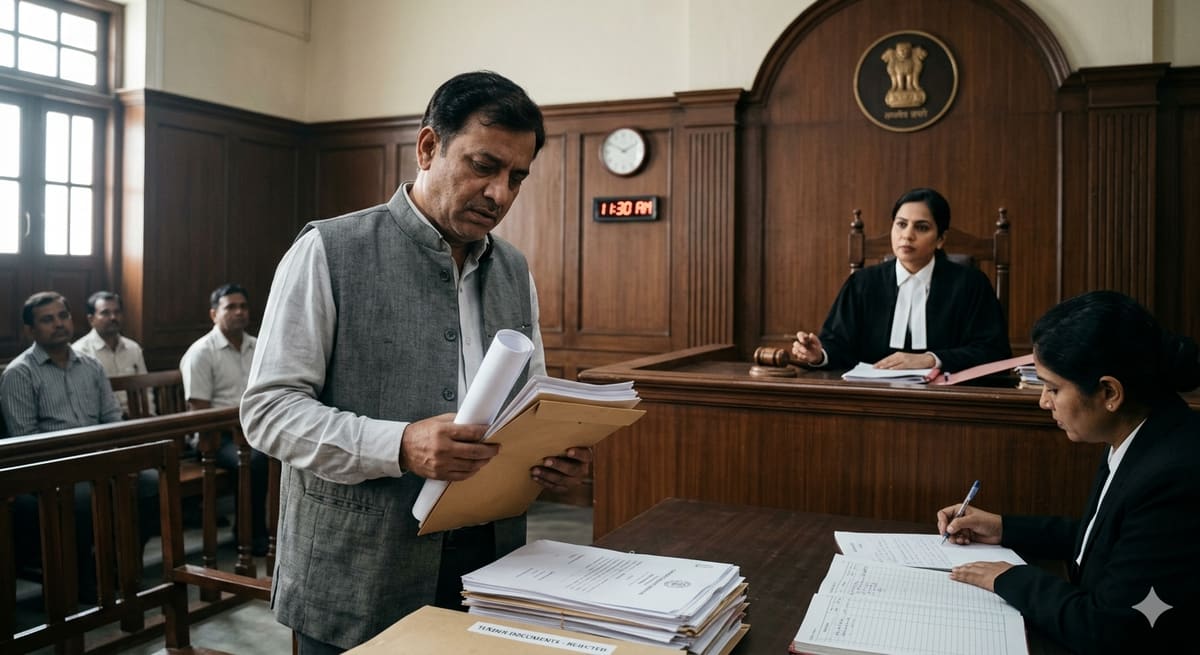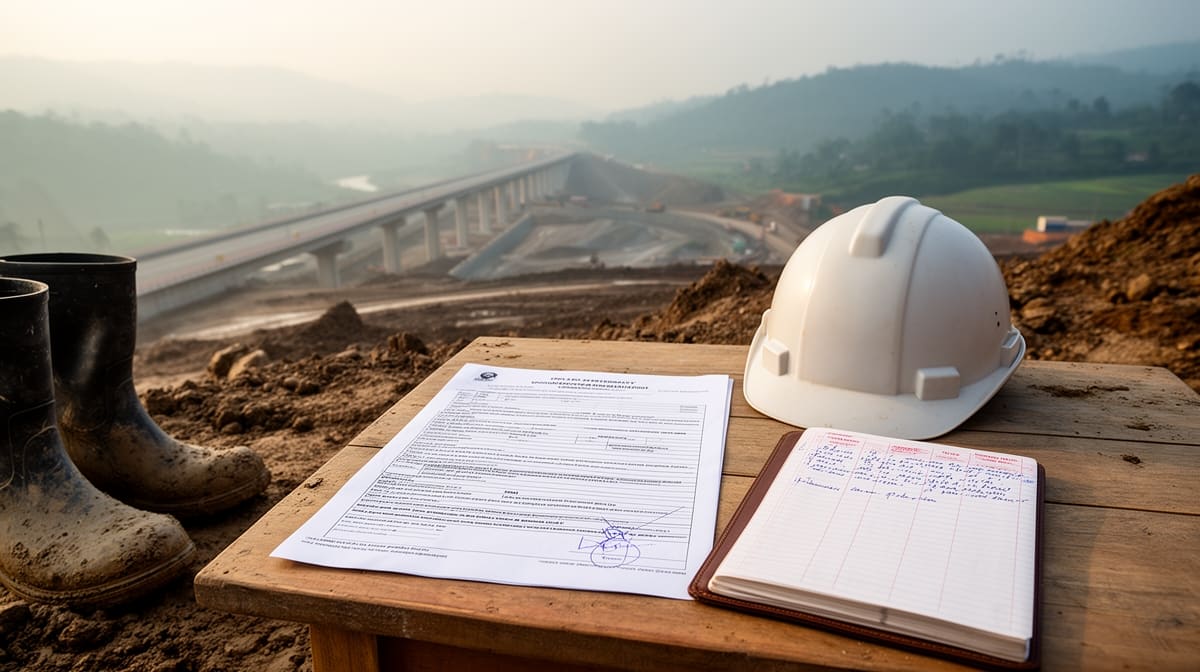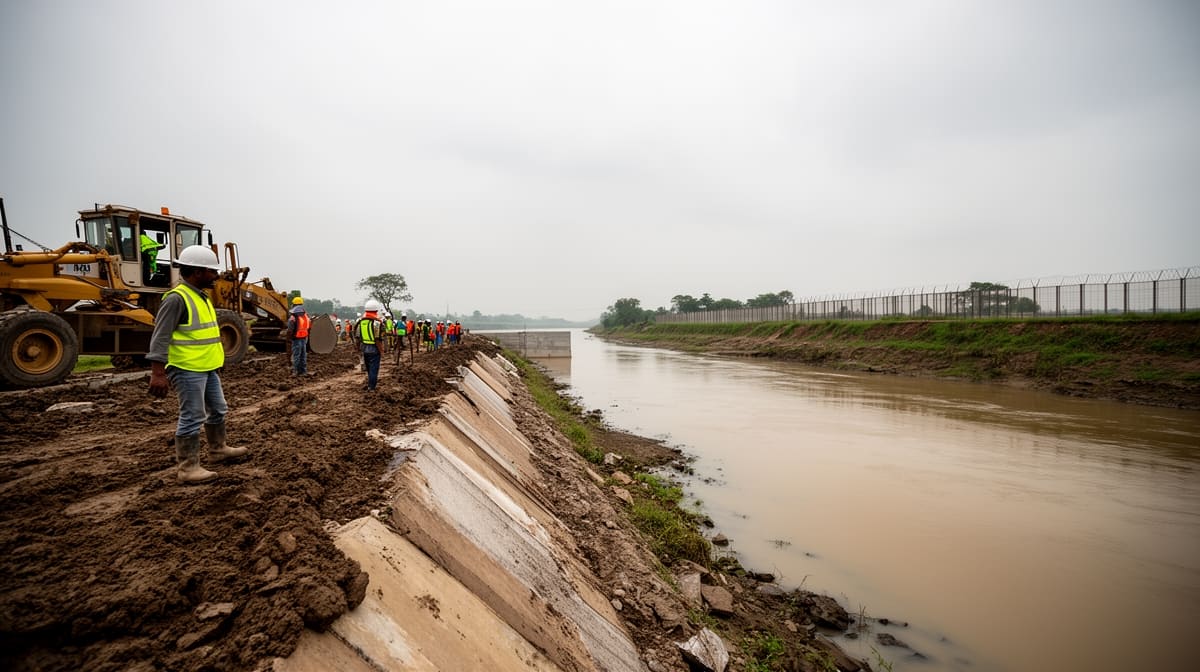
The Supreme Court has held that systemic irregularities in public procurement - including repeated non-tender awards, absence of recorded justifications, and non-production of critical documents - constitute a constitutional breach under Article 14, warranting an independent CBI investigation to restore public confidence in governance.
Background & Facts
The Dispute
The petitioners, Save Mon Region Federation and its authorised representative Mr. Joddik Tali, filed a public interest writ petition under Article 32 of the Constitution alleging a pattern of arbitrary, non-transparent, and preferential award of public works contracts in Arunachal Pradesh. The allegations centre on the systematic bypassing of competitive tendering processes and the preferential allocation of contracts to firms and individuals allegedly connected to Respondent Nos. 4 to 6, including the Chief Minister of Arunachal Pradesh and his close political associates.
Key Facts
- The petitioners allege that public works across multiple departments were awarded through work orders without competitive bidding, particularly for projects exceeding Rs. 50 lakhs.
- The period under scrutiny spans from 01.01.2015 to 31.12.2025.
- Specific projects cited include:
- Transportation of 24,800 MT of rice under Sampoorna Gramin Rozgar Yojana, awarded without tender despite four bids.
- NLCPR projects for porter track construction and road alignment, where vouchers worth Rs. 107.11 lakhs, Rs. 23.20 lakhs, and Rs. 12.24 crores respectively were not produced.
- Water supply project in Tawang township, where vouchers for Rs. 273.92 lakhs were missing.
- Corpus fund of Rs. 23 crores sanctioned to Bodhi Language and Literature Promotional Society, with interest transfers unaccounted for and no renewal of society registration since 1993.
- PMGSY projects where tenders were allegedly issued but comparative statements and award documentation were unavailable.
- The petitioners assert that the State failed to maintain contemporaneous records including tender committee minutes, evaluation sheets, file notings, and measurement books.
- The State’s own compilation claimed that the share of works awarded to Respondent Nos. 4 to 6 or their related entities was miniscule (e.g., 0.03% to 1.20% across departments).
Procedural History
- 20.03.2024: Supreme Court disposed of SLP (C) No. 34696 of 2010 (Voluntary Arunachal Sena v. State of Arunachal Pradesh) and directed the Comptroller and Auditor General of India (CAG) to examine the allegations.
- 21.07.2025: CAG filed its final audit report on nine specific allegations, documenting repeated departures from tender norms and non-availability of vouchers and evaluation records.
- 05.01.2024: Writ Petition (Civil) No. 54 of 2024 filed before the Supreme Court under Article 32.
- 06.04.2026: Judgment delivered by the Supreme Court.
The Parties' Positions
Petitioners: Argued that the pattern of non-tender awards, absence of documentation, and preferential allocation to politically connected entities constitute a prima facie violation of Article 14. They contended that the CAG report, while informative, cannot substitute for a criminal investigation into possible offences under the IPC and Prevention of Corruption Act. They emphasized that statistical averages mask concentrated abuse and that the State’s failure to produce records raises a presumption against it.
Respondents (State of Arunachal Pradesh): Contended that the work order system is legally permissible under the Arunachal Pradesh District Based Entrepreneurs and Professionals (Incentives, Development and Promotional) Act, 2015, Section 3A, for works under Rs. 50 lakhs. They argued that the CAG report is conclusive and subject to legislative scrutiny, that the percentage of contracts awarded to the alleged beneficiaries is negligible, and that the petitioners failed to provide explicit proof of statutory violations.
Relief Sought
The petitioners sought:
- Constitution of a Special Investigation Team (SIT) or direction for CBI to investigate.
- Independent probe into the award process, fund flows, beneficial ownership of contractors, and custody of records.
- Directions to preserve all physical and electronic records.
- Timely filing of investigation status reports before the Court.
The Legal Issue
The central question was whether the pattern of non-tender awards, absence of recorded justifications, non-production of procurement records, and allegations of preferential allocation to politically connected entities constitute a prima facie violation of Article 14 sufficient to warrant a CBI investigation under Article 32, even in the absence of explicit proof of criminal intent.
Arguments Presented
For the Petitioner
The petitioners relied on State of W.B. v. Committee for Protection of Democratic Rights (2010) 3 SCC 571 to assert that the Supreme Court has the constitutional authority to direct CBI investigations where public confidence in governance is at stake. They cited Sachidanand Pandey v. State of W.B. (1987) 2 SCC 295 and Akhil Bhartiya Upbhokta Congress v. State of M.P. (2011) 5 SCC 29 to argue that transparency and non-arbitrariness are constitutional essentials in public contracting. They emphasized that the CAG audit’s findings of missing vouchers, unexplained expenditures, and lack of tender documentation are not administrative lapses but red flags indicating possible criminal misconduct. They contended that the State’s reliance on aggregate percentages is a distraction from specific instances of abuse and that the burden of producing records lies with the State as custodian.
For the Respondent
The State argued that the work order system is a legitimate and statutorily sanctioned mechanism under the 2015 Act, tailored to Arunachal Pradesh’s geographical challenges. It contended that the CAG report, being a constitutional audit, is the appropriate forum for scrutiny and that judicial intervention is unnecessary. It asserted that the petitioners failed to prove violation of Section 3A and that the low percentage of contracts awarded to the alleged beneficiaries negates any claim of systemic bias. It further argued that the petition is Tawang-centric and that the State had complied with disclosure obligations by submitting departmental summaries.
The Court's Analysis
The Court began by reaffirming that public procurement is not a private contractual matter but an exercise of public power bound by Article 14. It held that the State acts as a trustee of public resources and must ensure fairness, transparency, and non-arbitrariness in every allocation. The Court observed that while competitive tendering is not an inflexible ritual, any departure must be justified by recorded, rational reasons capable of objective scrutiny.
"The discipline that governs State largesse reinforces this position. The State and its instrumentalities cannot confer benefits according to the whims of any political or administrative functionary."
The Court rejected the State’s reliance on statistical averages, holding that even a single instance of preferential award tainted by conflict of interest undermines constitutional integrity. It noted that the CAG report’s findings - missing vouchers, absence of comparative statements, and non-production of tender records - are not mere clerical errors but systemic failures that prevent accountability.
"A constitutional violation in public contracting is not diluted by statistics. Even a single instance, if established, undermines equality, the rule of law and public confidence in fair administration."
The Court distinguished between audit and investigation: while the CAG can verify compliance and record deficiencies, it lacks the statutory powers to trace beneficial ownership, conduct searches, examine money trails, or determine criminal culpability. The Court held that the involvement of high constitutional functionaries - specifically the Chief Minister and his close associates - creates a reasonable apprehension of bias in any State-led investigation.
The Court further held that the State’s argument that the petitioners must prove explicit violation of Section 3A reverses the constitutional burden. As the custodian of records, the State must explain gaps in documentation. The absence of records, particularly vouchers and evaluation sheets, raises a presumption against the State under the Evidence Act.
The Court concluded that the cumulative effect of repeated departures from tender norms, non-production of records, and allegations of related-party benefit creates a prima facie case requiring an independent, institutionally credible investigation.
The Verdict
The Supreme Court directed the Central Bureau of Investigation (CBI) to register a preliminary enquiry within two weeks and conduct a time-bound investigation into public works awarded between 01.01.2015 and 31.12.2025. The investigation must examine:
- The procurement process and reasons for dispensing with tender;
- Availability and custody of records including vouchers, comparative statements, and file notings;
- Beneficial ownership of contractor entities;
- Fund flows and payments;
- Any cognizable offences under the IPC or Prevention of Corruption Act.
The State of Arunachal Pradesh must, within four weeks, produce all relevant records - administrative approvals, technical sanctions, tenders, work orders, measurement books, bills, vouchers, and electronic data. The Chief Secretary must designate a nodal officer within one week, and all departments must preserve all records, physical and electronic. The CBI shall file a status report before the Court within sixteen weeks. The Court clarified that its observations are not findings on merits and shall not prejudice any person in future proceedings.
What This Means For Similar Cases
Public Procurement Transparency Is Non-Negotiable
- Practitioners must now treat any non-tender award without recorded justification as a constitutional red flag, regardless of project value.
- Absence of tender committee minutes, evaluation sheets, or vouchers will be presumed adverse against the State in judicial review.
Statistical Averages Cannot Defend Systemic Bias
- Claims that "only 0.5% of contracts went to connected entities" are legally insufficient if specific instances show preferential treatment.
- Courts will look at concentration within departments, districts, or high-value projects, not just statewide percentages.
CBI Investigation Is Warranted When High Officials Are Implicated
-
Where allegations involve sitting Chief Ministers or senior ministers, courts will not defer to State investigative agencies.
-
The mere appearance of bias is sufficient to trigger the need for an independent probe under Article 32.
-
In all public procurement challenges, petitioners should demand production of the complete procurement trail - not just final reports.
-
Legal notices should explicitly cite Sachidanand Pandey and State of W.B. v. Committee for Protection of Democratic Rights to anchor claims in constitutional jurisprudence.
-
Advocates must insist on CBI referrals where records are missing and political figures are implicated, even if criminal intent is not yet proven.