The Telangana High Court has intervened in a case involving arbitrary cancellation of contracts by a public sector undertaking, granting interim relief to contractors pending final disposal. The judgment underscores the judiciary's role in preventing administrative actions that violate constitutional guarantees of equality and fairness under Article 14 and Article 21 of the Constitution of India.
Background & Facts
The Dispute
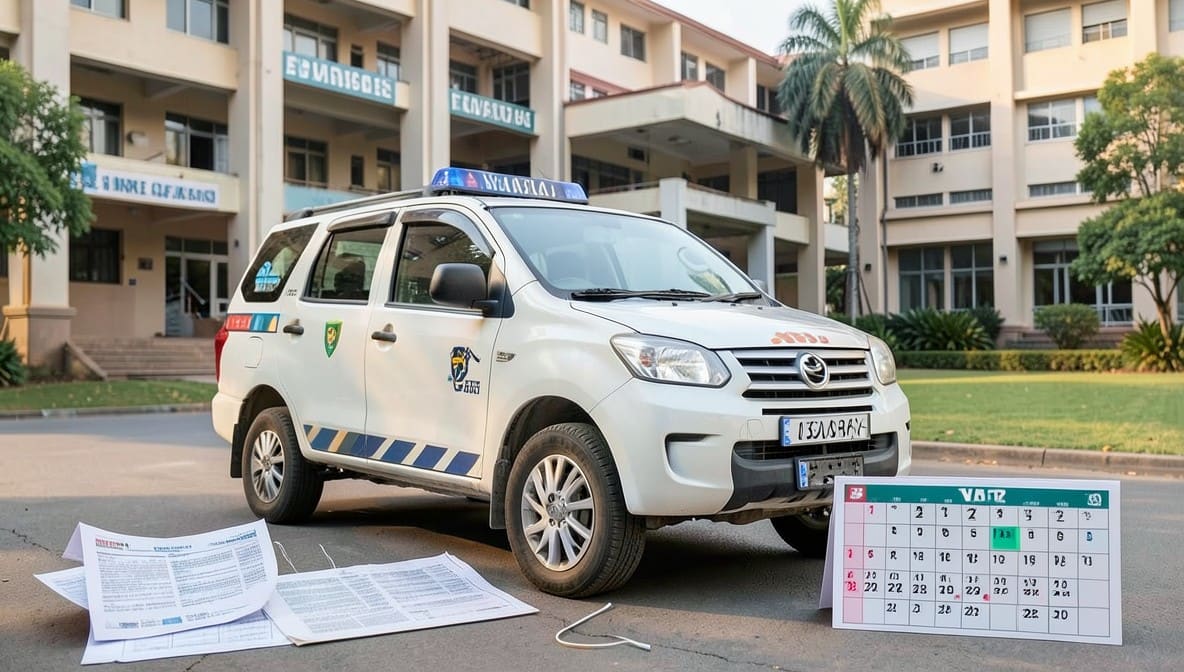
The case involves two writ petitions filed under Article 226 of the Constitution challenging the cancellation of contracts by The Singareni Collieries Company Limited (SCCL), a government-owned entity. The contracts pertained to the provision of vehicles on a hire basis for official use. The cancellations were allegedly arbitrary, unfair, and in violation of constitutional provisions.
Key Facts
Writ Petition No. 39612 of 2025
- Petitioner: Eerla Rajaiah, engaged to provide 1 No. 2 WD Hard Top Jeep at the General Manager's Office, Ramagundam Area-II
- Purchase Order (PO): PO No. 7500054472 dated 09.07.2024
- Contract Period: Total period not specified, but the petitioner executed work for 15 months with 18 months remaining
- Cancellation Order: Ref No. RG21PD175000544721259 dated 09.12.2025
Writ Petition No. 39614 of 2025
- Petitioner: M/s Thogari Mahesh, engaged to provide a 4WD Pickup Truck under a separate contract
- Purchase Order (PO): PO No. 7500052692 dated 09.09.2023
- Contract Period: 36 months, with 27 months executed and 6 months remaining
- Cancellation Order: Ref No. RG21PD175000526921258 dated 09.12.2025
Procedural History
- 13.03.2026: Memos filed by petitioners stating partial execution of contracts and prevention from completing remaining work due to cancellation orders
- 13.03.2026: Both writ petitions listed for hearing before the Telangana High Court
- 13.03.2026: Court issues interim order directing continuation of work pending final disposal
The Parties' Positions
Petitioners
- Contended that the cancellation orders were illegal, arbitrary, and unfair, violating Article 14 (equality before law) and Article 21 (right to livelihood) of the Constitution
- Argued that they had partially executed the contracts and were prevented from completing the remaining work due to the impugned orders
- Sought Writ of Mandamus to set aside the cancellation orders and direct continuation of contracts
Respondents
- Singareni Collieries Company Limited, represented by Standing Counsel Sri P. Sri Harsha Reddy, opposed the grant of interim relief
- No specific grounds for opposition were recorded in the judgment, but the counsel vehemently resisted the petitioners' pleas
Relief Sought
Both petitioners sought:
- Declaration that the cancellation orders dated 09.12.2025 were illegal, arbitrary, and violative of Article 14 and Article 21
- Writ of Mandamus setting aside the cancellation orders
- Direction to the respondents to permit continuation of contracts for the remaining periods (18 months in WP 39612/2025 and 6 months in WP 39614/2025)
- Interim relief pending disposal of the writ petitions
The Legal Issue
The central legal question was whether the cancellation of contracts by a public sector undertaking without apparent justification constitutes an arbitrary action violative of Article 14 and Article 21 of the Constitution, warranting judicial intervention under Article 226.
Arguments Presented
For the Petitioners
- Relied on constitutional guarantees under Article 14 (right to equality) and Article 21 (right to livelihood) to argue that the cancellation orders were arbitrary and unfair
- Contended that the respondents' action deprived them of their right to complete contractual obligations and earn livelihood
- Highlighted that the contracts were partially executed, and the remaining periods were substantial (18 months and 6 months respectively)
For the Respondents
- Opposed the grant of interim relief, though specific legal arguments were not recorded in the judgment
- Impliedly contested the maintainability or merits of the petitioners' claims, suggesting the cancellations were justified
The Court's Analysis
The Court, while not delving into detailed legal reasoning at this interim stage, made the following observations:
-
Prima Facie Case: The Court noted that the petitioners had executed part of the contracts and that substantial periods remained subsisting. This indicated a prima facie case for judicial intervention.
-
Balance of Convenience: The Court considered that permitting the petitioners to continue the work would preserve the status quo and prevent irreparable harm, while not causing undue prejudice to the respondents.
-
Constitutional Violations: The Court implicitly recognized that arbitrary cancellation of contracts by a state entity could violate Article 14 (equality before law) and Article 21 (right to livelihood), warranting interim relief.
-
Interim Relief Principles: The Court applied the well-established principle that interim relief may be granted where:
- There is a prima facie case
- The balance of convenience favors the petitioner
- Irreparable injury would result if relief is not granted
The Court did not engage in exhaustive analysis of the merits but focused on the immediate practical implications of the cancellation orders.
"Having regard to the submissions made and considering the contents of the memos as well as the fact that substantial period of the contracts is still subsisting, this Court is of the prima facie view that the matter requires consideration."
The Verdict
The Court granted interim relief with the following directions:
-
The respondents were directed to permit the petitioners to continue and execute the work for the remaining periods of their respective contracts:
- 18 months in W.P. No. 39612 of 2025
- 6 months in W.P. No. 39614 of 2025
-
The continuation of work was made subject to the terms and conditions of the tender agreements.
-
The matter was directed to be listed on 30.06.2026 for further hearing.
What This Means For Similar Cases
Administrative Arbitrariness Under Judicial Scrutiny
- Public sector undertakings and government entities must ensure that contract cancellations or administrative actions are based on reasonable grounds and comply with principles of natural justice
- Arbitrary actions, even in contractual matters, can be challenged under Article 226 if they violate Article 14 or Article 21
- Courts may intervene to prevent irreparable harm to parties who have partially executed contracts, especially where livelihood is at stake
Interim Relief as a Safeguard
- Prima facie case and balance of convenience are critical factors for granting interim relief in writ petitions
- Petitioners should emphasize:
- The substantial period remaining in the contract
- The partial execution of contractual obligations
- The absence of prejudice to the respondent if relief is granted
- The potential irreparable harm if relief is denied
Contractual Rights and Constitutional Protections
- Contractual rights, particularly those involving livelihood, are protected under Article 21
- Article 14 mandates that administrative actions must be fair, reasonable, and non-discriminatory
- Even in the absence of explicit statutory violations, constitutional remedies may be invoked against arbitrary state actions