The Madras High Court has reaffirmed a foundational principle of administrative law: that any decision terminating a contractual relationship must be accompanied by a speaking order that clearly states the reasons for action. The judgment underscores that administrative authorities cannot rely on post-hoc justifications in affidavits to validate arbitrary cancellations.
Background & Facts
The Dispute
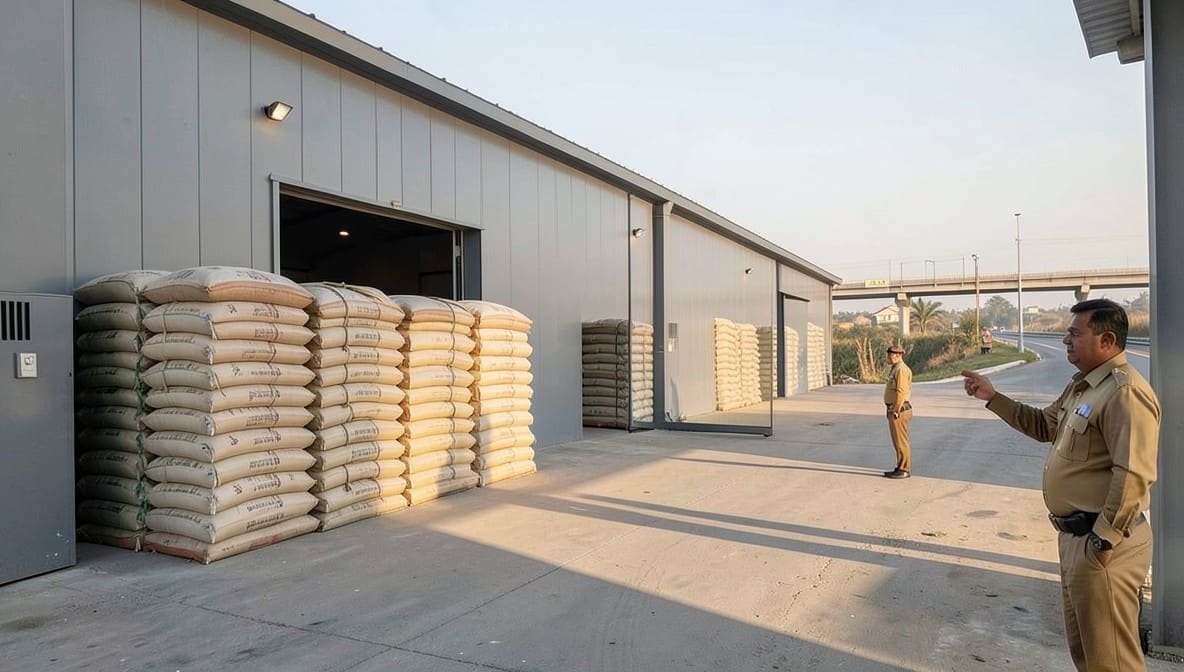
The dispute arose from a Total Labour Contract (TLC) entered into between Senthil Enterprises, represented by its proprietor R. Senthilkumar, and Tamil Nadu Minerals Ltd (TAMIN), for the production of dimensional granite blocks from the Sudanur SF.No.1 Black Granite Quarry, Pit-B. The contract was awarded following a tender issued by TAMIN on 29.11.2021. A formal agreement was executed on 04.07.2022, with a contract period of two years.
Key Facts
- The appellant commenced production on 20.05.2022, following issuance of the work order
- By 15.09.2022, the appellant had produced 208.979 CBM of granite blocks
- On 19.09.2022, TAMIN issued a notice directing temporary stoppage of work from 30.09.2022, citing stagnation of stock due to inherent defects in raw materials and lack of buyer approval
- The appellant continued production until 30.09.2022, bringing total production to 378.74 CBM
- TAMIN released 50% of the payment amounting to Rs. 50,49,783/- against the invoice of Rs. 87,68,579/- for the 208.979 CBM produced up to 15.09.2022
- The remaining 50% of the payment was withheld
- On 23.06.2023, TAMIN issued an order cancelling the contract with effect from 20.06.2023
- The cancellation order cited inherent defects in the granite blocks - predominant uneven white specks - as the reason for lack of market demand and stock accumulation
- The order invoked Clause 8(ii) of the TLC Agreement as the basis for cancellation
- The appellant’s machinery remained at the quarry site after cancellation
- No prior notice of default, opportunity to cure, or specific findings of contractual breach were communicated to the appellant
Procedural History
- 29.11.2021: Tender notification issued by TAMIN
- 20.05.2022: Work order issued to appellant
- 04.07.2022: Total Labour Contract executed
- 19.09.2022: Temporary stoppage notice issued by TAMIN
- 30.09.2022: Production halted as per notice
- 23.06.2023: Contract cancelled by TAMIN via Order No. Rc.No.1512/D/2022-1
- 12.07.2023: Writ Petition (W.P.No.27022 of 2023) filed before Single Judge, Madras High Court
- 31.07.2025: Single Judge dismissed the writ petition, holding the dispute was contractual and required civil adjudication
- 16.04.2026: Writ Appeal (W.A.No.2600 of 2025) heard and reserved
- 29.04.2026: Judgment delivered by Division Bench
The Parties' Positions
Appellant: Argued that the cancellation order was arbitrary, non-speaking, and failed to identify any specific breach of contract. No opportunity to be heard was granted. The reasons cited in the order (inherent defects) were not attributable to the appellant’s conduct. The withholding of 50% payment and continued retention of machinery were unjustified.
Respondents: Contended in their counter affidavit that the appellant failed to produce defect-free granite blocks as per contract specifications, failed to meet production targets, and submitted inflated invoices. They claimed the 50% payment was made as a lenient gesture.
Relief Sought
The appellant sought:
- Setting aside of the cancellation order dated 23.06.2023
- Payment of the outstanding 50% amount of Rs. 37,18,796/-
- Return of security deposit of Rs. 5,90,000/- (already acknowledged for repayment)
- Compensation for loss of machinery and operational costs
- Costs of litigation
The Legal Issue
The central question was whether an administrative authority may cancel a contract and withhold payments without issuing a speaking order that clearly states the grounds for action, and whether post-hoc justifications in a counter affidavit can validate an otherwise defective administrative decision.
Arguments Presented
For the Appellant
Learned Senior Counsel E. Om Prakash submitted that the cancellation order dated 23.06.2023 was non-speaking and failed to attribute any fault to the appellant. The reasons cited - ‘inherent defects in raw blocks’ - were intrinsic to the quarry and beyond the appellant’s control. No notice of default, opportunity to rectify, or specific contractual violation was mentioned. Reliance was placed on Mohinder Singh Gill v. Chief Election Commissioner to argue that administrative orders must be judged solely on the reasons recorded at the time of decision, and cannot be supplemented by affidavits filed in litigation.
For the Respondent
Mr. B. Vijay, counsel for TAMIN, argued that the appellant failed to meet contractual specifications regarding quality and quantity of granite blocks. He contended that the 50% payment was made as a concession, and that the dispute involved complex factual issues requiring evidence before a civil court. He submitted that the writ petition was rightly dismissed as the matter was contractual and not amenable to writ jurisdiction.
The Court's Analysis
The Court examined the cancellation order dated 23.06.2023 and found it devoid of any specific findings of contractual breach by the appellant. The order attributed the lack of market demand to ‘inherent defects in raw blocks’, which are natural characteristics of the quarry, not conduct attributable to the contractor. Crucially, the order did not mention any prior notice, opportunity to cure, or failure to meet production targets.
The Court emphasized that the counter affidavit filed by the respondents introduced new grounds - failure to meet targets, invoice discrepancies, and substandard quality - that were entirely absent from the cancellation order. The Court held that such post-hoc justifications cannot be used to validate an administrative decision.
"When an authority makes an order based on certain grounds, its validity must be judged by the reasons so mentioned and it cannot be supplemented by fresh reasons in the shape of affidavit or otherwise. Or else, an order which was bad in the beginning, may, by the time it comes to court on account of a challenge, get validated by additional grounds later brought out in the counter affidavit."
The Court cited Mohinder Singh Gill v. Chief Election Commissioner to reinforce that the doctrine of natural justice requires reasons to be recorded at the time of decision. The absence of a speaking order rendered the cancellation arbitrary and violative of Article 14 of the Constitution. The Court further noted that the respondents’ reliance on civil court adjudication was misplaced, as the issue was not merely contractual but involved the legality of an administrative act.
The Verdict
The appeal was allowed. The Court set aside the order dated 31.07.2025 of the Single Judge and the cancellation order dated 23.06.2023. The matter was remanded to the second respondent, TAMIN, to afford the appellant a hearing, consider all claims - including pending bills, machinery retention, and other dues - and pass a speaking order within four weeks of receipt of this judgment. There shall be no order as to costs.
What This Means For Similar Cases
Speaking Orders Are Non-Negotiable
- Practitioners must challenge administrative cancellations where reasons are vague, generic, or absent
- Any order that cites ‘lack of demand’ or ‘quality issues’ without linking them to the contractor’s conduct is vulnerable to being set aside
- The burden is on the authority to record specific, factual grounds at the time of decision
Post-Hoc Justifications Are Inadmissible
- Counter affidavits cannot introduce new grounds to justify an administrative order
- Courts will not validate arbitrary decisions by accepting belated explanations
- Legal arguments must be grounded in the original decision document, not litigation pleadings
Contractual Disputes May Still Be Subject to Writ Jurisdiction
- When an administrative body acts under statutory or contractual authority, its actions are subject to judicial review under Articles 226/227
- Mere existence of a contract does not bar writ jurisdiction if the action is administrative, arbitrary, or violates natural justice
- Writ petitions remain a viable remedy where procedural fairness is breached, even in commercial disputes involving public entities