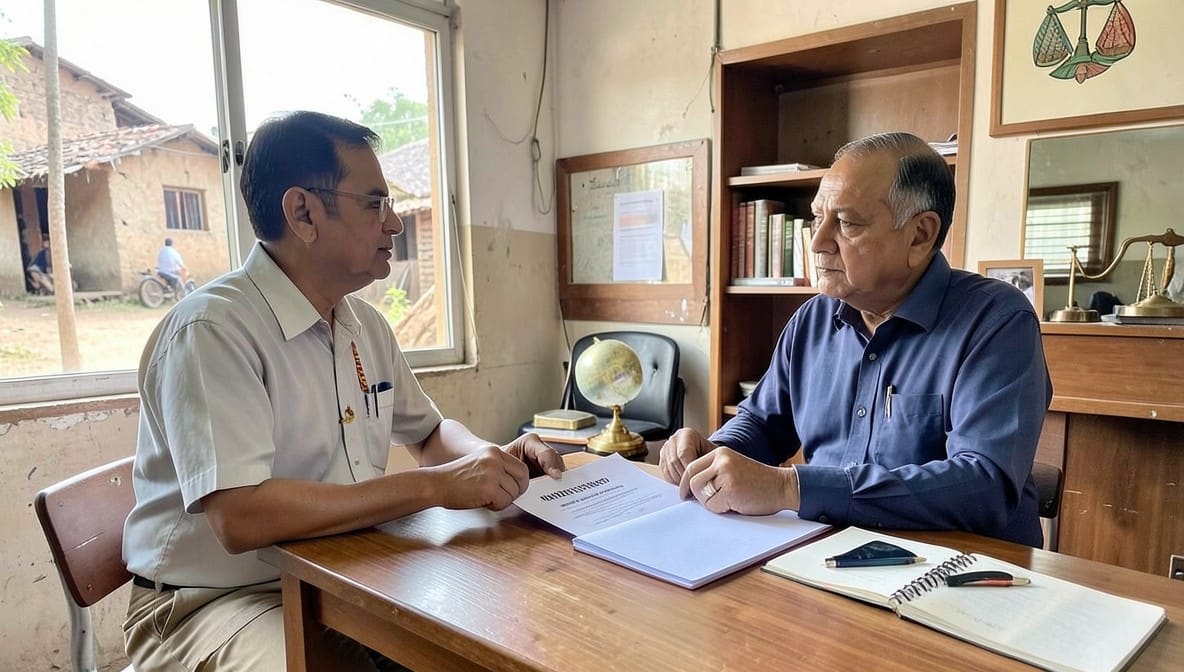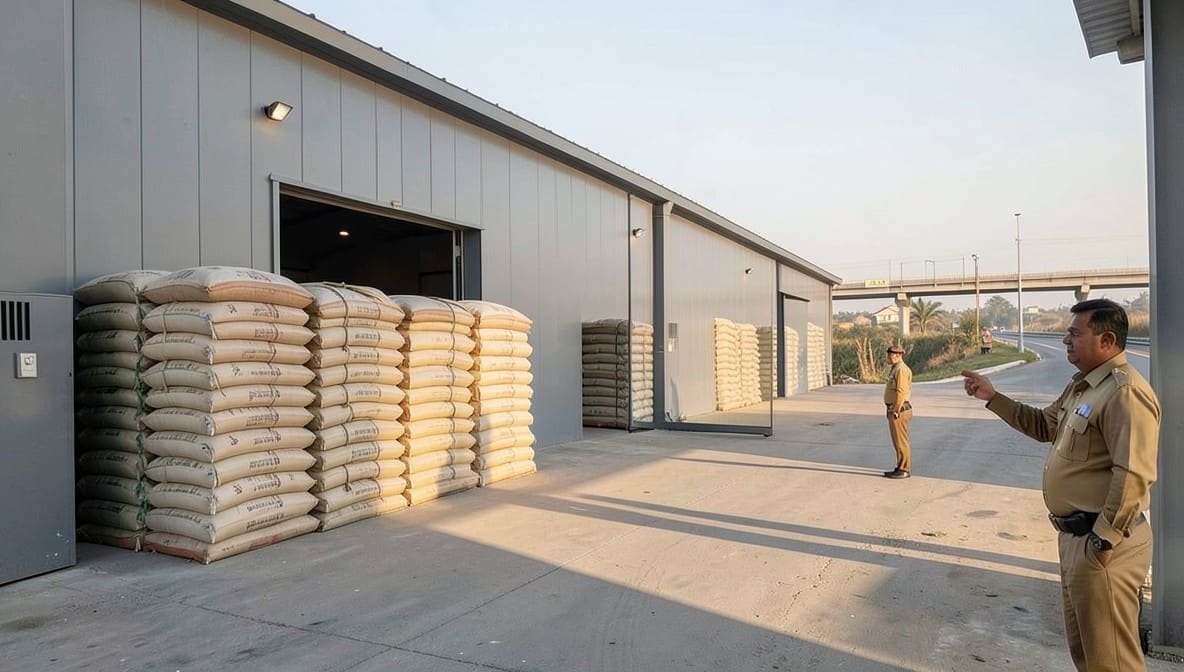
The Andhra Pradesh High Court has reaffirmed that even in the administration of public distribution systems, procedural fairness is non-negotiable. In a decisive ruling, the Court set aside an order terminating a contractor without notice, emphasizing that the principles of natural justice are not suspended merely because the contract involves essential commodities.
Background & Facts
The Dispute
The petitioner, NEW LAKSHMI NARSIMHA HANDLING AND WAREHOUSE SERVICES, was engaged as a handling and storage contractor for the Andhra Pradesh State Civil Supplies Corporation Limited (APSCSCL), responsible for the storage and distribution of Public Distribution System (PDS) rice. The contract was governed by internal guidelines and periodic renewals, with no fixed term. On 02.05.2026, the 2nd respondent, Joint Collector cum Executive Director of APSCSCL, issued a notice directing the petitioner to immediately hand over the godown and its stock to the 4th respondent, M/S SRI LAKSHMI BALAJI WAREHOUSING AND HANDLING TRANSPORTING SERVICES, without any prior notice, hearing, or explanation.
Key Facts
- The petitioner had been operating the godown under continuous contractual arrangements since at least 2020.
- The 4th respondent claimed ownership of the premises through a lease deed dated 21.08.2025, executed by the original property owner.
- The APSCSCL had not issued any formal termination notice, show-cause notice, or opportunity to be heard to the petitioner prior to the impugned order.
- The 4th respondent filed its vakalatnama only on the day of the hearing, indicating no prior formal engagement with the Corporation.
- The Corporation’s operations involve PDS rice, a critical public commodity, but no statutory provision permits unilateral termination without due process.
Procedural History
- 02.05.2026: Impugned notice issued by the 2nd respondent directing handover of godown and stock to the 4th respondent.
- 08.05.2026: Writ Petition No. 13553/2026 filed under Article 226 of the Constitution before the Andhra Pradesh High Court.
- 08.05.2026: Hearing conducted on the same day, with counsel for all parties present.
- 08.05.2026: Court disposed of the petition at the admission stage.
The Parties' Positions
For the Petitioner: The termination was arbitrary, lacked any statutory or contractual basis, and violated the principles of natural justice. No opportunity was given to explain or contest the decision. The petitioner’s continued operation was lawful and in public interest.
For the Respondents 1 - 3 (APSCSCL): The order was issued in response to a complaint from the property owner and due to the urgency of ensuring uninterrupted PDS supply. However, counsel conceded that the impugned order did not disclose any prior notice or hearing.
For the 4th Respondent: Claimed ownership of the premises via a lease deed dated 21.08.2025 and asserted entitlement to take over the godown.
Relief Sought
The petitioner sought:
- Declaration that the impugned order dated 02.05.2026 is illegal and void.
- Setting aside of the order.
- Direction to continue the petitioner as contractor.
- Injunction against handover to the 4th respondent.
- Alternative relief under Section 151 CPC to suspend the order pending fair procedure.
The Legal Issue
The central question was whether the principles of natural justice apply to the termination of a contractor engaged in the Public Distribution System, even in the absence of a formal contract term, and whether an administrative order directing handover of public infrastructure can be issued without notice or hearing.
Arguments Presented
For the Petitioner
The petitioner relied on the foundational doctrine of audi alteram partem and cited Krishnadutt Awasthy v. State of Madhya Pradesh and Triveni Engineering and Industries Limited v. State of Uttar Pradesh to argue that administrative actions affecting livelihood or economic rights, especially those involving public welfare infrastructure, must comply with procedural fairness. The absence of any notice or opportunity to be heard rendered the order void ab initio. The petitioner’s continued operation was not unlawful, and the Corporation had no statutory power to unilaterally transfer operational control.
For the Respondent
The Standing Counsel for APSCSCL conceded that the impugned order did not record any prior notice or hearing. While arguing that the Corporation acted to ensure continuity of PDS supply, counsel acknowledged that the procedural defect was fatal. Counsel submitted that the order should be set aside, leaving open the possibility for the Corporation to initiate a fresh, lawful process.
The Court's Analysis
The Court observed that the impugned order dated 02.05.2026 was issued without any indication of prior notice, inquiry, or opportunity to the petitioner. The Corporation, despite its role in managing a critical public service, is not exempt from constitutional obligations under Articles 14, 19(1)(g), and 21. The right to carry on trade or business under Article 19(1)(g) is protected even for contractual service providers, and its deprivation requires due process.
"The principles of natural justice are not a luxury but a constitutional imperative, especially when the livelihood of a citizen and the public’s access to essential commodities are at stake."
The Court noted that the 4th respondent’s claim to the premises, even if valid, could not override the petitioner’s legitimate expectation of fair procedure. The Corporation’s reliance on the property owner’s complaint did not absolve it of its duty to afford a hearing. The Court further emphasized that the absence of any statutory provision permitting summary termination rendered the action arbitrary.
The Court relied on Krishnadutt Awasthy (2025) 7 SCC 545, which held that even in cases involving public interest, procedural fairness cannot be bypassed. Similarly, in Triveni Engineering (2026) 2 SCC 729, the Supreme Court reiterated that administrative decisions affecting economic rights must be preceded by notice and hearing.
The Court concluded that the order was procedurally flawed and constitutionally unsustainable. However, recognizing the public interest in uninterrupted PDS operations, the Court declined to restore the petitioner’s contract outright. Instead, it granted liberty to the Corporation to initiate a fresh, lawful process.
The Verdict
The writ petition is disposed of. The impugned order dated 02.05.2026 is set aside. The 2nd respondent is directed to initiate a fresh proceeding, providing written notice and a reasonable opportunity of hearing to the petitioner, the 4th respondent, and the property owner before taking any decision regarding the godown’s operation. There shall be no order as to costs. All pending interlocutory applications are closed.
What This Means For Similar Cases
Natural Justice Applies to PDS Contractors
- Practitioners must now argue that any termination of a PDS contractor, regardless of contract type, requires notice and hearing under Articles 14 and 21.
- Administrative agencies cannot rely on third-party claims (e.g., property ownership) to bypass procedural safeguards.
Contractual Tenure Does Not Override Due Process
- Even where contracts are oral, periodic, or non-fixed term, the right to fair procedure persists.
- The absence of a written contract does not justify summary dispossession.
Public Interest Does Not Override Fair Procedure
-
The fact that the service involves essential commodities like PDS rice does not justify bypassing natural justice.
-
Courts will not permit expediency to override constitutional rights.
-
Always demand a show-cause notice before any termination in public supply chains.
-
File writ petitions under Article 226 immediately upon receipt of unilateral termination notices.
-
Cite Krishnadutt Awasthy and Triveni Engineering to establish that procedural fairness is non-negotiable in public service contracts.