The Chhattisgarh High Court has clarified that judicial intervention under Article 226 cannot be invoked merely on the ground that a municipal statue obstructs business access, unless a statutory violation or arbitrariness is demonstrably established. This ruling reinforces the principle that urban planning decisions rest primarily with competent local authorities.
Background & Facts
The Dispute
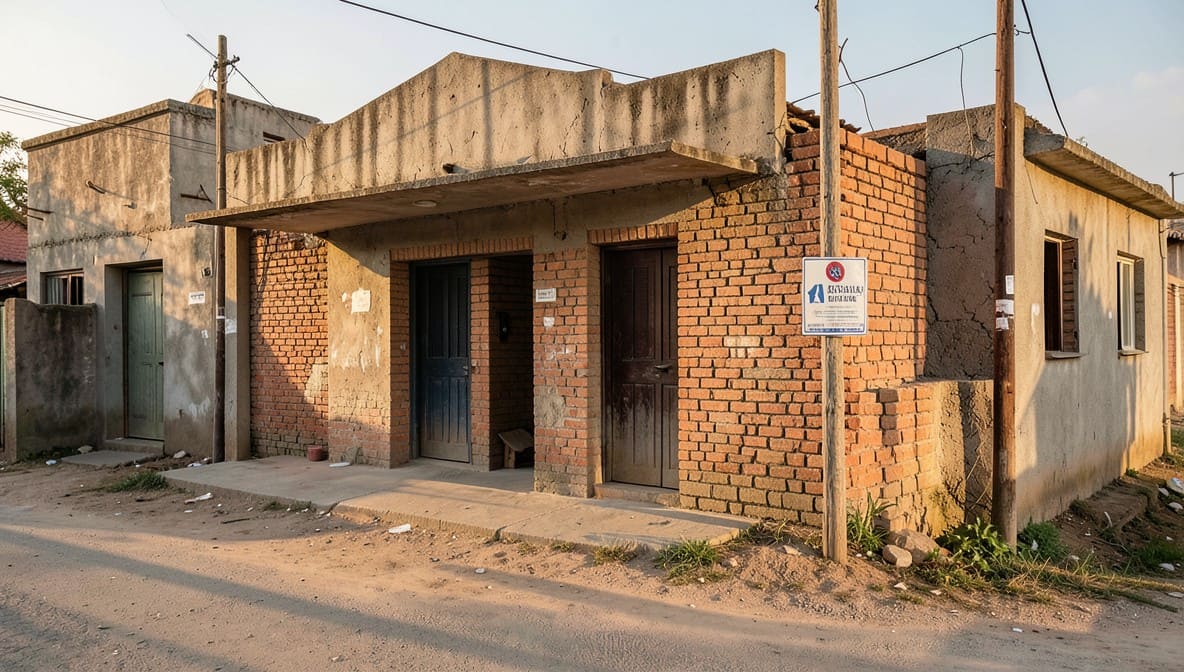
The petitioners, four siblings and legal heirs of Late Rajaram Vishwakarma, are proprietors of a shop located at Khasra No. 684/4/1, Sheet No. 28-D and Khasra No. 684, Nistar No. 28, Plot No. 113, in Padhawpara, Jawahar Ward No. 11, Mungeli. They allege that the installation of a stage and statue by the Municipal Council directly in front of their shop obstructs the main passage, impedes customer access, and adversely affects their livelihood.
Key Facts
- The petitioners have been operating their business at the said location for several years.
- The Municipal Council of Mungeli, under the authority of the Urban Administration and Development Department, approved the installation of a statue as part of a public cultural initiative.
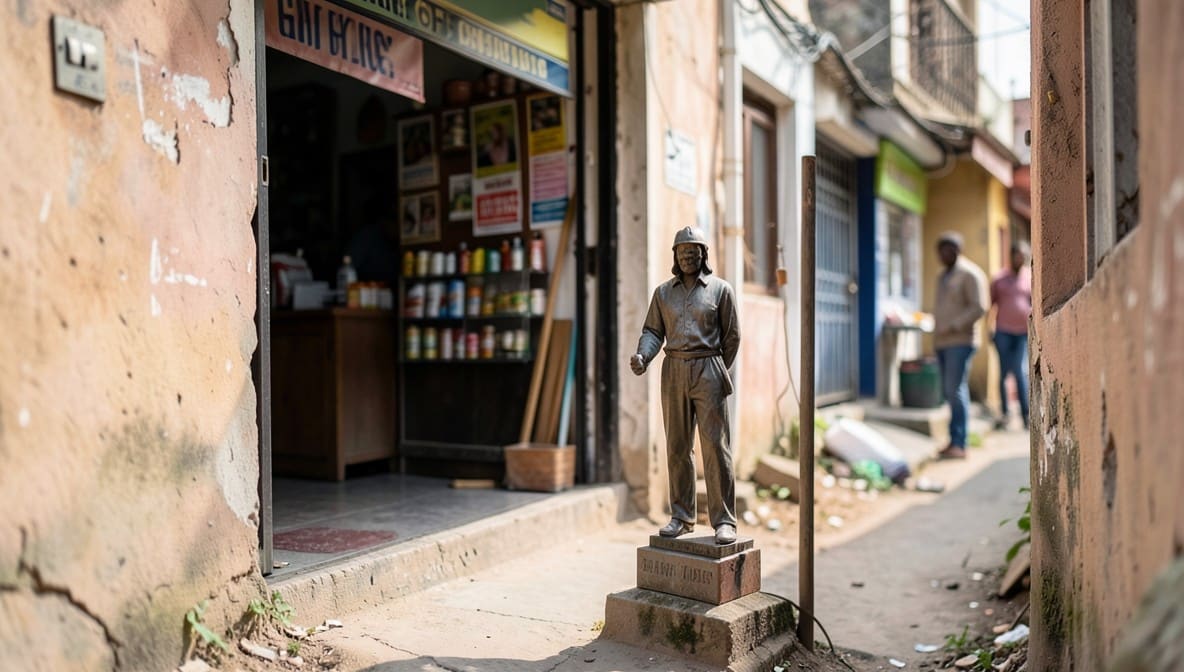
- The statue was installed in front of the petitioners’ shop, approximately 2 to 3 meters from the entrance.
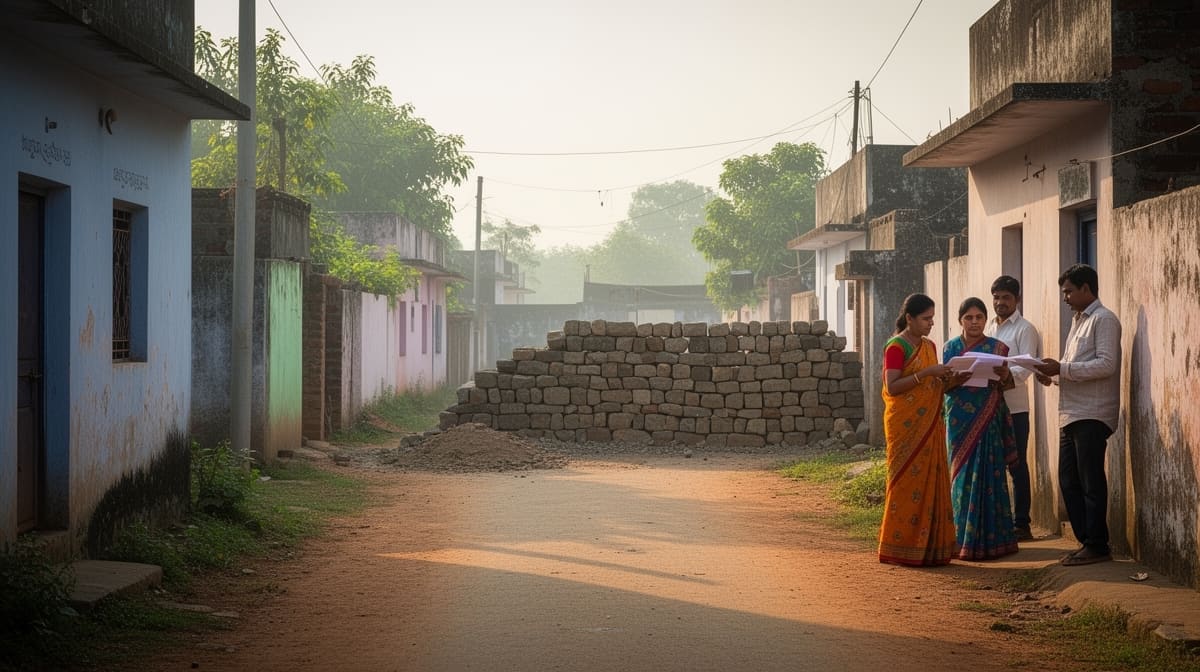
- Photographs submitted to the Court show the statue positioned such that it partially blocks the footpath and narrows the approach to the shop.
- The petitioners claim they have suffered a decline in footfall and revenue since the installation.
- The petitioners had previously filed a writ petition challenging other municipal actions, which resulted in interim protection being granted.
Procedural History
- Date of statue installation: Not explicitly stated, but confirmed by the Court to have been completed prior to filing of the petition.
- Filing date of writ petition: 2026 (exact date not specified in text).
- Date of hearing: 29.04.2026.
- Prior litigation: Petitioners had earlier challenged other municipal proceedings before the same Court, resulting in interim relief.
- No prior representation to the Municipal Council or Collector regarding the statue’s placement was cited by the petitioners.
The Parties' Positions
Petitioners’ Position:
- The statue obstructs their right of ingress and egress.
- The installation is arbitrary and violates their right to carry on business under Article 19(1)(g).
- The action was taken without consultation or notice.
- The petitioners seek quashing of the installation and a direction to remove or relocate the statue.
Respondents’ Position:
- The statue was installed pursuant to a valid resolution of the Municipal Council.
- The decision falls within the domain of municipal planning and public cultural policy.
- No statutory provision prohibits placement of statues near commercial premises.
- The matter involves disputed facts and policy discretion, not legal illegality.
Relief Sought
The petitioners sought:
- A writ of mandamus directing respondents to halt or remove the statue.
- A direction to ensure unobstructed access to their shop.
- Quashing of any decision leading to obstruction of their property rights.
- Any other relief deemed fit, including costs.
The Legal Issue
The central question was whether the installation of a municipal statue in front of a private shop, allegedly obstructing ingress and egress, constitutes a justiciable violation of fundamental rights warranting judicial intervention under Article 226, absent proof of statutory breach or arbitrariness.
Arguments Presented
For the Petitioner
Learned counsel argued that the statue’s placement directly interferes with the petitioners’ right to carry on business under Article 19(1)(g) and constitutes a violation of their right to peaceful enjoyment of property. He contended that the action was taken without notice, consultation, or adherence to procedural fairness, rendering it arbitrary. He relied on the principle that any state action affecting livelihood must be reasonable and non-discriminatory.
For the Respondent
The State and Municipal Council counsel submitted that the statue was erected pursuant to a duly passed resolution of the Municipal Council, which has statutory authority under the Chhattisgarh Municipal Corporation Act and relevant urban development rules to undertake cultural installations. They argued that the location of such installations is a matter of municipal planning, not subject to judicial review unless a specific legal provision is violated. They further stated that the petitioners had not exhausted alternative remedies by approaching the Municipal Council.
The Court's Analysis
The Court examined the nature of the grievance and the scope of writ jurisdiction under Article 226. It noted that while the petitioners’ business concerns are legitimate, the remedy sought requires an assessment of urban planning decisions, which are inherently discretionary and technical.
"Matters relating to location, planning and suitability of such installations fall within the domain of the competent municipal authorities and are not ordinarily amenable to writ jurisdiction unless statutory violation is demonstrated."
The Court referenced its own Division Bench judgment in W.P. (C) No. 463 of 2026, decided on 24.02.2026, which had laid down this principle. It found that the petitioners had not produced any evidence showing that the statue’s placement contravened any municipal bylaw, building regulation, or statutory provision governing public installations or commercial access.
The Court further observed that the petitioners had not filed any prior representation with the Municipal Council or the Collector seeking reconsideration of the statue’s location. The absence of such an effort undermined the claim that administrative remedies had been bypassed.
While acknowledging the petitioners’ hardship, the Court emphasized that writ jurisdiction is not a substitute for administrative redressal. The Court held that the mere fact of inconvenience or economic loss, without proof of illegality or arbitrariness, does not justify judicial interference.
The Verdict
The writ petition was dismissed without costs. The Court directed the petitioners to file a detailed representation before the competent municipal authority within two weeks. The authority was directed to consider the representation and decide it within 30 days of filing, in accordance with law. No direction was issued for removal or relocation of the statue.
What This Means For Similar Cases
Municipal Planning Decisions Are Presumed Valid
- Practitioners must first exhaust administrative remedies before approaching courts under Article 226 for urban planning disputes.
- Allegations of obstruction must be tied to specific statutory violations, not merely perceived inconvenience.
- Photographs or anecdotal evidence of reduced footfall alone are insufficient to invoke writ jurisdiction.
Writ Jurisdiction Requires More Than Discomfort
- Courts will not intervene in cultural or aesthetic municipal decisions unless there is clear evidence of arbitrariness, mala fide, or breach of statutory norms.
- Business owners must document formal objections to municipal plans at the earliest stage, preferably during public consultations or approval processes.
- Any future challenge must cite specific clauses from the Chhattisgarh Municipal Act, Building Bye-laws, or zoning regulations that were violated.
Procedural Fairness Is Key, Even in Discretionary Acts
- While discretion is broad, authorities must still follow internal procedures, such as recording reasons for placement decisions.
- Petitioners should request copies of the Municipal Council resolution, site plan, and public notice records to establish procedural compliance or lapse.
- Future litigation should include a prayer for production of these documents under Order XI Rule 1 CPC or Section 91 CrPC if applicable.