The Madhya Pradesh High Court has reaffirmed the well-established principle that writ petitions under Article 226 of the Constitution are not maintainable against mere show-cause notices, unless they are issued without jurisdiction or are patently illegal. This ruling clarifies the threshold for judicial intervention in administrative proceedings and reinforces the doctrine that remedies must be exhausted before invoking constitutional jurisdiction.
Background & Facts
The Dispute
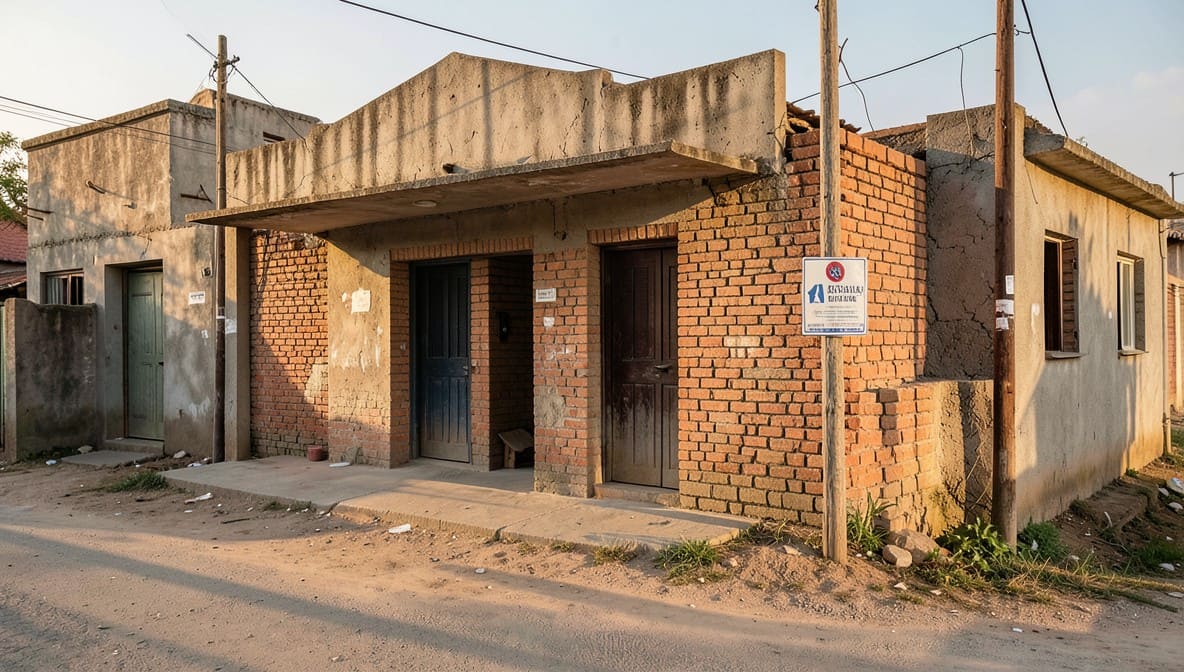
The petitioners, identified as Nitin Vishwakarma and others, are street hawkers engaged in livelihood activities in Jabalpur, Madhya Pradesh. On 16.01.2015, the Municipal Corporation of Jabalpur (Respondent No. 3) issued a show-cause notice directing them to remove encroachments from public streets, alleging unauthorized occupation of public space. The notice did not impose any immediate penalty or removal order but sought explanations from the petitioners.
Key Facts
- The petitioners have been operating as hawkers on the same streets for over a decade.
- The show-cause notice dated 16.01.2015 (Annexure P/2) was the first formal notice issued against them in this matter.
- No final order of removal, demolition, or penalty had been passed at the time of filing the writ petition.
- The petitioners had been granted interim stay against removal since 2014, effectively preventing enforcement for 11 years.
- The petitioners did not file any reply to the show-cause notice prior to filing the writ petition.
Procedural History
- 16.01.2015: Show-cause notice issued by Municipal Corporation, Jabalpur.
- 2014 - 2015: Petitioners began operating without formal authorization; informal tolerance by authorities.
- 2015: Writ Petition No. 1221 of 2015 filed before the High Court seeking quashing of the notice and a rehabilitation scheme.
- 2015 - 2026: Interim stay against removal remained in force for 11 years without any substantive hearing on merits.
- 01.04.2026: Hearing before Justice Deepak Khot.
Relief Sought
The petitioners sought:
- Quashing of the show-cause notice dated 16.01.2015.
- A direction to the State to frame a rehabilitation scheme for hawkers under Article 19(1)(g).
The Parties' Positions
For the Petitioners
The petitioners argued that the show-cause notice violated their fundamental right to carry on any trade or business under Article 19(1)(g). They contended that the notice was arbitrary and that the absence of a rehabilitation policy rendered the action oppressive.
For the Respondents
The State and Municipal Corporation contended that the notice was a preliminary administrative step, not a final order, and that no rights had been finally infringed. They emphasized that the petitioners had enjoyed an unprecedented 11-year stay and that the matter required adjudication on merits through proper procedure.
The Legal Issue
Can a writ petition under Article 226 of the Constitution be maintained solely against a show-cause notice issued by a statutory authority, without any final order having been passed?
Arguments Presented
For the Petitioner
The petitioners relied on the right to livelihood under Article 19(1)(g) and argued that the show-cause notice, though interim, created a chilling effect on their economic activity. They contended that the prolonged stay and lack of a rehabilitation policy amounted to a violation of procedural fairness and demanded judicial intervention.
For the Respondent
The State relied on binding precedents from the Supreme Court, particularly Union of India v. Kunisetty Satyanarayana, to argue that a show-cause notice does not constitute a final order and therefore cannot be the subject of a writ petition unless it is issued without jurisdiction or is manifestly illegal. They emphasized that the petitioners had not exhausted administrative remedies by filing a reply.
The Court's Analysis
The Court undertook a detailed review of the Supreme Court’s jurisprudence on the maintainability of writ petitions against show-cause notices. It cited Union of India v. Kunisetty Satyanarayana (2006) 12 SCC 28, which held that such notices are procedural steps and do not, by themselves, infringe any legal right. The Court observed:
"A mere show-cause notice or charge-sheet does not give rise to any cause of action, because it does not amount to an adverse order which affects the rights of any party unless the same has been issued by a person having no jurisdiction to do so."
The Court noted that the petitioners had not submitted any reply to the notice, thereby depriving the authority of the opportunity to consider their explanation. It further emphasized that the 11-year stay, while granted in the interest of justice, could not be permitted to indefinitely stall administrative proceedings.
The Court acknowledged the petitioners’ right to livelihood but held that constitutional remedies must be invoked at the appropriate stage. It distinguished between procedural fairness and premature judicial intervention, stating that the discretion under Article 226 must be exercised sparingly in such cases.
The Verdict
The writ petition was dismissed as not maintainable. However, the Court directed the petitioners to submit their reply to the show-cause notice within four weeks of the order. The Municipal Corporation was directed to decide the proceedings within two months of receiving the reply. No coercive action, including removal or demolition, shall be taken against the petitioners until the proceedings are concluded. Costs were not awarded.
What This Means For Similar Cases
Writs Against Show-Cause Notices Are Not Maintainable Without Jurisdictional Flaw
- Practitioners must advise clients to exhaust administrative remedies before approaching the High Court under Article 226.
- A show-cause notice alone cannot be challenged unless it is issued by an authority lacking jurisdiction or is facially illegal.
- Courts will not entertain writs merely because a notice causes inconvenience or economic anxiety.
Interim Relief Cannot Be Used to Defeat Administrative Process
- Prolonged stays granted in writ petitions must not become de facto permanent injunctions.
- Courts may dispose of petitions with directions to conclude proceedings within fixed timelines to prevent abuse.
- Delay in filing replies to notices may be viewed as acquiescence or waiver of opportunity to contest.
Livelihood Rights Require Procedural Fairness, Not Premature Intervention
- The right to livelihood under Article 19(1)(g) is protected, but not through premature constitutional litigation.
- Rehabilitation schemes must be framed by the State, but cannot be mandated through writ petitions against individual notices.
- Administrative bodies must be given a fair chance to consider representations before final orders are passed.