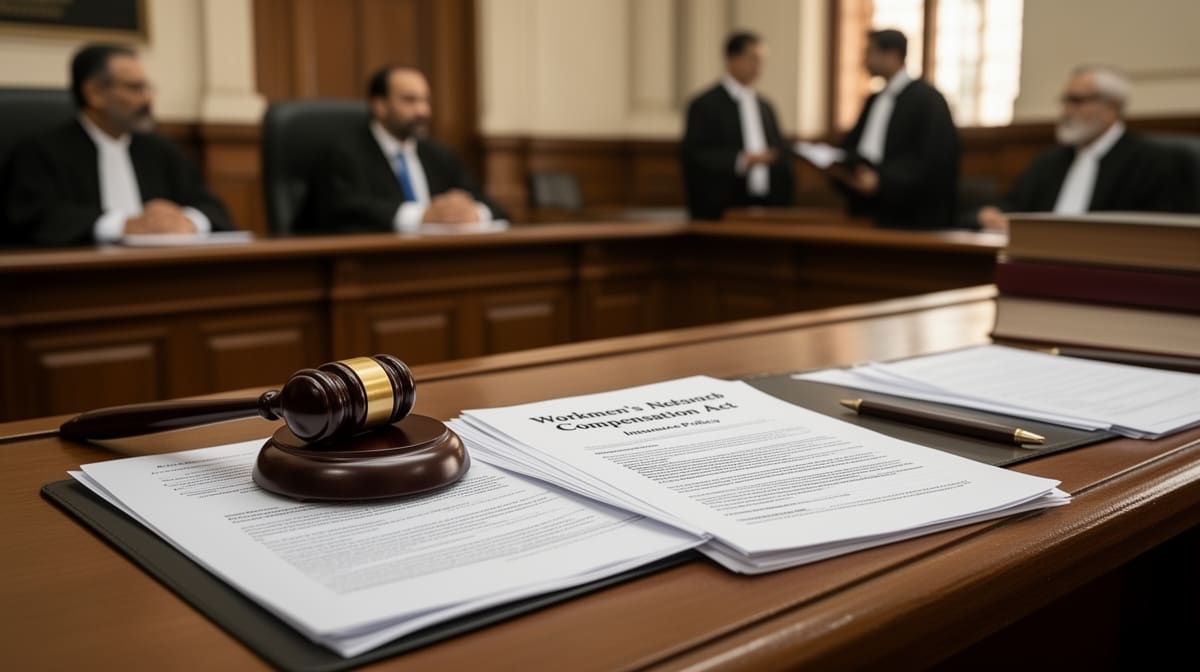
The Bombay High Court's judgment in New India Assurance Company Limited v. Smt. Abida Munshi Khan clarifies two critical aspects of workmen's compensation law: the prospective application of amendments to Section 4 of the Workmen's Compensation Act, 1923, and the limited scope for insurers to evade liability based on technical discrepancies in policy documentation. This decision reinforces the principle that compensation calculations must be based on the law prevailing at the time of the accident, while simultaneously preventing insurers from exploiting minor administrative errors to deny legitimate claims.
Background & Facts
The Accident and Claim
The case arose from a fatal accident on 23 May 2000, where the deceased, Munshi Khan, was employed by M/s. Solid Petroleum Refinery (formerly Jayhind Dambar Plant). His dependents - his wife and three minor children - filed a claim for compensation under the Workmen's Compensation Act, 1923 before the Labour Commissioner. The vehicle involved in the accident was insured with the appellant, New India Assurance Company Limited, though the policy listed the insured as 'Jayhind Construction, Ulhasnagar' rather than the employer's name.
Procedural History
The claim progressed through the following stages:
- 2000: Accident occurred on 23 May
- 2000-2002: Compensation claim filed and adjudicated by the Labour Commissioner
- 2002: Award passed calculating compensation based on the amended Section 4 (wages increased to Rs. 4,000)
- 2012: Appeal filed by the insurer challenging the application of the amended provision and the insurer's liability
The Parties' Positions
The appellant-insurer raised two primary contentions:
- The amended Section 4, which increased the wage base for compensation calculations from Rs. 2,000 to Rs. 4,000, should not apply retrospectively to accidents occurring before its enforcement date (8 December 2000).
- The insurer should not be held liable because the policy listed 'Jayhind Construction' as the insured, while the employer was named as 'M/s. Solid Petroleum Refinery' in the claim.
The respondents-claimants argued that:
- The amendment should apply as it was a welfare legislation intended to benefit workers.
- The insurer could not evade liability based on a minor name discrepancy, especially since the vehicle was indisputably insured with them.
The Legal Issue
The Bombay High Court was called upon to resolve two key questions:
- Whether the amendment to Section 4 of the Workmen's Compensation Act, 1923, which increased the wage base for compensation calculations, applies retrospectively to accidents occurring before its enforcement date.
- Whether an insurer can avoid liability for compensation on the ground that the name of the insured in the policy does not exactly match the name of the employer in the claim.
Arguments Presented
For the Appellant (Insurer)
The insurer relied on a line of precedents to argue that amendments to welfare legislations like the Workmen's Compensation Act and the Motor Vehicles Act must be applied prospectively. Key cases cited included:
- Padma Srinivasan v. Premier Insurance Company Ltd.
- Satya Devi Sharma v. Megh Pal
- Kerala State Electricity Board v. Valsala K.
- United India Insurance Company Ltd. v. Sumitra Devi
The insurer contended that since the accident occurred on 23 May 2000 - before the amendment came into force - the compensation should be calculated based on the wage base of Rs. 2,000, not Rs. 4,000.
On the second issue, the insurer argued that the policy was issued in the name of 'Jayhind Construction,' while the employer was named as 'M/s. Solid Petroleum Refinery' in the claim. This discrepancy, they claimed, absolved them of liability.
For the Respondents (Claimants)
The claimants argued that the Workmen's Compensation Act is a welfare legislation, and its amendments should be interpreted liberally to benefit workers. They contended that the amendment to Section 4 should apply retrospectively to ensure higher compensation for victims of accidents occurring before its enforcement.
On the second issue, the claimants pointed out that the employer was formerly known as 'Jayhind Dambar Plant,' which was closely related to 'Jayhind Construction.' They further argued that the insurer had not controverted this fact in their pleadings, and the vehicle was indisputably insured with the appellant. Thus, the insurer could not evade liability based on a minor name discrepancy.
The Court's Analysis
Prospective Application of Amendments
The Court examined the question of retrospective application of the amendment to Section 4 in light of established precedents. It noted that both the Workmen's Compensation Act, 1923 and the Motor Vehicles Act, 1939 are welfare legislations intended to protect the interests of workers and accident victims. However, the consistent judicial view has been that the law prevailing on the date of the accident governs the calculation of compensation.
The Court observed:
"In the instant case, on the date of accident i.e., 23 May 2000, Explanation II to Section 4(1) provided base of Rs. 2,000 as wages for computing compensation. Therefore, for the purpose of calculating compensation under Section 4(1), the compensation should be calculated on the basis of Rs. 2,000 and not Rs. 4,000."
This holding aligns with the principle that amendments to procedural or substantive provisions in welfare legislations do not automatically apply retrospectively unless expressly provided. The Court relied on the precedents cited by the insurer to conclude that the amendment to Section 4 could not be applied retrospectively.
Insurer's Liability and Name Discrepancies
On the second issue, the Court addressed the insurer's attempt to evade liability based on a name discrepancy in the policy. The Court noted that the employer was described as 'M/s. Solid Petroleum Refinery (formerly known as Jayhind Dambar Plant)' in the claim, while the policy listed the insured as 'Jayhind Construction.' The Labour Commissioner had recorded a finding of fact that 'Jayhind Dambar Plant' and 'Jayhind Construction' were the same entity, and this finding had not been controverted by the insurer.
The Court held:
"It is also important to note that there is no dispute that the vehicle which met with an accident was insured with the appellant. Therefore, in view of this finding of fact, question no. (2) is decided against the insurance company and in favour of the respondents."
This holding underscores that insurers cannot exploit minor administrative discrepancies to deny liability, especially when the vehicle in question is indisputably insured with them. The Court's approach ensures that technicalities do not defeat the substantive rights of claimants under welfare legislations.
The Verdict
The Bombay High Court partly allowed the appeal. It held that:
- The amendment to Section 4 of the Workmen's Compensation Act, 1923, which increased the wage base for compensation calculations, does not apply retrospectively. Thus, the compensation must be recalculated based on the wage base of Rs. 2,000, not Rs. 4,000.
- The insurer cannot evade liability based on a minor name discrepancy in the policy, as the vehicle was indisputably insured with them.
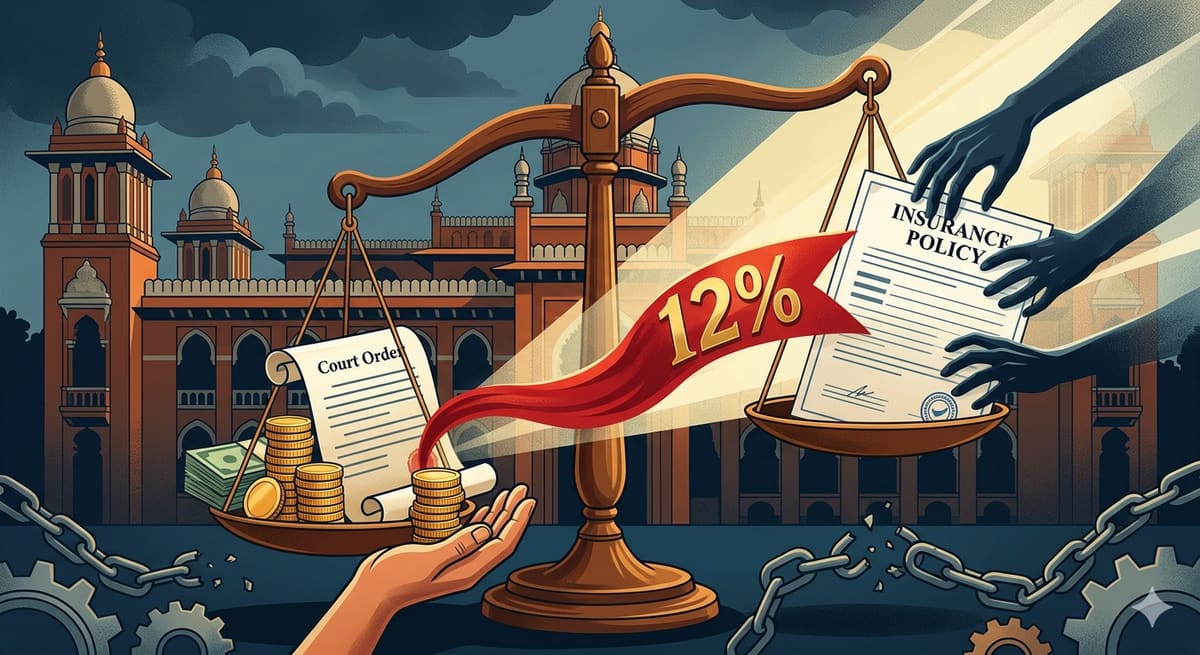
The Labour Commissioner was directed to recalculate the compensation and ensure its disbursement to the claimants, with interest at 12% per annum from the date of the accident until payment.
What This Means For Similar Cases
Amendments to Welfare Legislations Apply Prospectively
This judgment reaffirms the principle that amendments to welfare legislations like the Workmen's Compensation Act and the Motor Vehicles Act apply prospectively unless expressly provided otherwise. Practitioners must:
- Advise clients that compensation calculations will be based on the law prevailing at the time of the accident.
- Scrutinize the enforcement dates of amendments to determine their applicability to pending claims.
- Rely on precedents like Padma Srinivasan and Kerala State Electricity Board to argue against retrospective application of amendments.
Insurers Cannot Evade Liability Based on Technical Discrepancies
The Court's approach to insurer liability ensures that minor administrative errors do not defeat the rights of claimants. Key takeaways include:
- Insurers cannot avoid liability merely because the name of the insured in the policy does not exactly match the name of the employer in the claim.
- If the vehicle is indisputably insured with the insurer, and the discrepancy is minor or administrative, courts are likely to hold the insurer liable.
- Claimants should emphasize findings of fact recorded by lower forums, especially when such findings are not controverted by the insurer.
Interest on Compensation Awards
The Court's direction to grant interest at 12% per annum from the date of the accident until payment serves as a reminder of the following:
- Claimants are entitled to interest on compensation awards, which can significantly increase the total amount payable.
- Practitioners should always seek interest in compensation claims, as it compensates claimants for the delay in receiving their dues.
- Insurers must factor in the cost of interest when considering appeals, as prolonged litigation can substantially increase their liability.