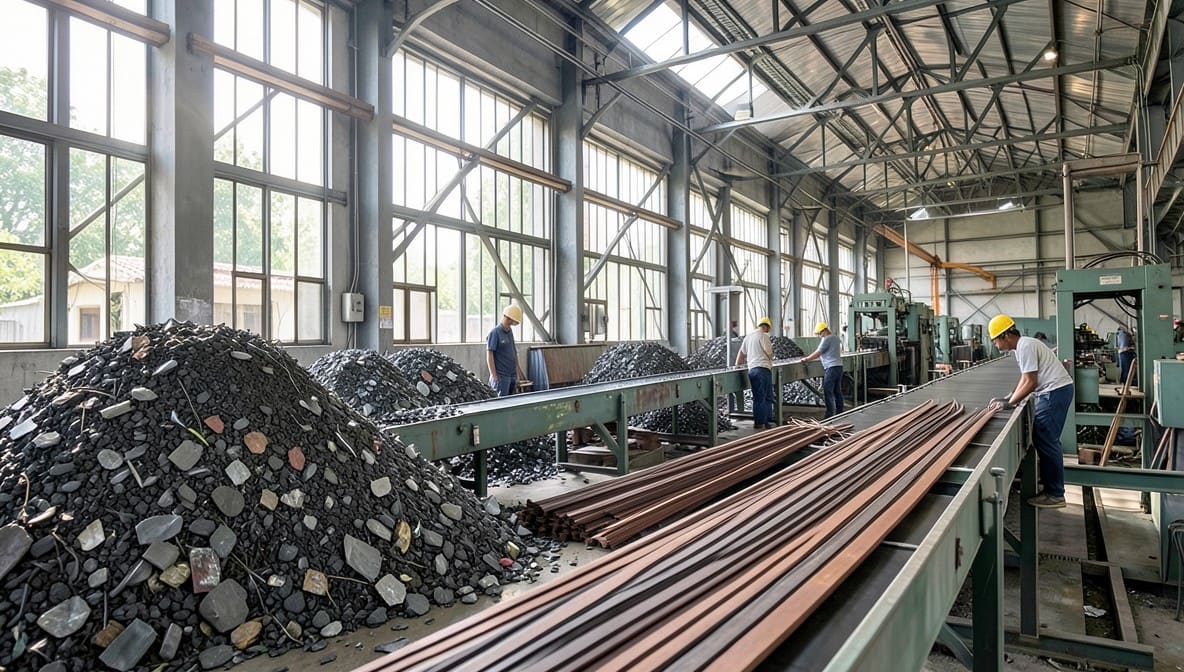
The Customs Appellate Tribunal has clarified that the classification of imported metal goods as waste and scrap under the Customs Tariff Act cannot be denied merely because their chemical composition matches that of primary alloy steel. The ruling reinforces that usability, not chemical content, is the decisive factor under Section Note 8.
Background & Facts
The Dispute
M/s Shri Balaji International imported three consignments of alloy steel scrap totaling 99,430 kilograms, declaring them under heading 7204 2990 as waste and scrap. Customs authorities seized the goods, alleging mis-declaration, and later reclassified them under heading 7224 9099 as alloy steel bars, imposing additional duties, interest, and penalties. The core dispute centered on whether the material qualified as waste and scrap under Section Note 8 of the Customs Tariff Act, 1975.
Procedural History
- 05.09.2017: Three bills of entry filed for import of alloy steel material
- 09.10.2017: Goods seized by SIIB, Ludhiana, on suspicion of mis-declaration
- Provisional release: Granted upon payment of duty, interest, and bank guarantee
- 08.02.2018: Show cause notice issued proposing reclassification and penalties
- 27/28.09.2018: Original adjudicating authority reclassified goods under 7224 9099
- 01.07.2019: Commissioner (Appeals) upheld the reclassification
- 03.02.2026: Appeals heard before the Customs Appellate Tribunal, Chandigarh
Relief Sought
The appellant sought setting aside of the reclassification order, restoration of the original classification under 7204 2990, and cancellation of penalties, arguing that the material was unusable for its intended purpose and thus clearly fell within the definition of waste and scrap.
The Legal Issue
The central question was whether Section Note 8 of the Customs Tariff Act permits reclassification of metal goods as primary alloy steel solely on the basis of chemical composition, even when the goods are demonstrably unfit for their original intended use and can only be used for melting or recycling.
Arguments Presented
For the Appellant
Shri A.S. Gill, Advocate, argued that the material met the definition of waste and scrap under Section Note 8(a), which includes metal goods "definitely not usable as such because of breakage, cutting-up, wear or other reasons." He emphasized that the chartered engineer’s report conclusively established the material was off-specification, unsafe for boiler applications, and suitable only for melting. He cited Kisco Casting Ltd but distinguished it, noting that in that case, importers had accepted reclassification, unlike here.
For the Respondent
The Authorized Representative for the Revenue contended that the presence of chromium, molybdenum, vanadium, nickel, and manganese in proportions typical of alloy steel bars justified classification under 7224 9099. They argued that the chemical composition was the primary determinant of classification and that the engineer’s opinion on usability was irrelevant to tariff heading.
The Court's Analysis
The Tribunal conducted a rigorous statutory interpretation of Section Note 8, emphasizing that the definition of waste and scrap is functional, not chemical. It noted that the appellate authority had ignored the engineer’s explicit finding: "the material is off specification and has huge difference in the readings... makes it unsuitable for intended use." The Tribunal held that the department’s reliance on chemical composition alone was legally flawed.
"The chartered engineer has reported... the material is off specification... cannot be used as such... suitable for melting purpose only."
The Court observed that Section Note 8 explicitly prioritizes usability over chemical identity. Even if the material chemically resembles alloy steel bars, if it cannot be used for that purpose due to defects, it qualifies as scrap. The Tribunal rejected the Revenue’s attempt to elevate chemical analysis above the statutory definition, stating that such an approach would render Section Note 8 meaningless. It further noted the absence of any contemporaneous price data or evidence proving the goods were intended for use as primary material.
The Verdict
The appellant prevailed. The Tribunal held that Section Note 8 of the Customs Tariff Act governs classification based on usability, not chemical composition. The reclassification under 7224 9099 was set aside, and the original classification under 7204 2990 as waste and scrap was restored. All penalties and additional duties were cancelled.
What This Means For Similar Cases
Classification Turns on Usability, Not Chemistry
- Practitioners must now argue that if imported metal goods are functionally unusable for their intended application, they qualify as waste and scrap regardless of chemical similarity to primary products
- Customs authorities cannot override statutory definitions by relying solely on spectrometry or lab reports
- Evidence of rejection by end-users or engineering reports on unsuitability are decisive
Documentary Evidence Must Align with Statutory Definitions
- Customs officers must justify reclassification by proving the goods are fit for primary use, not merely that they contain certain elements
- Reliance on Kisco Casting Ltd is limited to cases where importers admit to mis-declaration
- Absence of contemporaneous pricing or proof of intended use renders reclassification unsustainable
Burden of Proof Lies with Revenue
- The burden shifts to the department to prove the goods are not scrap, not to the importer to prove they are
- A mere assertion of chemical similarity without evidence of usability is insufficient
- Tribunals will strictly enforce the hierarchy of tariff classification rules under Section Note 8