Topic

procedural irregularity

7 articlesLatest August 2026
Omission to Present Incriminating Evidence Under Sec 313 CrPC Is Curable Irregularity, Death Sentences Vacated : Punjab & Haryana HC
Case Law Analysis
|Punjab and Haryana High Court

Omission to Present Incriminating Evidence Under Sec 313 CrPC Is Curable Irregularity, Death Sentences Vacated : Punjab & Haryana HC

The Punjab & Haryana High Court overturned the death sentences of Pardeep and Sagar, holding that the trial court’s failure to present all incriminating material under Section 313 CrPC is a curable irregularity. It ordered a fresh sentencing hearing, indicating that such procedural lapses do not automatically sustain capital punishment.
Section 156(3) CrPC | Procedural Non-Compliance Not Jurisdictional Error: Himachal Pradesh HC Restores FIR Registration Order
Case Law Analysis
|Himachal Pradesh High Court

Section 156(3) CrPC | Procedural Non-Compliance Not Jurisdictional Error: Himachal Pradesh HC Restores FIR Registration Order

Himachal Pradesh High Court clarifies that failure to comply with Section 154(1) and (3) CrPC before filing a Section 156(3) application is a procedural lapse, not a jurisdictional flaw. The ruling reinstates a Magistrate’s order directing FIR registration, emphasizing that technical irregularities cannot vitiate substantive justice for complainants.

Section 465 CrPC | Simultaneous Trial of Case and Counter Case Not Mandatory Absent Prejudice : Bombay HC Aurangabad
Case Law Analysis
|Bombay High Court

Section 465 CrPC | Simultaneous Trial of Case and Counter Case Not Mandatory Absent Prejudice : Bombay HC Aurangabad

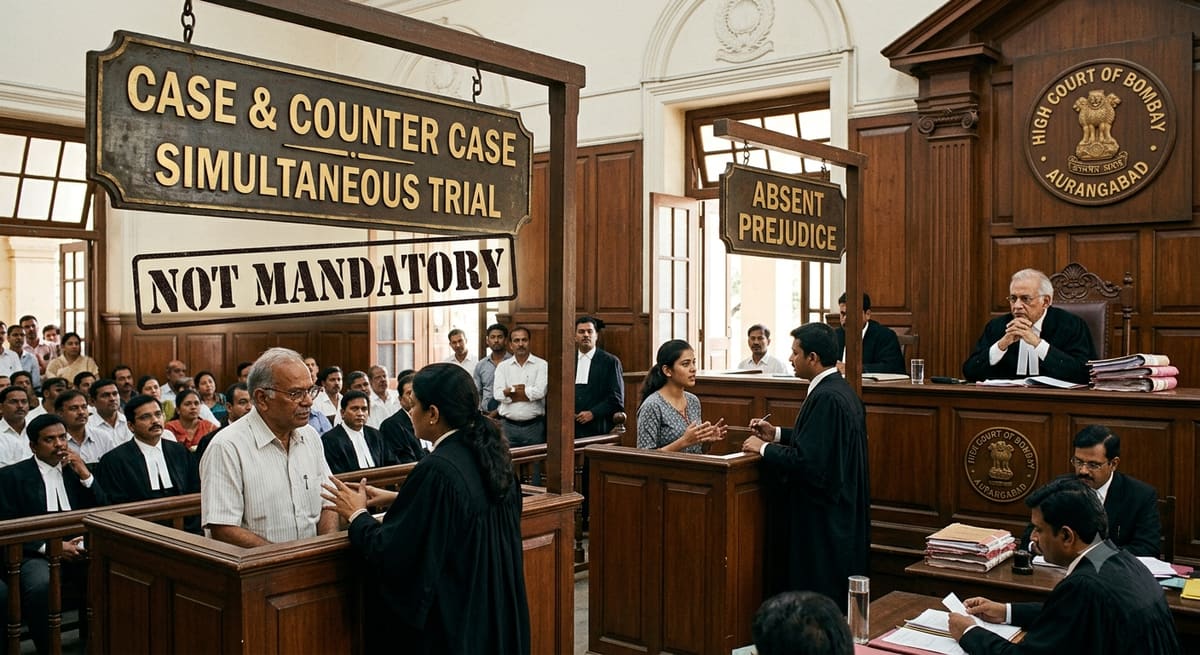
The Bombay High Court clarifies that procedural non-compliance in trying a criminal case and its counter case simultaneously does not invalidate proceedings unless the accused demonstrates actual prejudice. Section 465 CrPC operates as a curative provision, shielding convictions from technical defects when substantive justice is intact - a critical safeguard for prosecutors and trial courts navigating complex familial disputes.

Cenvat Credit | Procedural Invoice Defects (Address Mismatch, Non-ISD Registration) Cannot Deny Credit When Tax Paid & Services Rendered: CESTAT Hyderabad
Case Law Analysis
|Custom, Excise & Service Tax Tribunal

Cenvat Credit | Procedural Invoice Defects (Address Mismatch, Non-ISD Registration) Cannot Deny Credit When Tax Paid & Services Rendered: CESTAT Hyderabad

CESTAT Hyderabad rules that minor invoice irregularities - including incorrect billing address and failure to register as an Input Service Distributor - do not invalidate Cenvat credit if the services were actually received and service tax duly paid. This reinforces the principle that substantive compliance trumps technical non-compliance in tax credit claims, benefiting multi-unit businesses relying on centralized invoicing.

CPC Order 9 Rule 7 | Defence Cannot Be Struck Off for Procedural Irregularities Without Fault of Defendant : Punjab & Haryana HC
Case Law Analysis
|Punjab and Haryana High Court

CPC Order 9 Rule 7 | Defence Cannot Be Struck Off for Procedural Irregularities Without Fault of Defendant : Punjab & Haryana HC

The Punjab & Haryana High Court ruled that a defendant’s defence cannot be struck off under CPC Order 9 Rule 7 merely due to procedural irregularities by the court, unless the defendant is at fault. The court restored the defence upon payment of Rs. 20,000 costs, emphasizing that denial of a fair hearing violates principles of natural justice.

CrPC 156(3) | Procedural Irregularities Like Missing Affidavit Do Not Vitiate FIR or Charge Sheet: Madras HC
Case Law Analysis
|Madras High Court

CrPC 156(3) | Procedural Irregularities Like Missing Affidavit Do Not Vitiate FIR or Charge Sheet: Madras HC

Madras High Court rules that failure to file an affidavit under CrPC 156(3) is a mere procedural irregularity, not a jurisdictional defect, and does not invalidate the FIR or charge sheet. The court held that a prima facie case of poisoning and criminal conspiracy suffices to proceed to trial, reinforcing that technical lapses cannot override substantive justice.