Topic

non-bailable offence

A non-bailable offence in Indian law refers to serious crimes where bail is not a right and requires judicial discretion under the CrPC or special statutes.

7 articlesLatest July 2026
Section 376(2)(n) IPC | Bail Granted Where Consensual Relationship + Engagement History + Near-Complete Investigation Undermine Need for Custody : Kerala HC
Case Law Analysis
|Kerala High Court

Section 376(2)(n) IPC | Bail Granted Where Consensual Relationship + Engagement History + Near-Complete Investigation Undermine Need for Custody : Kerala HC

The Kerala High Court granted bail to an accused charged with aggravated rape under Section 376(2)(n) IPC, holding that a four-year consensual relationship followed by an engagement, coupled with an investigation nearly concluded and no criminal antecedents, negates the necessity for continued judicial custody. This ruling reinforces that the gravity of the offence alone cannot override constitutional protections when factual context and procedural progress favor liberty.

BNS Section 118(1) | Plastic Chair Not a 'Deadly Weapon' for Non-Bailable Assault: Kerala HC
Case Law Analysis
|Kerala High Court

BNS Section 118(1) | Plastic Chair Not a 'Deadly Weapon' for Non-Bailable Assault: Kerala HC

The Kerala High Court ruled that using a plastic chair in an assault does not meet the threshold of a 'deadly weapon' under BNS Section 118(1), making the offence bailable and setting a critical precedent for how everyday objects are interpreted in criminal liability. This clarifies the scope of non-bailable offences and protects accused persons from disproportionate pre-arrest detention over minor altercations.

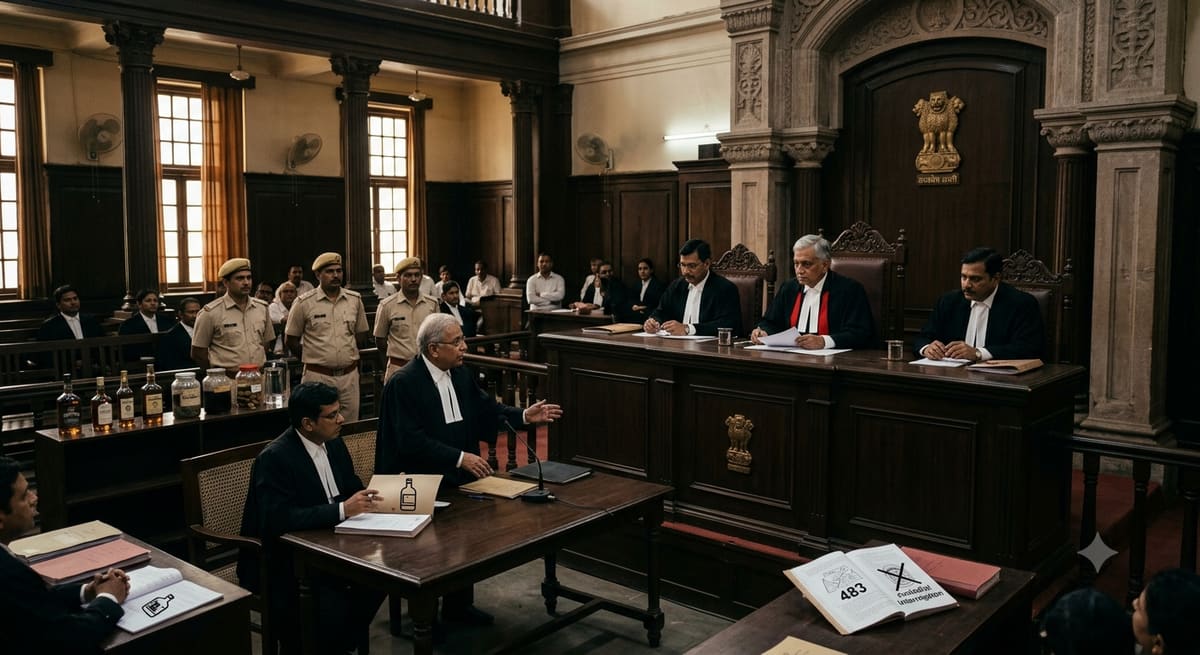
Section 483 BNSS | Custodial Interrogation Not Mandatory Post-Seizure in Poisonous Liquor Cases: MP HC Gwalior
Case Law Analysis
|Madhya Pradesh High Court

Section 483 BNSS | Custodial Interrogation Not Mandatory Post-Seizure in Poisonous Liquor Cases: MP HC Gwalior

The Madhya Pradesh High Court has ruled that once poisonous liquor is seized and investigation nears completion, continued custodial detention for interrogation is unjustified under Section 483 BNSS. This sets a critical precedent for bail in non-bailable excise offences, limiting arbitrary detention when evidence is secured and no further interrogation is needed to build the case.

CrPC Section 437(6) | Mandatory Bail After 60-Day Trial Delay from First Evidence Date: Allahabad HC
Case Law Analysis
|Allahabad High Court

CrPC Section 437(6) | Mandatory Bail After 60-Day Trial Delay from First Evidence Date: Allahabad HC

The Allahabad High Court ruled that an accused is statutorily entitled to bail if the trial remains unconcluded beyond 60 days from the first date fixed for taking evidence, reinforcing the right to liberty under CrPC Section 437(6). This holding mandates judicial compliance with statutory timelines, ensuring procedural fairness for undertrial prisoners.