The Kerala High Court has clarified that the use of a plastic chair in an assault does not automatically attract a non-bailable offence under Section 118(1) of the Bharatiya Nyaya Sanhita, 2023, where the instrument is unlikely to cause death. This ruling provides critical guidance on the interpretation of deadly weapons in pre-arrest bail applications under the new criminal code.
Background & Facts
The Dispute
The petitioners, Vipin Vinod and Mahendraraj N K, are accused persons in Crime No. 186/2026 registered at Aruvikkara Police Station, Thiruvananthapuram. They are charged with offences under Sections 115(2), 118(1), and 126(2) read with Section 3(5) of the Bharatiya Nyaya Sanhita, 2023 (BNS). The alleged incident occurred on 30.03.2026 at approximately 09:30 p.m. near the Kariyamkulam Sree Bhagavathy Temple. The prosecution claims that the petitioners, along with two other unidentified persons, assaulted the de facto complainant by beating him on the head and body, causing injuries.
Key Facts
- The alleged assault occurred on 30.03.2026 at approximately 09:30 p.m.
- The First Information Report (FIR) was registered on 21.04.2026.
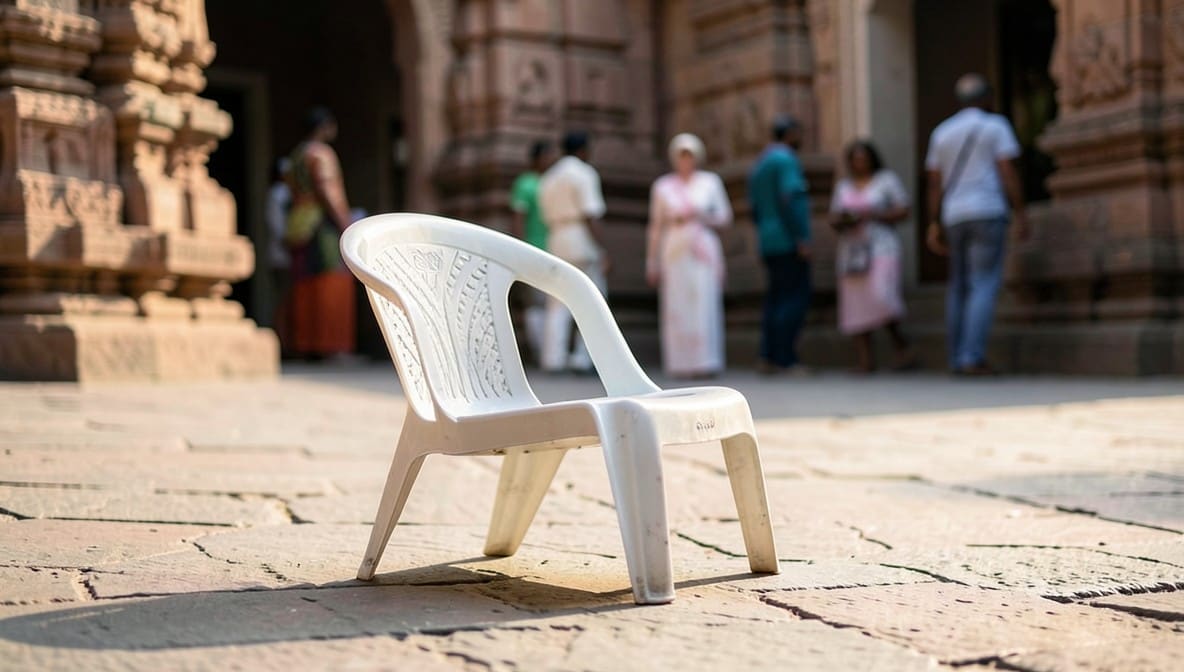
- The weapon allegedly used by the petitioners was a plastic chair.
- The complainant sustained injuries, including to the head, but no fatal injuries were reported.
- The petitioners have not been arrested as of the date of the bail application.
- An earlier bail application was dismissed by the Sessions Judge on 16.06.2026.
Procedural History
- 30.03.2026: Alleged assault incident occurs.
- 21.04.2026: FIR registered at Aruvikkara Police Station.
- 16.06.2026: Sessions Judge, Thiruvananthapuram, dismissed the petitioners’ earlier bail application (B.A. No. 1899/2026).
- 02.07.2026: Present bail application filed under Section 482 of the Bharatiya Nagarik Suraksha Sanhita, 2023 (BNSS).
The Parties' Positions
For the Applicants
The petitioners’ counsel contended that they are innocent and falsely implicated. No material evidence connects them to the alleged assault. The plastic chair used, if at all, cannot be classified as a weapon likely to cause death under Section 118(1) BNS. Custodial interrogation is unnecessary.
For the Respondent
The Public Prosecutor argued that the incident was a deliberate criminal act, and granting bail at this stage may hamper the investigation. The seriousness of the alleged injuries warranted denial of pre-arrest bail.
Relief Sought
The petitioners seek pre-arrest bail under Section 482 BNSS, praying for protection from arrest until the conclusion of investigation, subject to reasonable conditions.
The Legal Issue
The central question was whether the alleged use of a plastic chair in an assault satisfies the threshold under Section 118(1) of the Bharatiya Nyaya Sanhita, 2023 to constitute a non-bailable offence, where the instrument used is not inherently lethal and its capacity to cause death is doubtful.
Arguments Presented
For the Appellant/Petitioner
The petitioners’ counsel relied on the plain language of Section 118(1) BNS, which requires that the instrument used must be one that, if used as a weapon, is likely to cause death. A plastic chair, by its nature, is not designed or typically capable of causing fatal injury. The counsel cited State of Maharashtra v. Chandrakant to argue that courts must assess the actual likelihood of death, not merely the presence of an object. They emphasized that the complainant’s injuries were not life-threatening and that custodial interrogation was unnecessary.
For the Respondent/State
The Public Prosecutor contended that the nature of the assault, involving multiple accused and injuries to the head, demonstrated criminal intent and potential for grave harm. The prosecution argued that the classification of the weapon should not be narrowly interpreted and that the court must consider the totality of circumstances, including the number of accused and the location of injuries. They warned that granting bail might lead to witness tampering or destruction of evidence.
The Court's Analysis
The Court undertook a textual and contextual analysis of Section 118(1) BNS, which criminalizes voluntarily causing grievous hurt by using any instrument that, if used as a weapon, is likely to cause death. The Court observed that the provision requires a reasonable likelihood of death, not mere possibility or potential for harm. The plastic chair, as alleged, is a common household item not designed as a weapon. Its use in a scuffle, even if forceful, does not inherently meet the statutory threshold.
"It is doubtful whether the plastic chair used by the applicants for assaulting the de facto complainant would cause death if used as a weapon."
The Court further noted that the complainant’s injuries, while serious, were not described as life-threatening. The absence of any weapon recovery, medical reports indicating critical injury, or prior criminal antecedents of the petitioners weighed in their favour. The Court held that custodial interrogation was not essential for the investigation, given the availability of eyewitnesses and CCTV footage (if any), and that the petitioners’ cooperation could be secured through non-custodial conditions.
The Court distinguished this case from those involving knives, rods, or other inherently dangerous instruments. It emphasized that the legislature’s intent under BNS was to target serious violent offences, not minor altercations involving everyday objects.
The Verdict
The petitioners succeeded. The Court granted pre-arrest bail on the following conditions: (i) The applicants shall execute a personal bond of Rs. 1,00,000 each with two solvent sureties of the same amount; (ii) They shall fully cooperate with the investigation, including appearing for discovery if required; (iii) They shall appear before the investigating officer every Saturday between 10:00 a.m. and 11:00 a.m. until further orders; (iv) They shall not commit any similar offence; (v) They shall not contact or influence any prosecution witness; (vi) They shall not leave the State of Kerala without court permission; (vii) Any application for modification or cancellation of bail shall be filed in the jurisdictional court.
What This Means For Similar Cases
Plastic Objects Do Not Automatically Qualify as Deadly Weapons
- Practitioners must now argue that Section 118(1) BNS requires a realistic assessment of whether the object used is capable of causing death under normal circumstances, not merely its use in a violent act.
- Objects like chairs, bottles, or belts must be evaluated based on their design, material, and typical use - not the force applied.
Custodial Interrogation Is Not Presumed Necessary
- Courts may deny arrest where the accused are not flight risks, have no prior record, and the investigation can proceed without custodial interrogation.
- Pre-arrest bail under Section 482 BNSS is available even in non-bailable cases if the gravity of the offence is questionable.
Judicial Scrutiny of Prosecution Allegations Is Mandatory
- Courts must critically examine whether the alleged facts meet the statutory definition of a non-bailable offence before denying bail.
- Mere allegations without corroborative evidence of lethality are insufficient to justify denial of pre-arrest bail under BNS.