Topic

motor vehicle accident

Motor vehicle accident laws in India govern liability, compensation, and criminal liability for road crashes involving negligence or fatal outcomes. This page provides latest judgments from Indian courts on liability apportionment, sentencing under IPC Sections 279 and 304-A.

9 articlesLatest June 2026
Full Medical Costs + Non-Arbitrary Pain & Suffering Damages | Motor Accident Compensation Under MV Act : Karnataka HC
Case Law Analysis
|Karnataka High Court

Full Medical Costs + Non-Arbitrary Pain & Suffering Damages | Motor Accident Compensation Under MV Act : Karnataka HC

The Karnataka High Court ruled that compensation for medical expenses must be awarded in full even if partially reimbursed, and pain and suffering must be calibrated to the actual severity of injury, not capped by arbitrary benchmarks. This sets a critical precedent for claimants in motor accident cases, ensuring equitable redressal beyond mechanical compensation formulas.

Section 279 IPC | Failure to Maintain Safe Distance Under Rule 23 Road Rules Constitutes Rash Driving : HP HC
Case Law Analysis
|Himachal Pradesh High Court

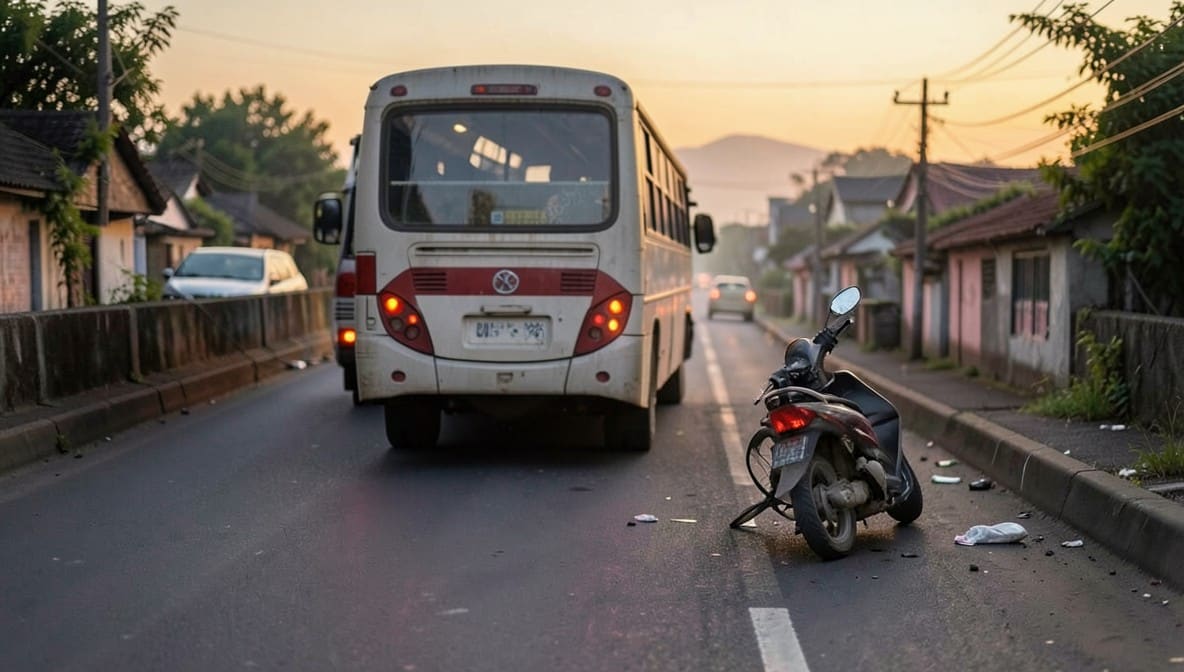
Section 279 IPC | Failure to Maintain Safe Distance Under Rule 23 Road Rules Constitutes Rash Driving : HP HC

HP High Court rules that a rear-end collision caused by failing to maintain safe distance, even when the front vehicle is stationary, amounts to rash driving under Section 279 IPC. The judgment overturns acquittal, clarifying that Rule 23 of the Road Rules Regulations imposes a strict duty on drivers to account for sudden stops, impacting criminal liability in traffic negligence cases.

Sarla Verma | Consortium Compensation Must Be Rs. 48,000 Per Claimant, Not Aggregate: Jharkhand HC
|Jharkhand High Court

Sarla Verma | Consortium Compensation Must Be Rs. 48,000 Per Claimant, Not Aggregate: Jharkhand HC

The Jharkhand High Court has held that consortium compensation under the Sarla Verma judgment must be awarded at Rs. 48,000 per claimant - not as a lump sum - overturning a Tribunal’s aggregate award of Rs. 30,000. This reinforces that insurers and claimants must treat each dependent’s loss of consortium as a distinct entitlement under the Motor Vehicles Act, significantly raising minimum compensation standards in fatal accident claims.

Section 166 Motor Vehicles Act | Consistent Eyewitness Testimony & FIR Suffice to Establish Negligence : CGHC Shifts Burden to Insurer to Prove License Invalidity
Case Law Analysis
|Chhattisgarh High Court

Section 166 Motor Vehicles Act | Consistent Eyewitness Testimony & FIR Suffice to Establish Negligence : CGHC Shifts Burden to Insurer to Prove License Invalidity

Chhattisgarh High Court rules that unchallenged eyewitness testimony and an FIR under IPC Sections 279 & 337 conclusively establish driver negligence, entitling the victim to compensation. The insurer must prove the driver's license was invalid to evade liability, reinforcing claimant rights under the Motor Vehicles Act.

Section 279/304-A IPC | Acquittal for Fatal Tractor Accident Due to Contradictory Evidence & CrPC Section 102 Delay : Karnataka HC
Case Law Analysis
|Karnataka High Court

Section 279/304-A IPC | Acquittal for Fatal Tractor Accident Due to Contradictory Evidence & CrPC Section 102 Delay : Karnataka HC

Karnataka High Court acquitted the accused in a fatal tractor accident case, citing unreliable motor vehicle reports, chain-of-custody violations, and a 22-day delay in seizure reporting under Section 102 CrPC. The ruling underscores that procedural lapses and contradictory prosecution evidence can nullify guilt even in fatal negligence cases.

Section 304-A IPC | Deterrent Sentencing Mandatory for Negligent Driving Causing Death : Himachal Pradesh HC Upholds Two-Year Imprisonment
Case Law Analysis
|Himachal Pradesh High Court

Section 304-A IPC | Deterrent Sentencing Mandatory for Negligent Driving Causing Death : Himachal Pradesh HC Upholds Two-Year Imprisonment

Himachal Pradesh High Court affirms that negligent driving leading to death under Section 304-A IPC warrants a deterrent sentence, rejecting the accused's challenge to concurrent findings of lower courts. The ruling underscores that admissions under Section 313 CrPC and established facts of reckless driving justify imprisonment, reinforcing road safety accountability.

Contributory Negligence Cannot Be Presumed for Unlicensed Riding or Pillion Passengers : Karnataka HC Reduces Apportionment to 10%
Case Law Analysis
|Karnataka High Court

Contributory Negligence Cannot Be Presumed for Unlicensed Riding or Pillion Passengers : Karnataka HC Reduces Apportionment to 10%

The Karnataka High Court ruled that merely riding without a licence or carrying pillion passengers does not automatically imply contributory negligence. The court reduced the claimant's negligence apportionment from 50% to 10% and enhanced compensation to ₹2.3 lakh, emphasizing that negligence must be proven, not presumed, under the Motor Vehicles Act.