The Karnataka High Court has set aside a conviction in a fatal tractor accident case, emphasizing that convictions cannot rest on speculative inferences, uncorroborated testimony, or procedurally tainted evidence. The judgment underscores the foundational principle that the prosecution must prove guilt beyond reasonable doubt, and failure to comply with mandatory statutory procedures renders the entire case unsustainable.
Background & Facts
The Dispute
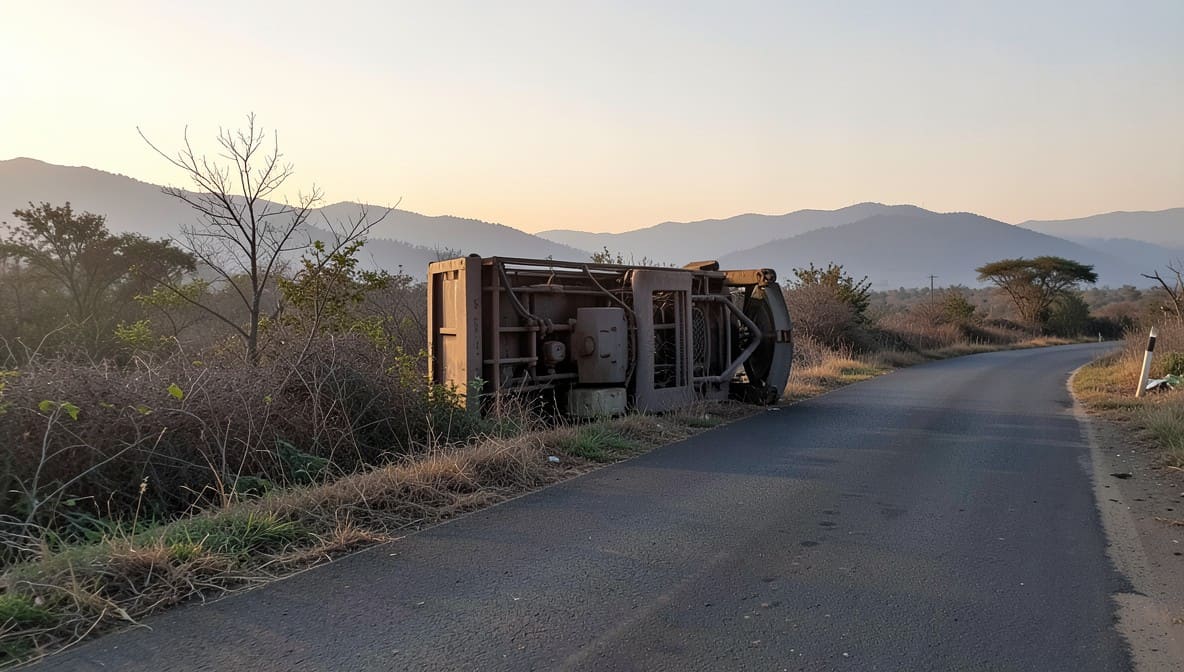
The case arose from a fatal road accident on 03.11.2008 at approximately 5:00 a.m. on the Sulepeth-Sedam Road, near the land of Sangappa Mastar. A tractor-trailer combination, bearing registration number KA-32/T-4778/79, overturned while returning from Bidar to Kondampalli village. The accident resulted in the death of one occupant, Nanjappa, and serious injuries to two others, including the complainant Chandrashekhar and the accused, Revanasiddappa. The prosecution alleged that the accused, who was driving the vehicle, did so in a rash and negligent manner, leading to the overturning.
Key Facts
- The tractor and trailer belonged to Sharanappa, whose son Basavaraj had passed away; the accused was his grandson and the driver.
- The complainant, Chandrashekhar, and two others - Sanjappa and Nagaraj - were occupants of the vehicle.
- The accident occurred at dawn; no independent eyewitnesses to the actual driving behavior were produced.
- The initial complaint (Ex.P1) lodged on 03.11.2008 did not name the accused as the driver.
- The accused’s name was added only on 24.11.2008, based on a further statement recorded 20 days after the incident.
- The vehicle was seized on 04.11.2008 by the Investigating Officer (IO), but no formal report of seizure was submitted to the Magistrate until 26.11.2008 - a delay of 22 days.
- The Motor Vehicle (MV) Inspector’s report (Ex.P5), dated 14.11.2008, concluded no mechanical defect caused the accident.
- The Property Form (P.F. No.52/2008) dated 04.11.2008 stated the vehicle was produced before the Sub-Inspector by P.C. No.536 on the same day.
- The MV Inspector claimed to have inspected the vehicle on 14.11.2008 at the accident spot, but the P.F. indicated the vehicle was already in police custody.
- PW.2 (Sangamesh) testified that the accident was caused by brake failure, contradicting the prosecution’s narrative and the MV report.
- PW.6, PW.7, and PW.8, who were attesters to key documents, turned hostile.
- The accused did not lead any defense evidence, but the prosecution failed to rebut the defense of brake failure.
Procedural History
- 03.11.2008: Accident occurred at approximately 5:00 a.m.
- 04.11.2008: Inquest panchanama and property seizure conducted; vehicle seized by IO.
- 12.11.2008: IO submitted requisition to MV Inspector.
- 14.11.2008: MV Inspector issued report (Ex.P5).
- 24.11.2008: Further statement recorded adding accused’s name.
- 26.11.2008: IO obtained Magistrate’s permission to retain seized vehicle - 22 days after seizure.
- 04.11.2008: Crime No.79/2008 registered.
- 06.02.2012: Trial Court (Principal Civil Judge & JMFC, Chincholi) convicted accused under Sections 279, 337, 338, and 304-A IPC; acquitted under Section 187 MV Act.
- 17.02.2021: IV Additional Sessions Judge, Kalaburagi (sitting at Sedam), dismissed appeal (Criminal Appeal No.29/2012) and confirmed conviction.
- 20.03.2024: Criminal Revision Petition No.200020 of 2024 filed before Karnataka High Court, Kalaburagi Bench.
- 12.03.2026: Case heard and reserved.
- 24.03.2026: Judgment pronounced.
The Parties' Positions
For the Petitioner
The accused, Revanasiddappa, contended that:
- His name was wrongly invoked in the case based on a delayed and uncorroborated statement.
- No witness identified him as the driver at the time of the accident.
- PW.2’s testimony on brake failure was not challenged by the prosecution, undermining the entire narrative of rash driving.
- The MV report (Ex.P5) was fabricated, as the vehicle was in police custody on the date of inspection.
- The 22-day delay in reporting seizure violated Section 102 CrPC.
- The prosecution failed to establish a chain of custody for the vehicle, rendering the MV report inadmissible.
For the Respondent
The State argued that:
- The trial and appellate courts had correctly appreciated the evidence.
- The accused was the driver, as per the complaint and charge sheet.
- The delay in reporting seizure was technical and did not affect the merits.
- The MV report was reliable and corroborated the prosecution’s case.
Relief Sought
The petitioner sought:
- Setting aside of the conviction order dated 06.02.2012 and the appellate order dated 17.02.2021.
- Acquittal of the accused on all charges under Sections 279, 337, 338, and 304-A IPC.
- Refund of any amount deposited with the trial court.
The Legal Issue
The central question was whether a conviction under Sections 279, 337, 338, and 304-A IPC can be sustained when the prosecution’s evidence is internally contradictory, key witnesses turn hostile, the forensic report is procedurally tainted, and mandatory compliance with Section 102 CrPC is violated.
Arguments Presented
For the Appellant/Petitioner
The petitioner’s counsel argued that the prosecution failed to establish the accused’s culpability beyond reasonable doubt. The testimony of PW.2 on brake failure was unchallenged and directly contradicted the prosecution’s theory of rash driving. The MV report (Ex.P5) was rendered unreliable due to the vehicle’s physical presence in police custody on the date of inspection, as per P.F. No.52/2008. The 22-day delay in reporting seizure to the Magistrate violated Section 102 CrPC, which mandates immediate reporting of seizure to the Magistrate. The failure to examine the author of Ex.P5 and the absence of any evidence on the vehicle’s transfer from the scene to the police station rendered the report speculative. The accused’s name was added only after 20 days, with no independent corroboration. The trial court’s reliance on the prosecution’s version, despite these defects, was legally unsustainable.
For the Respondent/State
The State contended that the trial and appellate courts had correctly weighed the evidence and that the accused’s identity as the driver was established through the complaint and charge sheet. The delay in reporting seizure was a procedural irregularity, not a fatal flaw. The MV report was admissible as it was prepared by a competent authority and formed part of the investigation. The prosecution’s case was consistent with the injuries and the circumstances of the accident.
The Court's Analysis
The Court undertook a meticulous review of the evidence and procedural record. It noted that the prosecution’s case rested entirely on circumstantial evidence, with no direct eyewitness to the act of rash driving. The testimony of PW.2, who stated the accident was due to brake failure, was not cross-examined or rebutted by the prosecution. The Court held that such unchallenged testimony, particularly from a prosecution witness, cannot be ignored and must be given due weight.
"The evidence of PW.2 which is not questioned by the prosecution itself demolish the entire evidence of the prosecution that this was accident occurred due to mechanical defect i.e., failure of brake."
The Court further found that the Motor Vehicle Inspector’s report (Ex.P5) was fundamentally flawed. The report claimed inspection occurred on 14.11.2008 at the accident spot, yet the Property Form (P.F. No.52/2008) clearly stated the vehicle was in police custody since 04.11.2008. This irreconcilable contradiction rendered the report worthless. The Court emphasized that the prosecution’s failure to examine the MV Inspector or explain the discrepancy destroyed the credibility of the entire forensic evidence.
The Court also held that the 22-day delay in reporting the seizure of the vehicle to the Magistrate under Section 102 CrPC was not a mere technicality but a substantive violation. The provision mandates that seized property be reported to the Magistrate without delay to prevent tampering and ensure transparency. The failure to comply with this mandatory requirement rendered the seizure and subsequent examination legally invalid.
The Court observed that the trial and appellate courts had failed to appreciate these critical contradictions and procedural lapses. The conviction was based on speculation, not proof. The Court reiterated the well-established principle that in criminal law, the benefit of doubt must go to the accused when the evidence is doubtful, inconsistent, or tainted.
The Verdict
The revision petition is allowed. The judgment of conviction and order on sentence dated 06.02.2012 passed by the Principal Civil Judge & JMFC, Chincholi, and confirmed by the IV Additional Sessions Judge on 17.02.2021, are set aside. The accused, Revanasiddappa, is acquitted of all charges under Sections 279, 337, 338, and 304-A IPC. The trial court is directed to refund any amount deposited by the accused after due identification. The Registry is directed to send a copy of this judgment along with the Trial Court Record to the concerned court.
What This Means For Similar Cases
Procedural Compliance Is Non-Negotiable in Criminal Cases
- Any failure to comply with mandatory provisions of Section 102 CrPC - such as delayed reporting of seized property to the Magistrate - renders the entire chain of evidence suspect.
- Courts must treat procedural violations not as technicalities but as potential indicators of evidentiary tampering or negligence.
- Practitioners must raise such violations at the earliest opportunity to challenge the admissibility of forensic or physical evidence.
Unchallenged Testimony Can Defeat Prosecution Cases
- When a prosecution witness gives testimony favorable to the accused and it is not cross-examined, courts must treat it as credible unless there is a compelling reason to reject it.
- Prosecutors must be prepared to confront and rebut all adverse testimony, even from their own witnesses.
- Failure to do so may result in acquittal, as the burden of proof remains on the prosecution throughout.
Forensic Reports Require Authenticity and Chain of Custody
- Forensic reports (e.g., MV inspections) are only as reliable as the evidence supporting their preparation.
- If the physical object examined is shown to have been in custody elsewhere, the report is inherently unreliable.
- Practitioners must always verify the timeline of seizure, custody, and inspection to challenge forensic conclusions.
- Always demand the attendance of the author of forensic reports for cross-examination.