The Karnataka High Court has significantly enhanced compensation in a motor vehicle accident claim, reinforcing that tribunals must comprehensively assess all heads of damage - including medical expenses, pain and suffering, and loss of amenities - when calculating just and reasonable awards under the Motor Vehicles Act. This judgment provides critical guidance on evidentiary standards and the obligation to award full relief where injuries are substantiated.
Background & Facts
The Dispute
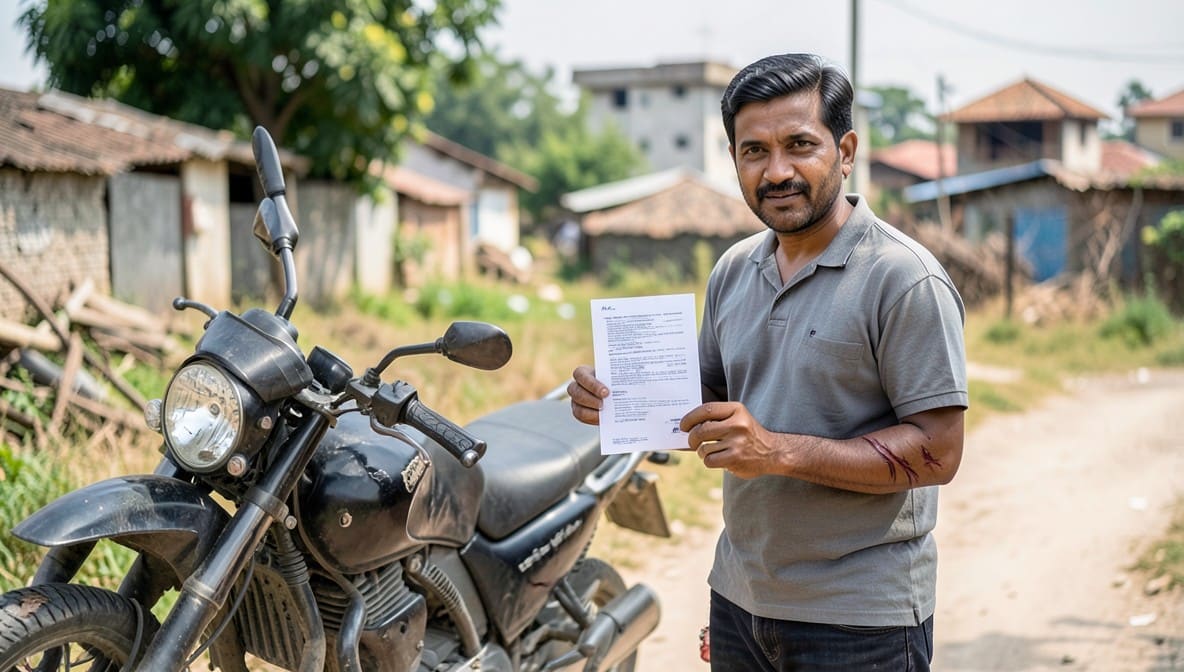
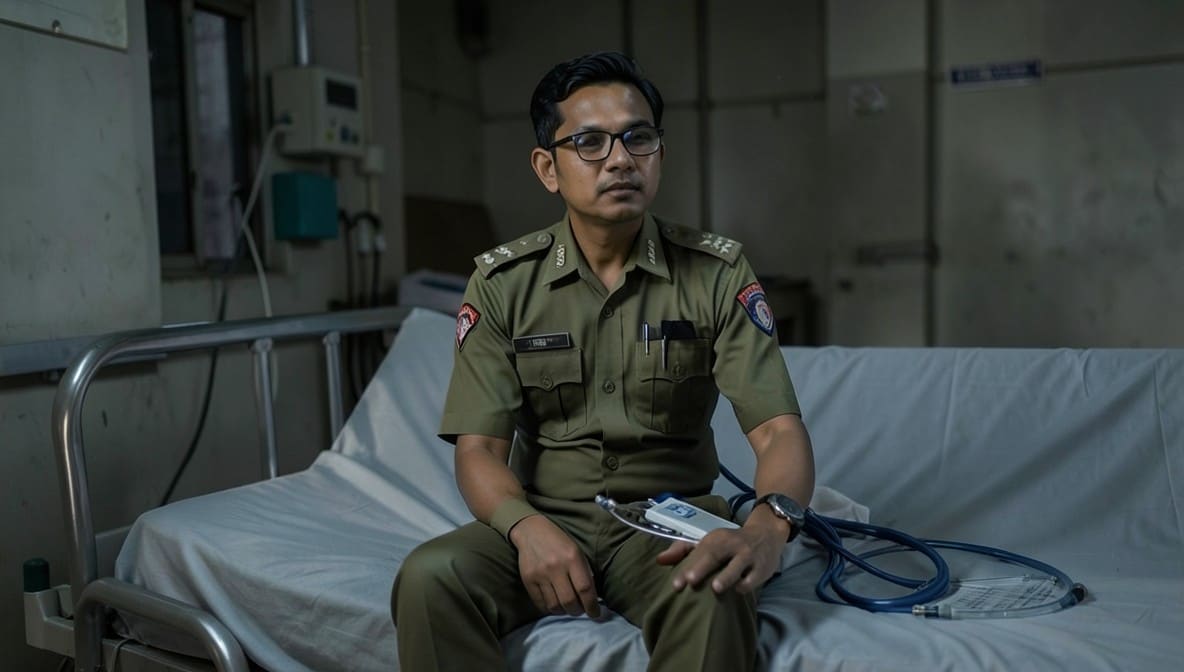
The appellant, Siddalingappa, a Head Constable with the Karnataka Police, was involved in a road accident on 22.01.2012 at approximately 11:40 p.m. near Aravind Nagar Cross, Hubli. He was riding his motorcycle (KA-25-EH-106) when the respondent No.1, Praddep, riding a motorcycle (KA-25-EH-1990), lost control while overtaking an auto-rickshaw and collided with the appellant’s vehicle. The impact caused severe injuries requiring hospitalization.
Key Facts
- The appellant was 52 years old at the time of the accident on 22.01.2012.
- He sustained multiple injuries including lacerated wounds, bilateral eyelid edema, contusions on the right fronto-parietal region and nose.
- A CT scan revealed a large extra-dural hemorrhage over the right fronto-parietal region and a fracture of the parietal bone.
- Three teeth were extracted as a direct result of the trauma, as documented in discharge summary Ex.P8.
- Total medical expenses incurred: Rs.27,243/-, supported by original bills marked as Ex.P15.
- The appellant received Rs.15,000/- as reimbursement from his employer, leaving a balance of Rs.12,243/- unclaimed.
- He was on earned leave for 176 days during treatment, resulting in loss of income.
- Medical reports and discharge summaries (Exs.P6 to P9) were admitted as evidence.
- The insurer (Respondent No.2) filed no oral evidence but submitted the policy as Ex.R1.
Procedural History
- 22.01.2012: Accident occurred.
- 2012: Claim petition filed before the Principal Senior Civil Judge and Additional MACT, Hubli (MVC No.454/2012).
- 05.06.2014: Tribunal awarded compensation of Rs.1,57,154/-.
- 17.03.2026: Miscellaneous First Appeal heard and reserved.
- 01.06.2026: Judgment delivered by the Karnataka High Court, Dharwad Bench.
Relief Sought
The appellant sought enhancement of compensation to Rs.5,20,000/- as claimed, specifically seeking:
- Full reimbursement of medical expenses (Rs.27,243/-)
- Increased award for pain and suffering
- Enhanced compensation for loss of amenities
- Adjustment for loss of future prospects due to 10% permanent disability
The Legal Issue
The central question was whether the Tribunal erred in under-awarding compensation under the heads of medical expenses, pain and suffering, and loss of amenities, despite clear medical evidence of grievous injury and documented expenditure.
Arguments Presented
For the Appellant
Sri Deepak Magnur contended that the Tribunal failed to award full compensation for medical expenses despite production of original bills (Ex.P15) and discharge summaries (Exs.P7 - P9). He argued that the Tribunal’s refusal to award the differential amount of Rs.12,243/- was legally untenable, as the claimant was not estopped from claiming the balance merely because he received partial reimbursement from his employer. He further submitted that the award of Rs.30,000/- for pain and suffering was grossly inadequate given the severity of injuries, including brain hemorrhage and skull fracture. He relied on Sarla Verma v. Delhi Transport Corporation to argue for liberal compensation under the head of loss of amenities.
For the Respondent
Sri B.M. Angadi, for the insurer, supported the Tribunal’s award, arguing that the claimant had not sufficiently pleaded the non-reimbursement of medical expenses and that the Tribunal had correctly assessed the quantum of compensation based on available evidence. He contended that the award under pain and suffering and loss of amenities was within reasonable bounds and should not be disturbed.
The Court's Analysis
The Court undertook a detailed review of the medical evidence and the Tribunal’s reasoning. It emphasized that the burden of proof in motor accident claims lies on the claimant, but once credible documentary evidence is produced, the tribunal must evaluate it fairly and not impose unreasonable evidentiary hurdles.
"The claimant has produced some bills and receipts as Ex.P15 claiming to be the documents supporting his claim of Rs.27,243/- towards the medical expenses... the documents produced as Ex.P15 appear to be the original bills."
The Court held that the Tribunal’s refusal to award the differential medical expense of Rs.12,243/- was legally flawed. Reimbursement from an employer does not extinguish the claimant’s right to claim the full amount from the tortfeasor’s insurer under Section 166 of the Motor Vehicles Act. The Court further noted that the Tribunal had overlooked the gravity of the injuries, particularly the brain hemorrhage and skull fracture, which warranted a substantial award under the head of pain and suffering.
Regarding loss of amenities, the Court observed that the Tribunal’s award of Rs.15,000/- was inadequate in light of the 10% permanent disability and the appellant’s age of 52 years. Citing National Insurance Co. Ltd. v. Laxmi Narain, the Court held that compensation for loss of amenities must reflect the impact on quality of life, not merely the percentage of disability.
The Court also found that the Tribunal’s awards for diet and transport expenses were unduly low given the prolonged treatment and nature of injuries. It increased this head from Rs.7,000/- to Rs.17,000/- as a reasonable estimate of incidental expenses.
The Court declined to interfere with the award under loss of income, as no error was demonstrated in the calculation based on 176 days of earned leave.
The Verdict
The appellant succeeded in part. The Court set aside the Tribunal’s award of Rs.1,57,154/- and enhanced the compensation to Rs.2,30,000/-, broken down as follows: Rs.1,05,154/- for loss of income, Rs.50,000/- for pain and suffering, Rs.30,000/- for loss of amenities, Rs.17,000/- for food, diet and incidental expenses, and Rs.27,243/- for medical expenses (rounded off to Rs.2,30,000/-). The enhanced compensation shall carry interest at 6% per annum from the date of the petition until realization. Respondent No.2 shall deposit the full amount, less any prior deposit, before the Tribunal within two months from the date of judgment.
What This Means For Similar Cases
Medical Expenses Must Be Fully Awarded, Even With Partial Reimbursement
- Claimants are entitled to the full cost of treatment from the insurer, regardless of partial reimbursement from employers or insurance schemes.
- Original medical bills (Ex.P15) are sufficient proof; no additional pleading is required to claim the differential.
- Tribunals cannot deny reimbursement claims on technical grounds when the injury and expenditure are medically documented.
Pain and Suffering Awards Must Reflect Injury Severity, Not Arbitrary Caps
- Awards under pain and suffering cannot be mechanically capped at Rs.30,000/- or lower.
- Brain hemorrhage, skull fracture, and tooth loss warrant significantly higher compensation.
- Courts must consider the psychological and physical trauma, not just the percentage of disability.
Loss of Amenities Requires Holistic Assessment
- Loss of amenities is not merely a function of disability percentage.
- Age, occupation, and impact on daily life must be factored in.
- Awards under this head must be liberal, consistent with Sarla Verma and National Insurance Co. Ltd. v. Laxmi Narain.