Topic

eviction suit

An eviction suit in Indian law is a legal proceeding to remove a tenant from property, governed by rent control laws, the Code of Civil Procedure, and limitation statutes.

20 articlesLatest September 2026
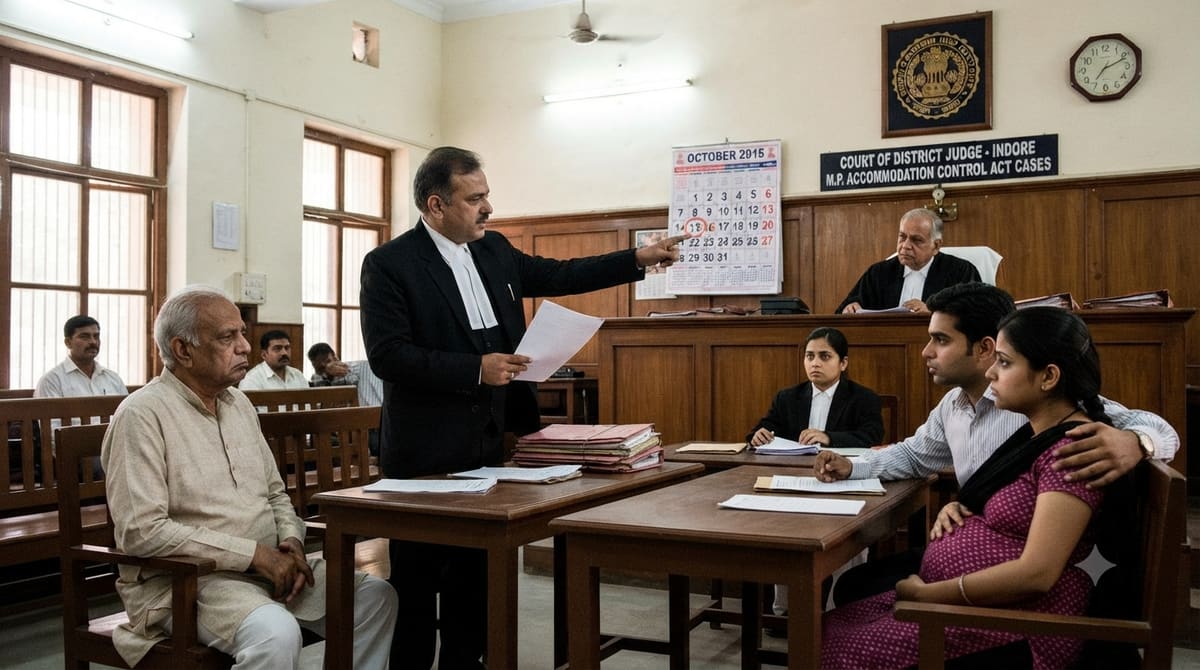
M.P. Accommodation Control Act Section 16(1)(g) | Bonafide Need for Eviction Must Be Assessed as of Suit Filing Date, Not Subsequent Marriage : MP HC
Case Law Analysis
|Madhya Pradesh High Court

M.P. Accommodation Control Act Section 16(1)(g) | Bonafide Need for Eviction Must Be Assessed as of Suit Filing Date, Not Subsequent Marriage : MP HC

The Madhya Pradesh High Court has ruled that a landlord's bonafide need to evict a tenant for personal use - such as starting a business for a daughter - must be evaluated solely as of the date the eviction suit was filed. This clarifies that post-filing events like marriage or changed family circumstances cannot be used to validate or invalidate the need, ensuring legal certainty for landlords and tenants alike.

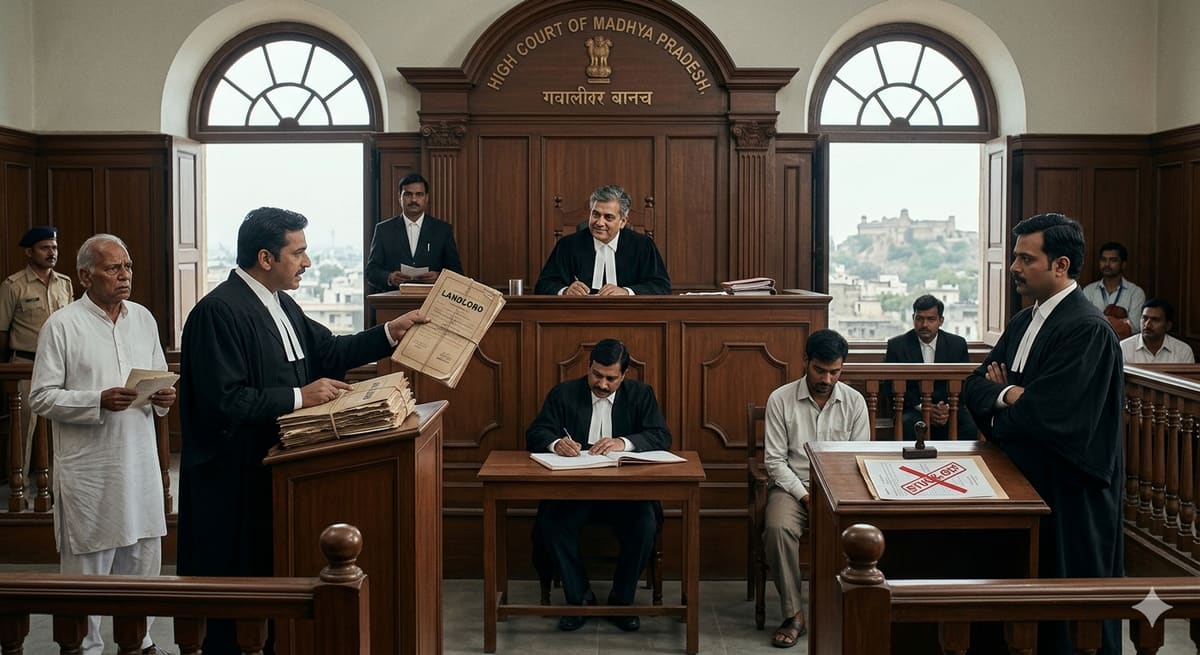
M.P. Accommodation Control Act Section 12 | Plaintiff Must Prove Landlord-Tenant Relationship Even If Defendant's Defence Is Struck Off : MP HC Gwalior
Case Law Analysis
|Madhya Pradesh High Court

M.P. Accommodation Control Act Section 12 | Plaintiff Must Prove Landlord-Tenant Relationship Even If Defendant's Defence Is Struck Off : MP HC Gwalior

The Madhya Pradesh High Court has ruled that under the M.P. Accommodation Control Act, 1961, the burden to establish a landlord-tenant relationship rests solely on the plaintiff - regardless of whether the defendant's written statement is struck off. This clarifies that procedural defaults do not shift the evidentiary burden, protecting tenants from summary eviction without proof of tenancy.

Estoppel Bars Licensee from Denying Locus of Partnership Firm as Lessor | Even When Title Is in Partner’s Name: Bombay HC
Case Law Analysis
|Bombay High Court

Estoppel Bars Licensee from Denying Locus of Partnership Firm as Lessor | Even When Title Is in Partner’s Name: Bombay HC

The Bombay High Court ruled that a licensee who previously acknowledged a partnership firm as the licensor cannot later deny its legal standing to file an eviction suit, even if the property title rests solely with an individual partner. This reinforces that admissions in lease dealings bind licensees under estoppel, protecting partnership entities from tactical legal reversals in eviction proceedings.

Bona Fide Requirement for Eviction Under Rent Control Act | Concurrent Findings Not Reappreciable Under Section 115 CPC : Gauhati HC
Case Law Analysis
|Gauhati High Court

Bona Fide Requirement for Eviction Under Rent Control Act | Concurrent Findings Not Reappreciable Under Section 115 CPC : Gauhati HC

Gauhati High Court rules that a landlord’s bona fide requirement for self-employment suffices for eviction under the Rent Control Act, even without documentary proof of business plans. The court affirms that revisional jurisdiction under Section 115 CPC cannot re-examine concurrent findings unless they are perverse, setting a precedent for eviction disputes in Assam and neighboring states.

Section 144 CPC | Restitution of Possession Mandatory After Ex Parte Decree Set Aside : AP HC Remands for Compliance
Case Law Analysis
|Andhra Pradesh High Court

Section 144 CPC | Restitution of Possession Mandatory After Ex Parte Decree Set Aside : AP HC Remands for Compliance

The Andhra Pradesh High Court ruled that restitution under Section 144 CPC is not discretionary but mandatory when possession is taken pursuant to an ex parte decree later set aside. The court directed fresh orders after examining execution records, reinforcing that parties must be restored to their original position without delay.

Section 12(2) Bombay Rent Act | Deposit in Standard Rent Application Validates Compliance with Demand Notice, Bars Eviction: Bombay HC
Case Law Analysis
|Bombay High Court

Section 12(2) Bombay Rent Act | Deposit in Standard Rent Application Validates Compliance with Demand Notice, Bars Eviction: Bombay HC

Bombay High Court rules that a tenant’s deposit of rent in a standard rent application under Section 11(3) of the Bombay Rent Act fulfills the requirement of a valid tender under Section 12(2), effectively blocking landlord eviction suits for arrears. This holding reinforces tenant protections by clarifying procedural compliance in rent disputes.

Order XLI Rule 33 CPC | Appellate Court Can Adjudicate Unchallenged Eviction Grounds If Evidence Supports : Calcutta HC
Case Law Analysis
|Calcutta High Court

Order XLI Rule 33 CPC | Appellate Court Can Adjudicate Unchallenged Eviction Grounds If Evidence Supports : Calcutta HC

The Calcutta High Court reinforced that appellate courts may independently adjudicate unchallenged eviction grounds under the West Bengal Premises Tenancy Act if evidence supports them, even when the trial court declined to rule on those grounds. This ruling clarifies the scope of appellate powers in tenancy disputes, ensuring substantive justice over procedural technicalities.

Unlawful Subletting as Continuing Wrong | 12-Year Limitation Period Under Section 22, Limitation Act Applies Until Possession Ceases : Bombay HC
Case Law Analysis
|Bombay High Court

Unlawful Subletting as Continuing Wrong | 12-Year Limitation Period Under Section 22, Limitation Act Applies Until Possession Ceases : Bombay HC

The Bombay High Court has ruled that unlawful subletting constitutes a continuing wrong under Section 22 of the Limitation Act, 1963, meaning the 12-year limitation period for eviction begins only when the subtenant vacates the premises. This empowers landlords to pursue eviction even decades after initial unauthorized occupation, provided possession persists, and reshapes strategy in long-standing tenancy disputes.

Landlord-Tenant Relationship Must Be Proven by Rent Payment or Agreement | No Ownership Alone Suffices for Eviction Jurisdiction: Bombay HC
Case Law Analysis
|Bombay High Court

Landlord-Tenant Relationship Must Be Proven by Rent Payment or Agreement | No Ownership Alone Suffices for Eviction Jurisdiction: Bombay HC

The Bombay High Court has ruled that mere ownership of property is insufficient to establish jurisdiction in eviction suits under rent control laws; without evidence of a rent payment history or a formal tenancy agreement, the Small Causes Court lacks authority to adjudicate. This clarifies a critical jurisdictional barrier for landlords and protects long-term occupants from baseless eviction claims grounded solely in title.

Section 213 Indian Succession Act | Eviction Suit Not Barred for Legatee Acting as Landlord, Not Title Holder : Bombay HC
Case Law Analysis
|Bombay High Court

Section 213 Indian Succession Act | Eviction Suit Not Barred for Legatee Acting as Landlord, Not Title Holder : Bombay HC

The Bombay High Court has ruled that a legatee need not obtain probate to file an eviction suit if the claim rests solely on landlord-tenant rights under a lease, not on ownership derived from a will. This clarifies that Section 213 does not extend to tenancy disputes, protecting tenants from procedural delays while affirming the separation between succession law and rent control remedies.

Section 151 CPC | Last Chance to File Written Statement in Eviction Suit Granted on Payment of Cost: MP HC Jabalpur
Case Law Analysis
|Madhya Pradesh High Court

Section 151 CPC | Last Chance to File Written Statement in Eviction Suit Granted on Payment of Cost: MP HC Jabalpur

The Madhya Pradesh High Court has affirmed that courts may invoke inherent powers under Section 151 CPC to grant a final opportunity to a tenant to file a written statement in an eviction suit, provided a substantial cost is paid to the plaintiff. This reinforces equitable relief in possession disputes where procedural lapses do not override the right to be heard, especially when possession is at stake.

Attornment Upon Property Purchase Establishes Tenancy Under M.P. Accommodation Control Act | No Direct Induction Required : MP HC Gwalior
Case Law Analysis
|Madhya Pradesh High Court

Attornment Upon Property Purchase Establishes Tenancy Under M.P. Accommodation Control Act | No Direct Induction Required : MP HC Gwalior

The Madhya Pradesh High Court holds that when a tenant continues paying rent to a new owner after purchase, attornment alone suffices to establish legal tenancy-even without formal induction. This clarifies that rent payment to the transferee, not just original landlord-tenant agreements, creates protected tenancy rights under the Act, impacting eviction suits nationwide where property changes hands.

Section 13 U.P. Rent Act Exemption | Trust-Owned Reconstructed Property Loses Statutory Tenancy Protections Post-1984: Uttarakhand HC
Case Law Analysis
|Uttarakhand High Court

Section 13 U.P. Rent Act Exemption | Trust-Owned Reconstructed Property Loses Statutory Tenancy Protections Post-1984: Uttarakhand HC

Uttarakhand High Court rules that trust-owned properties reconstructed after 1984 are exempt from the U.P. Rent Act, even if the original structure predated the cutoff. The tenant’s admission of trust ownership estopped any challenge to the exemption, reinforcing landlords’ eviction rights over charitable or religious properties.