The Uttarakhand High Court has clarified that properties owned by religious and charitable trusts, which have been substantially reconstructed and reassessed after 1984, are exempt from the protections of the U.P. Rent Control Act, even if the original structure predates the statute. This ruling reinforces the principle that statutory exemptions for trust properties hinge on current use and post-reconstruction status, not historical ownership.
Background & Facts
The Dispute
The plaintiffs, Udasin Karshni Narain Ashram Trust and its Managing Trustee and Manager, filed a suit before the Small Cause Court seeking eviction of the defendant, Mahendra Taneja, from two shops (Shop No. 4 and 5) located in Haridwar. The suit sought recovery of arrears of rent, mesne profits, and possession. The plaintiffs alleged that rent had been paid only up to 31.07.2012, and despite a legal notice dated 22.09.2012 terminating the tenancy, the defendant refused to vacate or pay outstanding dues.
Key Facts
- The property in question consists of two shops originally part of a larger complex owned by the Udasin Karshni Narain Ashram Trust.
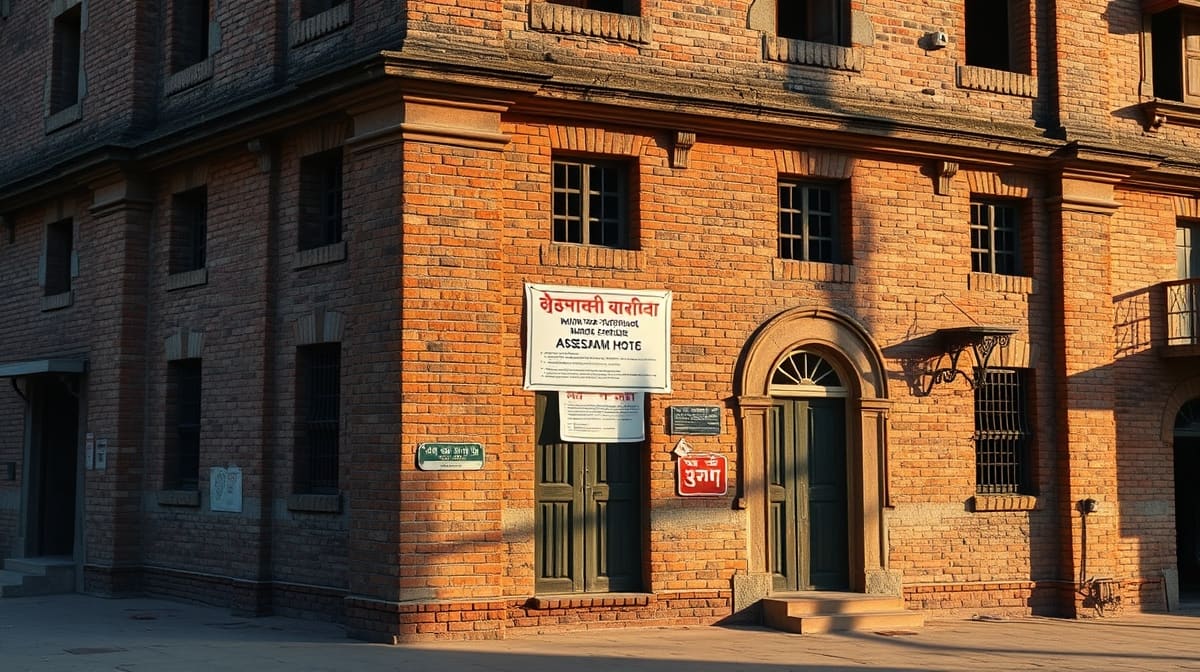
- The original structure was built prior to 1984, but the Trust obtained sanction for reconstruction from the Municipal Corporation on 23.10.1989.
- After reconstruction, the Municipal Corporation reassessed the property tax effective 01.04.2001, recording the Trust as the owner and the defendant as tenant of the two shops.
- The defendant paid rent to Ambadutt Pant, the Manager of the Trust, until 31.07.2012.
- Thereafter, the defendant attempted to pay rent via money order, which the plaintiffs refused to accept, citing non-compliance with payment procedures.
- The defendant admitted in his written statement that the property belonged to the "Udasin Karshni Narain Ashram Trust" and that Ambadutt Pant received rent on its behalf.
- The plaintiffs filed the Original Trust Deed dated 13.07.1930 and the Reconstitution Deed dated 06.01.1988, both of which were marked as exhibits.
- The defendant did not produce any documentary evidence to support his claim that the property was old construction or that he had deposited rent as required under Section 20(4) of the U.P. Act No. 13 of 1972.
- The defendant did not appear as a witness or call any defense witness.
Procedural History
- 22.09.2012: Legal notice of termination of tenancy served via counsel; defendant refused to accept it.
- 01.04.2015: Suit filed before the Small Cause Court (SCC Suit No. 05 of 2014).
- 31.08.2022: SCC dismissed the suit, holding that the property fell under the U.P. Rent Control Act and that the Trust failed to prove title.
- 27.03.2023: Civil Revision No. 97 of 2022 filed before the Uttarakhand High Court.
- 27.03.2026: Judgment reserved and delivered by Justice Rakesh Thapliyal.
The Parties' Positions
Plaintiffs / Revisionists:
- Argued that the property was reconstructed after 1989 and reassessed in 2001, making it exempt from the U.P. Rent Control Act under Section 2(1)(bb).
- Relied on the Reconstitution Deed, Municipal Assessment Register, and admission by the defendant that the property belonged to the Trust.
- Contended that the defendant’s failure to deposit rent under Order XV Rule 5 CPC and Section 20(4) of the U.P. Act rendered his defense invalid.
Defendant / Respondent:
- Claimed the property was old construction dating to before 1984 and therefore subject to the U.P. Rent Control Act.
- Denied that the Trust was the lawful owner, asserting Ambadutt Pant was the real landlord.
- Argued that no valid notice of termination was served.
- Did not produce any evidence to substantiate claims of old assessment or rent deposits.
Relief Sought
The revisionists sought:
- Setting aside of the SCC judgment dated 31.08.2022.
- Decree for eviction and possession of the two shops.
- Recovery of arrears of rent of Rs. 4,110.
- Mesne profits of Rs. 86,400 from 01.01.2012 to 05.01.2014.
- Rs. 200 per month for unauthorized occupation from the date of filing until actual possession.
The Legal Issue
The central question was whether a property owned by a religious and charitable trust, which was substantially reconstructed after 1989 and reassessed by the Municipal Corporation in 2001, remains subject to the U.P. Rent Control Act, 1972, despite the statutory exemption under Section 2(1)(bb) for trust properties.
Arguments Presented
For the Appellant/Petitioner
Mr. Rakesh Khanna, Senior Advocate, argued that:
- The property was not the original pre-1984 structure but a new construction after 1989, evidenced by the Municipal assessment register dated 01.04.2001.
- The Original Trust Deed and Reconstitution Deed were duly proved under Section 90 of the Indian Evidence Act.
- The defendant’s written statement admitted the property belonged to the Trust and that rent was paid to Ambadutt Pant as its Manager, invoking Section 116 of the Evidence Act to estop him from denying the Trust’s ownership.
- The defendant failed to deposit rent under Order XV Rule 5 CPC or Section 20(4) of the U.P. Act, despite having the means and opportunity.
- Relied on Chowdamma v. Vankatappa and Vidhyadhar v. Manikrao to argue that unchallenged testimony and absence of defense evidence weigh heavily against the defendant.
- Cited Asha Rani Gupta v. Vineet Kumar to emphasize that denial of landlord-tenant relationship does not absolve a tenant from depositing rent.
For the Respondent/State
Mr. Piyush Garg, counsel for the defendant, contended that:
- The property was an old structure built before 1984 and thus squarely covered by the U.P. Rent Control Act.
- The Trust failed to prove title, as the Trust Deed only appointed trustees and did not transfer ownership.
- No valid notice of termination was served.
- The plaintiffs did not prove the Trust’s religious or charitable character.
- Revision under Section 25 of the Provincial Small Causes Court Act cannot be used to reappreciate evidence.
- Relied on Union of India v. Ibrahimuddin and Sanjay Agarwal v. DJ, Haridwar to argue that factual findings of the trial court are final.
The Court's Analysis
The Court conducted a meticulous review of the documentary evidence and the defendant’s admissions. It emphasized that the defendant’s written statement explicitly acknowledged that the property belonged to the "Udasin Karshni Narain Ashram Trust" and that rent was received by Ambadutt Pant as its Manager. This admission, under Section 116 of the Indian Evidence Act, estopped the defendant from later claiming Ambadutt Pant was the true owner.
"The defendant himself admits that the property in question is the property of the Trust namely ‘Udasin Karshni Narain Ashram Trust’ and therefore, the contention that property in question is not Trust Property is thoroughly misconceived and misleading."
The Court further noted that the Municipal Corporation’s assessment register dated 01.04.2001, which recorded the Trust as owner and the defendant as tenant, was a public document and stood unchallenged. The defendant failed to produce any assessment records from 1971 - 1987 to substantiate his claim of old construction.
The Court rejected the defendant’s argument that the Trust Deed was merely an appointment document and not a transfer instrument. It held that under Section 75 of the Indian Trusts Act, 1882, the property gifted by the 1930 deed vested in the Trust upon reconstitution in 1988, and the Trust’s management rights were sufficient to maintain a suit for eviction.
The Court also emphasized that the defendant’s failure to appear as a witness or lead any evidence, coupled with his non-compliance with Order XV Rule 5 CPC, rendered his defense legally untenable. The Court cited Chowdamma v. Vankatappa to affirm that unchallenged testimony and absence of probative material from the defendant tilt the balance in favor of the plaintiff.
"When measured against the touchstone of preponderance of probabilities, the scales unambiguously tilt in favour of the plaintiffs."
The Court concluded that the SCC erred in dismissing the suit on the basis of an outdated assessment and ignoring the 2001 reassessment. Since the property was reconstructed and reassessed after 1984, it fell outside the purview of the U.P. Rent Control Act under Section 2(1)(bb), which exempts properties owned by religious and charitable trusts.
The Verdict
The revision was allowed. The judgment and decree of the Small Cause Court dated 31.08.2022 were set aside. The Court directed the defendant to vacate the two shops within four weeks from the date of this judgment. The plaintiffs are entitled to recover arrears of rent of Rs. 4,110 and mesne profits of Rs. 86,400 for the period 01.01.2012 to 05.01.2014, along with Rs. 200 per month for unauthorized occupation from 06.01.2014 until actual possession. No costs were awarded.
What This Means For Similar Cases
Trust Property Exemption Is Based on Current Status, Not Historical Origin
- Practitioners must now establish whether a trust property has undergone reconstruction or substantial alteration after 1984.
- Municipal assessment records post-reconstruction are decisive evidence to claim exemption under Section 2(1)(bb) of the U.P. Rent Control Act.
- A mere assertion of old construction without documentary proof will not suffice.
Admission by Defendant Can Estop Future Denial of Ownership
- Where a tenant admits in writing that the landlord is a trust, Section 116 of the Evidence Act bars subsequent denial of that fact.
- This principle applies even if the trust deed is not a conveyance instrument; management rights and possession are sufficient for eviction suits.
Failure to Deposit Rent Under CPC Renders Defense Invalid
- Tenants cannot rely on denial of landlord status to avoid depositing rent under Order XV Rule 5 CPC.
- Courts will not permit a tenant to occupy property without depositing rent, even during pendency of litigation, unless lawful payment is proven.
- Practitioners should routinely raise non-compliance with Order XV Rule 5 as a ground for summary relief.
Documentary Evidence Trumps Oral Denials
-
In landlord-tenant disputes involving trusts, documentary evidence (assessment registers, trust deeds, payment receipts) carries greater weight than oral denials.
-
Absence of defense witnesses or documentary rebuttal will be viewed as failure to discharge burden of proof.
-
Always obtain and mark Municipal assessment records post-reconstruction as key evidence.
-
Use admissions in written statements to invoke Section 116 of the Evidence Act.
-
File applications under Order XV Rule 5 CPC to compel rent deposits in all pending suits.