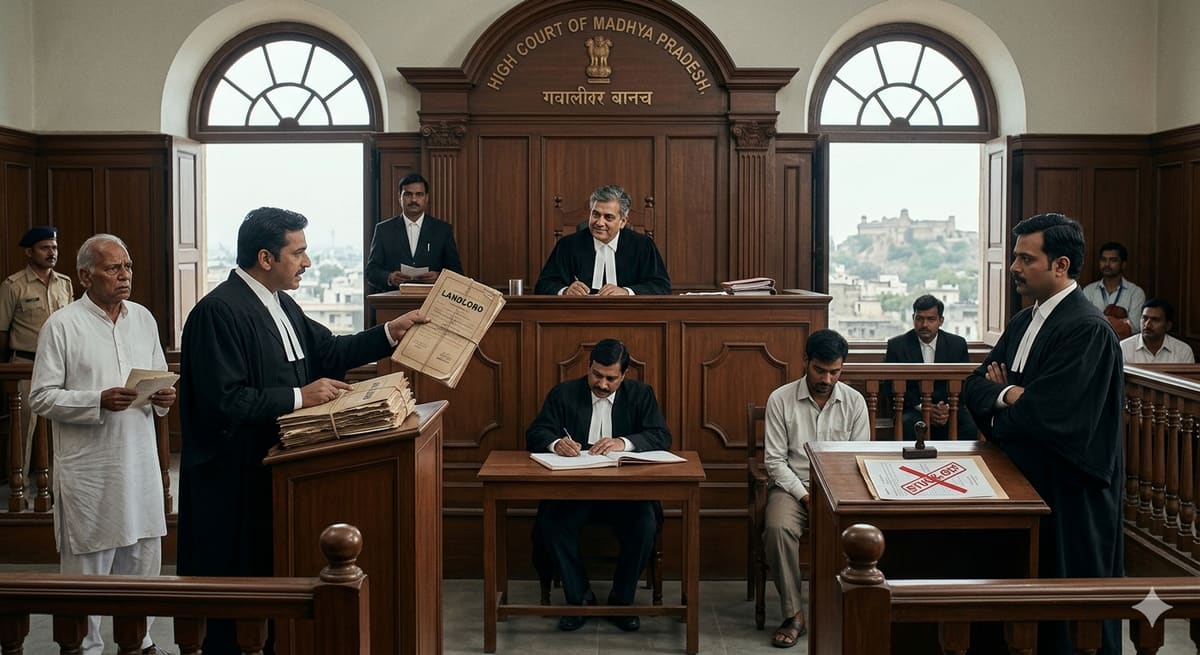
The Madhya Pradesh High Court has reaffirmed the equitable power of courts under Section 151 of the Code of Civil Procedure to grant last opportunities in civil litigation, particularly where fundamental rights to defense are at stake in eviction matters. In a pragmatic exercise of inherent jurisdiction, the Court permitted a tenant to file a written statement despite prior procedural defaults, conditioning relief on payment of costs.
Background & Facts
The Dispute
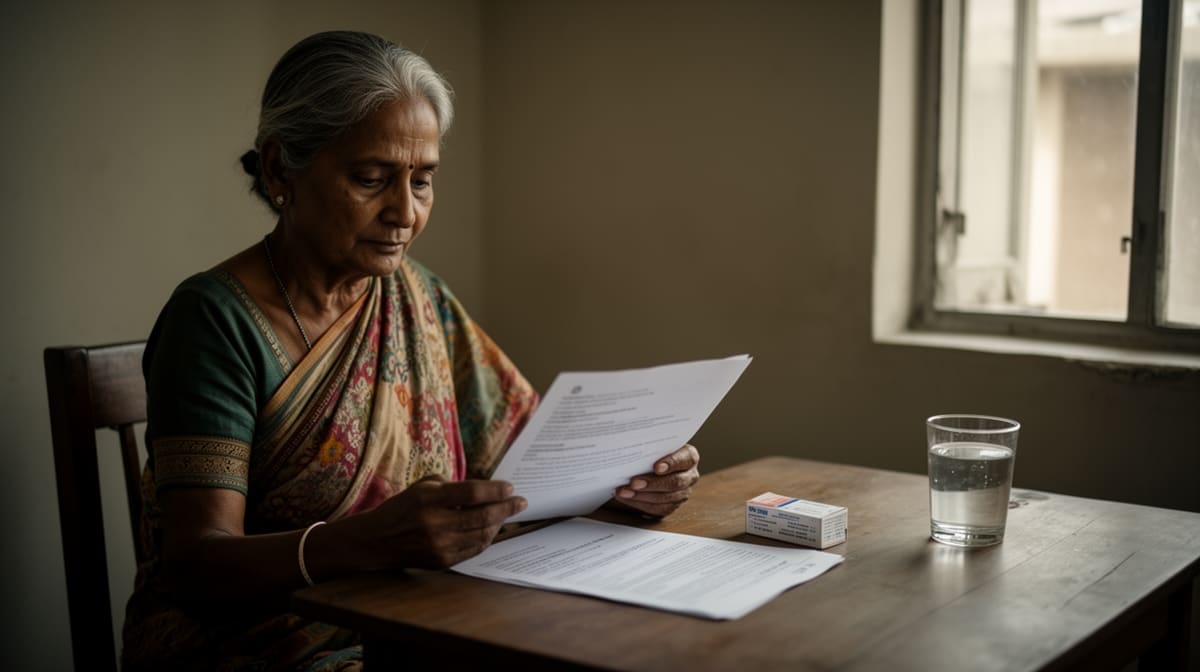
The present matter arises from an eviction suit filed by the plaintiff against the defendant, Shri Sailendra Jain, a tenant, seeking possession of residential property. The defendant failed to file a written statement within the stipulated time despite multiple opportunities.
Key Facts
- The suit was filed in the Trial Court seeking eviction of the tenant on grounds of default and unauthorized occupation
- The defendant was granted an initial opportunity to file written statement
- On 28.02.2024, the Trial Court granted a final opportunity to file written statement, imposing a cost of Rs. 1,000/-
- The defendant failed to file the written statement by the deadline
- On 11.03.2024, the Trial Court closed the defendant’s right to file written statement
- On 02.04.2024, the defendant filed an application seeking extension, alleging non-receipt of complete and certified copy of the plaint
- The defendant claimed that without the complete plaint, he could not properly draft his defense
- A certified copy of the plaint was subsequently obtained by the defendant
- On 12.12.2024, the Trial Court rejected the application for reopening the right to file written statement
- The defendant filed the present petition under Article 227 of the Constitution challenging the Trial Court’s order
Procedural History
- Date of filing of suit: Not specified in judgment
- 28.02.2024: Trial Court grants last opportunity to file written statement with cost of Rs. 1,000/-
- 11.03.2024: Right to file written statement closed due to non-compliance
- 02.04.2024: Defendant files application seeking extension on grounds of incomplete plaint
- 12.12.2024: Trial Court rejects application for reopening
- 05.04.2025: Writ petition filed before the High Court of Madhya Pradesh at Jabalpur
- 08.04.2026: Judgment delivered by Hon’ble Justice Vivek Jain
Relief Sought
The petitioner sought setting aside of the Trial Court’s order dated 12.12.2024 and direction to permit filing of written statement, subject to payment of cost.
The Legal Issue
The central question was whether the High Court, under its inherent powers under Section 151 of the Code of Civil Procedure, can grant a last opportunity to file a written statement in an eviction suit after the Trial Court has closed the right, particularly where the defendant claims lack of access to the complete plaint.
Arguments Presented
For the Petitioner
The petitioner’s counsel argued that the failure to file the written statement was not wilful but stemmed from the non-supply of a complete certified copy of the plaint, which is essential to frame a proper defense. He relied on the principle that courts must ensure justice is not denied due to technicalities, especially in matters affecting possession of residence. He emphasized that Section 151 CPC empowers courts to act in the interest of justice and that eviction proceedings, being quasi-criminal in nature, demand liberal interpretation of procedural safeguards.
For the Respondent
The respondent did not appear or file any written submission. The Court proceeded ex parte, relying on the record and the Trial Court’s reasoning for rejecting the application.
The Court's Analysis
The Court acknowledged that the petitioner’s conduct in delaying the filing of the written statement did not inspire confidence. However, it emphasized that the nature of the suit - being one for eviction - directly affects the petitioner’s right to shelter, a facet of the right to life under Article 21 of the Constitution. The Court observed that procedural rigidity must yield to substantive justice when fundamental rights are implicated.
"Looking to the position that the matter relates to the question of possession of Petitioner in the property, therefore, this Court is inclined to grant one last opportunity to the Petitioner to file written statement."
The Court distinguished between mere delay and genuine impediment to defense. While the petitioner had multiple chances, the claim of incomplete plaint - though belated - could not be dismissed outright, particularly in the absence of any rebuttal from the plaintiff. The Court held that Section 151 CPC permits courts to act in aid of justice, even after procedural deadlines have passed, provided the relief is conditional and punitive to discourage future defaults.
The Court further noted that the imposition of a higher cost of Rs. 10,000/- serves both as a deterrent and compensation for the delay caused to the plaintiff’s proceedings.
The Verdict
The petition was allowed. The High Court set aside the Trial Court’s order dated 12.12.2024 and directed the petitioner to file his written statement within 15 days from the date of this order, subject to payment of a cost of Rs. 10,000/- to the plaintiff before the Trial Court. The Trial Court was directed to permit the filing of the written statement upon proof of payment.
What This Means For Similar Cases
Procedural Defaults May Be Excused in Possession Disputes
- Practitioners may invoke Section 151 CPC to seek reopening of written statement deadlines in eviction suits where the tenant claims lack of access to essential documents
- Courts are likely to exercise discretion liberally when the right to shelter is involved, even if the delay is attributable to the defendant
Cost as a Condition Is Now Standard Practice
- Courts will increasingly impose costs as a precondition for granting belated relief under Section 151
- The amount must be proportionate to the delay and prejudice caused, but need not be punitive beyond reason
- Payment must be made before filing the written statement, and proof must be submitted to the Trial Court
Document Access Is a Valid Ground for Extension
- Failure to receive a complete certified copy of the plaint may constitute sufficient cause for extension, especially if the plaint contains material allegations
- Advocates should immediately seek certified copies upon filing and document non-receipt in writing to preserve this ground for future applications
Judicial Discretion Under Section 151 Is Not Exhausted by Trial Court Orders
- High Courts retain supervisory jurisdiction to correct procedural injustice even after Trial Courts have closed the door
- This does not override statutory timelines but provides a safety valve where justice demands it