The Madhya Pradesh High Court has affirmed that the personal circumstances of an accused, particularly pregnancy and the care of minor children, can be decisive factors in denying custodial arrest even in cases involving alleged electoral fraud. In granting anticipatory bail to a woman facing charges under the Indian Penal Code and Representation of People Act, the Court underscored that the necessity of custodial interrogation must be rigorously evaluated against human dignity and public interest.
Background & Facts
The Dispute
The applicant, Smt. Sulochana More, is a 26-year-old woman who contested the election for the post of Sarpanch in Gram Panchayat Machhalgaon, Tehsil Bhikangaon, District Khargone, Madhya Pradesh. She submitted an affidavit declaring herself as belonging to the Nihal caste, which is classified as a Scheduled Tribe (S.T.). The seat was reserved for S.T. candidates. Subsequent scrutiny during the election petition revealed that her actual caste was Nahal, which falls under Other Backward Class (OBC). This discrepancy led to the registration of Crime No. 495/2025 at Police Station Goganwan, alleging false affidavit under Sections 318(4), 336(3), and 338 of the Indian Penal Code, 1860, and Section 125A of the Representation of the People Act, 1951.
Key Facts
- The applicant filed her nomination papers and affidavit on or before the date of filing for the Gram Panchayat election
- The election petition challenging her candidacy was filed by respondent No. 2, who alleged misrepresentation of caste
- The Election Tribunal found the affidavit to be false, leading to the filing of the FIR on 15.11.2025
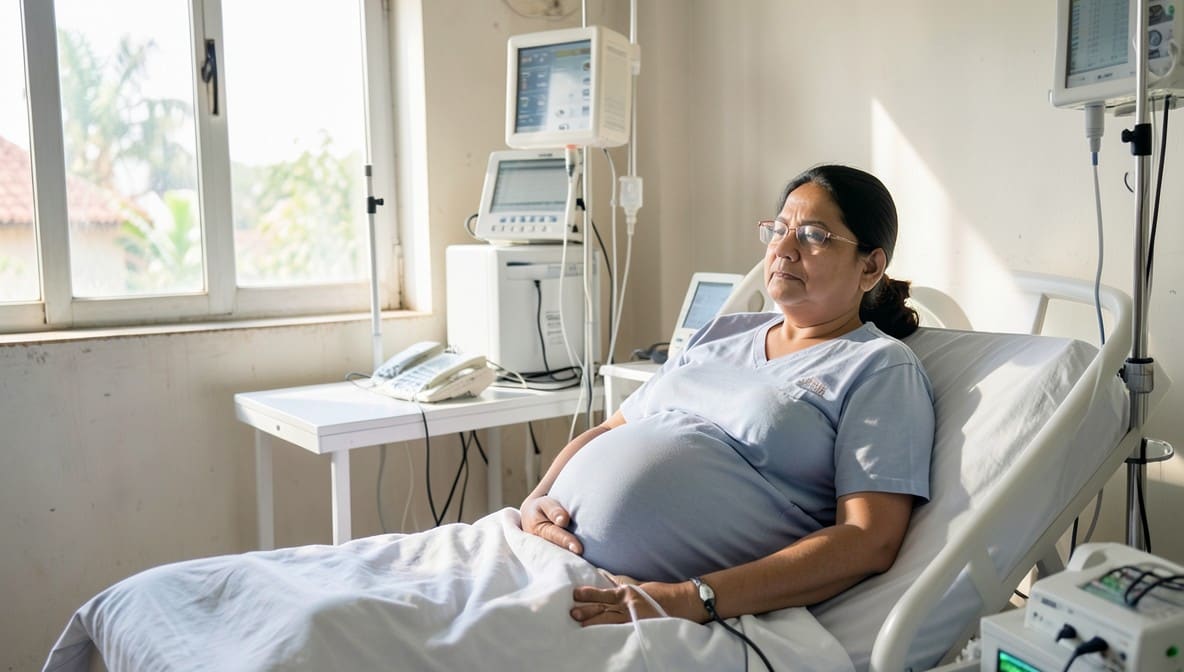
- The applicant is currently seven months pregnant
- She is the mother of three minor daughters, aged between 2 and 8 years
- No prior criminal record or history of non-cooperation with investigation has been alleged
- The applicant has not fled or attempted to tamper with evidence
Procedural History
- 15.11.2025: Crime No. 495/2025 registered at Police Station Goganwan, District Khargone
- 05.04.2026: Applicant became aware of impending arrest through legal notice
- 12.05.2026: Application under Section 482 of Bhartiya Nagrik Suraksha Sanhita, 2023 (equivalent to Section 438 CrPC, 1973) filed before the High Court at Indore
Relief Sought
The applicant sought anticipatory bail to prevent arrest, arguing that custodial detention would cause irreparable harm to her health, her unborn child, and her three minor daughters. She requested release on personal bond and surety, subject to conditions of cooperation with investigation.
The Legal Issue
The central question was whether the personal circumstances of a female accused - specifically advanced pregnancy and responsibility for minor children - can justify the denial of custodial interrogation and warrant the grant of anticipatory bail, even in cases involving allegations of false affidavits in elections.
Arguments Presented
For the Appellant/Petitioner
Counsel for the applicant argued that the applicant acted in good faith, believing her caste to be Nihal (S.T.), and that the false affidavit, if any, was not made with criminal intent. The applicant’s pregnancy and the dependency of three minor children on her care were emphasized as compelling humanitarian grounds. Counsel cited Arnesh Kumar v. State of Bihar to argue that arrest is not automatic and custodial interrogation must be justified by necessity. It was submitted that the investigation could proceed without detention, and the applicant was willing to cooperate fully.
For the Respondent/State
The State and the objector opposed the bail plea, contending that the offence under Section 125A of the Representation of the People Act, 1951, is serious and involves deliberate misrepresentation to secure a reserved seat. They argued that the gravity of the offence, which undermines electoral integrity, necessitates custodial interrogation to ensure truthfulness and prevent tampering. No specific evidence of flight risk or witness intimidation was presented, but the nature of the offence was invoked as sufficient grounds to deny bail.
The Court's Analysis
The Court examined the nature of the allegations and the personal circumstances of the applicant. It noted that while the offence under Section 125A is serious, the applicant had not been previously accused of any criminal conduct, nor was there any indication of her attempting to influence witnesses or destroy evidence. The Court emphasized that the purpose of anticipatory bail under Section 438 CrPC is to prevent unnecessary arrest, particularly where custodial interrogation is not essential.
"The applicant is a woman aged 26 years having 3 minor daughters and also carrying 7 months pregnancy, and the other facts and circumstances of the case, this Court is of the considered opinion that the custodial interrogation of the applicant is not necessary in the present case."
The Court held that the right to life and personal liberty under Article 21 of the Constitution includes the right to dignity, health, and care during pregnancy. The potential harm to the unborn child and the welfare of three dependent minor children outweighed the speculative need for custodial interrogation. The Court distinguished this case from those involving organized crime or repeated non-cooperation, noting that the applicant’s conduct thus far demonstrated willingness to face legal process.
The Court further observed that the investigation could proceed through voluntary appearances and recorded statements, without the need for detention. The applicant’s willingness to appear before the Investigating Officer as and when required was deemed sufficient to satisfy the requirements of Section 438(2) CrPC.
The Verdict
The applicant succeeded. The High Court granted anticipatory bail. In the event of arrest, the applicant shall be released on bail upon executing a personal bond of Rs. 25,000 and furnishing one solvent surety of the same amount, to the satisfaction of the Arresting Officer. The applicant shall make herself available for interrogation by the police as and when required, and shall abide by all conditions under Section 438(2) of the Code of Criminal Procedure, 1973. The order is effective immediately.
What This Means For Similar Cases
Pregnancy and Caregiving Are Material to Bail Decisions
- Practitioners must now systematically document and present evidence of pregnancy, childcare responsibilities, and medical vulnerability in anticipatory bail applications
- Courts are likely to treat these factors as presumptive grounds for denying custodial arrest unless the prosecution demonstrates exceptional necessity
- The burden shifts to the State to justify why interrogation cannot be conducted without detention
False Affidavits in Elections Do Not Automatically Justify Arrest
- Allegations of misrepresentation in caste or income affidavits for reserved seats are not per se grounds for arrest
- Absence of prior criminality, cooperation with investigation, and lack of flight risk must be weighed against the nature of the offence
- Courts will prioritize proportionality: the means of investigation must not exceed the harm caused by the alleged offence
Procedural Compliance Must Be Explicit
- Applicants must explicitly undertake to appear before investigating officers
- Bond and surety conditions must be clearly specified and tied to the arresting officer’s satisfaction
- Failure to comply with Section 438(2) conditions may result in cancellation of bail