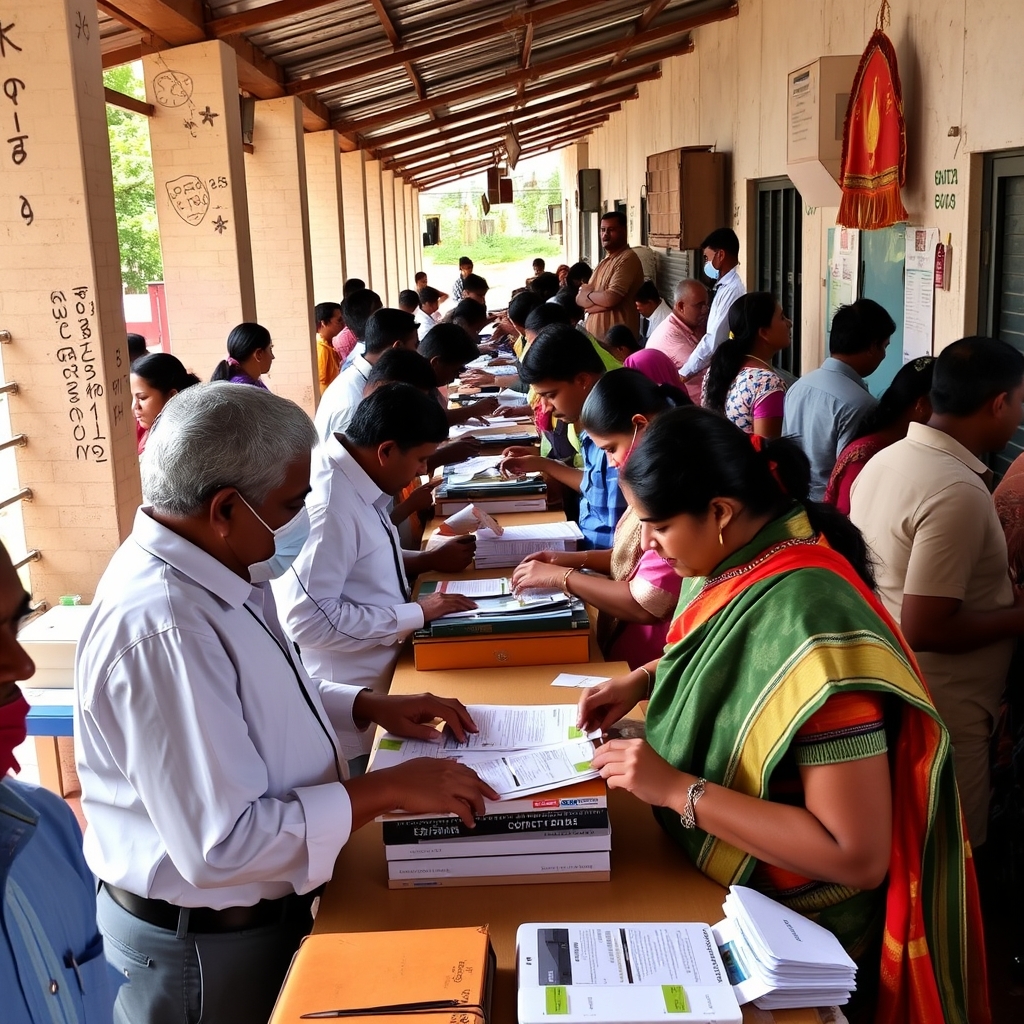
The Supreme Court affirmed that personal presentation of an election petition by the petitioner is a mandatory requirement under Section 81 of the Representation of the People Act, 1951, and non-compliance renders the petition liable to dismissal in limine under Section 86(1). The Court rejected the petitioner's claim of personal presentation due to lack of contemporaneous evidence, upholding the High Court's dismissal of the election petition filed via counsel.
Background & Facts
The Dispute
The petitioner, V. PON. PANEERSELVAM, filed an election petition challenging the election of S. Regupathy from the 181-Thirumayam Assembly Constituency in the 2026 Tamil Nadu Legislative Assembly Elections. The petition sought declaration of the respondent's election as null and void, a finding of guilty of corrupt practice (undue influence), and exemplary costs. The High Court dismissed the petition as not maintainable on the ground that it was presented by the petitioner's counsel, not the petitioner in person.
Key Facts
- The election was declared on 04.05.2026
- The election petition (ELP No. 36/2026) was filed before the Madras High Court
- The impugned judgment and order dismissing the petition was dated 22.07.2026
- The petitioner asserted he personally presented the Election Petition before the Registry on 16.06.2026
- The petitioner relied on a CISF entry pass showing his entry into the High Court premises on 16.06.2026
- The receipt for security deposit under Section 117 of the RP Act was issued in the name of the petitioner's counsel
- CCTV footage relied upon by the petitioner could only establish his presence in the premises, not personal presentation of the petition
Procedural History
- 04.05.2026: Date of election declaration for 181-Thirumayam Assembly Constituency
- 16.06.2026: Date petitioner claims to have personally presented the election petition (within 45-day period from election date)
- 22.07.2026: Date of impugned judgment and order of Madras High Court dismissing ELP No. 36/2026
- Special Leave Petition (Civil) No. 30538/2026: Filed before Supreme Court challenging the High Court's order
- 07.10.2026: Date of Supreme Court judgment
Relief Sought
The petitioner sought:
- Declaration that the election of Respondent No. 1 is null and void under Sections 100(1)(b) and 100(1)(d)(i) & (iv) of the RP Act
- Holding that Respondent No. 1 is guilty of corrupt practice (undue influence) under Section 123(2) of the RP Act
- Award of exemplary costs in his favour
The Legal Issue
The central question was whether presentation of an election petition by the petitioner in person is a mandatory requirement under Section 81(1)(ii) of the Representation of the People Act, 1951, and whether non-compliance with this requirement renders the election petition liable to dismissal at the threshold under Section 86(1) of the Act.
Arguments Presented
For the Petitioner
The petitioner argued that he had personally presented the election petition before the Registry on 16.06.2026, citing his CISF entry pass as evidence of presence in the High Court premises. He contended that the requirement under Section 81(1)(ii) was satisfied in substance, if not in form, relying on the precedent in Sheo Sadan Singh v. Mohan Lal Gautam where the Court held that presentation by an advocate's clerk in the petitioner's immediate presence satisfied the requirement. The petitioner further argued that the High Court erred in relying solely on Rule 7 of the Madras High Court Election Petitions Rules, 1967, without considering whether such rule operated as an incident of the jurisdiction conferred by the RP Act.
For the Respondent
The respondents contended that the petitioner failed to prove personal presentation, as the CISF entry pass only showed entry into premises, not the act of presentation. They emphasized that the security deposit receipt was issued in the counsel's name, undermining the claim of personal presentation. The respondents argued that Rule 7 of the Madras High Court Election Petitions Rules, 1967, which mandates presentation by the petitioner in person before the II Assistant Registrar, is a valid exercise of the High Court's rule-making power and does not trench upon Section 81 of the RP Act, as affirmed in Jamal Uddin Ahmad v. Abu Saleh Najmuddin. They stressed that Section 86(1) mandates dismissal for non-compliance with Section 81, and the requirement of personal presentation is a core, non-curative component of the statutory scheme.
The Court's Analysis
The Court began by noting that Section 81(1) contains five specific components: (i) petitioner qualification as candidate or elector, (ii) presentation "by" the petitioner, (iii) basis on specified grounds, (iv) presentation in the High Court, and (v) presentation within 45 days from but not earlier than the election date. The Court emphasized that the word "by" in Section 81(1)(ii) necessitates personal presentation by the petitioner, as established in G.V. Sreerama Reddy v. Returning Officer and Others.
The Court examined the legislative history, noting that the Representation of the People (Amendment) Act, 1966 omitted sub-section (2) of Section 81, which previously allowed presentation through an authorized person or by registered post. The current provision, post-amendment, recognizes no such modes, making personal presentation indispensable. The Court held that Section 86(1)'s mandate to dismiss non-compliant petitions underscores that Section 81 requirements are not mere formalities but condition precedents to maintainability.
Regarding the petitioner's evidence, the Court found the CISF entry pass insufficient as it only proved entry into premises, not the act of presentation. The security deposit receipt in the counsel's name further contradicted the claim of personal presentation. The CCTV footage, at best, established the petitioner's presence but could not confirm he presented the petition. The Court rejected reliance on Dr. Vijay Laxmi Sadho v. Jagdish, distinguishing it as concerning a rule (English language requirement) originating solely from High Court rules, unlike the instant case involving a statutory requirement under Section 81.
The Court affirmed that Rule 7 of the Madras High Court Election Petitions Rules, 1967, regulates the manner of presentation and reception before the High Court and operates as an incident of the jurisdiction conferred by the RP Act, as held in Jamal Uddin Ahmad. It does not conflict with Section 81 but complements it by detailing the procedural aspect of the "by" requirement. Consequently, the High Court's dismissal was correct, as the petitioner failed to discharge the burden of proving personal presentation.
The Verdict
The petitioner failed to prove personal presentation of the election petition. The Special Leave Petition is devoid of merit and stands dismissed. The Court upheld the High Court's order dated 22.07.2026 dismissing ELP No. 36/2026 as not maintainable due to non-compliance with Section 81(1)(ii) of the RP Act, 1951. No costs were awarded.
What This Means For Similar Cases
Personal Presentation Is Non-Negotiable
- Election petitioners must present the petition in person before the designated officer; presentation by counsel or authorized representatives does not satisfy Section 81(1)(ii) post-1966 amendment
- Ancillary evidence like court entry passes or security deposit receipts in counsel's name undermines claims of personal presentation
- CCTV footage showing mere presence in court premises is insufficient to prove the act of presentation
Statutory Scheme Prevails Over Ancillary Rules
- High Court rules regulating petition presentation (e.g., Rule 7 of Madras High Court Election Petitions Rules, 1967) are valid if they operate as incidents of statutory jurisdiction and do not trench upon Section 81 requirements
- Rules requiring presentation "by" the petitioner complement, rather than contradict, the statutory mandate under Section 81(1)(ii)
- Petitioners cannot challenge such rules on the grounds of exceeding statutory authority when they facilitate the exercise of jurisdiction conferred by the RP Act
Burden of Proof Lies Strictly with Petitioner
- Petitioners bear the burden of proving personal presentation through contemporaneous, direct evidence
- Indirect or circumstantial evidence (entry passes, counsel's receipts, general presence footage) fails to discharge this burden
- The requirement is not satisfied "in substance" if not complied with "in form" under the current statutory scheme post-1966 amendment