The Bombay High Court has reaffirmed the limited scope of judicial intervention in international commercial arbitrations seated in India, dismissing a Section 34 challenge to an arbitral award on the ground that patent illegality is not a viable ground for setting aside such awards. The judgment underscores the legislative intent to minimize court interference and uphold the finality of arbitral decisions in cross-border commercial disputes.
Background & Facts
The Dispute
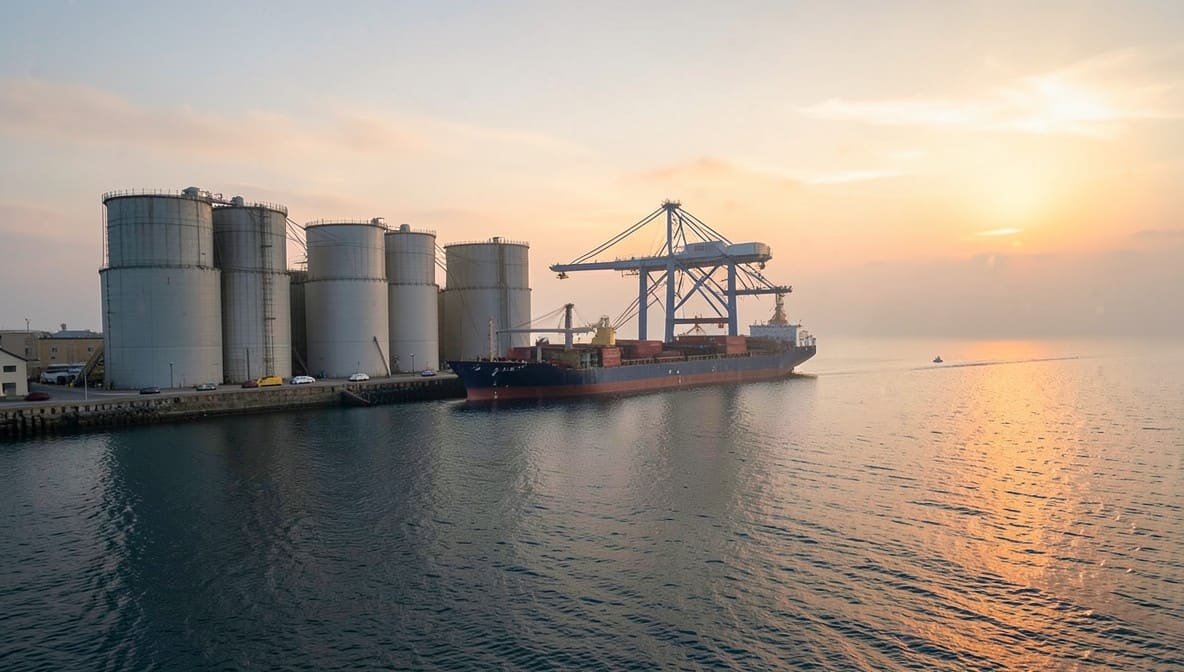
The dispute arose from a contract awarded by Oil and Natural Gas Corporation Limited (ONGC), a public sector undertaking, to Sapura Fabrication SDN BHD (now VTEB Fabrication SDN BHD), a Malaysian company, for the redevelopment of ONGC’s Mumbai High South Field. The contract, executed on 27 June 2015, involved the installation of wellhead platforms, submarine pipelines, cables, and other offshore infrastructure at a total lump sum price of USD 211,952,770, Euro 7,716,347, and INR 3,413,551,315. The work was completed on time by 30 April 2017, with ONGC releasing the performance bank guarantee and paying USD 214.71 million, Euro 7.81 million, and INR 344.42 crores.
Key Facts
- The contract was governed by the General Conditions of Contract (GCC) and Annexure-C, which included unit rates for marine spreads and provisions for variations under Clause 8.
- Respondent raised six claims for additional work or change orders, totaling approximately USD 41.2 million.
- ONGC partially allowed two claims (Claim 1 and Claim 2) and rejected four (Claims 3 - 6).
- The Arbitral Tribunal, constituted on 30 March 2022 and reconstituted on 17 February 2023 after the death of one arbitrator, issued its Award on 4 May 2024, later modified on 29 June 2024 under Section 33.
- The Tribunal awarded five of the six claims: fully allowing Claims 3, 4, and 5; partially allowing Claims 1 and 2; and rejecting Claim 6.
- The awarded amounts included:
- Claim 1 (SCA Jacket V Bracing): USD 1,927,254.54 + GST
- Claim 2 (MHNRD III PLP-N23 Platform): USD 9,920,000 + GST
- Claim 3 (Topside Modification on SCA Platform): USD 2,229,859.56 + GST
- Claim 4 (IDDS): USD 8,011,865.15 + GST
- Claim 5 (Standby Charges for SK900): USD 2,638,229.18 + GST
- Post-award interest was awarded at LIBOR + 2% per annum, and costs of INR 1,87,82,866 were awarded to the Respondent with 9% interest from the date of the Award.
Procedural History
- 19 December 2014: ONGC issued Invitation for Bids (IFB) for redevelopment of Mumbai High South Field.
- 16 March 2015: Kencana HL Sdn. Bhd. submitted bid.
- 26 May 2015: Notification of Award issued.
- 27 June 2015: Contract executed between ONGC and Kencana HL Sdn. Bhd.
- 26 October 2015 & 12 September 2017: Contract amended to reflect name changes to Sapura Fabrication SDN BHD.
- 30 April 2017: Contract work completed.
- 25 May 2017: Respondent submitted all six claims.
- 18 January 2018: ONGC rejected Claims 1, 3, 4, and 5.
- 21 May 2019: ONGC formally rejected Claim 3.
- 28 December 2021: Respondent issued notice under Section 21 of the Arbitration Act.
- 30 March 2022: Arbitral Tribunal constituted.
- 17 February 2023: Tribunal reconstituted after death of co-arbitrator Justice Anoop V. Mohta; Justice R.G. Ketkar substituted.
- 31 May 2022: Statement of Claim filed.
- 5 August 2022: Statement of Defence filed.
- 17 September 2022: Rejoinder filed.
- 24 - 25 April 2023: Cross-examination of witnesses completed.
- 4 May 2024: Arbitral Award issued.
- 29 June 2024: Section 33 order issued correcting minor errors in the Award.
- 1 December 2025: Court recorded deposit of awarded sum with interest.
- 27 March 2026: Respondent’s name changed to VTEB Fabrication SDN BHD.
- 9 June 2026: Judgment pronounced.
The Parties' Positions
Petitioner (ONGC): Contended that the Tribunal erred in awarding Claims 1 - 5 by misinterpreting the contract, applying incorrect rates, ignoring contractual limitations, and making findings contrary to the lump sum nature of the contract. It argued that the Tribunal’s award was perverse and patently illegal, particularly in relation to Claim 4 (IDDS) and Claim 5 (standby charges). It also claimed limitation bar on all claims.
Respondent (VTEB Fabrication): Argued that the Tribunal correctly interpreted the contract, applied the correct rates under Annexure-C, and properly distinguished between contractual obligations and additional work. It maintained that the award was rational, supported by evidence, and not subject to challenge under Section 34(2A) as this was an international commercial arbitration.
Relief Sought
ONGC sought to set aside the arbitral award in its entirety or in part, specifically challenging the awards on Claims 1 - 5. It sought a declaration that the Tribunal erred in applying Annexure-C rates, in awarding costs for unnecessary surveys, and in granting standby charges. It also sought reversal of the cost award and dismissal of the arbitration petition.
The Legal Issue
The central question was whether the ground of patent illegality under Section 34(2A) of the Arbitration and Conciliation Act, 1996 is available to challenge an arbitral award arising from an international commercial arbitration seated in India, and whether the Tribunal’s findings on contractual interpretation, variation, and limitation constituted a valid ground for setting aside the award under Section 34(2).
Arguments Presented
For the Petitioner
Mr. Zubin Behramkamdin, Senior Advocate for ONGC, argued that the Tribunal’s award was patently illegal and perverse. He contended that:
- The contract was a lump sum contract, and all work was covered under the bid price.
- The Tribunal erred in applying Annexure-C rates for Claims 1 and 2, ignoring Note 5 which permitted ONGC to use actual market rates.
- The Tribunal wrongly treated IDDS modifications (Claim 4) as additional work, despite the broad specifications in the bidding documents.
- The third pre-engineering survey (Claim 3) and IDDS surveys (Claim 4) were the Respondent’s responsibility under Clause 5.4.1.
- The standby charges (Claim 5) were barred by the SIMOPs agreement, evidenced by the letter dated 13 January 2017.
- All claims were barred by limitation, as they were rejected by January 2018, while arbitration was invoked only in December 2021.
- The Tribunal ignored vital evidence, particularly the 13 January 2017 letter, rendering its findings perverse.
For the Respondent
Mr. Naresh Thacker for VTEB Fabrication countered that:
- The award was made in an international commercial arbitration under Section 2(1)(f), and Section 34(2A) (patent illegality) is inapplicable.
- The Tribunal’s interpretation of the contract, particularly Clause 8 and Annexure-C, was plausible and not irrational.
- The award of Claim 4 was justified because connecting HVLR to both firewater headers and constructing deck extensions were not envisaged in the contract scope, as admitted by ONGC in the 11 May 2016 meeting.
- The third survey (Claim 3) was unnecessary and wasteful, and the Tribunal rightly held ONGC liable for its cost.
- The SIMOPs condition was not imposed at the time of preponement; the 13 January 2017 letter merely documented a last-minute agreement, not a prior condition.
- The claim was within limitation, especially considering the COVID-19 exclusion period (15 March 2020 to 28 February 2022).
- The Tribunal’s factual findings were conclusive and not subject to appellate review under Section 34.
The Court's Analysis
The Court began by affirming that this was an international commercial arbitration under Section 2(1)(f) of the Arbitration Act, as the Respondent was incorporated in Malaysia, and the seat of arbitration was Mumbai. Consequently, Section 34(2A), which permits setting aside awards on grounds of patent illegality, was held to be inapplicable. The Court relied on Ssangyong Engineering & Construction Co. Ltd. v. NHAI and Vijay Karia v. Prysmian Cavi E Sistemi SRL to hold that patent illegality, including perversity, is a ground available only for domestic arbitrations.
"The ground of patent illegality is not available for challenging the impugned award which is made in an international commercial arbitration held in India. Also, perversity, if any, in findings recorded by the Arbitral Tribunal would constitute the vice of patent illegality and would not come in the ambit of the expression 'in conflict with public policy of India.'"
The Court emphasized that the 2015 amendments narrowed the scope of public policy under Section 34(2)(b)(ii) to only fundamental policy of Indian law, natural justice, or basic notions of morality. Perversity, even if established, could not be invoked under public policy.
Regarding Claim 1 and Claim 2, the Court upheld the Tribunal’s interpretation of Annexure-C rates. It found that Clause 8.1.1.4(ii) applied because the contract provided applicable rates for marine spreads, and Note 5 only triggered under Clause 8.1.1.4(iii), which required mutual agreement on rate revision - a condition not met. The Court rejected ONGC’s reliance on the B-127 contract rates as arbitrary and unsupported.
On Claim 3, the Court agreed with the Tribunal that the third pre-engineering survey was unnecessary, as the first two surveys had already confirmed the feasibility of the eastern deck extension. The Court also rejected ONGC’s attempt to reframe its defense by alleging failure to provide a hazard identification report - a contention not pleaded in the Statement of Defence.
For Claim 4 (IDDS), the Court found the Tribunal’s conclusion compelling: connecting HVLR to both firewater headers was never a contractual requirement, as evidenced by the Notes to Section 2.2.7.2 and ONGC’s own approval of a single connection in the P&ID diagram dated 3 December 2015. The Court further held that ONGC’s admission in the 11 May 2016 meeting - that deck extensions were “not envisaged in contract scope” - was conclusive evidence of a change order.
On Claim 5 (standby charges), the Court acknowledged that the Tribunal may have overlooked the 13 January 2017 letter, but held that even if this constituted perversity, it could not be grounds for setting aside the award under Section 34(2A). The Court emphasized that the legislative intent was to insulate international commercial arbitrations from appellate scrutiny, even where evidence may have been ignored.
The Court also held that the limitation defense failed because the final rejection of Claim 3 occurred on 21 May 2019, and the arbitration was invoked on 28 December 2021 - well within the limitation period, especially considering the COVID-19 exclusion.
The Verdict
The Petition was dismissed. The arbitral award dated 4 May 2024, as modified on 29 June 2024, was upheld in its entirety. The Court directed that the awarded sum of USD 24,707,208.43 (Claims 1 - 5) plus GST, post-award interest at LIBOR + 2% per annum from 4 May 2024, and costs of INR 1,87,82,866 with 9% interest from 4 May 2024, shall be paid to the Respondent. The Court declined to award costs of the petition to the Respondent, given the non-interference with Claim 5 on procedural grounds.
What This Means For Similar Cases
Patent Illegality Is Not a Shield in International Arbitrations
- Practitioners must recognize that Section 34(2A) is inapplicable to international commercial arbitrations seated in India.
- Challenges based on perversity, erroneous application of law, or reappreciation of evidence are barred, regardless of how glaring the error may appear.
- Courts will not act as appellate forums - even if an arbitrator ignores key evidence, the award stands unless it violates fundamental policy of Indian law or natural justice.
Contractual Interpretation Is Final Unless Irrational
- Arbitrators’ interpretations of contract terms, including variation clauses and rate applicability, are binding unless they are so irrational that no reasonable person could have reached them.
- The Tribunal’s reliance on Annexure-C rates over B-127 contract rates was upheld because the contract explicitly provided for such rates under Clause 8.1.1.4(ii).
- Parties cannot unilaterally substitute rates under the guise of “actuals” or “market conditions” without mutual agreement under Clause 8.1.1.4(iii).
Change Orders Must Be Clearly Contractual
- A change order arises when the work goes beyond the contract’s express or implied scope.
- Admissions by the employer in meeting minutes (e.g., “not envisaged in contract scope”) are powerful evidence of a variation.
- Broad specifications in bidding documents do not preclude claims for additional work if the specific instruction exceeds the original intent.
- Surveys conducted at the employer’s request for non-contractual purposes are not the contractor’s cost burden.
Limitation and COVID-19 Exclusion Are Critical
- The limitation period for arbitration begins from the final rejection of the claim, not the first rejection.
- The COVID-19 exclusion period (15 March 2020 to 28 February 2022) remains a valid ground for extending limitation in arbitration matters, even if not explicitly pleaded.
Simultaneous Operations (SIMOPs) Require Clear Agreement
- Conditions like SIMOPs must be documented at the time of scheduling changes.
- A later communication (e.g., 13 January 2017 letter) cannot retroactively impose conditions on a prior agreement.
- Adverse inference may be drawn against a party that fails to produce contemporaneous evidence of conditions.