The Delhi High Court has clarified that an 'as is where is' clause in a public tender, when accepted by the bidder after inspection, extinguishes any subsequent claim for encroachments or infrastructural deficiencies. This judgment reinforces the principle that tender participants must conduct due diligence before bidding and cannot later seek relief based on conditions visible at the time of acceptance.
Background & Facts
The Dispute
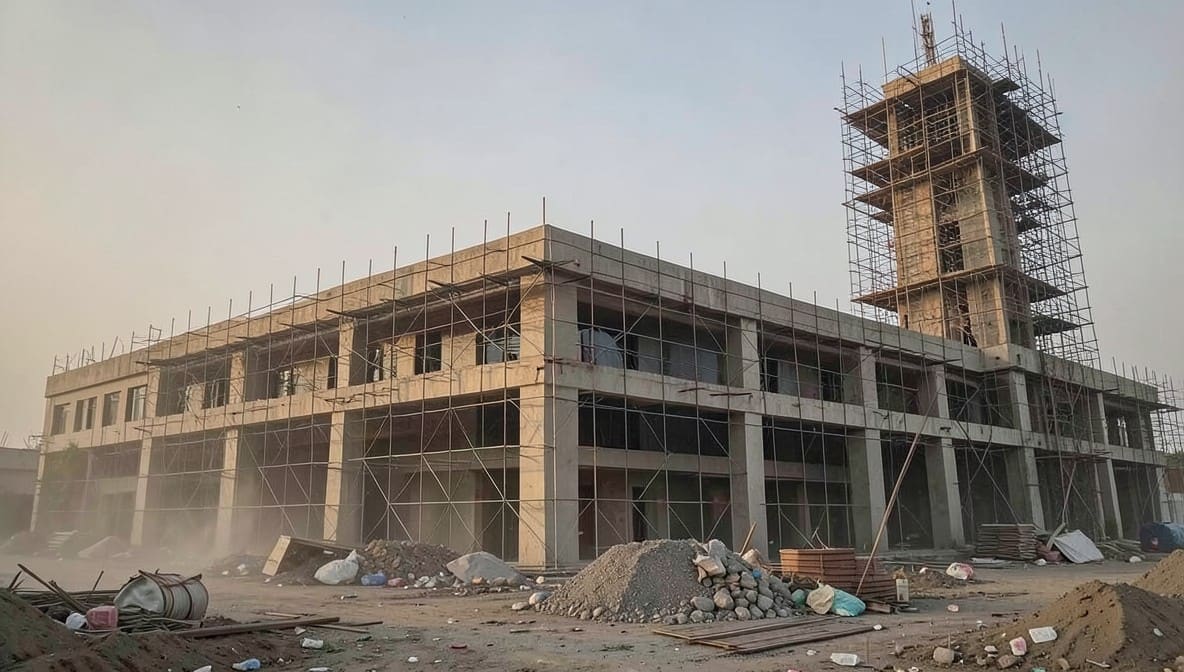
The respondent, Kalwa, was awarded a three-year license to operate a truck parking site at Majnu Ka Tila, Delhi, following a competitive tender process. The Delhi Development Authority (DDA) issued an allotment letter specifying a monthly license fee of Rs. 5,11,000. Kalwa deposited earnest money and three months’ advance fee, and executed the license deed. However, in his acceptance letter dated 29.03.2010, Kalwa disclosed that the site was heavily encroached upon by unauthorized vendors, lacked boundary walls, gates, and lighting, and could accommodate only 400 - 450 trucks instead of the advertised 700+. He requested DDA to clear encroachments and improve infrastructure.
Procedural History
- March 2010: Kalwa accepted the allotment and took possession, subject to his written request for remedial action.
- May 2010: DDA responded, denying encroachments and stating safety was the licensee’s responsibility, but promised to initiate boundary wall construction.
- 2011: Kalwa filed a petition under Section 11 of the Arbitration and Conciliation Act, 1996, seeking appointment of an arbitrator after DDA failed to act.
- 2014: The sole arbitrator awarded Kalwa Rs. 81.72 lakh, including 40% refund of license fees and compensation for operational loss, based on photographic evidence and DDA’s letter.
- 2025: The District Judge dismissed DDA’s Section 34 objections, upholding the award.
- 2026: DDA appealed under Section 37 of the Act.
Relief Sought
The DDA sought to set aside the arbitral award on grounds of patent illegality, arguing that the arbitrator misinterpreted the 'as is where is' clause in Clause 17 of the agreement. Kalwa sought confirmation of the award.
The Legal Issue
The central question was whether the acceptance of a license on an 'as is where is' basis, after inspection and with full knowledge of site conditions, precludes a claim for refund or compensation due to encroachments and infrastructural deficiencies not remedied by the authority.
Arguments Presented
For the Appellant
The DDA contended that Clause 17 of the agreement explicitly required the bidder to inspect the site and accept it in its existing condition, including all encroachments and deficiencies. Relying on K.C. Ninan v. Kerala State Electricity Board and S.K. Pandey v. MCD, it argued that the 'as is where is' clause operates as a complete bar to post-acceptance claims. It further asserted that oral assurances from officials cannot override written contractual terms and that the arbitrator’s interpretation effectively rewrote the contract, violating public policy.
For the Respondent
Kalwa argued that while he accepted the 'as is where is' clause, he did so with a clear, contemporaneous notice to DDA about the encroachments and a verbal assurance that they would be removed. He relied on his letter dated 29.03.2010 and DDA’s letter dated 01.05.2010 as evidence of a mutual understanding. He contended that the clause did not contemplate a site rendered unusable by third-party encroachments, and that the arbitrator’s finding was factually grounded and not perverse.
The Court's Analysis
The Court examined the scope of 'as is where is' clauses under Indian contract law and tender jurisprudence. It emphasized that such clauses are not mere boilerplate but serve to allocate risk to the bidder who has the opportunity to inspect. The Court cited K.C. Ninan to affirm that the clause extends to the state of title, encumbrances, and visible defects, placing the burden of due diligence on the bidder.
"The implication of the expression 'as is where is' is that every intending bidder is put on notice that the seller does not undertake any responsibility to procure permission... or liability for... pending statutory dues."
The Court rejected Kalwa’s reliance on oral assurances, holding that in public tender processes, such assurances cannot be inferred absent express contractual incorporation. To allow such claims would undermine the integrity of competitive bidding, disadvantaging other bidders who refrained from participating due to the site’s visible condition.
The Court distinguished Associated Builders v. DDA, noting that while arbitrators are the sole judges of evidence, they cannot create new contractual obligations. The arbitrator’s interpretation, which treated the 'as is where is' clause as conditional upon DDA’s remedial action, was found to be a patent illegality because it contradicted the express terms of the agreement and introduced a term not negotiated or documented.
The Court further held that the arbitrator’s appreciation of evidence - while factually supported - could not override the clear contractual allocation of risk. The award of 40% refund and operational loss compensation was therefore set aside as based on a legally unsustainable interpretation.
The Verdict
The DDA prevailed on the core issue. The Delhi High Court held that the 'as is where is' clause, when accepted after inspection, bars claims for encroachments or infrastructural deficiencies unless contractually modified. The arbitral award for refund of license fees and operational loss was set aside. However, the refund of security deposit and litigation expenses, along with interest, were upheld.
What This Means For Similar Cases
Contractual Terms Override Oral Assurances
- Practitioners must advise clients that oral promises made during tender processes are unenforceable unless reduced to writing and incorporated into the final agreement.
- Any modification to tender terms must be documented in writing and signed by both parties to be legally binding.
- Bidders should record all site conditions and communications in writing before submitting bids.
'As Is Where Is' Is a Risk Allocation Mechanism
- The clause is not a disclaimer of all liability but a clear allocation of risk to the bidder who has had opportunity to inspect.
- Courts will not permit arbitrators to reinterpret such clauses to impose obligations on authorities not expressly stated in the tender documents.
- Public agencies can rely on this clause to defend against claims arising from pre-existing site conditions.
Arbitrators Cannot Rewrite Contracts
- Arbitrators must interpret contracts as written; they cannot imply terms that contradict express provisions.
- Awards based on interpretations that effectively amend the contract will be set aside as patently illegal under Section 34(2A).
- Legal teams must focus arguments on contractual language, not equitable considerations, when challenging arbitral awards.