Topic

Commercial Disputes

Commercial disputes in Indian law involve legal conflicts arising from business transactions, including contract breaches, negotiable instrument violations, and arbitration enforcement.

28 articlesLatest July 2026
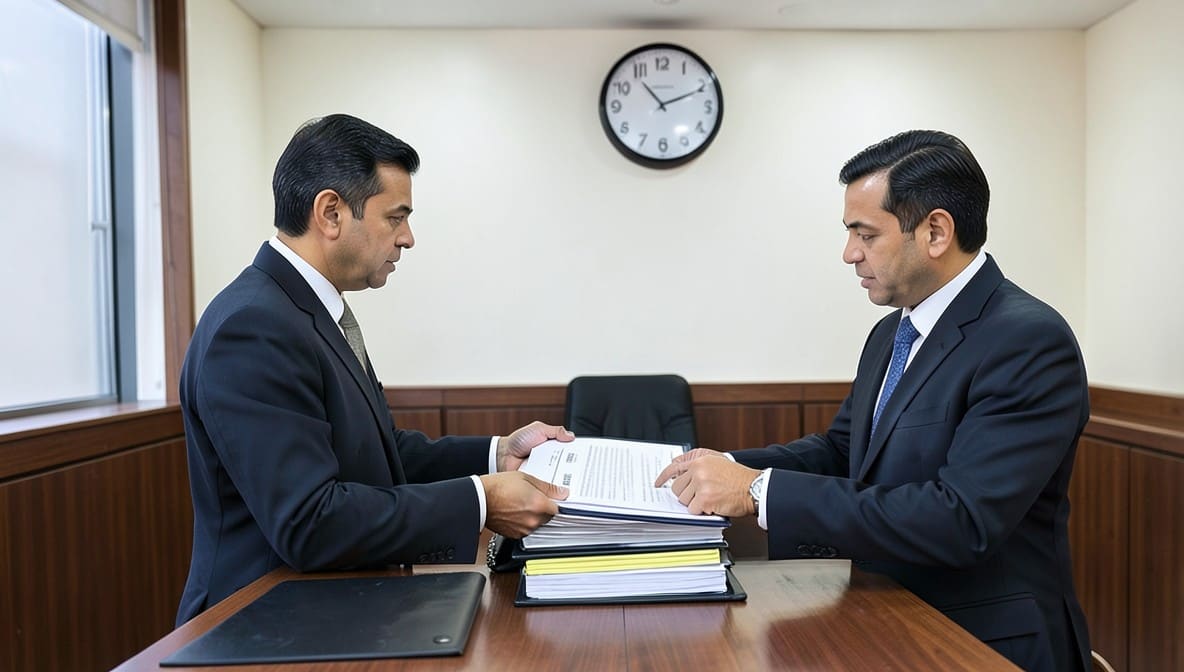
Commercial Courts Act | Strict Timelines for Document Production Non-Compliance Bars Piecemeal Evidence Submission : SC
Case Law Analysis
|Supreme Court of India

Commercial Courts Act | Strict Timelines for Document Production Non-Compliance Bars Piecemeal Evidence Submission : SC

The Supreme Court ruled that litigants cannot adopt a piecemeal approach to document production under the Commercial Courts Act, especially when documents were in their possession from the outset. Failure to adhere to prescribed timelines results in forfeiture of the right to submit additional evidence later, reinforcing procedural discipline in commercial disputes.

Section 9 Arbitration Act | Prima Facie Breach of LLP Agreement Justifies Interim Relief Against Expelled Partners : Bombay HC
Case Law Analysis
|Bombay High Court

Section 9 Arbitration Act | Prima Facie Breach of LLP Agreement Justifies Interim Relief Against Expelled Partners : Bombay HC

Bombay High Court rules that a prima facie breach of an LLP agreement, including expulsion clauses, entitles aggrieved partners to interim relief under Section 9 of the Arbitration Act. The judgment clarifies that courts may restrain expelled partners from interfering with ongoing projects while preserving arbitration rights, setting a precedent for commercial disputes involving partnership expulsions.

Section 9 Arbitration Act | Interim Relief Requires Proof of Actual Asset Diversion, Not Mere Apprehension : Bombay HC
Case Law Analysis
|Bombay High Court

Section 9 Arbitration Act | Interim Relief Requires Proof of Actual Asset Diversion, Not Mere Apprehension : Bombay HC

Bombay High Court clarifies that Section 9 interim relief under the Arbitration Act mandates concrete evidence of asset diversion or financial instability, not just fear of dissipation. The ruling underscores that delays in seeking relief weaken claims of urgency, setting a stricter threshold for contractors and businesses seeking emergency protection.

Section 37 Arbitration Act | Unsubstantiated Loss of Profit Claims Cannot Sustain Arbitral Award: Karnataka HC
Case Law Analysis
|Karnataka High Court

Section 37 Arbitration Act | Unsubstantiated Loss of Profit Claims Cannot Sustain Arbitral Award: Karnataka HC

The Karnataka High Court ruled that arbitral tribunals cannot award loss of profits without concrete evidence, even if contract foreclosure was unlawful. The decision underscores that findings of fact in arbitration are binding unless perverse, rejecting a Rs. 4.38 crore claim for lack of proof. Contractors and businesses must now ensure robust documentation to sustain damages claims in arbitration.

Section 9 Arbitration Act | Small Causes Court Jurisdiction Overrides Arbitration Clause in Licensor-Licensee Disputes : Bombay HC
Case Law Analysis
|Bombay High Court

Section 9 Arbitration Act | Small Causes Court Jurisdiction Overrides Arbitration Clause in Licensor-Licensee Disputes : Bombay HC

Bombay High Court holds that disputes relating to possession under licensor-licensee agreements fall exclusively under the Small Causes Court's jurisdiction, rendering arbitration clauses unenforceable. This ruling impacts commercial tenants and landlords seeking interim relief under the Arbitration Act, reinforcing the primacy of statutory jurisdiction over contractual arbitration.

Section 31(3) Arbitration Act | Counter-Claim Against Co-Respondent Maintainable Under Arbitration Agreement : Kerala HC
Case Law Analysis
|Kerala High Court

Section 31(3) Arbitration Act | Counter-Claim Against Co-Respondent Maintainable Under Arbitration Agreement : Kerala HC

Kerala High Court rules that a counter-claim by one respondent against a co-respondent is maintainable under the arbitration agreement, overriding procedural limitations under the CPC. The decision clarifies that arbitration agreements prevail over technical objections, enabling broader dispute resolution in multi-party commercial disputes.

Section 11 Arbitration Act | Disputes from Non-Performance Trigger Arbitration Even Without Contract Termination: MP HC
|Madhya Pradesh High Court

Section 11 Arbitration Act | Disputes from Non-Performance Trigger Arbitration Even Without Contract Termination: MP HC

Madhya Pradesh High Court holds that arbitration can be invoked under Section 11 of the Arbitration and Conciliation Act, 1996, if disputes arise from contractual non-performance or third-party actions, even without formal contract termination. The ruling clarifies that the existence of a dispute, not contract termination, is the threshold for arbitration reference, impacting commercial contracts and arbitrator appointments.

Group of Companies Doctrine Applies to Family Settlement Agreements | Single Arbitration Clause Governs Composite Transactions: Bombay HC Grants Section 9 Interim Relief
Case Law Analysis
|Bombay High Court

Group of Companies Doctrine Applies to Family Settlement Agreements | Single Arbitration Clause Governs Composite Transactions: Bombay HC Grants Section 9 Interim Relief

Bombay High Court extends the Group of Companies Doctrine to family settlement agreements, holding that interconnected agreements executed as part of a single transaction may be governed by a single arbitration clause-even if some agreements lack independent arbitration provisions. The ruling clarifies that Section 9 interim relief is available where the composite nature of the transaction and the parties' intent justify arbitration, offering critical protection for commercial disputes arising from family settlements.

Fraud Allegations Remain Arbitrable Unless Meeting Ayyasamy & Vidya Drolia Non-Arbitrability Tests : Bombay HC
Case Law Analysis
|Bombay High Court

Fraud Allegations Remain Arbitrable Unless Meeting Ayyasamy & Vidya Drolia Non-Arbitrability Tests : Bombay HC

Bombay High Court reaffirms that commercial disputes involving fraud and third-party rights are arbitrable unless they satisfy the strict non-arbitrability thresholds established in A. Ayyasamy and Vidya Drolia. The Court set aside the arbitrator’s order, restoring arbitration proceedings and reinforcing the pro-arbitration stance under Section 16 of the Arbitration and Conciliation Act 1996.

Section 12A Commercial Courts Act | Pre-Institution Mediation Not Retrospective for Suits Filed Before 20.08.2022 : Sikkim HC
Case Law Analysis
|Sikkim High Court

Section 12A Commercial Courts Act | Pre-Institution Mediation Not Retrospective for Suits Filed Before 20.08.2022 : Sikkim HC

Sikkim High Court clarifies that mandatory pre-institution mediation under Section 12A of the Commercial Courts Act does not apply to suits filed before the 20.08.2022 amendment, shielding litigants from procedural dismissals. The ruling ensures legal certainty for pending commercial disputes and reinforces the non-retrospective application of procedural amendments.