The Bombay High Court's judgment in Zuzar Kathawala v. Bhupesh Agarwal clarifies the scope of interim relief under Section 9 of the Arbitration and Conciliation Act, 1996 in disputes involving expulsion of partners from a Limited Liability Partnership (LLP). The Court held that while final determination of expulsion validity must await arbitration, a prima facie case of breach justifies limited interim protection to prevent irreparable harm to the redevelopment project and its stakeholders.
Background & Facts
The Dispute
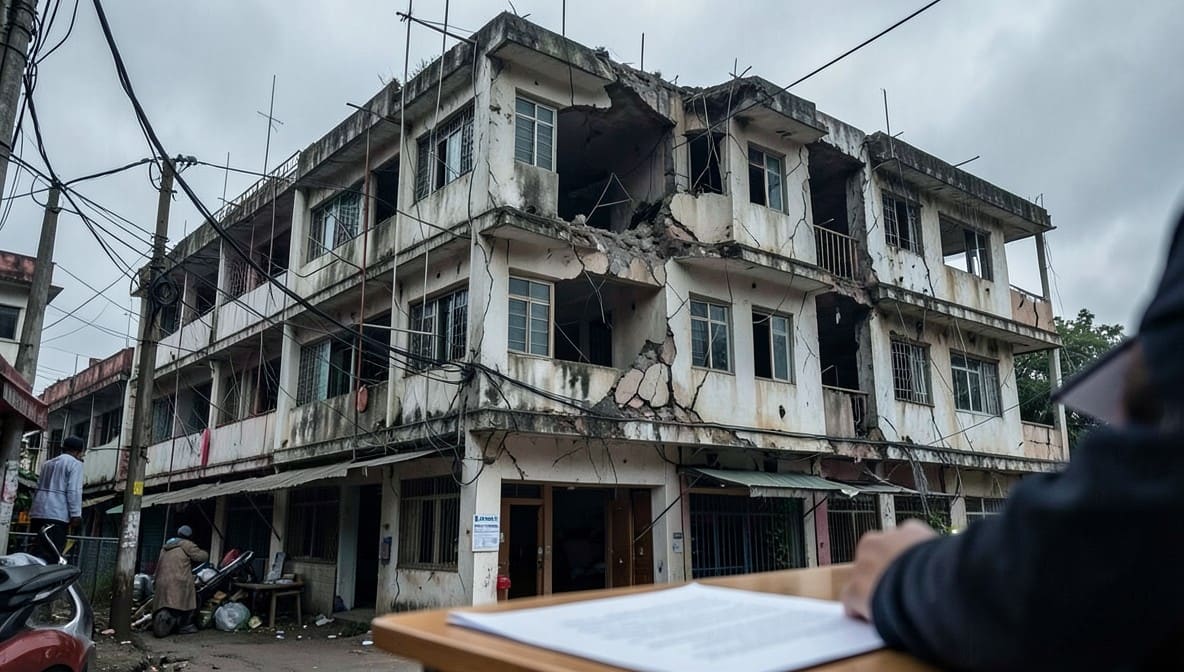
The dispute arises from a redevelopment project involving multiple properties owned by the Kathawala family. The petitioners, comprising three entities (Zuzar Kathawala, Hashim Kathawala, and Kathawala Realtors LLP), entered into a Limited Liability Partnership Agreement on 23 July 2010 to develop commercial buildings on the family's lands. The project faced financial constraints, leading to the induction of respondent Nos.1 to 3 (Bhupesh Agarwal, Dilawar Khan, and D.K. Realtors & Developers Limited) into the LLP through a Supplementary Agreement dated 21 February 2023. Respondent No.4 (Sabir Nirman) was already a partner since 1 April 2012.
The petitioners allege that respondent Nos.1 to 3 failed to fulfill their financial obligations under the Supplementary Agreement, particularly Clauses 19.1, 19.2, 19.3, 19.7, and 20, which required them to infuse funds and complete the redevelopment. Despite repeated notices, including a show cause notice on 13 March 2025 and a notice under Section 21 of the Arbitration Act on 10 April 2026, respondent Nos.1 to 3 did not respond or rectify the breaches. Consequently, the petitioners issued an Expulsion Notice on 24 April 2026, removing respondent Nos.1 to 3 from the LLP.
Key Facts
- 23 July 2010: Original LLP Agreement executed between the petitioners and the Kathawala family.
- 1 April 2012: Respondent No.4 inducted as a partner through a Supplementary Agreement.
- 21 February 2023: Supplementary Agreement executed, reconstituting the LLP and inducting respondent Nos.1 to 3 as designated partners with financial obligations.
- March 2025 onwards: Respondent Nos.1 to 3 allegedly stopped infusing funds into the project.
- 13 March 2025: First show cause notice issued to respondent Nos.1 to 3 for breach of obligations.
- 23 March 2026: Second show cause notice issued.
- 10 April 2026: Notice under Section 21 of the Arbitration Act issued, followed by an Expulsion Notice on 24 April 2026.
- 24 April 2026: Present Arbitration Petition (L) No.15311 of 2026 filed under Section 9 of the Arbitration Act.
The petitioners claim to have invested over Rs.20 crores in the project, while respondent Nos.1 to 3 contributed only Rs.1.34 crores from October 2024 to June 2026. The project involves 298 tenants, and the petitioners allege they are bearing the entire financial burden, including monthly transit rent payments of nearly Rs.1 crore.
Procedural History
- 24 April 2026: Arbitration Petition filed under Section 9 seeking interim relief.
- Subsequent hearings: Petitioners amended the petition to clarify respondent No.4's role in the expulsion decision.
- 1 July 2026: Judgment reserved.
- 7 July 2026: Judgment pronounced.
The Parties' Positions
For the Petitioners:
- Contend that respondent Nos.1 to 3 failed to infuse funds as agreed under the Supplementary Agreement.
- Rely on Clause 22.5 of the LLP Agreement, which permits expulsion of a partner for breach of obligations.
- Argue that the expulsion decision was taken by a majority (petitioners holding 33% and respondent No.4 holding 25%).
- Assert that the Framework Agreement dated 25 May 2022 and Memorandum of Understanding dated 21 January 2023 are distinct from the LLP Agreement and do not affect the expulsion clause.
For Respondent Nos.1 to 3:
- Argue that the LLP Agreement dated 21 February 2023 is an independent agreement superseding the 2010 Agreement.
- Contend that there is no clause permitting expulsion in the 2023 Agreement.
- Rely on Section 23 of the Limited Liability Partnership Act, 2008 and Schedule I, which require a majority decision for expulsion in the absence of a specific agreement.
- Assert that the expulsion decision was taken only by the petitioners, who hold a minority share (33.33%).
- Claim that the Framework Agreement was acted upon and binds all parties.
For Respondent No.4:
- Supports the petitioners' position, stating that references to his expulsion in notices were typographical errors.
- Confirms participation in the decision to expel respondent Nos.1 to 3.
Relief Sought
The petitioners sought the following interim reliefs:
- Restraint order against respondent Nos.1 to 3 from interfering with the redevelopment project.
- Appointment of a Court Receiver to take possession of the properties.
- Direction to respondent Nos.1 to 3 to disclose personal assets, income tax records, and bank accounts.
- Other ancillary reliefs to protect the project during arbitration.
The Legal Issue
The central question was whether Section 9 of the Arbitration and Conciliation Act, 1996 permits interim relief when:
- The validity of expulsion of partners from an LLP is disputed;
- The expelled partners claim authority to manage the LLP under a subsequent agreement; and
- The redevelopment project involves multiple stakeholders, including tenants, whose interests may be irreparably harmed by delays.
Arguments Presented
For the Petitioners
- Expulsion Clause: Relied on Clause 22.5 of the LLP Agreement dated 23 July 2010, which permits expulsion for breach of obligations. Argued that Clause (E) of the Supplementary Agreement dated 21 February 2023 preserved the expulsion clause by incorporating amendments into the original agreement.
- Majority Decision: Contended that the expulsion decision was taken by a majority (petitioners holding 33% and respondent No.4 holding 25%). Relied on the show cause notice dated 13 March 2025 and respondent No.4's affidavit to prove his participation.
- Breach of Obligations: Alleged that respondent Nos.1 to 3 failed to infuse funds after March 2025, causing the project to stall. Claimed to have invested Rs.20 crores, while respondent Nos.1 to 3 contributed only Rs.1.34 crores.
- Urgency: Highlighted the order dated 30 September 2025 in Writ Petition No.3180 of 2025, which fixed timelines for project completion. Argued that delays would harm tenants and the project.
For Respondent Nos.1 to 3
- No Expulsion Clause: Argued that the LLP Agreement dated 21 February 2023 is an independent agreement with no clause permitting expulsion. Relied on Section 23 of the LLP Act and Schedule I, which require a majority decision for expulsion in the absence of a specific agreement.
- Minority Decision: Contended that the expulsion decision was taken only by the petitioners, who hold a minority share (33.33%). Argued that the petitioners amended the petition only after objections were raised.
- Framework Agreement: Asserted that the Framework Agreement dated 25 May 2022 was acted upon and binds all parties, superseding the LLP Agreement.
- Designated Partners: Claimed that under the 2023 Agreement, respondent Nos.1 to 3 were designated partners with authority to manage the LLP. Argued that their expulsion renders the LLP non-functional.
- Wide Reliefs: Submitted that the reliefs sought by the petitioners are in the nature of final reliefs, which cannot be granted under Section 9.
The Court's Analysis
The Court conducted a detailed analysis of the legal and factual matrix:
-
Prima Facie Case of Breach:
"The material placed before this Court is not sufficient to hold that the case of the petitioners is without merit."
The Court noted that the petitioners provided a payment schedule (Exhibit 'M') showing expenditure of Rs.19,71,06,065 towards transit rent and project expenses after the order dated 30 September 2025. Respondent Nos.1 to 3 made only a general denial without disputing specific payments or producing evidence of their contributions. While the Court refrained from recording a finding on the correctness of the amount, it held that the petitioners had established a prima facie case of breach.
-
Validity of Expulsion Clause: The Court examined Clause 22.5 of the LLP Agreement, which permits expulsion for breaches such as insolvency, unsoundness of mind, absence without consent, or breach of agreement terms. The clause also provides that the remaining partners may expel a defaulting partner without notice, though they are at liberty to issue one.
The Court relied on Clause (E) of the Supplementary Agreement, which states:
"The Parties do hereby expressly agree that the change specified in this Agreement shall be made and read as part and parcel of the LLP Agreement (as amended by the Supplementary LLP Agreement) and shall be valid to the extent appropriate, as if they are included in the LLP Agreement ab-initio."
The Court held that this clause preserved the expulsion power under the original agreement, as there was no evidence that Clause 22.5 was deleted or superseded. Thus, the submission that the expulsion clause ceased to exist under the 2023 Agreement was not prima facie acceptable.
-
Majority Decision for Expulsion: The Court considered the argument that the expulsion decision was taken only by the petitioners, who hold a minority share (33.33%). However, it noted the show cause notice dated 13 March 2025, which was allegedly issued jointly by the petitioners and respondent No.4, and the affidavit filed by respondent No.4 supporting the petitioners. While acknowledging inconsistencies in the pleadings, the Court held that at this prima facie stage, the material did not discredit the petitioners' case.
-
Framework Agreement: The Court observed that the Framework Agreement was disputed, with the petitioners claiming it was never finalized and respondent Nos.1 to 3 asserting it was acted upon. The Court held that this was a disputed question of fact that could not be decided in Section 9 proceedings. It emphasized that the LLP Agreement should govern the interim arrangement, as it directly deals with the partners' rights.
-
Scope of Interim Relief: The Court acknowledged that some reliefs sought by the petitioners, such as appointment of a Court Receiver and disclosure of personal assets, were wider than necessary for protecting the subject matter of arbitration. It reiterated that Section 9 is intended to preserve the status quo and prevent irreparable harm, not to grant final reliefs.
However, the Court emphasized the urgency of the situation, noting that the project involves 298 tenants and is governed by timelines fixed by the Court. It held that allowing the dispute to stall the project would harm the tenants and the redevelopment, justifying limited interim protection.
The Verdict
The Court partly allowed the arbitration petition and granted the following reliefs:
- Restraint Order: Respondent Nos.1 to 3, their servants, agents, or representatives are restrained from interfering with, obstructing, or preventing the redevelopment of Property Nos.1 to 5 of Kathawala Realtors LLP pending arbitration.
- Management Restraint: Respondent Nos.1 to 3 are restrained from interfering with the management, affairs, redevelopment, construction, and development activities of the LLP.
- Document Handover: Respondent Nos.1 to 3 must hand over all original books of account, statutory records, permissions, approvals, correspondence, agreements, and bank records to the petitioners within two weeks. If originals are unavailable, authenticated copies with an explanation must be furnished.
- Non-Representation: Respondent Nos.1 to 3 shall not represent themselves as partners or designated partners of the LLP before any authority, including MCGM, MHADA, MBRRB, tenants, or contractors, subject to the arbitration outcome.
The Court did not grant the following reliefs:
- Appointment of a Court Receiver;
- Removal of persons stationed at the project site;
- Disclosure of personal assets, income tax returns, or bank accounts of respondent Nos.1 to 3;
- Any other wider reliefs sought in prayer clauses (c), (d), (g), and (h).
The Court clarified that its observations are prima facie and confined to the Section 9 proceedings. The Arbitral Tribunal will decide all issues independently. The parties were directed to constitute the Arbitral Tribunal immediately, and no order as to costs was passed.
What This Means For Similar Cases
Interim Relief Under Section 9 Is Not Automatic
This judgment underscores that Section 9 of the Arbitration Act does not guarantee interim relief merely because a dispute exists. Courts will:
- Assess whether the petitioner has established a prima facie case of breach;
- Evaluate the balance of convenience, particularly where third-party interests (e.g., tenants) are involved;
- Refuse reliefs that are wider than necessary to preserve the subject matter of arbitration.
Practitioners must tailor reliefs to the limited scope of Section 9, avoiding prayers that resemble final adjudication.
Expulsion Clauses in LLP Agreements
The judgment provides clarity on the interpretation of expulsion clauses in LLP Agreements:
- Supplementary Agreements do not automatically supersede original agreements unless explicitly stated;
- Clause (E)-type provisions (incorporating amendments into the original agreement) can preserve expulsion powers;
- Designated partners cannot claim absolute authority if their expulsion is prima facie valid.
Partners drafting LLP Agreements should ensure expulsion clauses are unambiguous and specify whether they survive subsequent agreements.
Urgency and Third-Party Interests
Where disputes risk irreparable harm to third parties (e.g., tenants, occupants), courts are more likely to grant limited interim relief. Key takeaways:
- Timelines fixed by courts (e.g., for project completion) create urgency justifying interim protection;
- Financial obligations (e.g., transit rent) must be addressed during arbitration to avoid harm to stakeholders;
- Prima facie evidence of breach (e.g., payment schedules, notices) strengthens the case for relief.
Parties should document breaches meticulously and highlight third-party impacts to bolster Section 9 petitions.