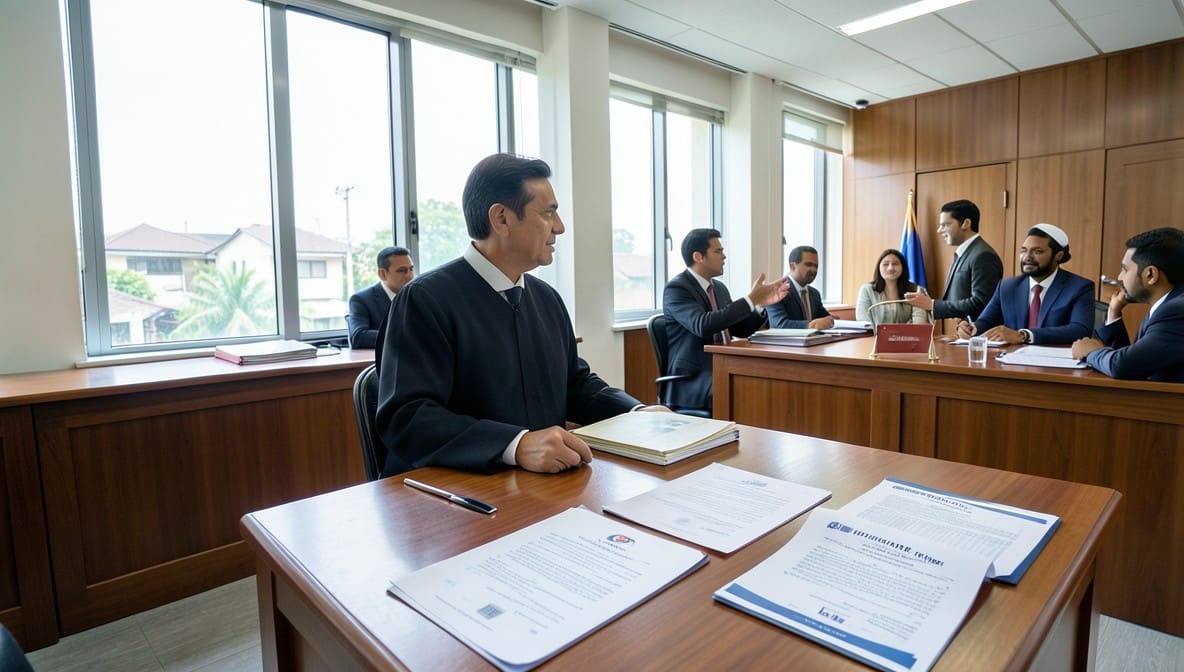
The Bombay High Court has clarified a critical jurisdictional issue in commercial disputes: when a licensor-licensee dispute relates to possession, the Small Causes Court's jurisdiction prevails over arbitration agreements, rendering interim protection under Section 9 of the Arbitration and Conciliation Act, 1996 unavailable. This judgment underscores the primacy of statutory jurisdiction in landlord-tenant matters, even where parties have contractually agreed to arbitration.
Background & Facts
The Dispute
The petitioner, Jubilant Restaurants and Hotels Private Limited, operates two restaurant units (Unit No. FF-10 and Unit No. GF-79) in LakeShore Thane Mall under leave and license agreements with the respondent, Salsette Developers Private Limited. The original agreements were executed on 11 August 2021 (FF-10) and 2 August 2021 (GF-79), with the license period commencing on 1 July 2021. Following a scheme of amalgamation approved by the National Company Law Tribunal on 7 June 2023, the respondent acquired all rights and obligations under the agreements.
Key Facts
- Original Agreements: Executed in August 2021 for a fixed term ending on 30 June 2024.
- Extensions: The parties extended the arrangement through five consecutive letters:
- 18 June 2024: Extended till 30 September 2024.
- 29 September 2024: Extended till 31 December 2024.
- 26 December 2024: Extended till 31 March 2025.
- 30 March 2025: Extended till 30 June 2025.
- 26 June 2025: Extended till 30 September 2025.
- Fresh Agreement: On 11 March 2026, the parties executed registered leave and license agreements, including an arbitration clause under the MCLA Rules with Mumbai as the seat. The petitioner contends this agreement substituted all prior arrangements.
- Dispute: On 18 May 2026, the respondent demanded vacation of the premises by 24 June 2026, citing expiry of the agreement. The petitioner disputed this, arguing the agreement contained a lock-in period and had replaced earlier arrangements.
Procedural History
- 20 June 2026: Petitioner filed Arbitration Petition (L) No. 21544 of 2026 and Arbitration Petition (L) No. 21545 of 2026 under Section 9 of the Arbitration and Conciliation Act, 1996, seeking interim protection against dispossession and disconnection of utilities.
- The petitions were heard together due to identical factual and legal issues.
Relief Sought
The petitioner sought:
- Restraining the respondent from dispossessing it from the premises without due process.
- Protection against disconnection of electricity, water, HVAC, internet, and other utilities.
- Maintenance of status quo regarding possession and enjoyment of the licensed premises.
The Legal Issue
The central question was whether Section 9 of the Arbitration and Conciliation Act, 1996 could be invoked for interim protection in a licensor-licensee dispute where the Small Causes Court has jurisdiction over matters relating to recovery of possession.
Arguments Presented
For the Petitioner
- Clause 4.1 of the Agreement: The license was granted for two years from the License Commencement Date (1 July 2024), and the respondent could not demand possession before 1 July 2026.
- Protection Against Dispossession: Even if the license expired on 30 June 2026, the petitioner was entitled to protection against dispossession except through due process.
- Scope of Reliefs: The reliefs sought (ingress/egress, utility disconnection) were not confined to recovery of possession and thus fell outside Section 26 of the Provincial Small Cause Courts Act, 1887.
- Precedent: Relied on Motilal Oswal Financial Services Limited v. Santosh Cordeiro, where the Supreme Court referred a licensor-licensee dispute to arbitration, distinguishing it from the Full Bench judgment in Central Warehousing Corporation v. Fortpoint Automotive Private Limited.
For the Respondent
- Jurisdiction of Small Causes Court: The dispute fell within the jurisdiction of the Small Causes Court under Section 41 of the Presidency Small Cause Courts Act, 1882, and Section 26 of the Provincial Small Cause Courts Act, 1887, making it non-arbitrable.
- Precedent:
- Anuj Kabra v. CL Educate Limited: A coordinate Bench held that if a Small Causes Court is available, disputes between licensor and licensee are excluded from arbitration.
- Bombay Forging Limited v. Messers Manilal & Son: The Division Bench held that the expression "relating to recovery of possession" is wide and includes all reliefs connected to termination of license or tenancy.
- Mansukhlal Dhanraj Jain v. Eknath Vithal Ogale: The Supreme Court held that disputes arising from the licensor-licensee relationship are covered by the Small Cause Courts Act and are non-arbitrable.
- Factual Distinction: The petitioner’s claim to continue in possession, along with consequential reliefs, fell squarely within the Small Causes Court’s jurisdiction.
The Court's Analysis
The Court framed the issue as whether it could exercise powers under Section 9 of the Arbitration Act when the dispute fell within the jurisdiction of the Small Causes Court. It observed:
"If the dispute itself is of such nature that it cannot go before the Arbitrator, then ordinarily interim protection under Section 9 also may not be available."
The Court examined Clause 4.1 of the agreement, which granted the license for two years from the License Commencement Date (1 July 2024). While the petitioner argued that the respondent could not demand possession before 1 July 2026, the Court noted that this required interpretation of contractual clauses and evidence, which was beyond the scope of interim relief.
The Court relied on the judgments cited by the respondent, particularly Bombay Forging Limited and Mansukhlal Dhanraj Jain, which held that the expression "relating to recovery of possession" in the Small Cause Courts legislation is wide and covers all disputes arising from the licensor-licensee relationship, regardless of how the reliefs are drafted.
The Court distinguished Motilal Oswal Financial Services Ltd. on factual grounds. In that case, possession had already been handed over, and the dispute was limited to a money claim and refund of security deposit. Here, the petitioner’s primary relief was protection of possession, with other reliefs (ingress/egress, utilities) being consequential. Thus, the dispute was fundamentally about possession, bringing it within the Small Causes Court’s jurisdiction.
The Court also considered the coordinate Bench’s decision in Anuj Kabra, which held that if a competent Small Causes Court is available, disputes between licensor and licensee cannot be referred to arbitration. Since a Small Causes Court exists at Thane, the arbitration agreement was overridden by statutory jurisdiction.
The Verdict
The Court dismissed the arbitration petitions, holding that the dispute fell within the jurisdiction of the Small Causes Court. Consequently, it could not grant interim relief under Section 9 of the Arbitration and Conciliation Act, 1996. The petitioner was left free to pursue remedies before the competent forum. No costs were awarded.
What This Means For Similar Cases
Jurisdiction Trumps Arbitration Agreement
- Statutory Jurisdiction Prevails: Where a statute (e.g., the Small Cause Courts Act) confers exclusive jurisdiction on a forum, arbitration agreements cannot override it. Practitioners must first assess whether the dispute falls within the statutory jurisdiction of a specialized court.
- Licensor-Licensee Disputes: Disputes involving possession, even if framed as claims for ingress/egress or utility disconnection, will likely be treated as relating to recovery of possession and fall under the Small Causes Court’s jurisdiction.
Drafting Considerations
- Clarity in Agreements: Parties should explicitly define the "License Commencement Date" and lock-in periods to avoid ambiguity. The Court’s interpretation of Clause 4.1 hinged on whether the license period had expired, which could have been avoided with clearer drafting.
- Consequential Reliefs: Merely framing reliefs in different language (e.g., protection against disconnection of utilities) does not alter the substantive nature of the dispute if it arises from the licensor-licensee relationship.
Forum Shopping Risks
- Avoid Arbitration for Possession Disputes: Parties should avoid including arbitration clauses for disputes likely to involve possession, as courts will prioritize statutory jurisdiction. Instead, they may consider alternative dispute resolution mechanisms for non-possession-related issues.
- Pre-Litigation Strategy: Before invoking arbitration, assess whether the dispute is arbitrable under the applicable statutory framework. If not, approach the competent court directly to avoid jurisdictional objections.