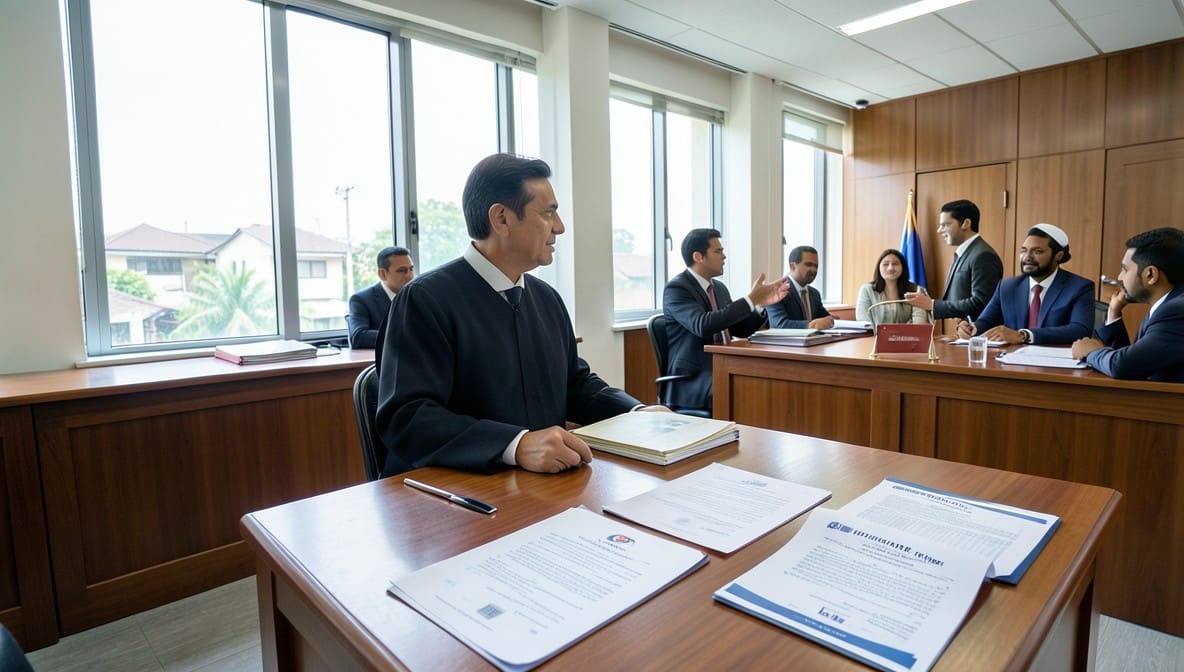
The Bombay High Court's judgment in Capalpha Trade Private Limited v. Dentsu Communications India Pvt. Ltd. addresses a critical question in arbitration law: whether disputes involving allegations of fraud, collusion, and third-party involvement are arbitrable. The Court set aside an arbitrator's order that declined jurisdiction on grounds of convenience, reaffirming that civil claims arising from contractual disputes remain arbitrable unless they involve public law implications or affect third-party rights in rem.
Background & Facts
The Dispute
The petitioner, Capalpha Trade Private Limited, entered into a trade financing arrangement with the respondent, Dentsu Communications India Pvt. Ltd., under a letter of intent dated 5th March 2021. The arrangement involved short-term financing for the supply of food grains by Suumaya Agro (a third party) to the respondent. The petitioner would release funds to Suumaya Agro upon receiving written confirmation from the respondent that the goods were delivered. The respondent was liable to repay the petitioner within 30-45 days. Between February and September 2021, the respondent paid approximately Rs. 175 crores but defaulted thereafter, citing internal fraud by its former employees.
Key Facts
- 5th March 2021: Letter of intent issued for Rs. 600 crores over 20 months.
- 21st February to 15th September 2021: Respondent paid Rs. 175 crores under the arrangement.
- 19th October 2021: Petitioner issued a demand notice alleging fraud and collusion.
- 4th April 2022: Bombay High Court referred disputes to arbitration, keeping arbitrability issues open.
- 20th July 2022: Petitioner filed a statement of claim.
- 2nd November 2022: Respondent filed a statement of defence, alleging sham transactions and fraud.
- Post-November 2022: Respondent filed an application under Section 16 of the Arbitration Act, contending that the disputes were non-arbitrable due to allegations of fraud involving third parties.
Procedural History
- 12th June 2022: Petitioner filed an application under Section 9 of the Arbitration Act for interim relief.
- 4th April 2022: Court treated the Section 9 application as one under Section 17 and referred parties to arbitration.
- 3rd August 2023: Arbitrator allowed the respondent’s Section 16 application, holding the disputes non-arbitrable.
- 2025: Petitioner filed the present Commercial Arbitration Petition No. 183 of 2025 under Section 37 of the Arbitration Act challenging the arbitrator’s order.
The Parties' Positions
- Petitioner: Contended that the disputes were purely contractual, involving recovery of money under purchase orders. Allegations of fraud were made by the respondent, not the petitioner, and did not affect third-party rights. The arbitration agreement remained valid.
- Respondent: Argued that the allegations of fraud, collusion, and forgery involved third parties and required adjudication in a civil court. The disputes had public implications and could not be resolved in a private arbitration.
Relief Sought
The petitioner sought to set aside the arbitrator’s order dated 3rd August 2023, dismiss the respondent’s Section 16 application, and restore the arbitration proceedings.
The Legal Issue
The central question was whether disputes involving allegations of fraud, collusion, and third-party involvement are arbitrable under Section 16 of the Arbitration Act, or whether they must be adjudicated by a civil court due to their complexity and public implications.
Arguments Presented
For the Petitioner
- The petitioner’s claim was based solely on the purchase orders and sought recovery of money. The reference to fraud in the statement of claim was in response to the respondent’s allegations.
- The arbitrator’s findings were contradictory, as the arbitration agreement was held valid, and the award would not affect third-party rights.
- The respondent’s reliance on Simran Sodhi v. Sandeep Singh was misplaced, as that case involved reliefs affecting third-party rights, unlike the present dispute.
- The arbitrator failed to apply the tests laid down by the Supreme Court in A. Ayyasamy v. A. Paramasivam, Rashid Raza v. Sadaf Akhtar, and Avitel Post Studioz Ltd. v. HSBC PI Holdings (Mauritius) Ltd., which distinguish between serious fraud (non-arbitrable) and simple fraud (arbitrable).
- The petitioner’s belated filing of the Section 16 application violated Section 16(2) of the Arbitration Act, which requires jurisdictional objections to be raised before or at the time of submitting the statement of defence.
For the Respondent
- The petitioner’s demand notice and Section 9 application alleged fraud, collusion, and forgery involving third parties, making the disputes non-arbitrable.
- The disputes involved serious allegations of fraud with criminal implications, requiring adjudication in a civil court where third parties could be impleaded.
- The respondent relied on Booz Allen and Hamilton Inc. v. SBI Home Finance Ltd. and Vidya Drolia v. Durga Trading Corporation to argue that disputes with erga omnes effect are non-arbitrable.
- The respondent contended that the arbitrator rightly held the disputes non-arbitrable, as a collective resolution involving third parties was necessary.
- The respondent argued that the jurisdictional objection was validly raised, even if belatedly, as the arbitrator was bound to consider it under Section 16(2) of the Arbitration Act.
The Court's Analysis
The Court undertook a detailed examination of the legal principles governing arbitrability of fraud allegations:
-
Legal Framework:
- In A. Ayyasamy, the Supreme Court held that disputes involving serious fraud may not be arbitrable if they involve criminal offences or complex issues requiring adjudication by a civil court. However, simple allegations of fraud remain arbitrable.
- In Rashid Raza, the Supreme Court laid down two tests for non-arbitrability:
- (1) Whether the fraud permeates the entire contract, including the arbitration agreement, rendering it void.
- (2) Whether the allegations involve public law implications, necessitating adjudication by a writ court.
- In Avitel Post Studioz, the Supreme Court reaffirmed that serious fraud allegations must satisfy either of the two tests to be non-arbitrable.
- In Vidya Drolia, the Supreme Court propounded a fourfold test for non-arbitrability:
- (1) Disputes relating to actions in rem.
- (2) Disputes affecting third-party rights with erga omnes effect.
- (3) Disputes involving sovereign or public interest functions.
- (4) Disputes expressly non-arbitrable under mandatory statutes.
-
Application to the Present Case:
- The arbitrator held that the disputes were non-arbitrable due to the involvement of third parties and the desirability of a collective resolution in a civil court. However, the Court noted that the arbitration agreement was valid, and the disputes were purely contractual, involving recovery of money.
- The Court observed that the arbitrator’s reasoning was based on convenience rather than legal principles. The arbitrator failed to record a clear finding that the disputes fell within the non-arbitrable categories recognised by the Supreme Court.
- The Court emphasised that mere allegations of fraud, even if serious, do not render disputes non-arbitrable unless they satisfy the tests laid down in A. Ayyasamy and Vidya Drolia. In this case, the allegations did not permeate the arbitration agreement or involve public law implications.
- The Court held that the pendency of criminal proceedings did not per se render the disputes non-arbitrable. The arbitral tribunal could adjudicate the contractual claims without affecting third-party rights.
-
Procedural Compliance:
- The Court noted that the respondent’s Section 16 application was filed belatedly, after the conclusion of arguments on the petitioner’s Section 17 application. This violated Section 16(2) of the Arbitration Act, which requires jurisdictional objections to be raised before or at the time of submitting the statement of defence.
"The mere fact that criminal proceedings can or have been instituted in respect of the same incident would not per se lead to the conclusion that the dispute which is otherwise arbitrable ceases to be so."
The Verdict
The Court set aside the arbitrator’s order dated 3rd August 2023, dismissed the respondent’s application under Section 16 of the Arbitration Act, and restored the arbitration proceedings. The Court directed the arbitrator to proceed with the reference from the stage at which the respondent filed the Section 16 application.
What This Means For Similar Cases
Fraud Allegations Do Not Automatically Render Disputes Non-Arbitrable
- Practitioners must distinguish between serious fraud (non-arbitrable) and simple fraud (arbitrable). Disputes remain arbitrable unless they satisfy the tests laid down in A. Ayyasamy and Vidya Drolia:
- The fraud permeates the entire contract, including the arbitration agreement.
- The allegations involve public law implications or affect third-party rights in rem.
- Mere involvement of third parties or complexity of allegations does not render disputes non-arbitrable.
Arbitration Agreement Remains Valid Unless Specifically Vitiated
- The validity of the arbitration agreement is not affected by allegations of fraud unless the fraud specifically vitiates the agreement itself.
- Courts must defer to the parties’ choice of arbitration unless the disputes fall within the recognised categories of non-arbitrable subjects.
Procedural Compliance Under Section 16(2) Is Mandatory
- Jurisdictional objections under Section 16(2) of the Arbitration Act must be raised before or at the time of submitting the statement of defence. Belated objections may be rejected unless the delay is justified.