The Customs, Excise & Service Tax Appellate Tribunal has clarified a critical principle in tariff classification: a product need not be fully consumable to qualify under a heading if it retains the essential character of the classified article. This decision resolves longstanding ambiguity around the classification of partially cooked Indian flatbreads and sets a precedent for similar food products.
Background & Facts
The Dispute
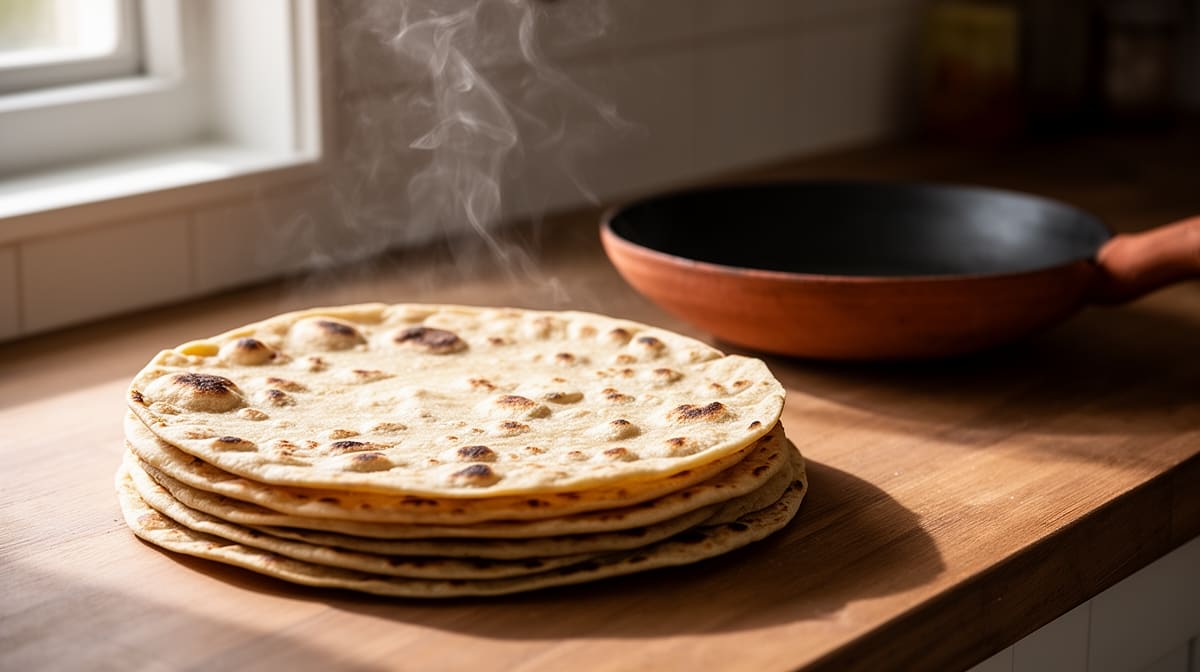
The appellant, M/s Ready Roti India Private Limited, manufactures packaged, partially cooked rotis marketed as "Ready to Cook Rotis - 1 min Heat & Eat". The product is made from wheat flour, rolled into discs, and lightly cooked before packaging. Consumers heat them on a tawa or gas burner for one minute before consumption. The appellant classified the product under CETH 1905 90 90 (bread and bakery items), attracting nil duty, and did not obtain central excise registration.
Procedural History
- September 2015: Appellant commenced manufacturing ready rotis without excise registration
- 30 November 2018: Departmental officers inspected premises and observed product labeling and manufacturing process
- 30 September 2020: Show Cause Notice issued proposing recovery of excise duty for period September 2015 to June 2017
- March 2022: Assistant Commissioner issued Order-in-Original, reducing demand but confirming duty, interest, and penalty under Section 11A(4) and Section 11AC of the Central Excise Act, 1944
- 2 July 2024: Commissioner (Appeals) upheld the OIO
- 8 December 2025: Appeal heard before the Tribunal
Relief Sought
The appellant seeks quashing of the duty demand, interest, and penalty, arguing that the product is correctly classified under CETH 1905 90 90, that the Show Cause Notice is time-barred, and that no intent to evade duty exists.
The Legal Issue
The central question was whether partially cooked ready rotis, requiring minimal heating before consumption, retain the essential character of bread under CETH 1905 90 90, or whether they constitute an "instant food mix" under CETH 2106 90 90.
Arguments Presented
For the Appellant
Counsel argued that roti is an unleavened bread, recognized in Indian culinary tradition and included under "bread and rolls" in FSSAI Regulations. Reliance was placed on Modern Food Enterprises Pvt. Ltd. v. UOI, where Malabar Parota was held classifiable under heading 1905. The appellant emphasized that Rule 2(a) of the General Rules for Interpretation permits classification of incomplete articles if they possess the essential character of the finished product. No evidence of fraud or suppression was presented.
For the Respondent
The Revenue contended that since the rotis are not ready to eat without further cooking, they cannot be classified as bread. They argued that Rule 3(a) favors the more specific heading (2106 90 90) over the general one (1905 90 90). The Revenue also asserted that the extended period of limitation under Section 11A(4) was validly invoked, as the inspection occurred within two years of the SCN issuance.
The Court's Analysis
The Tribunal rejected the Revenue’s argument that readiness for immediate consumption is a prerequisite for classification as bread. It emphasized that Rule 2(a) of the General Rules for Interpretation explicitly includes incomplete or unfinished articles if they possess the essential character of the finished product. The Tribunal noted that rotis, even when partially cooked, are not dough or flour - they are shaped, pressed, and partially baked into the form of bread.
"The Ready Rotis manufactured by the appellant have, undoubtedly, the essential character of Rotis. They are not in the form of wheat or flour or dough. However, they are incomplete and need to be cooked for a few more minutes before consuming. Therefore, they are squarely covered by Rules of Interpretation 2(a)."
The Tribunal distinguished Modern Food Enterprises as directly analogous, noting that the Kerala High Court’s reasoning on parotas applied equally to rotis. It further held that the product’s marketing as "heat and eat" does not transform its nature into an instant food mix; the method of consumption does not override the product’s intrinsic character. The Tribunal also found that the extended period of limitation was not applicable, as the appellant’s classification was based on a bona fide belief, with no evidence of fraud or suppression.
The Verdict
The appellant won. The Tribunal held that partially cooked ready rotis retain the essential character of bread and are correctly classifiable under CETH 1905 90 90, attracting nil duty. The impugned order was set aside, and the demand for duty, interest, and penalty was quashed.
What This Means For Similar Cases
Essential Character Overrides Marketing Claims
- Practitioners must assess product classification based on intrinsic physical and functional attributes, not promotional language
- Marketing terms like "ready to cook" or "instant" do not override tariff classification under Rule 2(a)
- Food manufacturers should document the manufacturing process to demonstrate continuity of essential character
Classification of Unleavened Breads Is Protected
- Unleavened flatbreads (roti, parota, chapati, kulcha) are now explicitly recognized as bread under CETH 1905 90 90
- FSSAI’s inclusion of roti under "bread and rolls" reinforces this classification in regulatory alignment
- Similar products like uncooked dosa batter sheets or paratha discs may now be classified under the same heading
Bona Fide Classification Shields from Penalty
- Absence of fraud, suppression, or wilful misstatement negates application of Section 11AC penalty
- Taxpayers acting on reasonable interpretation of tariff headings are protected from punitive demands
- Authorities must establish intent to evade duty before invoking extended limitation or penalty provisions