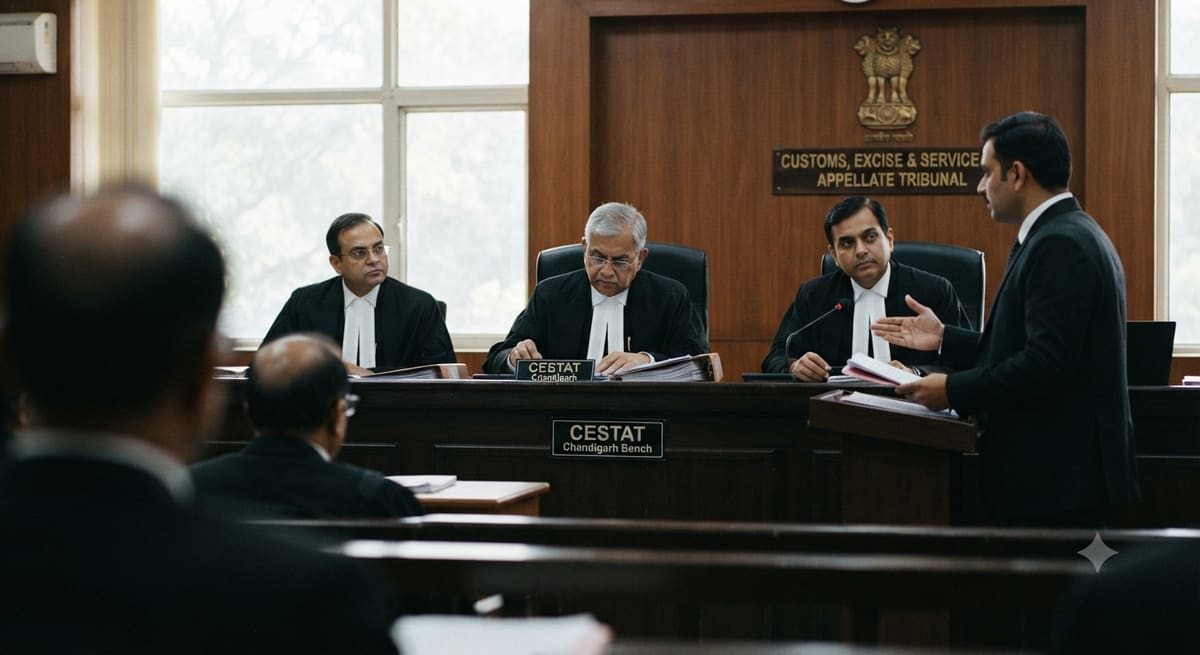
The Chennai Regional Bench of the Customs, Excise & Service Tax Appellate Tribunal has delivered a significant ruling clarifying that extended period of limitation under Section 11A(4) of the Central Excise Act, 1944 cannot be invoked when a taxpayer acts under a bona fide belief in the face of an interpretational dispute over statutory classification. This decision reinforces the principle that legal ambiguity, especially where judicial and departmental views have diverged, precludes allegations of suppression or wilful evasion.
Background & Facts
The Dispute
The appellant, M/s Miracle Sands and Chemicals, Tuticorin, was assessed for Central Excise Duty on the grounds that it had manufactured and cleared "Titanium Concentrates" - specifically Ilmenite and Rutile - from beach sand between 01.03.2011 and 07.06.2012 without paying duty. The Department contended that the physical and mechanical separation of valuable minerals from beach sand constituted "manufacture" under Section 2(f)(ii) of the Central Excise Act, 1944, read with Note 4 to Chapter 26 of the Central Excise Tariff Act, 1985 (CETA), which came into effect on 01.03.2011. The Commissioner confirmed a demand of Rs.6,08,35,533/- as duty, along with interest and penalty.
Key Facts
- The appellant imported and sourced beach sand containing Ilmenite, Rutile, Zircon, and Garnet.
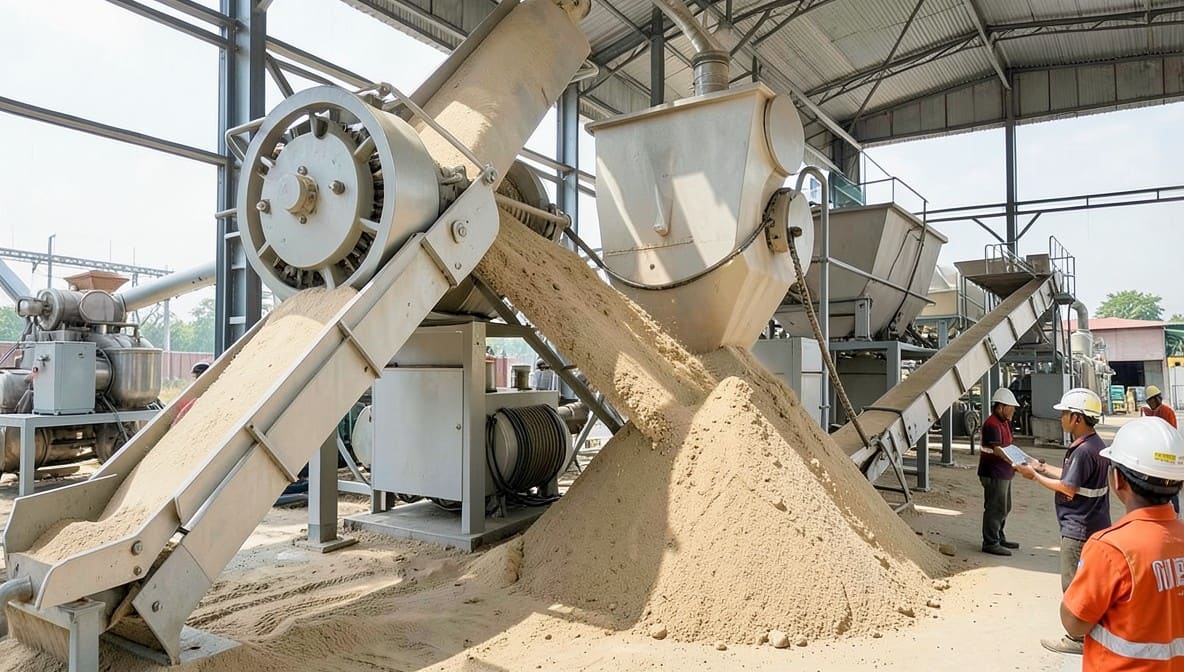
- The sand was processed using physical and mechanical methods - including washing, magnetic separation, gravity separation, and drying - to isolate valuable mineral fractions.
- The resultant product was marketed as "Hi Grade Sands" (70% and 80% grade), but the chemical composition of the minerals remained unchanged.
- The appellant did not pay Central Excise duty on these clearances from 01.03.2011 to 07.06.2012.
- On 08.06.2012, the appellant began paying duty after amending its Registration Certificate to include "concentrated minerals".
- The appellant cleared goods to 100% Export Oriented Units (EOUs) and sold "as such" (unprocessed) mineral sand to welding electrode manufacturers.
- The Department’s audit in January 2014 revealed the non-payment of duty.
- A Show Cause Notice (SCN) dated 01.04.2016 was issued, invoking the extended period of limitation under Section 11A(4) of the CEA.
- The appellant submitted certificates from EOUs confirming receipt of goods and a technical opinion from a welding rod manufacturer affirming that only unprocessed sand was used.
- The Assistant Commissioner of Customs, Tuticorin, in a letter dated 13.01.2017, classified the exported product as "Unprocessed Ilmenite" under CTH 26140010.
- Government entities such as Indian Rare Earths Limited (IRE) and Kerala Minerals & Metals Limited (KMML) also began paying duty only from June 2012.
Procedural History
- 01.03.2011: Note 4 to Chapter 26 of CETA came into force, deeming conversion of ores into concentrates as "manufacture".
- 08.06.2012: Appellant commenced payment of Central Excise duty and amended its Registration Certificate.
- 06.01.2014 & 31.01.2014: Internal Audit conducted by Department.
- 01.04.2016: Show Cause Notice issued demanding duty, interest, and penalty for period 01.03.2011 to 07.06.2012.
- 15.03.2018: Commissioner issued Order-in-Original confirming demand of Rs.6,08,35,533/-, interest, and penalty.
- 19.10.2022: Writ Petition filed before Madras High Court dismissed with liberty to file statutory appeal.
- 11.07.2014: Writ Appeal dismissed with liberty to file statutory appeal.
- 03.02.2026: Hearing before CESTAT Chennai Regional Bench.
- 06.05.2026: Final Order passed.
Relief Sought
The appellant sought:
- Setting aside of the impugned order dated 15.03.2018.
- Exclusion of clearances to 100% EOUs and "as such" sales from the turnover.
- Cancellation of interest and penalty.
- Declaration that extended period of limitation under Section 11A(4) was not applicable.
The Legal Issue
The central question was whether the extended period of limitation under Section 11A(4) of the Central Excise Act, 1944 could be invoked against a taxpayer who acted under a bona fide belief that the physical separation of minerals from beach sand did not constitute "manufacture" or result in "concentrates", given that the issue had been the subject of conflicting judicial and departmental interpretations over a decade.
Arguments Presented
For the Appellant
The appellant relied on multiple CESTAT decisions - including M/s Indian Rare Earths Limited v. CCE [2002 (139) ELT 352 (Tri.-Kol)] and M/s Classic Microtech Pvt. Ltd. v. CC Ahmedabad [2012 (285) ELT 418 (Tri.-Ahmd.)] - which held that mere physical separation without chemical treatment or augmentation of purity does not amount to manufacture. It emphasized that the Supreme Court had affirmed the Indian Rare Earths decision in 2009. The appellant argued that the insertion of Note 4 in 2011 created a legal fiction, but its application was not clear-cut, especially since government entities like IRE and KMML also began paying duty only in June 2012. The appellant submitted that its belief was genuine, not blind, and that non-compliance with CT-3 procedures for EOU clearances was due to ignorance of the law, not intent to evade. It further cited M/s Apollo Tyres Limited and M/s Rungta Mines Limited to argue that interpretational disputes preclude invocation of extended limitation.
For the Respondent
The Department relied on M/s Indian Rare Earths Limited [2016 (338) ELT 274 (Tri.-Kol)], which held that physical processes like magnetic and gravity separation constituted manufacture under Note 4. It argued that the appellant’s failure to declare clearances in ER-1 returns, delayed payment from June 2012, and use of sister-unit facilities indicated deliberate concealment. The Department contended that the appellant’s belief was not bona fide because the tariff change was public and the appellant was a long-standing registered unit since 1994. It further argued that non-compliance with CT-3 procedures for EOU clearances invalidated the exemption, and that the opinion of the welding rod manufacturer was irrelevant.
The Court's Analysis
The Tribunal undertook a meticulous review of the statutory framework, judicial precedents, and factual conduct of the appellant. It noted that Note 4 to Chapter 26 of CETA, inserted on 01.03.2011, created a legal fiction by deeming the conversion of ores into concentrates as "manufacture", even in the absence of chemical change. However, the term "concentrates" was not defined in CETA, and the HSN Explanatory Notes defined it as ores from which foreign matter is removed by "special treatments" for metallurgical efficiency or economical transport.
"The contention of the appellant that unless the content of Ores improves, the resultant cannot be called as a 'concentrates' and accordingly the physical/mechanical processes carried out by them like washing, magnetic separation, gravity separation etc. to sand Ores would not fall under the definition of manufacture, in our opinion, is the result of misunderstanding and incorrect interpretation of the relevant tariff entry, the Chapter Note 4 and clause (ii) of Sec. 2(f) of CEA, 1944."
The Tribunal acknowledged that while the process did amount to manufacture under the legal fiction of Note 4, the critical issue was whether the appellant’s non-payment was due to suppression or bona fide misunderstanding. It found that the appellant’s belief was not only reasonable but widely shared. The fact that government entities like IRE and KMML also began paying duty only in June 2012 demonstrated that the legal position was unsettled. The Assistant Commissioner of Customs had classified the same product as "unprocessed" for export purposes in January 2017, further evidencing departmental inconsistency.
The Tribunal rejected the Department’s claim of "clandestine removal", noting that all clearances were documented and accounted for in books. It held that the Department’s failure to act upon the appellant’s duty payment from June 2012 - despite having a preventive unit and access to ER-1 returns - was inexcusable. The delay in audit until 2014, three years after the tariff change, could not be blamed on the appellant.
"The charge that the Appellant resorted to suppression to evade duty payment is bereft of any merit or any evidence and hence, unsustainable."
Regarding EOU clearances, the Tribunal applied the maxim Lex non cogit as impossibilia - the law does not compel the impossible. Since the appellant genuinely believed the goods were non-dutiable, compliance with CT-3 procedures was not feasible. The certificates obtained post-audit confirmed receipt, and the Department’s refusal to verify them was arbitrary.
Similarly, the Tribunal held that the Department’s rejection of "as such" sales was based on assumption, not evidence. The opinion of the welding rod manufacturer, though specific to one product, could not be dismissed without independent verification. The Department’s own acceptance of SAD refunds for "as such" sales confirmed the nature of those transactions.
The Verdict
The appeal was allowed. The Tribunal set aside the Order-in-Original dated 15.03.2018 in its entirety. The demand of Rs.6,08,35,533/- for Central Excise Duty, along with interest and penalty, was held to be barred by limitation under Section 11A(4) of the Central Excise Act, 1944. The appellant’s clearances to 100% EOUs and "as such" sales were excluded from the turnover. No duty, interest, or penalty was payable for the period 01.03.2011 to 07.06.2012.
What This Means For Similar Cases
Bona Fide Belief in Interpretational Disputes Shields from Extended Limitation
- Practitioners must argue that extended period under Section 11A(4) cannot be invoked where the legal position was genuinely uncertain and judicial precedents were conflicting.
- A taxpayer’s conduct - such as commencing duty payment upon clarification - supports a claim of bona fide belief.
- Departmental inconsistency (e.g., different classifications for export vs. domestic duty) strengthens the argument that the issue was interpretational.
Procedural Lapses Cannot Override Substantive Exemptions
- Non-compliance with CT-3 or other procedural requirements for EOU clearances cannot be used to deny exemption if the taxpayer acted under a genuine belief that the goods were non-dutiable.
- The burden lies on the Department to verify claims of receipt, not to reject them on technical grounds.
- Courts and tribunals will not penalize taxpayers for failing to follow procedures that are irrelevant under their understanding of the law.
Evidence Must Precede Allegation in Excise Assessments
- Assumptions about product use (e.g., "ought to have been cleared as concentrates") are insufficient to sustain a demand.
- The Department must conduct investigations and produce evidence before alleging concealment or misclassification.
- Acceptance of SAD refunds or prior clearances without objection constitutes tacit recognition of the nature of goods.