Topic

caste verification

Caste verification in India refers to the legal process of authenticating an individual's claim to a Scheduled Caste, Scheduled Tribe, or Other Backward Class status for reservation benefits, governed by state and central regulations and judicial precedents.

13 articlesLatest June 2026
Natural Justice | Caste Verification Order Vitiated by Failure to Provide Translated Vigilance Report or Personal Hearing : Bombay HC
|Bombay High Court

Natural Justice | Caste Verification Order Vitiated by Failure to Provide Translated Vigilance Report or Personal Hearing : Bombay HC

The Bombay High Court has held that denying a petitioner a translated copy of the vigilance report and refusing a personal hearing before invalidating a Scheduled Tribe certificate violates the foundational principles of natural justice. This ruling reinforces that procedural fairness is non-negotiable in caste verification, especially when state action impacts employment rights and affirmative action benefits after decades of service.


Rule 7(1) Karnataka SC/ST/OBC Rules 1992 | Caste Verification Committees Must Consider CRE Cell Reports: Karnataka HC
Case Law Analysis
|Karnataka High Court

Rule 7(1) Karnataka SC/ST/OBC Rules 1992 | Caste Verification Committees Must Consider CRE Cell Reports: Karnataka HC

The Karnataka High Court has ruled that caste verification committees cannot issue or cancel caste certificates without formally considering the inspection report from the Civil Rights and Enforcement Cell, making it a non-discretionary procedural requirement. This binds district authorities to rely on verified ground-level evidence, safeguarding applicants from arbitrary decisions and reinforcing administrative accountability in reservation certification.

Scheduled Tribe Certificate | 'Mani' Must Be Read as 'Mana' Where No Such Caste Exists Under Constitution (Scheduled Tribes) Order : Bombay HC Nagpur Bench
Case Law Analysis
|Bombay High Court

Scheduled Tribe Certificate | 'Mani' Must Be Read as 'Mana' Where No Such Caste Exists Under Constitution (Scheduled Tribes) Order : Bombay HC Nagpur Bench

Bombay HC Nagpur Bench rules that where 'Mani' is not a recognized Scheduled Tribe but 'Mana' is, the certificate must be interpreted as 'Mana' to uphold constitutional protections. The judgment restores service and directs issuance of a validity certificate, reinforcing natural justice in caste verification processes.

Natural Justice in ST Certification | Bombay HC Mandates Scrutiny of Maternal-Side Evidence Before Rejection : Bombay HC Nagpur Bench
Case Law Analysis
|Bombay High Court

Natural Justice in ST Certification | Bombay HC Mandates Scrutiny of Maternal-Side Evidence Before Rejection : Bombay HC Nagpur Bench

Bombay HC sets aside a caste certificate rejection for failing to consider school records proving Halba tribe affiliation via maternal lineage. The court directed issuance of the certificate within four weeks, reinforcing that administrative bodies cannot dismiss evidence without proper evaluation, safeguarding constitutional rights under Articles 14 and 16.

Constitution (Scheduled Tribes) Order, 1950 Entry 16 | Mogia Community Recognized as ST; Mechanical Denial of Certificate Quashed : MP HC Gwalior
Case Law Analysis
|Madhya Pradesh High Court

Constitution (Scheduled Tribes) Order, 1950 Entry 16 | Mogia Community Recognized as ST; Mechanical Denial of Certificate Quashed : MP HC Gwalior

The Madhya Pradesh High Court has affirmed that the Mogia community is constitutionally recognized as a Scheduled Tribe under Entry 16 of the 1950 Order, striking down administrative denials of caste certificates as legally unsustainable. This ruling reinforces binding precedent and protects the rights of thousands of Mogia families seeking affirmative action benefits under India’s constitutional framework.

Caste Certificate Validity | Blood Relative Certificates Create Presumptive Proof of ST Status Unless Fraud Proven : Bombay HC
Case Law Analysis
|Bombay High Court

Caste Certificate Validity | Blood Relative Certificates Create Presumptive Proof of ST Status Unless Fraud Proven : Bombay HC

The Bombay High Court has ruled that validity certificates issued to blood relatives establish a rebuttable presumption of Scheduled Tribe status, shifting the burden to scrutiny committees to prove fraud-not mere inconsistency-to reject a claim. This sets a critical precedent for thousands of applicants relying on familial documentation in caste verification processes across Maharashtra.

Pre-1976 Documentary Evidence Trumps Affinity Test & Area Restrictions for ST Caste Certificates : Bombay HC (Nagpur Bench)
Case Law Analysis
|Bombay High Court

Pre-1976 Documentary Evidence Trumps Affinity Test & Area Restrictions for ST Caste Certificates : Bombay HC (Nagpur Bench)

Bombay HC's Nagpur Bench ruled that pre-independence documents listing 'Mana' as a Scheduled Tribe hold superior probative value, invalidating post-1976 affinity tests and area restrictions. The judgment reinforces reliance on historical records for caste verification, impacting thousands of ST certificate holders facing scrutiny challenges.

Pre-Independence School Records Supersede Affinity Test for ST Certification | Bombay HC
Case Law Analysis
|Bombay High Court

Pre-Independence School Records Supersede Affinity Test for ST Certification | Bombay HC

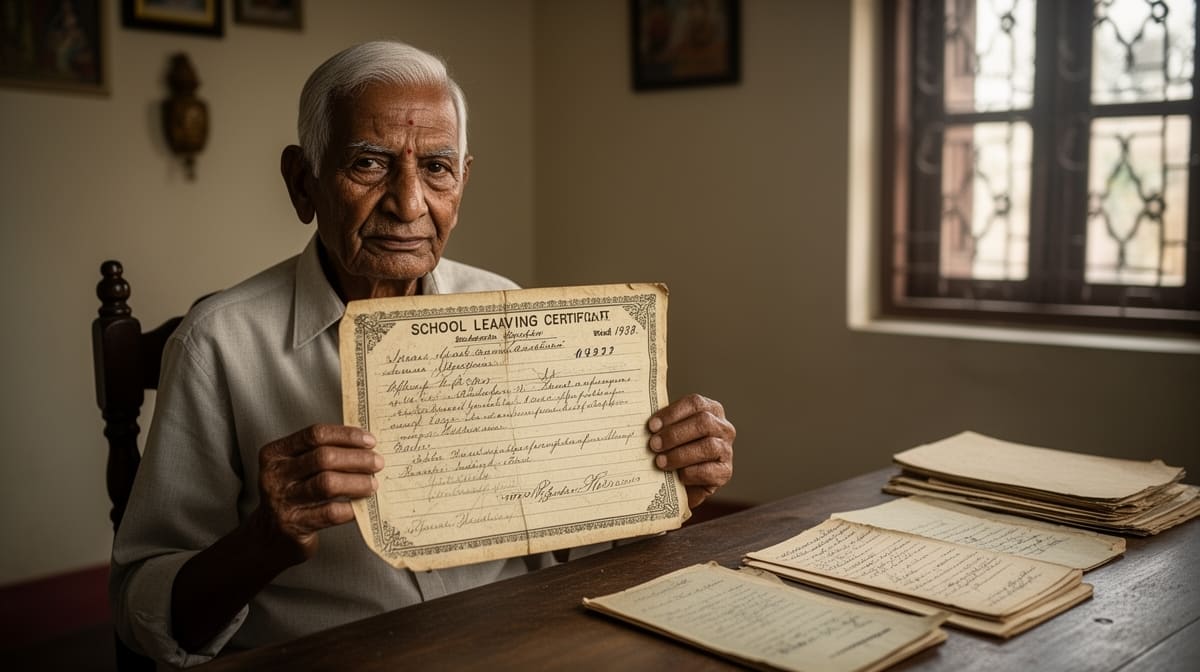
The Bombay High Court has ruled that pre-independence school records conclusively establish Scheduled Tribe status, rendering rejection based on affinity tests or geographic restrictions legally invalid. This sets a critical precedent for tribal applicants relying on historical documentation, especially in regions where colonial-era records are the only verifiable proof of caste identity.