The Bombay High Court has set aside a caste certificate rejection that ignored critical documentary evidence linking the petitioner to the Halba Scheduled Tribe, emphasizing that procedural fairness demands proper appreciation of historical records, even when they conflict with later entries. The judgment reinforces that administrative bodies cannot dismiss caste claims based on selective scrutiny or unexplained contradictions.
Background & Facts
The Dispute
The petitioner, Ku. Kanchan Balkrushna Sonkusle, was appointed as a probationary Clerk in the Scheduled Tribe category by the Amravati District Central Co-operative Bank on 08.09.2003, subject to submission of a valid Scheduled Tribe certificate. She failed to submit the certificate within the stipulated time, leading to her termination on 25.11.2005. She challenged the termination before this Court, which quashed the order on 18.07.2006 and directed her reinstatement on 03.08.2006. She has remained in service since then.
The Scrutiny Committee, Respondent No.2, initially invalidated her caste claim on 21.12.2006. She challenged this in Writ Petition No.780/2007, and this Court quashed the invalidation on 27.08.2009, remanding the matter for fresh consideration in accordance with law. The Scrutiny Committee again rejected her claim on 28.11.2022, prompting the present writ petition.
Key Facts
- The petitioner’s father, Balkrushna Maruti Sonkusale, was recorded as belonging to the "Koshti" caste in school records from 1944 to 1945.
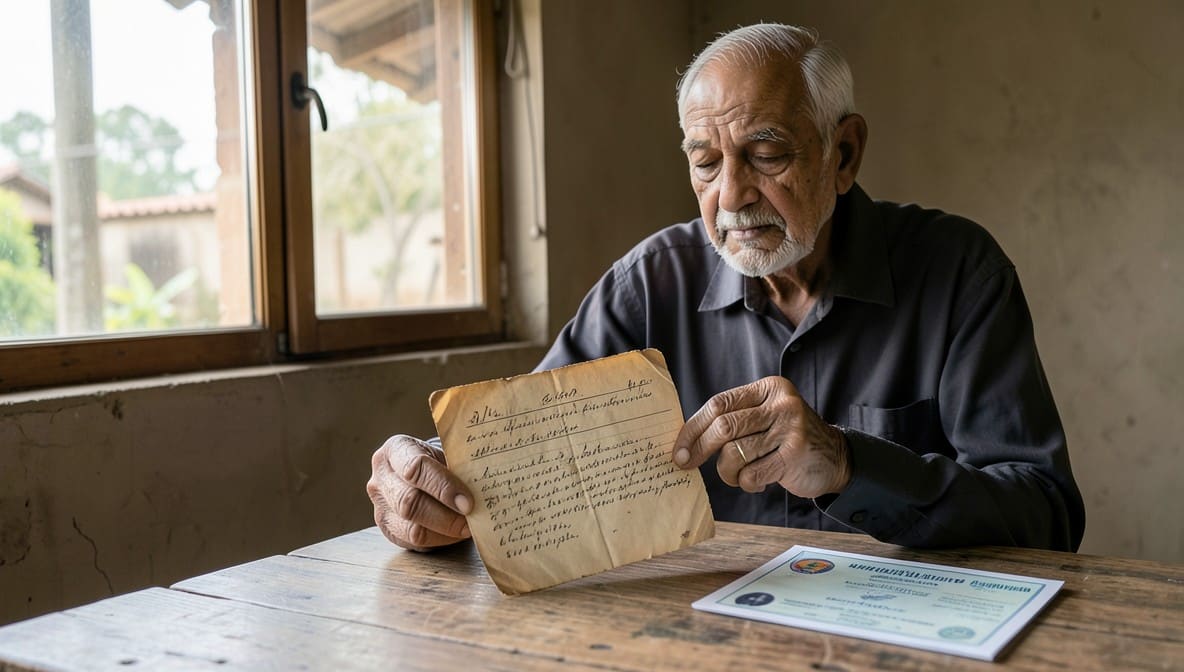
- An extract of the school leaving register (Entry No.10) dated 03.04.1944 shows the caste column originally marked "Koshti" was scratched out and overwritten with "Halba", with a remark stating the change was made pursuant to Order No.3648 of the Education Officer dated 02.05.1955.
- The Headmistress of the school, Mrs. Nandanwar, confirmed in cross-examination that only the Education Officer could authorize such changes, and that the alteration was done in compliance with the Secondary School Code.
- A subsequent entry (Entry No.10A) dated 03.04.1945, prepared by the same school, again recorded the caste as "Koshti".
- The Vigilance Cell obtained this document and noted the conflicting entries, yet the Scrutiny Committee dismissed the 1944 entry as "overwritten" without addressing the Education Officer’s order.
- The petitioner submitted a caste certificate issued on 17.11.1989 by the Competent Authority.
- The petitioner’s reply to the Vigilance Cell explicitly denied that the "Koshti" entries pertained to her family, citing absence of surname and name match.
- The Vigilance Cell’s own report acknowledged that the petitioner’s parents married within the same tribe.
- Documents from the maternal side (Lila Gangaramji Newale and Suryabhan Newale) were rejected for lack of proven relationship, though no argument was advanced on the constitutional validity of Rule 2(f) of the Maharashtra Scheduled Tribes Rules, 2003.
Procedural History
- 08.09.2003: Petitioner appointed as probationary Clerk on condition of submitting ST certificate.
- 25.11.2005: Termination order issued due to non-submission of certificate.
- 18.07.2006: High Court quashed termination order in W.P. No.1488/2006.
- 03.08.2006: Petitioner reinstated.
- 21.12.2006: Scrutiny Committee invalidated caste claim.
- 27.08.2009: High Court quashed 2006 invalidation and remanded matter to Scrutiny Committee in W.P. No.780/2007.
- 28.11.2022: Scrutiny Committee issued impugned order rejecting caste claim again.
- 07.05.2026: Present writ petition decided by Division Bench.
Relief Sought
The petitioner sought quashing of the Scrutiny Committee’s order dated 28.11.2022, a declaration that she belongs to the "Halba" Scheduled Tribe, and issuance of a valid caste certificate. She also challenged the constitutionality of Rule 2(f) of the Maharashtra Scheduled Tribes Rules, 2003, but did not argue it before the Court.
The Legal Issue
The central question was whether the Scrutiny Committee acted arbitrarily and illegally by rejecting the petitioner’s caste claim despite the presence of a school record dated 1944 showing a legally authorized change of caste to "Halba", and whether the failure to consider the petitioner’s explanation regarding conflicting entries and the Vigilance Cell’s own admission of intra-tribal marriage amounted to a violation of natural justice.
Arguments Presented
For the Petitioner
Learned counsel argued that the 1944 school record, with its notation of change pursuant to the Education Officer’s order, constituted authoritative documentary evidence of the petitioner’s ancestral affiliation to the "Halba" tribe. He emphasized that the Headmistress confirmed the alteration could only be made by the Education Officer, validating its legitimacy. He further contended that the Scrutiny Committee ignored the petitioner’s rebuttal to the "Koshti" entries, which showed no surname or name match, and failed to consider the Vigilance Cell’s own finding that the marriage was within the same tribe. He relied on Rameshbhai Dabhai Naika v. State of Gujarat to argue that caste identity may be established through lineage and upbringing, even where documentation is complex.
For the Respondent
The Assistant Government Pleader contended that the conflicting entries in the school register, particularly the 1945 entry showing "Koshti", undermined the petitioner’s claim. He argued that the petitioner failed to establish a clear lineage and that the Scrutiny Committee was justified in rejecting documents from the maternal side due to lack of proven relationship. He maintained that the Committee had afforded adequate opportunity for cross-examination and that the decision was based on a holistic view of the record.
The Court's Analysis
The Court observed that the Scrutiny Committee’s order was perverse and failed to engage with the most critical piece of evidence: the 1944 school record with the Education Officer’s authorized change. The Court noted that the Headmistress’s testimony confirmed the alteration was not arbitrary but done under official directive, and that the Secondary School Code permitted such corrections. The Court held that the Scrutiny Committee’s dismissal of this document as "overwritten" without addressing the legal authority behind it was a clear error.
"The change in caste column has been affected in pursuance to the order of the Education Officer bearing No.3648 on 2/5/1955."
The Court further emphasized that the Vigilance Cell’s own report acknowledged the marriage was within the same tribe, a fact the Scrutiny Committee ignored. The petitioner’s detailed rebuttal to the "Koshti" entries - pointing to absence of surname and name match - was also not addressed. The Court held that administrative bodies must engage with all material evidence, especially when it originates from official records and is corroborated by testimony.
The Court declined to rule on the constitutional validity of Rule 2(f) since no arguments were advanced, but noted that the rejection of maternal documents was not justified in the absence of such challenge. The Court concluded that the Scrutiny Committee’s decision was based on selective appreciation of evidence and violated the principles of natural justice.
The Verdict
The petition succeeded. The Court quashed and set aside the Scrutiny Committee’s order dated 28.11.2022. It declared that the petitioner belongs to the "Halba" Scheduled Tribe and directed the Scrutiny Committee to issue a valid caste certificate in her favour within four weeks from the date of the order. The writ petition was disposed of accordingly.
What This Means For Similar Cases
Documentary Evidence with Official Sanction Prevails
- Practitioners must insist that caste verification bodies give primacy to school records bearing official endorsements, even if later entries conflict.
- Scrutiny Committees cannot dismiss altered entries as "overwritten" without investigating the authority behind the change.
- Testimony from school officials confirming compliance with educational codes must be treated as conclusive unless disproven by credible evidence.
Failure to Address Rebuttals Violates Natural Justice
- Administrative bodies must respond to specific rebuttals submitted by applicants, particularly regarding conflicting records.
- Ignoring explanations about surname mismatches or unrelated entries constitutes a procedural flaw warranting quashing.
- Vigilance reports, even if adverse, must be fully considered - their favorable findings cannot be selectively ignored.
Maternal Lineage Claims Require Contextual Evaluation
- While the Court did not rule on Rule 2(f), it implicitly recognized that maternal lineage documents cannot be summarily dismissed without legal argument.
- Practitioners should preserve and submit all lineage documents, even from maternal side, as future challenges to Rule 2(f) may gain traction.
- The judgment signals that caste identity is not determined by rigid paternal lineage alone, especially where historical records and family circumstances support an alternative claim.