The Madhya Pradesh High Court has reaffirmed that state housing boards are bound by the Supreme Court’s binding guidelines on lease price escalation, requiring them to revisit demands made on lessees and refund any excess amounts collected without due process. This judgment reinforces the principle that administrative action must conform to settled legal standards, particularly when financial obligations are imposed on citizens.
Background & Facts
The Dispute
The petitioners, Dr. Ravishankar Khamparia and Dr. Girish Jha, challenged the impugned order dated 31.01.2014 issued by the Madhya Pradesh Housing and Infrastructure Development Board (Respondent No. 3), which unilaterally escalated the consideration amount required for registration of lease deeds for residential plots and houses. The petitioners had entered into lease agreements with the Board for residential plots and constructed houses thereon. Subsequent to construction, the Board issued notices demanding additional payments based on revised pricing norms, which the petitioners contended were arbitrary and contrary to settled legal principles.
Key Facts
- The petitioners had entered into lease agreements with the Madhya Pradesh Housing and Infrastructure Development Board for residential plots
- Houses were constructed on the leased plots in accordance with approved plans
- The Board issued an order dated 31.01.2014 demanding additional payment for registration of lease deeds, based on escalated pricing norms
- The petitioners paid the entire amount demanded under protest, to avoid denial of registration
- The petitioners challenged the legality of the escalation, arguing it violated principles of fairness and prior judicial guidance
Procedural History
- 31.01.2014: Impugned order issued by the Housing Board escalating lease registration charges
- 2014: Writ Petitions No. 12246 and 12247 of 2014 filed before the High Court of Madhya Pradesh at Jabalpur
- 05.05.2026: Hearing concluded before Justice Deepak Khot
The Parties' Positions
For the Petitioner
The petitioners, through counsel Shri Akash Sharma, submitted that the Board’s escalation of lease registration charges was ex-facie arbitrary, violative of natural justice, and contrary to the binding precedent laid down by the Supreme Court in Madhya Pradesh Housing and Infrastructure Development Board v. B.S.S. Parihar (2015) 14 SCC 130. They argued that the Board had no authority to unilaterally revise prices after construction had been completed and possession delivered, and that any revision must follow a fair, transparent, and procedurally compliant process, including issuance of a show cause notice and opportunity of hearing.
For the Respondent
The State, represented by Government Advocate Shri Suyash Thakur, and Respondents No. 2 and 3, represented by Shri Rohit Jain, conceded that the matter was no longer res integra, acknowledging that the Supreme Court’s judgment in B.S.S. Parihar had laid down clear and binding guidelines on the issue. They did not contest the applicability of the precedent but sought an opportunity to recalculate the amounts in accordance with the judgment.
Relief Sought
The petitioners sought:
- Quashing of the impugned order dated 31.01.2014
- Refund of the entire amount illegally recovered, with interest
- Directions to the Board to reconsider the quantum of dues in accordance with the Supreme Court’s guidelines
The Legal Issue
Whether the Madhya Pradesh Housing and Infrastructure Development Board can unilaterally escalate the lease registration charges after construction is complete, without following the procedural safeguards and pricing guidelines laid down by the Supreme Court in B.S.S. Parihar (2015) 14 SCC 130?
Arguments Presented
For the Petitioner
The petitioner relied on B.S.S. Parihar to argue that the Board’s action was ultra vires. The Supreme Court had held that any revision of lease prices must be prospective, based on transparent norms, and must not be applied retrospectively to completed constructions. The Court had also mandated that before imposing any additional liability, a show cause notice must be issued, and the lessee must be given a reasonable opportunity to be heard. The petitioners emphasized that the Board had not issued any such notice prior to the impugned order, rendering it procedurally invalid.
For the Respondent
The State and other respondents did not dispute the applicability of B.S.S. Parihar. They accepted that the Board’s action was inconsistent with the Supreme Court’s guidelines and agreed that the matter required reconsideration in light of the precedent. They did not contest the petitioner’s claim that the escalation was arbitrary or that the absence of a show cause notice violated natural justice.
The Court's Analysis
The Court observed that the parties had jointly conceded that the issue was no longer res integra, as the Supreme Court had already laid down comprehensive guidelines in B.S.S. Parihar. The Court examined paragraphs 22 onwards of the judgment, which clearly stipulated that:
"Any revision in the price of the leasehold plots or houses constructed thereon shall be prospective and shall not be applied retrospectively to houses already constructed and possession delivered. Before imposing any additional liability, a show cause notice must be issued and an opportunity of hearing granted to the lessee."
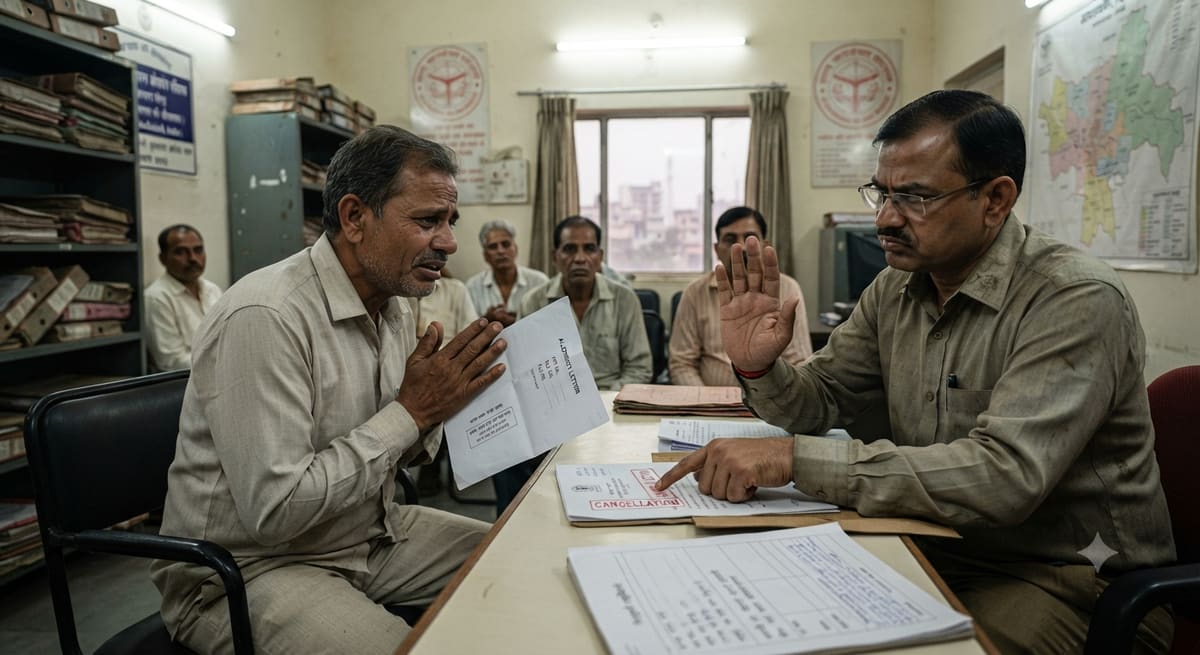
The Court held that the impugned order dated 31.01.2014 violated these mandatory procedural requirements. The Board had not issued a show cause notice, nor had it afforded the petitioners an opportunity to be heard before escalating the charges. The Court further noted that the petitioners had paid the demanded amount under protest, which did not amount to waiver of their legal rights.
The Court emphasized that administrative bodies cannot act in a manner inconsistent with binding precedents of the Supreme Court. The Board’s failure to follow the Parihar guidelines rendered the order arbitrary and violative of Article 14 of the Constitution. The Court rejected the notion that payment under protest could be construed as consent to the revised charges.
The Verdict
The petition succeeded. The Court set aside the impugned order dated 31.01.2014 and directed the Madhya Pradesh Housing and Infrastructure Development Board to issue a fresh show cause notice to the petitioners within one month of production of the certified copy of this order, in accordance with the guidelines in B.S.S. Parihar. The Board was further directed to determine the actual quantum of dues payable for registration of the lease deed, and to refund any excess amount paid by the petitioners within one month of receiving the petitioners’ reply on the quantum of dues. Interest on the refund amount shall be determined by the Board in accordance with prevailing norms, but shall not be less than 6% per annum from the date of payment until actual refund.
What This Means For Similar Cases
Procedural Fairness Is Non-Negotiable in Administrative Pricing
- Practitioners must challenge any retrospective price escalation by housing boards without prior notice and hearing
- Payment under protest does not constitute waiver of legal rights
- Any demand for additional payment must be preceded by a show cause notice and opportunity of hearing
Supreme Court Guidelines Bind All State Agencies
- State housing boards cannot ignore or dilute binding Supreme Court directives on pricing
- B.S.S. Parihar is now the definitive authority on lease price revisions in Madhya Pradesh and analogous jurisdictions
- Violations of these guidelines render administrative orders void ab initio
Refund Obligations Are Automatic Upon Violation
- When a board imposes charges contrary to Parihar, the burden shifts to the board to justify the amount
- Any excess payment must be refunded, with interest
- Courts will not permit administrative convenience to override statutory and constitutional rights