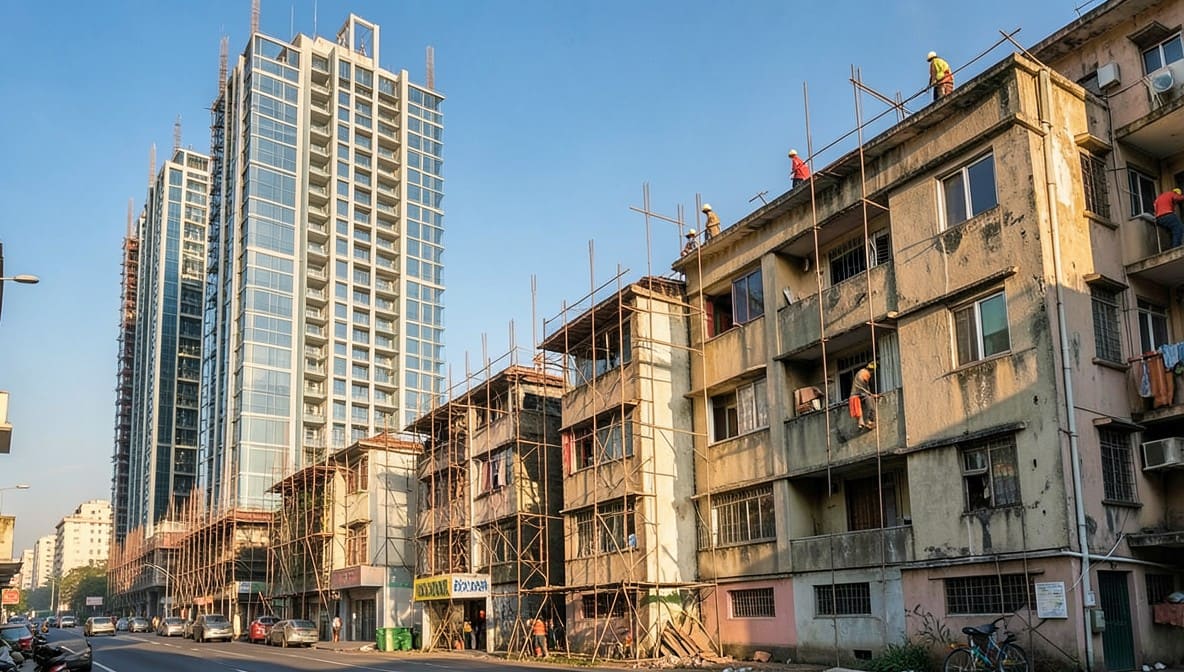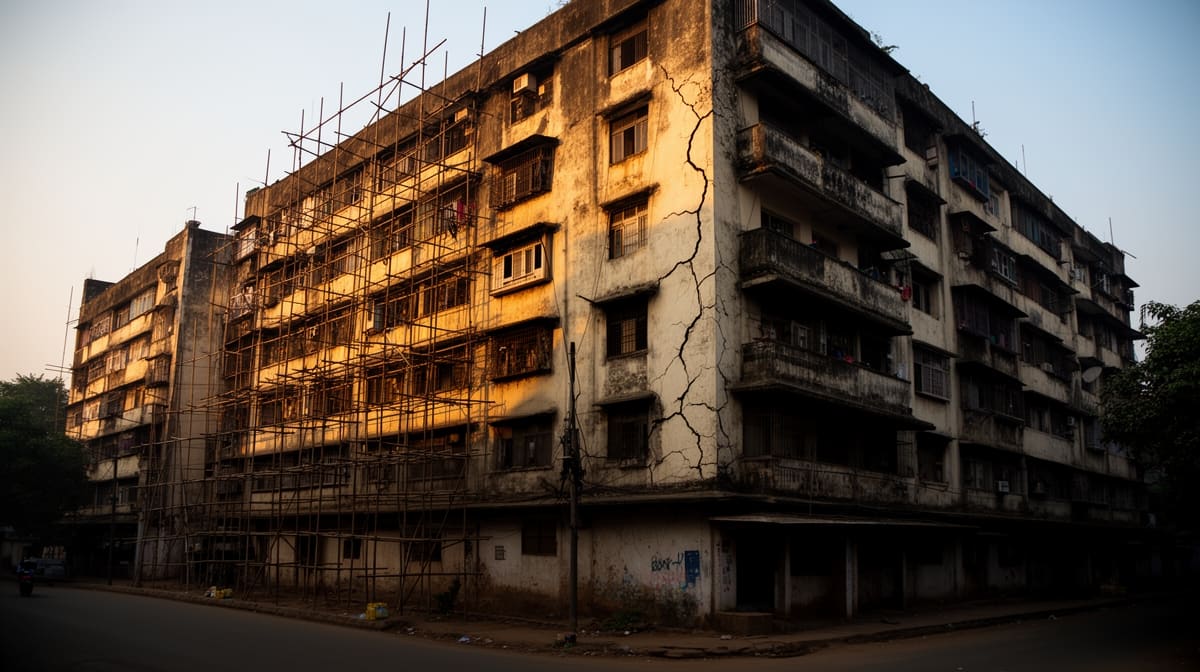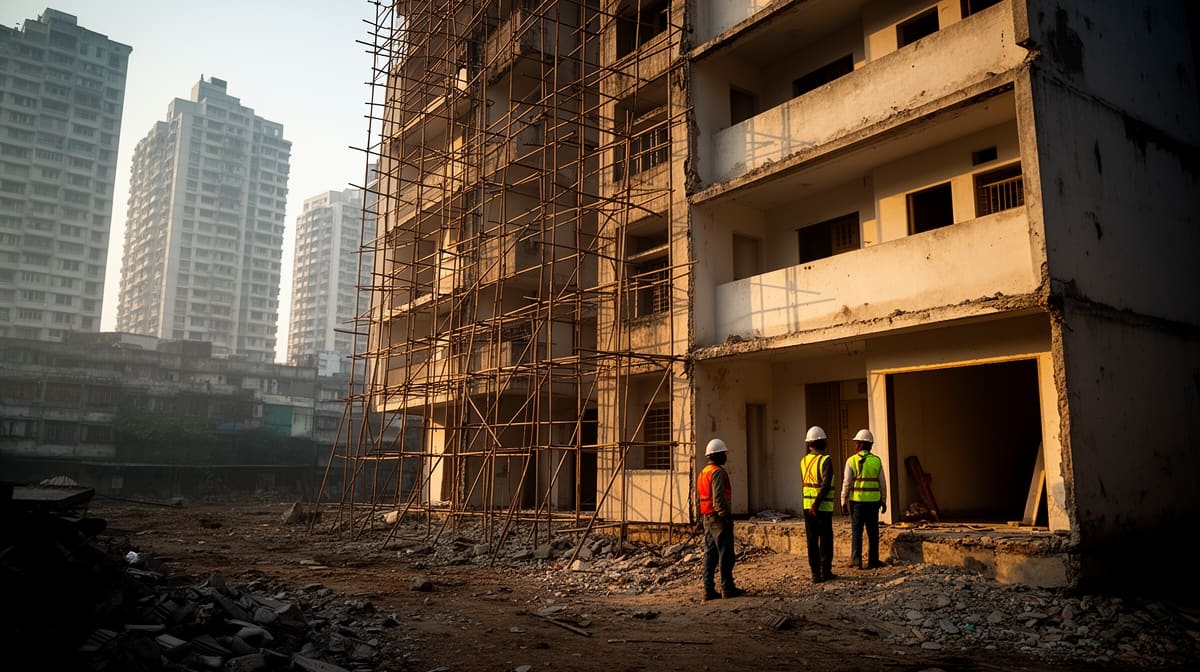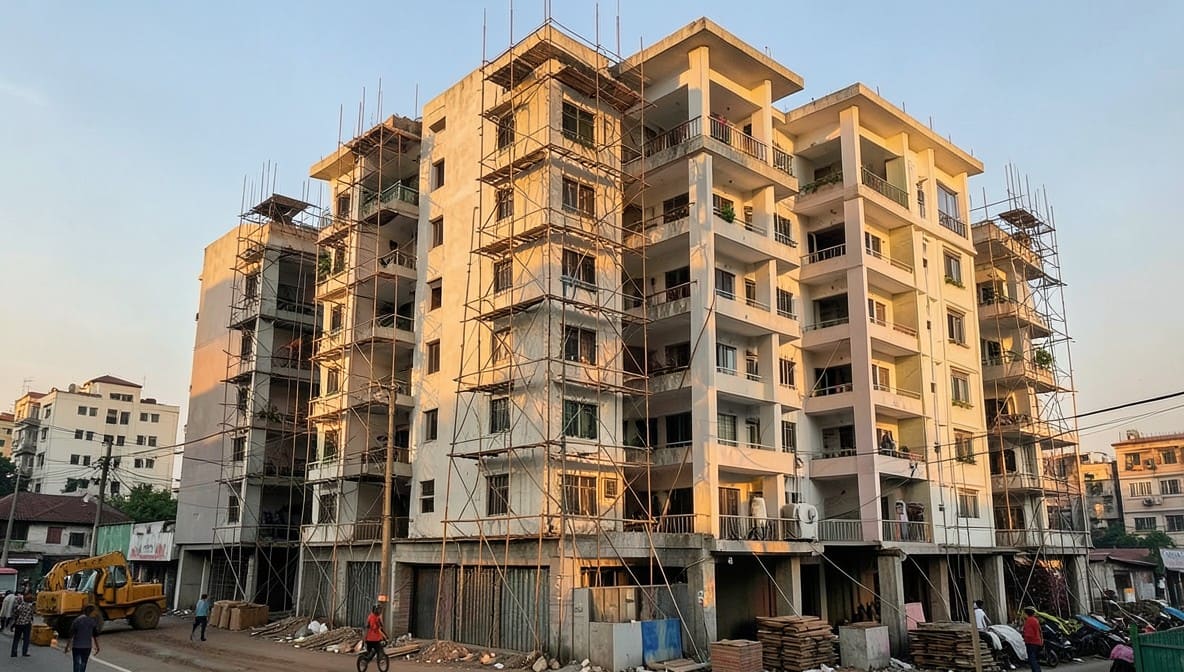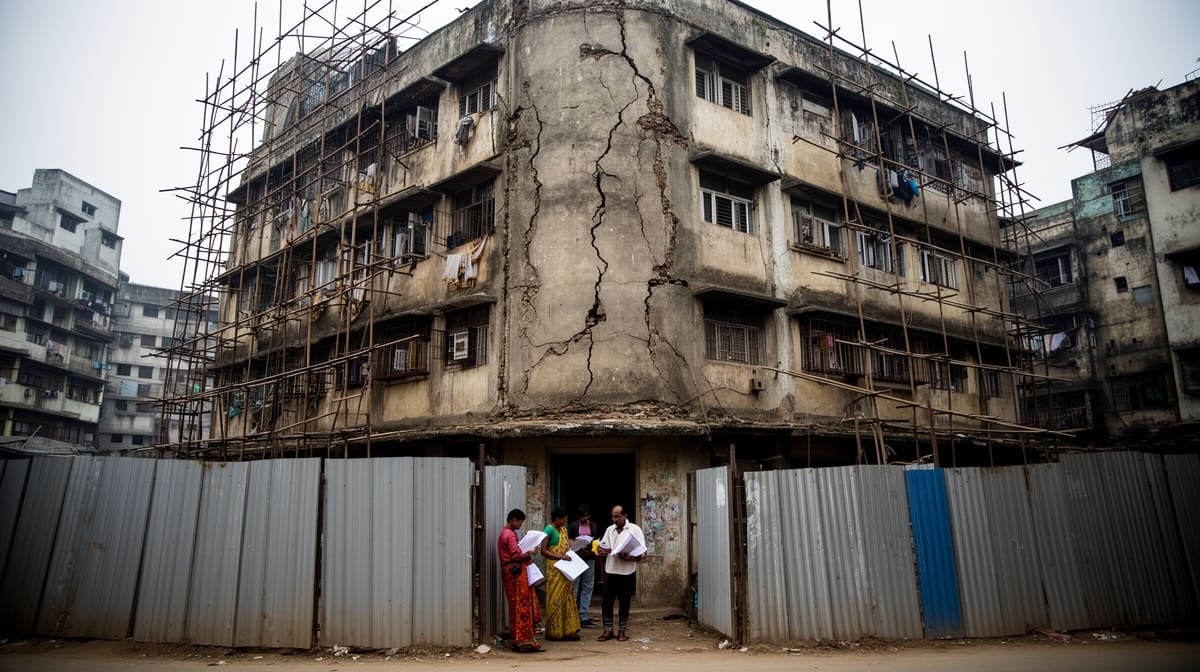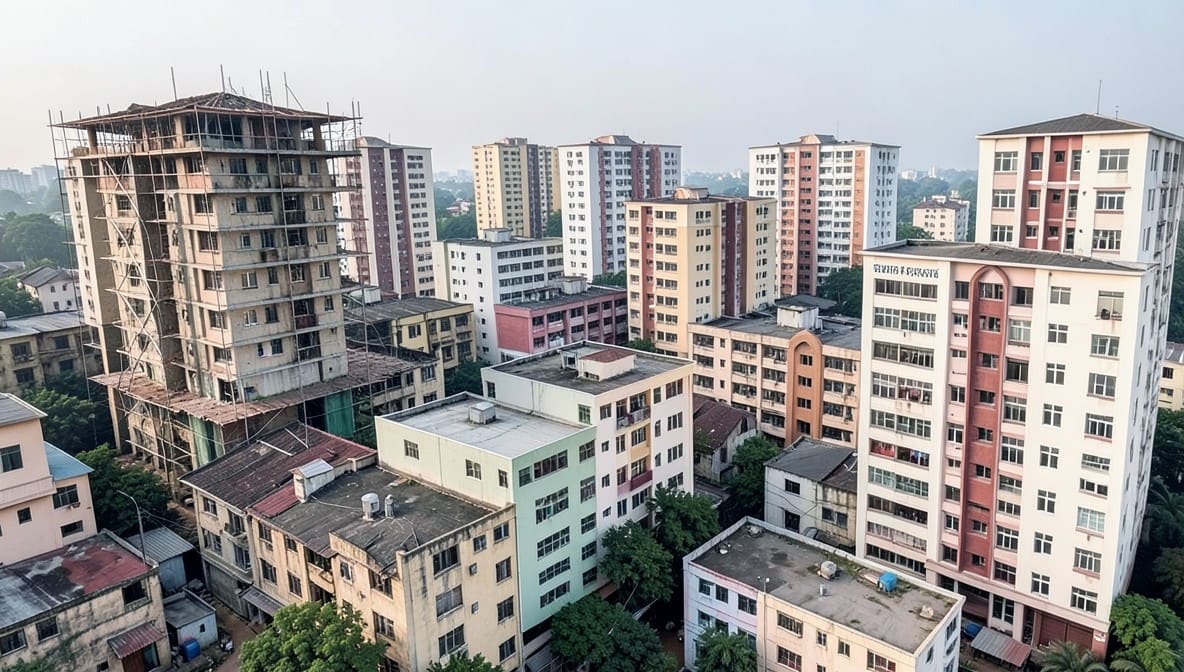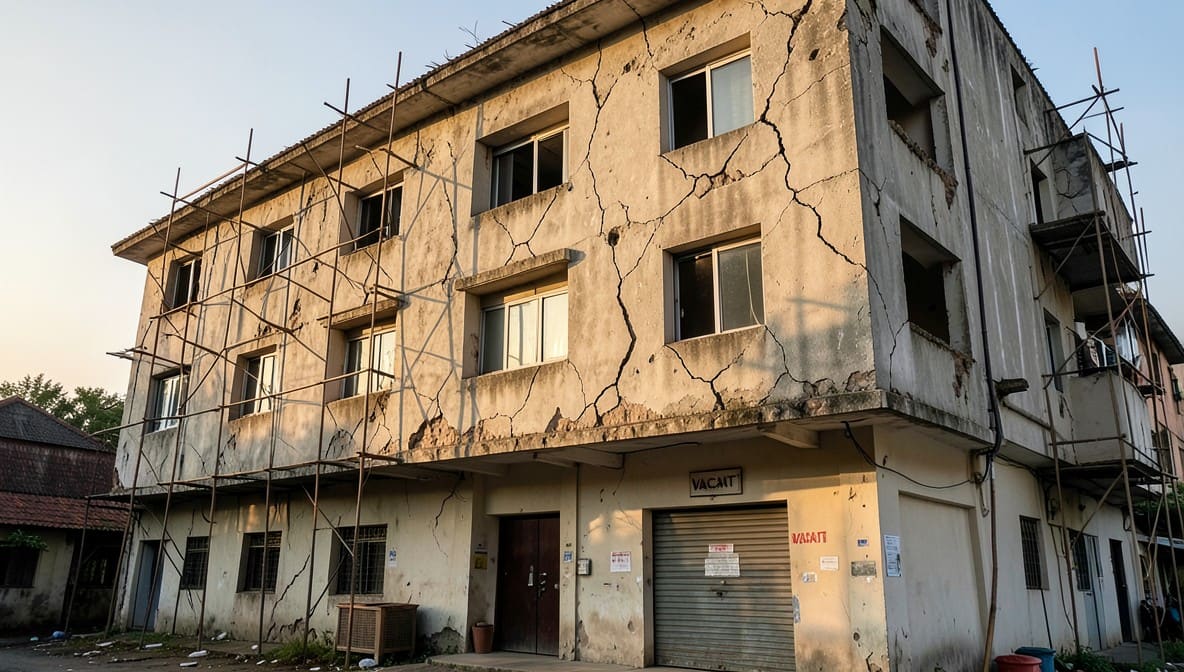
A dilapidated co-operative housing society building in Kulgaon-Badlapur, declared unsafe by municipal authorities, has prompted the Bombay High Court to balance individual occupancy rights against collective safety. With thirteen of fourteen members having vacated, the Court ordered immediate evacuation of the last occupant, while safeguarding his entitlement to redevelopment benefits.
Background & Facts
The Dispute
The petitioner, Govind Raj Darshan Co-operative Housing Society Ltd., sought judicial intervention to evict respondent No.5, the sole remaining occupant of a structurally unsound building. The Society, representing 14 members, initiated proceedings after the Kulgaon Badlapur Municipal Council issued a notice on 18.10.2022, declaring the building dangerous based on a structural audit report. The Society contended that respondent No.5, despite having no legitimate reason to remain, was deliberately obstructing the redevelopment process by falsely claiming occupation of a locked flat.
Key Facts
- The building, constructed in the 1970s, had deteriorated to a state of structural unsafety, as confirmed by a licensed structural audit report dated 18.10.2022
- The Kulgaon Badlapur Municipal Council issued a formal notice on 18.10.2022 directing evacuation due to imminent risk of collapse
- Of the 14 members, 13 had vacated the premises by the time of the petition
- Respondent No.5 claimed to be in occupation of Flat No. 4, though the Society presented photographs showing the flat locked and unused
- No formal eviction notice under the Maharashtra Co-operative Societies Act or the Municipal Corporation Act was issued to respondent No.5 prior to the petition
- The Society alleged that respondent No.5’s conduct was intended to delay redevelopment and harass the Society
Procedural History
- 18.10.2022: Kulgaon Badlapur Municipal Council issues notice declaring building dangerous and requiring evacuation
- 15.12.2023: Society files representation with Municipal Council seeking enforcement of evacuation order
- 05.01.2024: Municipal Council issues reminder notice to respondent No.5, which remained unacknowledged
- 15.03.2024: Writ Petition No. 18566 of 2024 filed before Bombay High Court seeking direction to evict respondent No.5
- 25.03.2026: Hearing before Division Bench of Justices M.S. Karnik and Shyam C. Chandak
The Parties' Positions
Petitioners (Society): Argued that the structural audit was conclusive, 13 members had vacated, and the building posed a public safety hazard. They contended that respondent No.5’s continued claim of occupation was a tactical delay tactic, especially since the flat was locked and unoccupied.
Respondent No.5: Initially resisted, claiming he was the rightful occupant and that no due process had been followed by the Society or the Municipal Council. Later, through counsel, he conceded the issue.
Relief Sought
The Society sought:
- A direction to the Kulgaon Badlapur Municipal Council and Police to evict respondent No.5
- An order to secure and hand over respondent No.5’s belongings to him upon eviction
- A declaration that respondent No.5 would not be deprived of redevelopment benefits
The Legal Issue
The central question was whether a co-operative housing society, acting on a municipal declaration of structural danger, may compel the eviction of a sole remaining occupant without prior statutory notice or adjudication, and whether such eviction must be accompanied by safeguards for the occupant’s rights to redevelopment benefits.
Arguments Presented
For the Petitioner
Learned counsel for the Society relied on the structural audit report and photographs to establish the imminent danger. They argued that under Section 15 of the Maharashtra Co-operative Societies Act, 1960, the Society has a duty to ensure the safety of members and property. They cited Smt. Sushila Devi v. State of Maharashtra to assert that collective welfare overrides individual obstruction when public safety is at stake. They emphasized that respondent No.5 had not challenged the municipal notice and that his continued presence was in bad faith.
For the Respondent
Initially, respondent No.5’s counsel contended that the Society had not followed due process under the Municipal Act or the Co-operative Societies Act. However, during the hearing, counsel for respondent No.5, acting on instructions from the respondent who was present in court, withdrew this objection and offered an undertaking to vacate.
The Court's Analysis
The Court acknowledged the validity of the structural audit and the municipal notice, noting that the photographs submitted by the Society corroborated the building’s hazardous condition. The Court observed that the conduct of respondent No.5, who claimed occupation of a locked flat, was inconsistent with genuine residency and appeared designed to obstruct redevelopment.
"Considering that 13 members have already vacated the premises, and it is only the respondent No.5 who is holding on to the premises, having regard to the condition of the building, which we can be seen from the photographs, it is absolutely necessary that the respondent No.5 vacates the suit premises if he has not already vacated."
The Court emphasized that while individual rights must be respected, they cannot override the collective right to safety and redevelopment. The Court noted that respondent No.5 retained the right to challenge the municipal notice or the Society’s redevelopment plan through appropriate legal remedies, but could not indefinitely block the process.
The Court accepted the undertaking given by respondent No.5’s counsel, recorded in open court, as a binding commitment. The Court further directed that if the undertaking was breached, the Municipal Council must act within a defined timeframe.
The Verdict
The writ petition was disposed of. Respondent No.5 undertook to vacate the premises within one week from 25.03.2026. If he failed to do so, the Kulgaon Badlapur Municipal Council was directed to initiate eviction proceedings with police assistance within one week thereafter. The Society was directed to provide respondent No.5 with all redevelopment benefits extended to other members, including payment of rent equivalent to the area of his flat until redevelopment is complete. No costs were awarded.
What This Means For Similar Cases
Eviction for Safety Overrides Delay Tactics
- Practitioners must now argue that obstruction by a single member in a structurally unsafe building does not justify delaying redevelopment
- Courts will prioritize public safety over procedural technicalities when the danger is objectively documented
- A locked flat with no evidence of occupancy may be treated as non-occupation for the purpose of eviction
Redevelopment Benefits Are Non-Negotiable
- Even if eviction is ordered, the occupant retains full rights to compensation, rent, or alternative accommodation under the Society’s redevelopment scheme
- Denial of such benefits post-eviction may be challenged as discriminatory and violative of Article 14
- Societies must document and communicate benefit entitlements in writing to all members, including those being evicted
Municipal Authority Must Act Promptly
- Municipal bodies cannot remain passive after issuing danger notices
- Courts will now expect them to enforce evacuation orders within stipulated timelines when undertakings are breached
- Failure to act may invite judicial intervention under Article 226