The Bombay High Court has delivered a pivotal ruling reinforcing that demolition notices issued under municipal law cannot be issued as arbitrary instruments of state power. The judgment underscores that procedural fairness is non-negotiable when the state seeks to destroy private property, even in the interest of urban planning.
Background & Facts
The Dispute
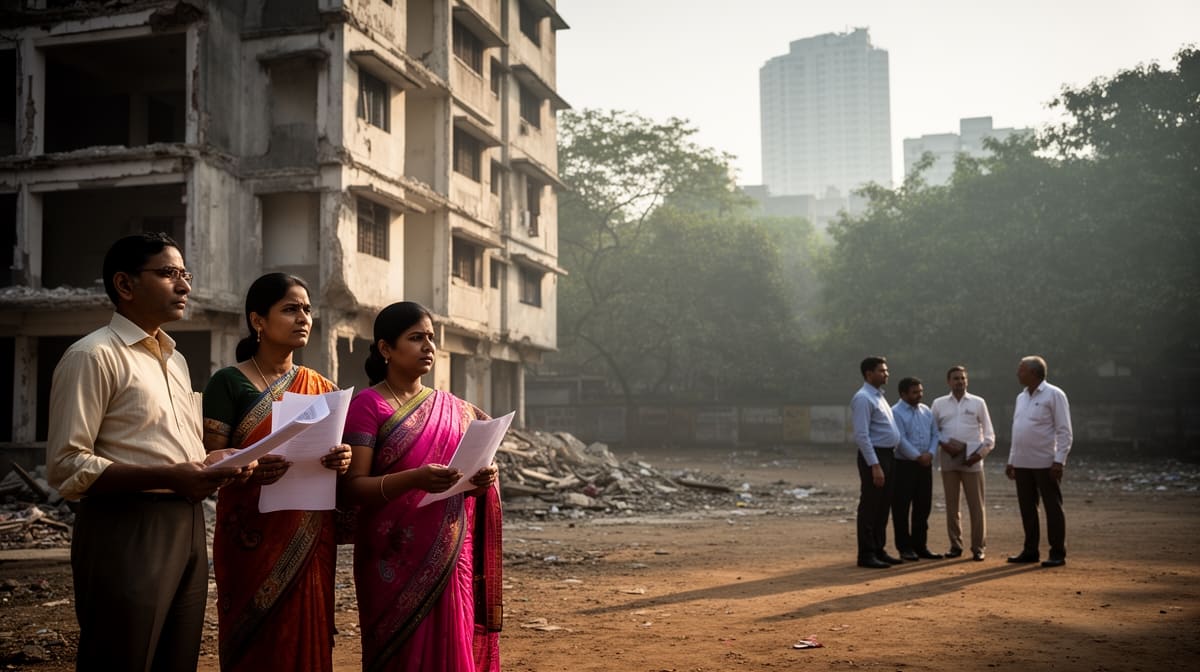
The petitioners are property owners in Chhatrapati Sambhaji Nagar whose residential structures are partially encroaching upon a road slated for widening under the Development Plan 2022-2040. They acquired their properties through registered sale deeds and constructed dwellings between 1991 and 1992 with permissions granted by the then-competent Gram Panchayat. These permissions included approval for first-floor construction. In 2002, the Collector of Aurangabad regularized the land use from agricultural to non-agricultural. The area was later merged into the Municipal Corporation in 2015-2016.
Procedural History
- 1991-1992: Construction permissions granted by Gram Panchayat
- 2002: Collector’s order regularizing land for non-agricultural use
- 2015-2016: Area merged into Chhatrapati Sambhaji Nagar Municipal Corporation
- April 2025: Development Plan 2022-2040 came into force, mandating 15-meter road widening
- November 2025: Notice issued under Section 260 of the Maharashtra Municipal Corporation Act alleging unauthorized construction
- February 2026: Impugned demolition notices issued without addressing petitioners’ submissions
Relief Sought
The petitioners sought quashing of the demolition notices, arguing that the notices violated principles of natural justice and that their constructions were legally sanctioned at the time of building. They contended that acquisition, not demolition, was the lawful route for acquiring land for public purpose.
The Legal Issue
The central question was whether a demolition notice issued under Section 260 of the Maharashtra Municipal Corporation Act satisfies the requirements of natural justice when it fails to specify the nature, extent, and legal basis of the alleged unauthorized construction, and ignores documented permissions submitted by the property owner.
Arguments Presented
For the Petitioner
The petitioners relied on Article 300A of the Constitution, which protects property rights against arbitrary deprivation. They argued that permissions granted by the Gram Panchayat prior to municipal incorporation remain valid under Section 493 read with Appendix VI of the MMC Act. They further cited the Collector’s 2002 order as evidence of lawful land use conversion. The notices, they submitted, were perfunctory, failed to engage with their documents, and amounted to a denial of fair hearing.
For the Respondent
The Municipal Corporation contended that Gram Panchayat permissions ceased to be valid upon municipal incorporation, and that only the Planning Authority under the Development Plan could grant construction permissions. It argued that the Collector’s order pertained only to land use conversion and did not validate construction. It maintained that the notices were issued after considering replies and were legally valid under Section 260.
The Court's Analysis
The Court examined the nature of Section 260 powers, recognizing them as draconian and requiring strict adherence to procedural safeguards. It emphasized that demolition is not merely an administrative act but a quasi-judicial function, triggering the obligation to record reasons.
"Every quasi-judicial order must be supported by reasons. That has been laid down by a long line of decisions of this Court..."
The Court cited Siemens Engineering and Manufacturing Co. v. Union of India and Kranti Associates Pvt. Ltd. v. Masood Ahmed Khan to affirm that reasoned orders are indispensable to natural justice. It further relied on Municipal Corporation of Greater Mumbai v. Sunbeam High Tech Developers Pvt. Ltd. to stress that demolition powers must be exercised with precision.
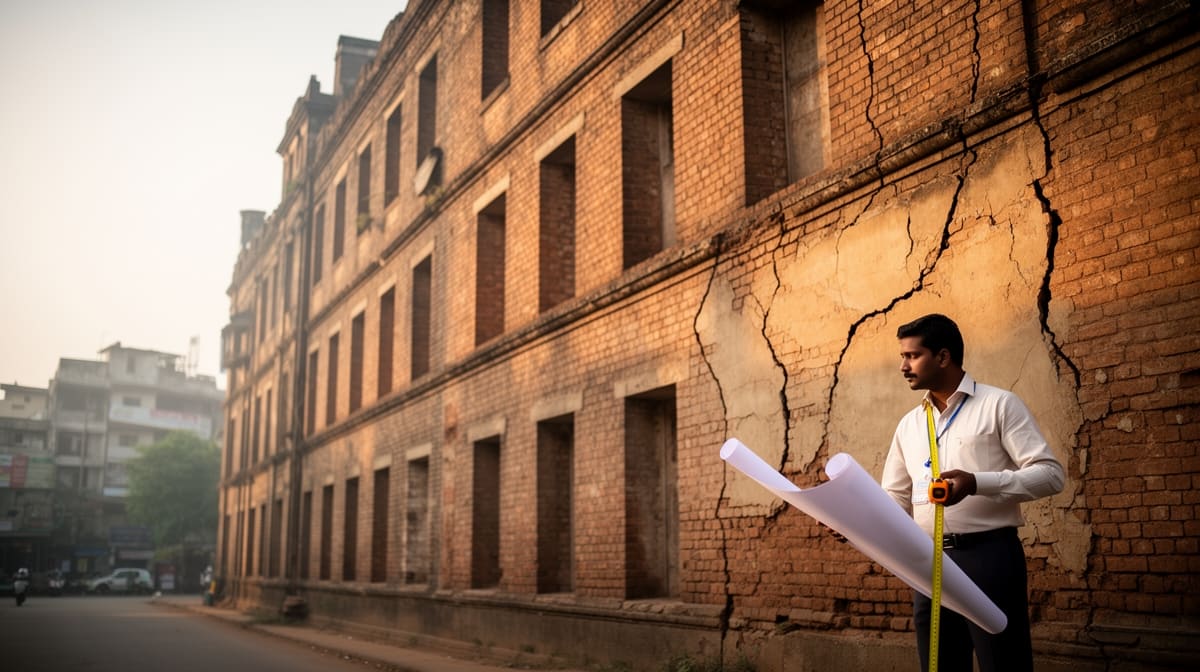
The impugned notices were found deficient on multiple grounds: they did not specify the exact area of construction deemed unauthorized, provided no measurements, ignored the petitioners’ permissions, and offered no analysis of why those permissions were invalid. The Court held that a notice that does not enable a party to meaningfully respond cannot be lawful.
The Court deliberately declined to decide the ultimate legality of the constructions or whether acquisition was mandatory, limiting its intervention to the procedural illegality of the notices.
The Verdict
The petitioners succeeded. The Court set aside the demolition notices dated 06.02.2026, holding that they violated principles of natural justice by lacking specificity and reasoned analysis. The matter was remanded to the Municipal Corporation to issue fresh notices with full particulars and a reasoned order after considering all submissions.
What This Means For Similar Cases
Demolition Notices Must Be Specific and Reasoned
- Practitioners must challenge notices that fail to identify the exact portion of construction deemed unauthorized
- Notices citing vague references like "affecting road width" without measurements or plan references are legally unsustainable
- Authorities must explicitly address and reject documents submitted by property owners
Permissions by Predecessor Authorities May Remain Valid
- Construction permissions granted by Gram Panchayats before municipal incorporation are not automatically void
- Section 493 and Appendix VI of the MMC Act provide for continuity of permissions
- Legal advice must include verification of pre-merger approvals in municipal areas
Natural Justice Trumps Administrative Expediency
- Municipal bodies cannot bypass due process in the name of development timelines
- The Court reaffirmed that even public interest projects must comply with procedural norms
- Petitioners in similar cases may now invoke Kranti Associates and Siemens Engineering to demand reasoned orders