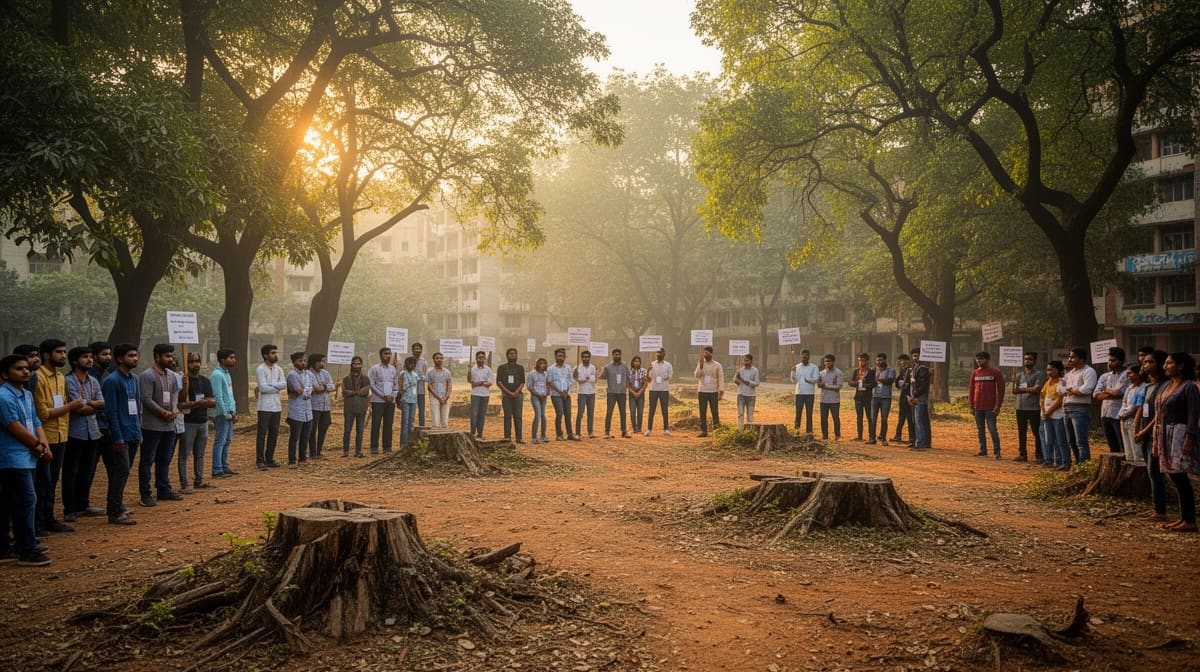
The National Green Tribunal (NGT) has underscored the importance of strict compliance with Section 8 of the Maharashtra (Urban Areas) Protection and Preservation of Trees Act, 1975, while adjudicating a plea seeking to halt the felling of 72 heritage trees. The Tribunal granted the applicant an opportunity to amend the prayer clause, noting that the public notice failed to disclose critical details such as the number of trees, their species, age, and whether a personal inspection was conducted. This order reinforces the procedural safeguards under the Act, ensuring transparency in tree felling permissions.
Background & Facts
The Dispute
The applicant, Rupesh Kalantri, filed an Original Application (OA No. 45 of 2026) before the NGT, Western Zone Bench, Pune, challenging a public notice issued by the State of Maharashtra and other respondents. The notice, dated 27.01.2026, proposed the transplantation of 72 trees and the felling of an unspecified number of trees (potentially 714) along the Baba Petrol Pump-Padegaon and Daulatabad stretch. The applicant alleged non-compliance with Section 8(3)(a) of the Maharashtra (Urban Areas) Protection and Preservation of Trees Act, 1975 (hereinafter, the Trees Act), which mandates specific disclosures in public notices for tree felling.
Key Facts
- The public notice dated 27.01.2026 proposed the transplantation of 72 trees and the felling of an unspecified number of trees (likely 714)
- The notice did not disclose:
- The species of the trees proposed to be felled
- The age of the trees
- Whether a personal inspection of the trees was conducted by the Tree Officer
- Whether any of the trees were heritage trees
- The applicant’s prayer clause sought a direction to the respondents to immediately stay the felling, burning, or transplantation of trees, including 72 heritage trees, but did not specify the exact number of trees proposed to be cut
Procedural History
- 27.01.2026: Public notice issued by the respondents proposing tree transplantation and felling
- Date not specified: Applicant files OA No. 45 of 2026 before the NGT
- 29.04.2026: NGT passes an interim order directing the applicant to file the English version of the public notice
- 10.06.2026: Hearing held; NGT notes deficiencies in the public notice and grants the applicant one week to amend the prayer clause
- 23.06.2026: Matter listed for admission
Relief Sought
The applicant sought:
- A direction to the respondents to stay the felling, burning, or transplantation of trees, including 72 heritage trees
- Compliance with Section 8(3)(a) of the Trees Act, including personal inspection and disclosure of tree age and species
The Legal Issue
The primary legal question was whether the public notice issued under Section 8(3)(a) of the Trees Act complied with the statutory requirements, particularly:
- Whether the notice adequately disclosed the number, species, and age of the trees proposed to be felled
- Whether the Tree Officer conducted a personal inspection of the trees as mandated by the Act
- Whether the applicant’s prayer clause was sufficiently specific to seek quashing of the public notice for non-compliance
Arguments Presented
For the Applicant
- The public notice dated 27.01.2026 was vague and deficient as it failed to disclose:
- The exact number of trees proposed to be felled
- The species and age of the trees
- Whether a personal inspection was conducted by the Tree Officer
- Whether any of the trees were heritage trees
- The notice did not comply with Section 8(3)(a)(iii) and (vi) of the Trees Act, which mandate personal inspection and determination of tree age
- The prayer clause, though seeking a stay on tree felling, did not explicitly seek quashing of the public notice, which was the appropriate relief for non-compliance
For the Respondents
The judgment does not record any arguments presented by the respondents.
The Court's Analysis
The NGT critically examined the public notice dated 27.01.2026 and the applicant’s prayer clause, focusing on compliance with Section 8 of the Trees Act. The Tribunal observed:
"The language, which has been used by the applicant in the prayer clause of the present Original Application, does not disclose the specific number of trees, which are said to have been proposed to be cut because it says felling, burning or transplantation of trees including 72 heritage trees. The prayer does not disclose the exact number of trees proposed to be cut, which was required to be disclosed by the applicant."
The Tribunal further noted that the public notice itself was deficient as it did not comply with Section 8(3)(a) of the Trees Act. Specifically:
- The notice did not disclose the species or age of the trees proposed to be felled
- There was no indication that the Tree Officer conducted a personal inspection of the trees
- The notice failed to clarify whether any of the trees were heritage trees, as required under Section 8(3)(a)(v)
The NGT agreed with the applicant that the public notice was not in consonance with the statutory provisions but noted that the prayer clause did not seek quashing of the notice. Instead, it merely sought a stay on tree felling. The Tribunal held:
"But for that, prayer ought to have been sought for quashing of the said Notice dated 27.01.2026. Therefore, we grant an opportunity of one week to the applicant to move an amendment in this regard in the prayer clause of the present Original Application."
The Verdict
The NGT granted the applicant one week to amend the prayer clause of the Original Application to explicitly seek quashing of the public notice dated 27.01.2026. The Tribunal directed the matter to be listed for admission on 23.06.2026. The order underscores that:
- The public notice must comply with Section 8(3)(a) of the Trees Act, including disclosure of tree species, age, and personal inspection
- The prayer clause must be specific when challenging procedural deficiencies in tree felling permissions
What This Means For Similar Cases
Public Notices Must Comply With Statutory Disclosures
This order establishes that public notices under Section 8(3)(a) of the Trees Act must strictly adhere to statutory requirements. Practitioners should ensure that notices:
- Disclose the exact number of trees proposed to be felled or transplanted
- Specify the species and age of the trees
- Confirm whether a personal inspection was conducted by the Tree Officer
- Clearly indicate if any trees are heritage trees
Failure to comply with these disclosures may render the notice vulnerable to quashing.
Amendment of Pleadings Is Permissible for Procedural Deficiencies
- The NGT’s willingness to grant an opportunity to amend the prayer clause signals that courts may allow corrections for procedural lapses if the substantive challenge is meritorious
- Practitioners should explicitly seek quashing of deficient notices rather than generic stays on tree felling
- Amendments should be promptly filed to avoid dismissal on technical grounds
Heritage Trees Require Special Scrutiny
- The Act mandates specific mention of heritage trees in public notices (Section 8(3)(a)(v))
- Notices that fail to identify heritage trees may be deemed non-compliant, providing grounds for legal challenge
- Applicants should highlight heritage tree status in pleadings to strengthen their case
Personal Inspection Is a Mandatory Requirement
- Section 8(3)(a)(iii) mandates that the Tree Officer personally inspect the trees before granting permission
- Notices that do not confirm such inspection may be challenged for non-compliance
- Applicants should demand proof of inspection in their pleadings or during hearings