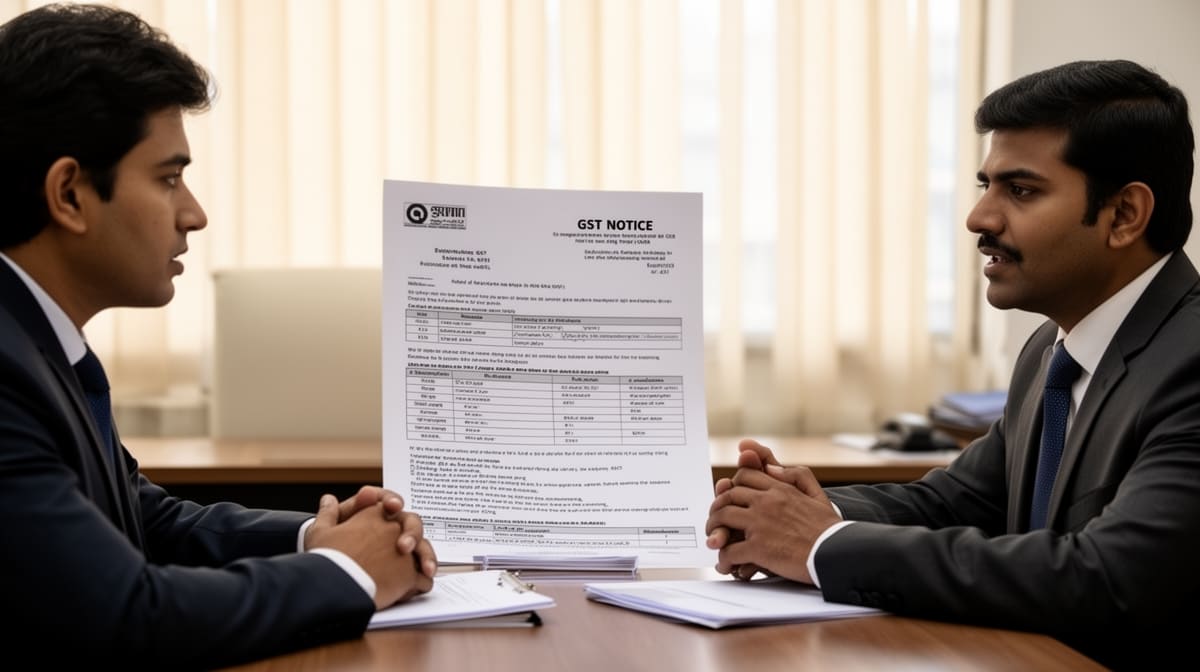
The Uttarakhand High Court has reaffirmed that denial of personal hearing in GST proceedings renders any final order legally invalid, regardless of the underlying merits. This judgment reinforces the foundational principle of natural justice in administrative tax actions under the CGST and IGST Acts.
Background & Facts
The Dispute
The petitioner, Rakesh Juyal, challenged an order dated 13.01.2025 passed by the Assistant Commissioner under Section 73 read with Section 39 of the Central Goods and Services Tax Act, 2017 (CGST Act), Section 20 of the Integrated Goods and Services Tax Act, 2017 (IGST Act), and the rules framed thereunder. The order impugned was a recovery notice issued after the petitioner’s GST registration had already been cancelled in 2021.
Key Facts
- The petitioner’s GST registration was cancelled in the year 2021
- The impugned order dated 13.01.2025 was issued more than three years after cancellation
- The notice initiating proceedings was served solely by uploading it on the GST portal
- No personal hearing was scheduled or offered to the petitioner prior to the issuance of the order
- No date was fixed for personal hearing, nor was any opportunity granted to present oral submissions
- The petitioner was not served with any physical or electronic notice specifying a hearing date
Procedural History
- 2021: GST registration of petitioner’s firm was cancelled
- 13.01.2025: Impugned order issued under Section 73 CGST Act for recovery of tax, interest, and penalty
- 30.04.2025: Writ Petition (M/B) No. 489 of 2025 filed before the Uttarakhand High Court
- 30.04.2025: Hearing conducted via video conferencing
The Parties' Positions
The petitioner contended that the order was void ab initio due to non-compliance with mandatory procedural safeguards under the GST regime, particularly the right to personal hearing. He argued that service by portal upload alone, without a fixed hearing date, violated principles of natural justice and rendered the order illegal.
The respondents, through the Standing Counsel, admitted on instructions that:
- The GST registration had indeed been cancelled in 2021
- No personal hearing was afforded to the petitioner
- No specific date was fixed for hearing prior to the impugned order
Relief Sought
The petitioner sought quashing of the order dated 13.01.2025 and a direction to the proper officer to re-adjudicate the matter in accordance with law, after affording a proper opportunity of hearing.
The Legal Issue
The central question was whether an order passed under the CGST/IGST Acts is valid when the taxpayer is denied a personal hearing and no date is fixed for such hearing, despite statutory and procedural mandates requiring fair opportunity.
Arguments Presented
For the Petitioner
The petitioner relied on the principle of audi alteram partem, arguing that the right to personal hearing is not merely procedural but substantive under the GST regime. He cited Rule 142 of the CGST Rules, which mandates that the proper officer shall afford a reasonable opportunity of being heard before passing any order. He further contended that service via portal upload without a fixed hearing date is insufficient to satisfy due process, especially where substantial financial liability is at stake.
For the Respondent
The State counsel conceded the factual position: no personal hearing was afforded and no date was fixed. No legal argument was advanced to defend the procedural lapse, and the counsel explicitly acknowledged that the issue was covered by a coordinate bench judgment.
The Court's Analysis
The Court noted that both parties had conceded the material facts: cancellation of registration in 2021, service of notice only via portal, and absence of any fixed date for personal hearing. The Court then turned to the binding precedent of its own coordinate bench in M/s Sri Sai Vishwas Polymers v. Deputy Commissioner and Another, decided on 05.06.2025 in WPMB No. 316 of 2025.
"The denial of personal hearing, where the statute and rules mandate an opportunity to be heard, vitiates the final order regardless of the correctness of the substantive outcome. Natural justice is not a technicality; it is the bedrock of administrative fairness."
The Court held that the failure to fix a date for personal hearing, even if notice was uploaded on the portal, amounted to a complete denial of opportunity. The portal upload, without any indication of a hearing date or mechanism to respond orally, could not substitute for the statutory obligation under Rule 142 of the CGST Rules. The Court emphasized that the right to be heard is not satisfied by mere notice of proceedings but requires a meaningful opportunity to present one’s case.
The Court further observed that the lapse of time since cancellation of registration (2021) and the issuance of the order in 2025 underscored the arbitrary nature of the proceeding. The absence of any explanation for the delay, coupled with the procedural violation, rendered the order unsustainable.
The Verdict
The writ petition was allowed. The order dated 13.01.2025 was quashed. The matter was remitted to the proper officer for fresh adjudication from the stage of the show-cause notice. The petitioner shall be afforded a full opportunity of personal hearing, including fixation of a specific date, before any order is passed. All pending applications are disposed of.
What This Means For Similar Cases
Personal Hearing Is Mandatory, Not Discretionary
- Practitioners must now insist on a fixed hearing date in all GST show-cause notices under Sections 73 and 74
- Portal-only notice without a hearing date is legally insufficient and will be struck down
- Any order passed without affording personal hearing is voidable, irrespective of the taxpayer’s liability
Procedural Compliance Trumps Substantive Outcome
- Even if the tax demand is correct, failure to follow procedure invalidates the order
- Courts will not uphold orders on merits if natural justice is violated
- Tax authorities must document the date fixed for hearing and proof of communication to the taxpayer
Time Lapse Does Not Cure Procedural Defects
- Delay in initiating proceedings does not justify bypassing statutory hearing rights
- Authorities cannot rely on past cancellations to justify new recovery orders without fresh compliance
- Petitioners may challenge old orders if new proceedings are initiated without due process