The Punjab and Haryana High Court has affirmed that the right to a personal hearing under Section 75(4) of the Central Goods and Services Tax Act, 2017 is a statutory imperative that attaches before any adverse decision is contemplated, irrespective of whether the assessee responds to the show cause notice. This ruling reinforces procedural fairness in GST adjudication and sets a clear boundary on revenue authorities' discretion.
Background & Facts
The Dispute
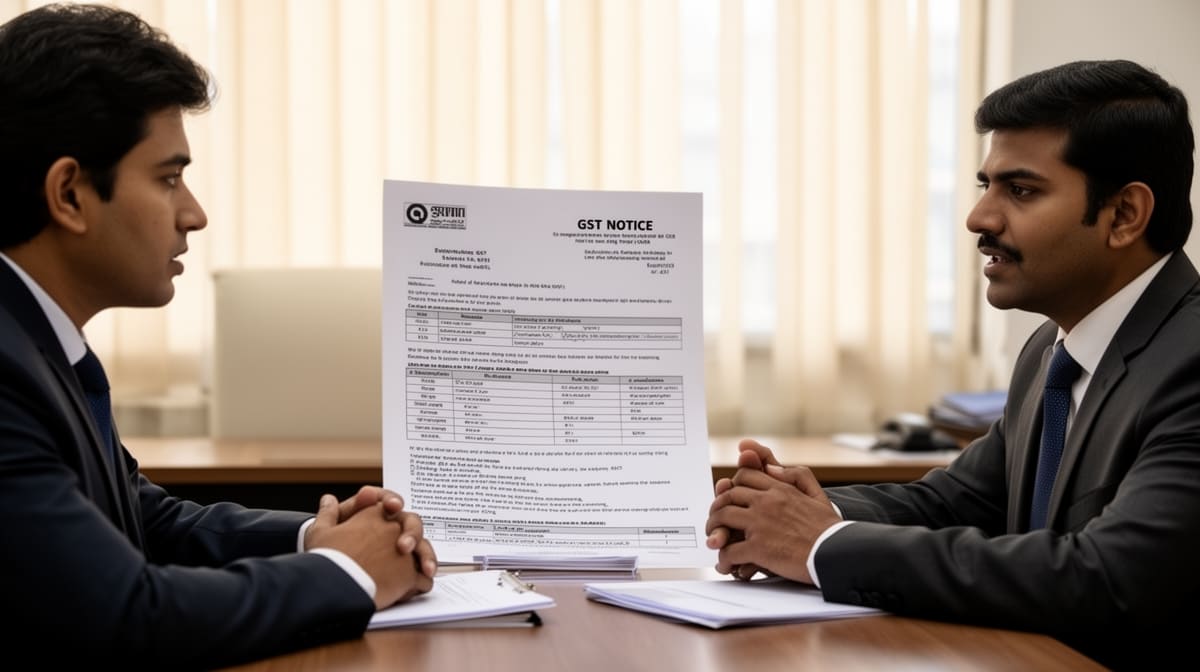
The petitioner, Parv Alloys & Metals, was issued a show cause notice dated 03.02.2023 by the GST authorities under Section 74 of the CGST Act, 2017, alleging short payment of tax for the financial period July 2017 to March 2018. The notice demanded payment of Rs. 1,49,26,704 in aggregate tax liability (Rs. 74,63,352 under CGST and Rs. 74,63,352 under SGST), along with interest and penalty. The notice did not specify any date, time, or venue for a personal hearing, instead marking these fields as "NA" (not applicable). The petitioner did not file a written reply to the notice. Subsequently, on 19.05.2023, the authorities passed an adjudication order directing the petitioner to deposit the demanded amount without affording any personal hearing.
Key Facts
- The show cause notice (Ref. No. ZD030223002234C) was issued on 03.02.2023
- The notice cited Section 74 read with Rules 100(2) and 142(1) of the CGST Act
- The tax period under scrutiny was July 2017 to March 2018
- The total tax demand was Rs. 1,49,26,704 (CGST + SGST)
- The notice invited a written reply by 02.03.2023
- The columns for personal hearing date, time, and venue were explicitly marked as "NA"
- The petitioner did not submit any written response by the deadline
- The adjudication order was passed on 19.05.2023 without any hearing
- The petitioner filed the writ petition on 2026 (exact filing date not specified in judgment, but adjudication order dated 19.05.2023 is impugned)
Procedural History
- 03.02.2023: Show cause notice issued under Section 74 of the CGST Act
- 02.03.2023: Deadline for written reply expired; no reply filed
- 19.05.2023: Adjudication order passed without personal hearing
- 2026: Writ petition filed before the Punjab and Haryana High Court challenging the order
- 29.04.2026: Judgment delivered by the Division Bench
Relief Sought
The petitioner sought quashing of the adjudication order dated 19.05.2023 on the grounds of violation of natural justice and statutory non-compliance with Section 75(4) of the CGST Act.
The Legal Issue
The central question was whether Section 75(4) of the CGST Act, 2017 mandates an opportunity of personal hearing before an adverse decision is contemplated, even if the assessee has not filed a written reply to the show cause notice.
Arguments Presented
For the Petitioner
The petitioner’s counsel argued that Section 75(4) creates a statutory obligation on the revenue authorities to grant a hearing before any adverse decision is contemplated, irrespective of whether the assessee responds. The absence of a written reply does not extinguish the statutory right to hearing. The show cause notice’s failure to provide any hearing date or venue rendered the entire proceeding defective. Reliance was placed on the principle of audi alteram partem and the mandatory nature of Section 75(4).
For the Respondent
The State counsel contended that since the petitioner did not file any written reply to the show cause notice, there was no need to grant a personal hearing. The authorities were entitled to proceed to adjudication based on the allegations in the notice and the absence of any defense. The petitioner had forfeited the right to hearing by not responding.
The Court's Analysis
The Court examined the language of Section 75(4), which states: "An opportunity of hearing shall be granted where a request is received in writing from the person chargeable with tax or penalty, or where any adverse decision is contemplated against such person." The Court emphasized that the provision uses the conjunctive "or", meaning the obligation arises independently under either condition. The second limb - "where any adverse decision is contemplated" - is triggered automatically upon the intention to pass an order adverse to the assessee.
"The statutory obligation under Section 75(4) is not contingent upon the filing of a written reply. It arises as soon as an adverse decision is contemplated."
The Court rejected the State’s argument that non-response waives the right to hearing. It held that the purpose of the provision is to ensure procedural fairness before the state imposes a financial liability. Even without a written reply, the assessee may have documentary evidence - such as account books, ledgers, or invoices - that could rebut the allegations. Denying a hearing in such circumstances defeats the very object of the statutory safeguard.
The Court further noted that the show cause notice’s explicit marking of "NA" for hearing details was not a mere administrative oversight but a systemic failure to comply with the law. The revenue authorities cannot unilaterally decide that a hearing is unnecessary based on the assessee’s silence.
The Verdict
The writ petition was allowed. The adjudication order dated 19.05.2023 was set aside. The revenue authorities were directed to initiate fresh proceedings against the petitioner, but only after complying with Section 75(4) of the CGST Act by providing a personal hearing before contemplating any adverse decision. No costs were awarded.
What This Means For Similar Cases
Statutory Hearing Is Non-Discretionary
- Practitioners must now argue that any GST adjudication order passed without a hearing is void ab initio, regardless of whether the assessee responded
- Revenue authorities cannot treat silence as waiver of statutory rights under Section 75(4)
- Show cause notices must always include a proposed date, time, and venue for hearing - "NA" is legally impermissible
Procedural Compliance Trumps Substantive Allegations
- Even in cases of clear tax shortfalls, failure to follow Section 75(4) invalidates the entire proceeding
- Courts will not uphold adverse orders based on technicalities of non-response
- Practitioners should routinely challenge adjudication orders on this ground where no hearing was offered
Evidence Preservation Strategy
- Assessees should retain all financial records even if they do not intend to respond to a show cause notice
- The right to hearing is not merely procedural - it is the mechanism through which evidence is presented
- Failure to conduct a hearing deprives the assessee of the opportunity to present exculpatory material