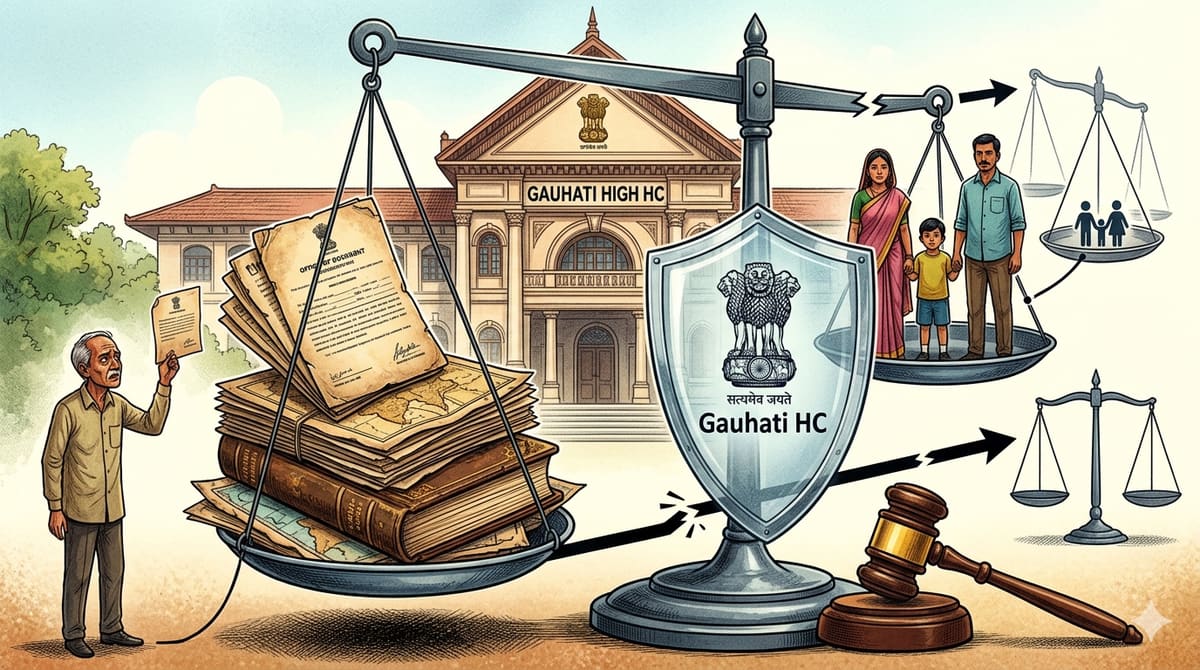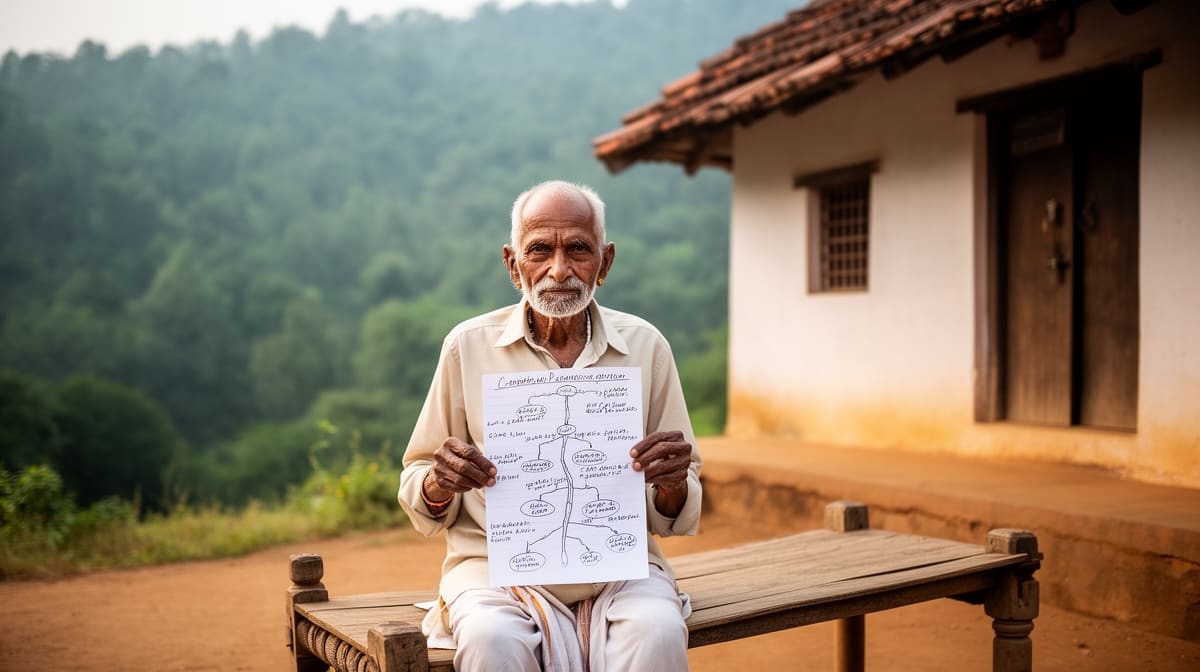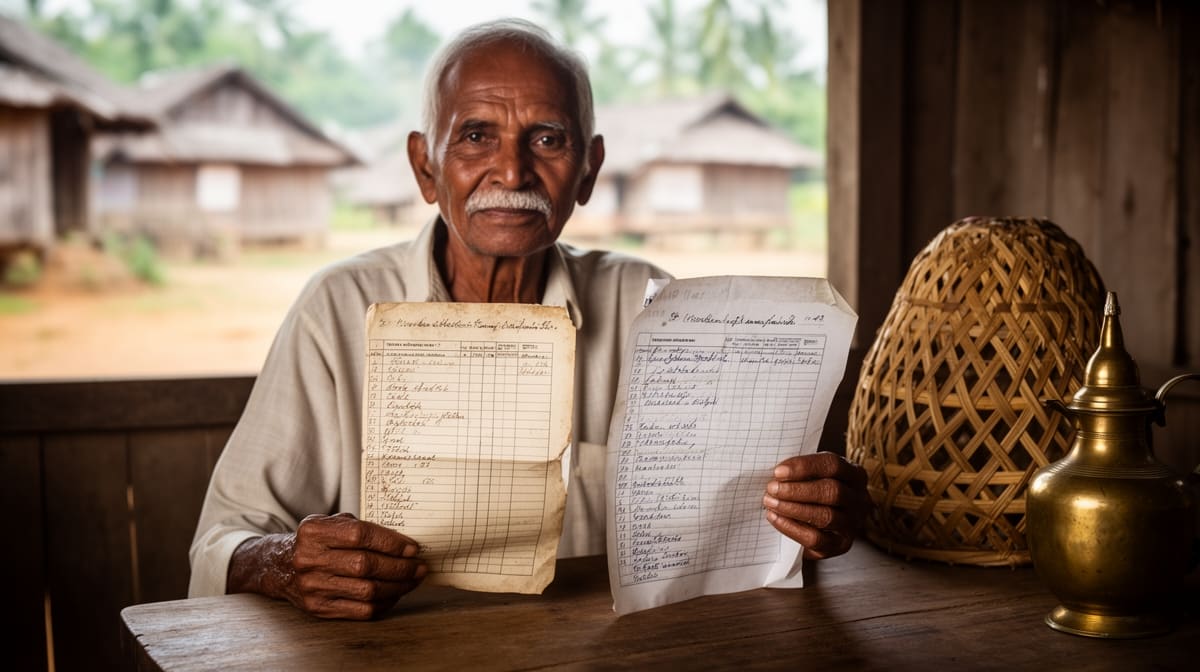
The Gauhati High Court’s dismissal of the writ petition underscores a critical doctrinal principle in citizenship determination under the Foreigners Act, 1946: the burden of proof lies squarely on the individual, and documentary evidence must be logically and chronologically linked to establish lineage. This judgment reinforces that isolated or uncorroborated documents - however seemingly supportive - cannot substitute for a coherent, pleaded, and proven chain of descent.
Background & Facts
The Dispute
The petitioner, Md. Ali Hussain, challenged the Foreigners Tribunal’s 2019 order declaring him a foreigner under the Foreigners Act, 1946, on the ground that he entered Assam after 25.03.1971. He claimed Indian citizenship by descent, asserting that his father, Abdul Jabbar, was a permanent resident of Goroimari village in Nagaon district since before 1971, and that he himself was born in Thanagara, Morigaon, and had been a registered voter since 1997.
Procedural History
- 2012: Initial proceedings initiated as FT Case No. 256/2012 against the petitioner and his wife.
- 2015: Case transferred and renumbered as FT Case No. 259/2015, with adjudication limited to the petitioner following Sudhir Kumar Roy v. State of Assam.
- 2019: Foreigners Tribunal declared petitioner a foreigner, citing failure to prove lineage.
- 2019: Writ petition filed before Gauhati High Court under Article 226.
- 2026: Judgment delivered by Justices Kalyan Rai Surana and Susmita Phukan Khound.
The Parties' Positions
- Petitioner: Argued that voter lists from 1966 and 1970 (showing his father’s name), a 1984 sale deed, and a Gaonburah certificate established his lineage and continuous residence.
- Respondents (State, NRC, FT): Contended that the petitioner failed to link documents to his father or grandfather, omitted his mother’s name in pleadings, and introduced new claims via affidavit after the Tribunal’s order.
Relief Sought
The petitioner sought quashing of the Foreigners Tribunal’s order and a declaration of his Indian citizenship under Section 6A of the Citizenship Act, 1955, which grants conditional rights to persons who entered Assam between 1966 and 1971.
The Legal Issue
The central question was whether Section 9 of the Foreigners Act, 1946 permits a person to establish citizenship through disconnected or uncorroborated documents, or whether a clear, pleaded, and logically linked chain of lineage - supported by contemporaneous records - is mandatory.
Arguments Presented
For the Petitioner
The petitioner relied on Sudhir Kumar Roy v. State of Assam to argue that the Tribunal’s focus on his wife’s case was misplaced. He cited Exhibits D and E (voter lists of 1966 and 1970) showing his father’s name as son of Ain Uddin, and Exhibit I (sale deed of 1984) and Exhibit J (annual khiraj patta) as proof of ancestral landholding. He argued that voter enrollment since 1997 and the Gaonburah certificate (Exhibit A) corroborated his long-standing residence.
For the Respondent
The State and NRC contended that the petitioner’s written statement was vague and omitted critical facts: his mother’s name, siblings, and date of birth. They emphasized that Romila Khatun v. Union of India and Rashminara Begum v. Union of India require full disclosure in the written statement and that documents cannot be proved by personal knowledge alone. The Tribunal’s finding that the Gaonburah certificate was inadmissible due to unauthorized use of the State Emblem was also highlighted.
The Court's Analysis
The Court conducted a rigorous analysis of documentary evidence and procedural compliance under Section 9 of the Foreigners Act, 1946, which places the burden of proof on the person alleged to be a foreigner. The Court held that the petitioner’s evidence was fragmented and lacked internal consistency.
"Written statement is the basic statement of defence of a proceedee before the Foreigners Tribunal... it is incumbent upon the proceedee to disclose at the first instance itself... all relevant facts specially within his knowledge having a material bearing on his claim to citizenship of India."
The Court noted that the petitioner’s father’s name in the 1966 and 1970 voter lists was recorded as "Jabbar," while the 1997 voter list listed the petitioner as "Ali Hussain Jabbar" - a discrepancy unexplained in pleadings or evidence. Crucially, the petitioner never disclosed his mother’s name, Mosa Hajera, who appeared in the 1997 list as Jabbar’s wife, nor did he mention siblings. The Court found this omission fatal, as citizenship by descent requires proof of parentage.
The Gaonburah certificate, though bearing the petitioner’s name, was deemed inadmissible under the State Emblem Rules, 2007, and could not serve as a primary document. The sale deed and khiraj patta, while establishing landholding, did not link the petitioner to his father or grandfather. The Court reiterated that proof of a document is not proof of its contents, and personal knowledge cannot substitute for contemporaneous records.
The Court distinguished Romila Khatun and applied Rashminara Begum to hold that introducing new facts via affidavit after the Tribunal’s order constitutes a breach of pleading rules. The petitioner’s failure to discharge the burden under Section 9 rendered the Tribunal’s conclusion legally unassailable.
The Verdict
The petitioner’s writ petition was dismissed. The Court upheld the Foreigners Tribunal’s order declaring him a foreigner under the Foreigners Act, 1946. The judgment affirmed that citizenship by descent in Assam requires a complete, pleaded, and documented chain of lineage, and that failure to disclose material facts in the written statement is fatal to the claim.
What This Means For Similar Cases
Linking Documents Are Non-Negotiable
- Practitioners must ensure every document - voter list, land record, or certificate - is explicitly tied to the claimant’s parent or grandparent by name, relationship, and timeline.
- Mere coexistence of names in separate documents (e.g., father in 1970 list, claimant in 1997 list) without a connecting record is insufficient.
Written Statement Is the Foundation
- All facts relating to lineage, birth, residence, and family members must be disclosed in the written statement. Omissions cannot be cured by subsequent affidavits.
- Failure to mention mother’s name, siblings, or date of birth will be viewed as concealment, triggering adverse inference.
Gaonburah Certificates Are Secondary at Best
-
Gaonburah certificates cannot stand alone as proof of citizenship.
-
They are admissible only if corroborated by contemporaneous records and if the issuer is examined as a witness.
-
Unauthorized use of the State Emblem renders them inadmissible.
-
Practitioners must advise clients to compile a chronological dossier of documents with clear lineage links before filing any defense.
-
In NRC-related proceedings, early disclosure of all family members’ names and documents is critical to avoid procedural disqualification.