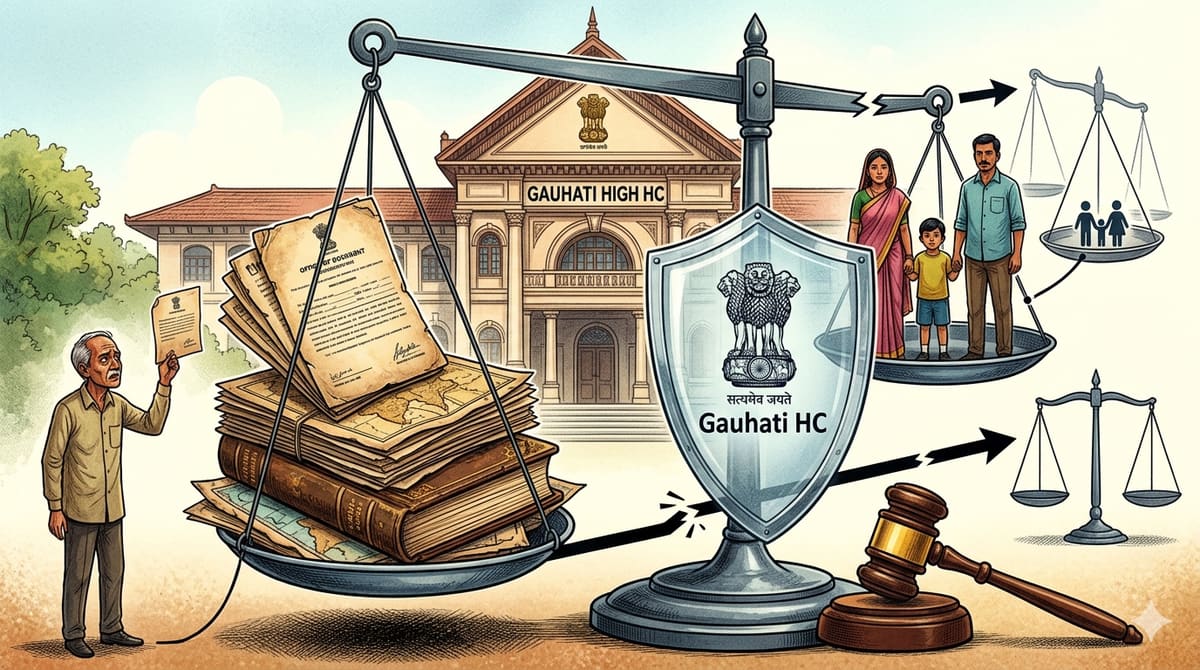
The Gauhati High Court has reaffirmed the stringent burden of proof placed on individuals contesting citizenship proceedings under Section 9 of the Foreigners Act, 1946. In a recent judgment, the Court dismissed a writ petition challenging a Foreigners Tribunal's order declaring the petitioner a foreigner post-25.03.1971, holding that the proceedee failed to discharge the onus of proving citizenship through cogent, credible, and contemporaneous evidence. This ruling underscores the limited scope of judicial review in such matters and the absolute burden on the proceedee to establish their Indian citizenship.
Background & Facts
The Dispute
The petitioner, Aptar Ali, was declared a foreigner post-25.03.1971 by the Foreigners Tribunal No. 11th, Sorbhog, Barpeta, in F.T. Case No. 170/2016. The reference was initiated by the Superintendent of Police (B), Barpeta District, under Section 9 of the Foreigners Act, 1946, which places the burden of proving citizenship on the proceedee. The petitioner challenged this order under Article 226 of the Constitution of India before the Gauhati High Court.
Key Facts
-
Reference Date: The Superintendent of Police referred the case to the Foreigners Tribunal, triggering F.T. Case No. 170/2016.
-
Written Statement: The petitioner filed his written statement on 08.09.2016, accompanied by documentary evidence, including:
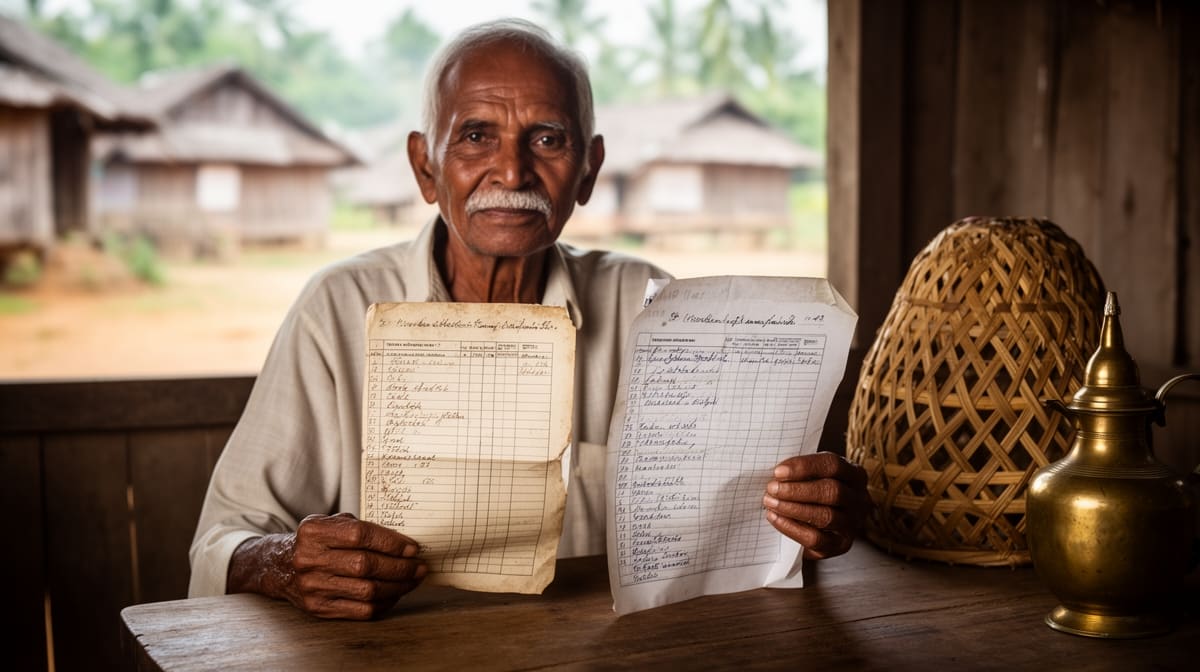
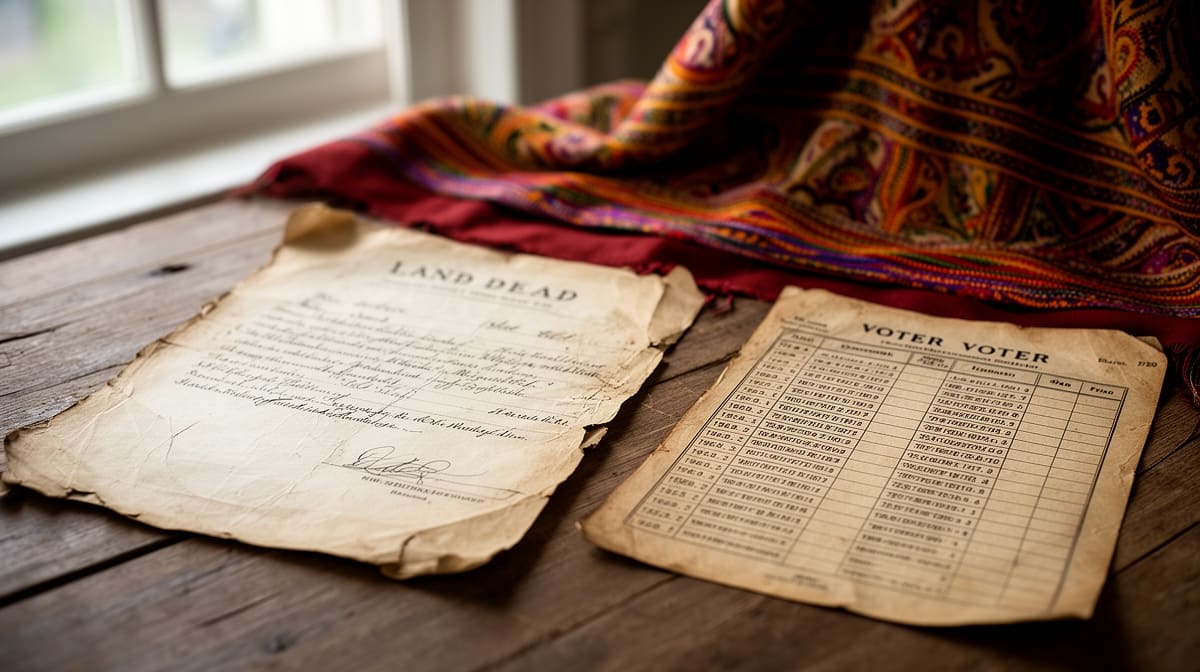
- Ext-A: Certified copy of the Voters List of 1970.
- Ext-B: Certified copy of the Voters List of 1989.
- Ext-C: Another certified copy of the Voters List of 1970.
- Ext-D: Identity Card.
- Ext-E: NRC entry Certificate issued by the President, District Jamiot Ulema & Hind, Barpeta.
-
Evidence Adduced: The petitioner appeared as DW1, and his elder brother as DW2.
-
Voter List Discrepancies:
- 1970 Voters List: Names of projected father (Aakim Ali, aged 38, son of Samir Uddin) and mother (Aamiron Nessa, aged 27), residing in Uttar Athiyabari.
- 1989 Voters List: Names of projected father (Hakim Ali, aged 70, son of Sokhu Mia), mother (Aamiron, aged 65), petitioner (Aator Ali), and his brother, residing in Nisuka. The names and details in the 1989 list did not match those in the 1970 list.
-
Gaonburah Certificate: Dated 03.08.2016, issued to establish linkage with the petitioner's father, but not proved.
-
NRC Certificate: Issued by a private organization (District Jamiot Ulema Hind), deemed inadmissible as proof of citizenship.
Procedural History
- 07.12.2016: Foreigners Tribunal No. 11th, Sorbhog, Barpeta, declared the petitioner a foreigner post-25.03.1971 in F.T. Case No. 170/2016.
- 23.02.2017: High Court requisitioned records for review.
- 08.06.2026: Judgment reserved.
- 10.06.2026: High Court dismissed the writ petition and upheld the Tribunal's order.
Relief Sought
The petitioner sought quashing of the Foreigners Tribunal's order dated 07.12.2016, contending that he had discharged the burden of proof through documentary and oral evidence. He further argued that the Tribunal erred in rejecting his evidence without rebuttal from the State.
The Legal Issue
The central question was whether the petitioner had discharged the burden of proof under Section 9 of the Foreigners Act, 1946 to establish his Indian citizenship, and whether the High Court, in exercise of its certiorari jurisdiction under Article 226, could interfere with the factual findings of the Foreigners Tribunal.
Arguments Presented
For the Petitioner
- The petitioner argued that he had submitted cogent evidence, including Voters Lists of 1970 and 1989, a Gaonburah Certificate, and an NRC Certificate, to establish his linkage with his parents and his Indian citizenship.
- He contended that the burden of proof under Section 9 had been discharged, as the State failed to adduce any rebuttal evidence.
- Reliance was placed on the Voters Lists and the testimony of DW1 and DW2 to prove his citizenship.
For the Respondent
- The respondents, represented by the Standing Counsel for the Home Department, argued that the petitioner utterly failed to discharge the burden of proof under Section 9 of the Foreigners Act, 1946, which places the onus solely on the proceedee.
- The written statement was vague and lacked critical details, such as the petitioner's date of birth, place of birth, and the citizenship of his parents, as required by the Supreme Court in Sarbananda Sonowal v. Union of India.
- The Voters Lists of 1970 and 1989 were disconnected, with no matching names or details, rendering them unreliable.
- The Gaonburah Certificate and NRC Certificate were not proved and were issued by a private organization, making them inadmissible as proof of citizenship.
- Oral evidence of DW1 and DW2 was not trustworthy or credible, as it was not supported by documentary evidence.
- The respondents relied on precedents such as Romila Khatun v. Union of India and Nur Begum v. Union of India to argue that documentary evidence must be proved from contemporaneous records and that the High Court's certiorari jurisdiction is supervisory, not appellate.
The Court's Analysis
The Court conducted a detailed examination of the burden of proof under Section 9 of the Foreigners Act, 1946, which places the onus squarely on the proceedee to establish their Indian citizenship. The Court emphasized that this burden does not shift and is not subject to the provisions of the Indian Evidence Act, 1872, due to the non-obstante clause in Section 9.
"If in any case not falling under Section 8 any question arises with reference to this Act or any order made or direction given thereunder, whether any person is or is not a foreigner or is or is not a foreigner of a particular class or description the onus of proving that such person is not a foreigner or is not a foreigner of such particular class or description, as the case may be, shall, notwithstanding anything contained in the Indian Evidence Act, 1872 (1 of 1872), lie upon such person."
The Court relied on the Constitutional Bench decision in Ghaus Mohammad v. Union of India and Fateh Mohd. v. Delhi Administration, which held that the burden of proving citizenship rests absolutely on the proceedee. The Court further cited Sarbananda Sonowal v. Union of India to underscore the requirements for proving citizenship, including:
- Date of birth.
- Place of birth.
- Names of parents.
- Their place of birth and citizenship.
- Details of grandparents, if relevant.
The Court observed that the written statement filed by the petitioner was vague and failed to meet these requirements. The Voters Lists of 1970 and 1989 were inconsistent, with no matching names or details, rendering them unreliable. The Gaonburah Certificate and NRC Certificate were not proved and were issued by a private organization, making them inadmissible as evidence of citizenship.
The Court also noted that the oral evidence of DW1 and DW2 was not trustworthy or credible, as it was not supported by documentary evidence. DW2, the petitioner's projected elder brother, admitted during cross-examination that he was not aware of the contents of his affidavit, further weakening the petitioner's case.
The Court reiterated the limited scope of certiorari jurisdiction under Article 226, citing the recent Supreme Court decision in Central Council for Research in Ayurvedic Sciences v. Bikartan Das, which held:
"The first cardinal principle of law that governs the exercise of extraordinary jurisdiction under Article 226 of the Constitution, more particularly when it comes to the issue of a writ of certiorari is that in granting such a writ, the High Court does not exercise the powers of Appellate Tribunal. It does not review or reweigh the evidence upon which the determination of the inferior tribunal purports to be based. It demolishes the order which it considers to be without jurisdiction or palpably erroneous but does not substitute its own views for those of the inferior tribunal."
The Court emphasized that findings of fact by the Foreigners Tribunal are not liable to be interfered with unless there is a procedural impropriety, illegality, or violation of natural justice. In this case, the Court found no such infirmities in the Tribunal's decision-making process.
The Verdict
The Gauhati High Court dismissed the writ petition, upholding the Foreigners Tribunal's order dated 07.12.2016 declaring the petitioner a foreigner post-25.03.1971. The Court vacated the interim order passed earlier and directed that actions consequent upon the Tribunal's opinion shall follow in accordance with law. The records were ordered to be returned to the Foreigners Tribunal forthwith.
What This Means For Similar Cases
The Burden of Proof Is Absolute and Non-Shifting
- Section 9 of the Foreigners Act, 1946 places an absolute burden on the proceedee to prove their Indian citizenship. This burden does not shift to the State, even in the absence of rebuttal evidence.
- Practitioners must advise clients that mere submission of documents is insufficient; the proceedee must prove the authenticity and contents of each document through contemporaneous records and credible evidence.
Documentary Evidence Must Be Contemporaneous and Reliable
- Voter Lists, certificates, and other documents must match and establish a clear linkage between the proceedee and their claimed relatives. Discrepancies, such as mismatched names or details, will render the evidence unreliable.
- Certificates issued by private organizations (e.g., NRC Certificates from non-governmental bodies) are not admissible as proof of citizenship unless supported by official records.
- Oral evidence alone is insufficient; it must be corroborated by documentary evidence and contemporaneous records, as held in Bijoy Das v. UOI.
Limited Scope of Judicial Review Under Certiorari
- The High Court's certiorari jurisdiction under Article 226 is supervisory, not appellate. It does not permit reweighing of evidence or substitution of the Court's views for those of the Tribunal.
- Findings of fact by the Foreigners Tribunal will not be interfered with unless there is a procedural impropriety, illegality, or violation of natural justice.
- Practitioners must focus on challenging the decision-making process rather than the merits of the Tribunal's factual findings.