The Rajasthan High Court has clarified a critical aspect of bail jurisprudence under the Narcotic Drugs and Psychotropic Substances Act, 1985 (NDPS Act), holding that the embargo under Section 37 does not apply where the commercial quantity for cultivation of opium poppy is undefined. This judgment reinforces the principle that bail cannot be denied solely on the gravity of the offence when statutory thresholds are ambiguous, offering relief to accused persons in similar cases.
Background & Facts
The Dispute
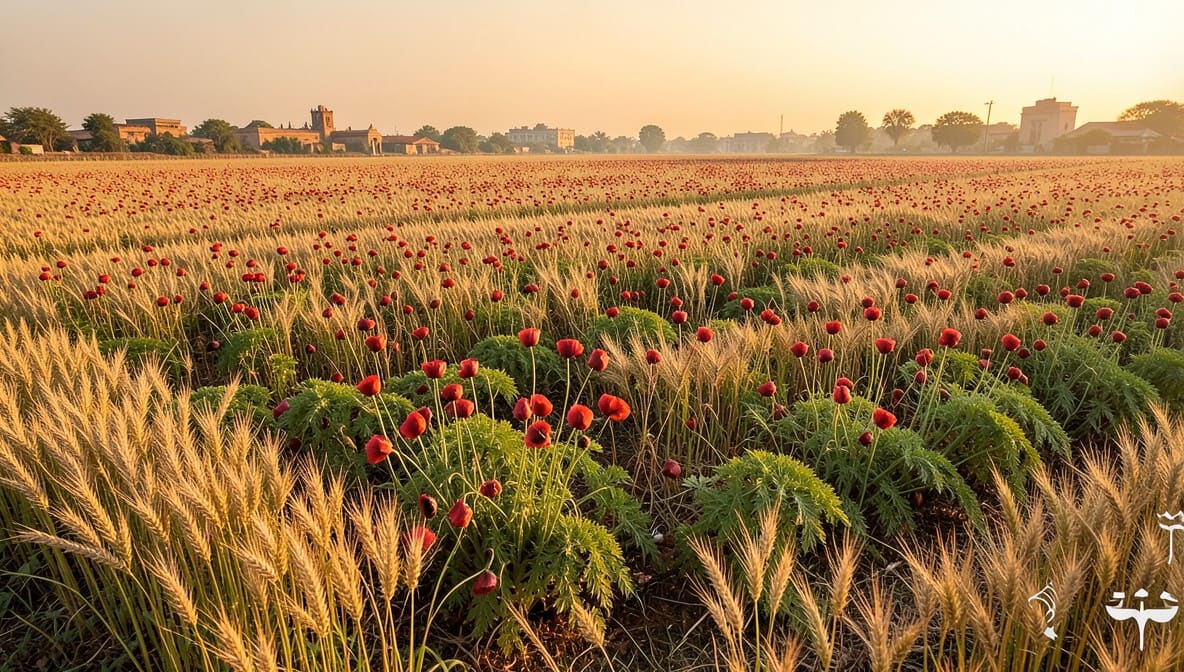
The petitioner, Hazi Ram, was arrested in connection with FIR No. 41/2026 dated 20.02.2026, registered at Police Station Garhi, District Banswara, for offences under Sections 8/18 of the NDPS Act. The prosecution alleged that the petitioner was cultivating 2,428 opium poppy plants weighing 71 kg in his agricultural field. The petitioner contended that he was falsely implicated and that the embargo under Section 37 of the NDPS Act - which restricts bail for offences involving commercial quantities - was not attracted in this case.
Key Facts
- 20.02.2026: FIR registered for cultivation of opium poppy under Sections 8/18 NDPS Act
- Recovery Details: 2,428 opium poppy plants weighing 71 kg allegedly recovered from the petitioner’s field
- Prior Acquittal: Petitioner was acquitted in a similar case (Case No. 06/2018) on 20.04.2022 by the Special Judge, NDPS Cases, Pratapgarh
- Legal Argument: Petitioner argued that Section 37 of the NDPS Act does not apply as commercial quantity for opium cultivation is undefined under the Act
Procedural History
- 20.02.2026: FIR registered at Police Station Garhi, Banswara
- Arrest: Petitioner arrested and lodged in District Jail, Balotra
- 13.04.2026: Bail application (SB Criminal Misc. Bail Application No. 3423/2026) filed before the Rajasthan High Court
Relief Sought
The petitioner sought release on bail, arguing that:
- The embargo under Section 37 NDPS Act was not applicable as the commercial quantity for opium cultivation is undefined
- The trial would take a long time to conclude, warranting interim relief
- The petitioner had no prior convictions and had been acquitted in a similar case
The Legal Issue
The central question before the Court was: Whether the embargo under Section 37 of the NDPS Act applies to offences involving cultivation of opium poppy where the commercial quantity is undefined under the Act?
Arguments Presented
For the Petitioner
- Section 37 Embargo Inapplicable: Relied on precedents (Vala Ram v. State of Rajasthan, Bhajan Lal v. State of Rajasthan, Kallu Nath v. State of Rajasthan) to argue that Section 37 applies only to offences involving defined commercial quantities
- Undefined Commercial Quantity: Highlighted Note 3 of Notification S.O. 1055(E) dated 19.10.2001, which states that "small quantity" and "commercial quantity" for opium cultivation are not specified as the offence is covered under Section 18(c) NDPS Act
- No Rigour of Section 37: Contended that since commercial quantity is undefined, the embargo under Section 37 does not apply, and bail should be granted
- Prior Acquittal: Submitted that the petitioner had been acquitted in a similar case, demonstrating lack of criminal intent
For the Respondent
- Opposed Bail: Learned Public Prosecutor opposed the bail application, arguing that the case involved serious allegations
- Conceded Legal Point: However, the prosecution could not refute that Section 37 embargo was not attracted due to the undefined commercial quantity
The Court's Analysis
The Court conducted a detailed examination of the NDPS Act’s provisions, particularly Sections 8, 18, and 37, and relied on precedents to determine the applicability of the bail embargo.
Key Legal Principles Established
-
Undefined Commercial Quantity: The Court observed that Note 3 of Notification S.O. 1055(E) explicitly states that "small quantity" and "commercial quantity" for opium cultivation are not specified, as the offence is covered under Section 18(c) NDPS Act. This means that no statutory threshold exists for determining commercial quantity in cases of opium cultivation.
-
Section 37 Embargo: The Court reiterated that Section 37 NDPS Act imposes a restriction on bail for offences involving commercial quantities or offences under Sections 19, 24, or 27A. Since commercial quantity for opium cultivation is undefined, the embargo under Section 37 does not apply.
-
Precedential Support: The Court relied on three key judgments to support its reasoning:
- Vala Ram v. State of Rajasthan (SBCRLMB No. 5293/2024): Held that scattered opium plants in a large field do not necessarily imply exclusive possession, and bail should not be denied without strong evidence
- Bhajan Lal v. State of Rajasthan (SBCRLMB No. 6894/2022): Emphasized that only the flowering/fruiting tops of cannabis plants should be considered for determining commercial quantity, and total plant weight (including roots/stems) cannot be used
- Kallu Nath v. State of Rajasthan (SB Criminal Misc. IV Bail Appln. No. 2676/2022): Held that Section 37 embargo is inapplicable where commercial quantity is undefined
-
Judicial Discretion: The Court noted that bail should not be denied merely on the gravity of the offence when statutory thresholds are ambiguous. It emphasized that trial delays and lack of evidence at the bail stage warrant interim relief.
"The embargo contained in Section 37 is not attracted as there is no question of commercial quantity in the present case... The cultivation of opium poppy plant would fall under the category (c) of Section 18 of the NDPS Act, where no specific quantity is defined."
The Verdict
The Court allowed the bail application and directed the release of the petitioner on the following terms:
- Personal Bond: Rs. 50,000
- Sureties: Two sureties of Rs. 25,000 each
- Condition: Petitioner must appear before the trial court on all hearing dates and as required
The Court did not express any opinion on the merits of the case, clarifying that its observations were limited to the bail application and would not influence the trial judge.
What This Means For Similar Cases
Bail Cannot Be Denied Solely on Gravity of Offence
- Section 37 Embargo Inapplicable: Practitioners must argue that where commercial quantity is undefined (e.g., opium cultivation), Section 37 NDPS Act does not restrict bail
- Judicial Precedent: Courts are likely to follow this judgment in cases involving undefined commercial quantities, particularly for cultivation-related offences
Documentary Evidence and Land Records Crucial
- Joint Possession Defence: If opium plants are scattered in a large field with multiple khatedar tenants, accused can argue lack of exclusive possession
- Land Use Records: Jamabandi (land records) showing legitimate crops (e.g., fennel, wheat) can support claims of unintentional cultivation
Trial Delays Favour Bail
- Protracted Trials: Courts may grant bail where trials are likely to take a long time, especially in NDPS cases involving complex evidence
- Acquittal History: Prior acquittals in similar cases can be strong grounds for bail, as they undermine prosecution’s case
Strategic Takeaways for Practitioners
- Challenge Commercial Quantity: If commercial quantity is undefined, argue that Section 37 embargo does not apply
- Highlight Scattered Growth: Use land records and photographic evidence to show lack of intentional cultivation
- Leverage Precedents: Cite Vala Ram, Bhajan Lal, and Kallu Nath to strengthen bail pleas
- Emphasize Trial Delays: Argue that prolonged incarceration without trial violates right to speedy justice