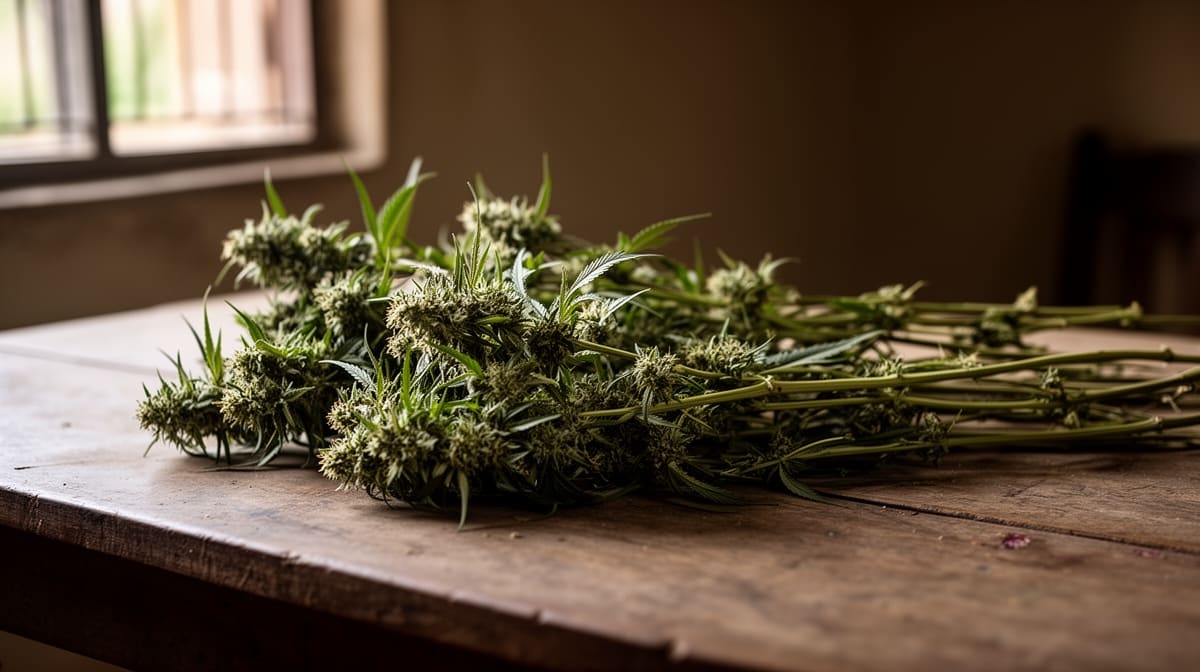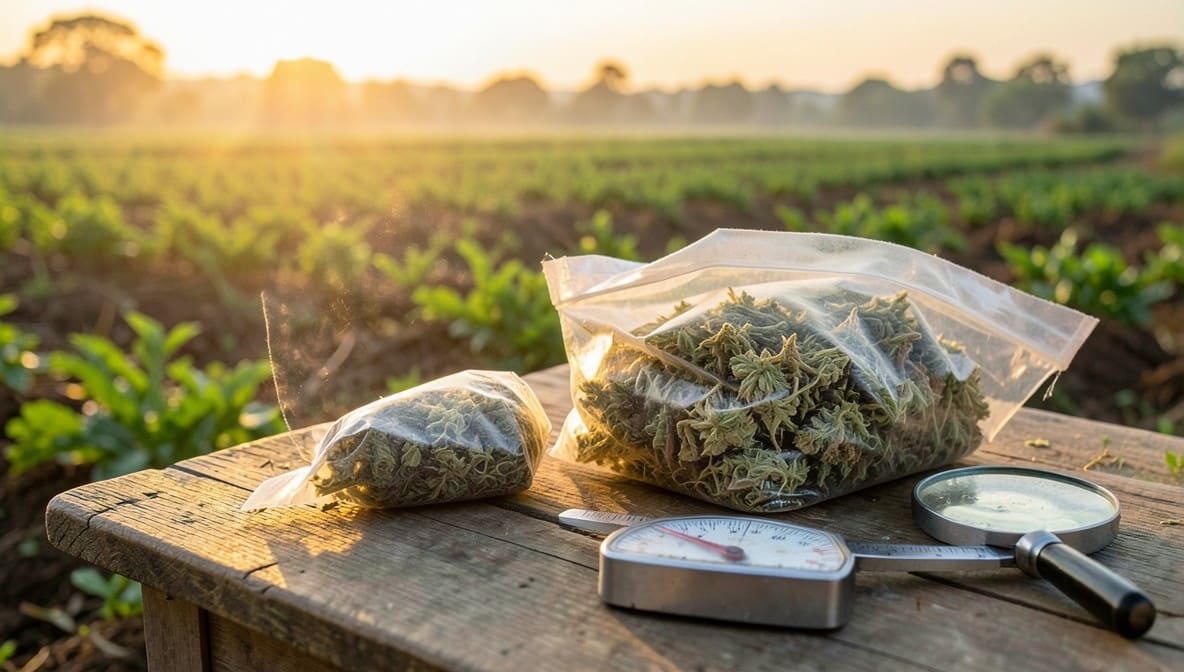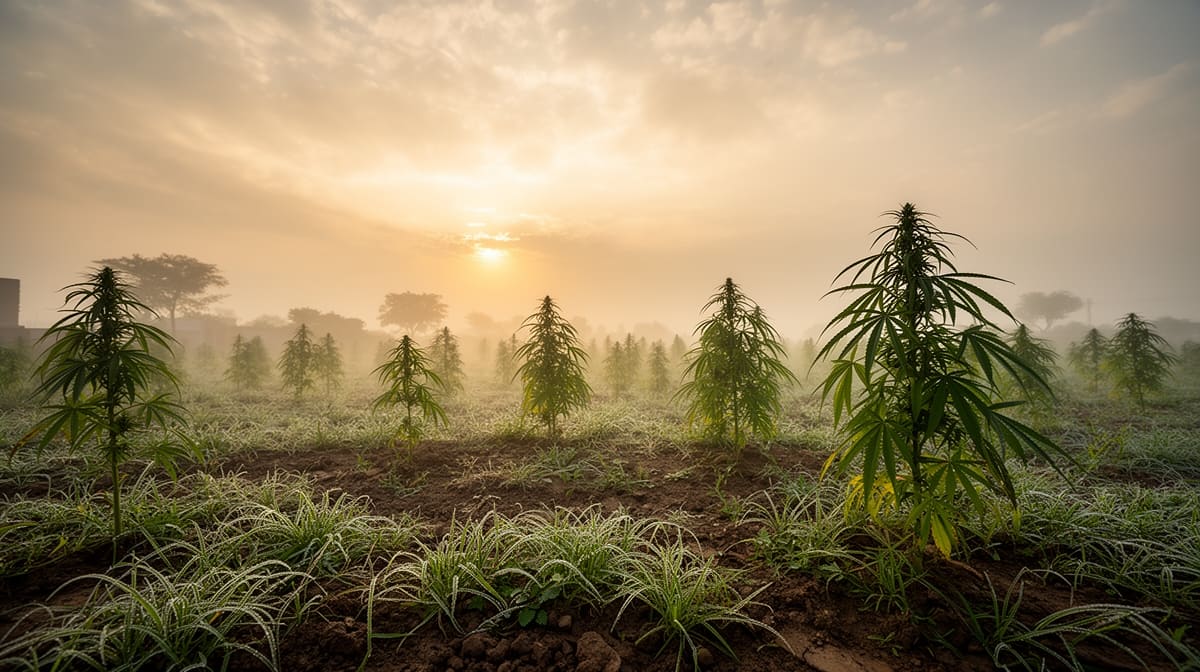
The Rajasthan High Court has clarified a critical interpretational issue under the Narcotic Drugs and Psychotropic Substances Act, 1985 (NDPS Act). In a bail application involving cultivation of cannabis plants, the Court held that only the flowering or fruiting tops of cannabis plants - not the entire plant including seeds, leaves, stems, or soil - should be considered for determining whether the recovered contraband qualifies as commercial quantity. This judgment provides crucial guidance for future cases under Sections 8 and 20 of the NDPS Act, particularly where the weight of recovered cannabis plants is disputed.
Background & Facts
The Dispute
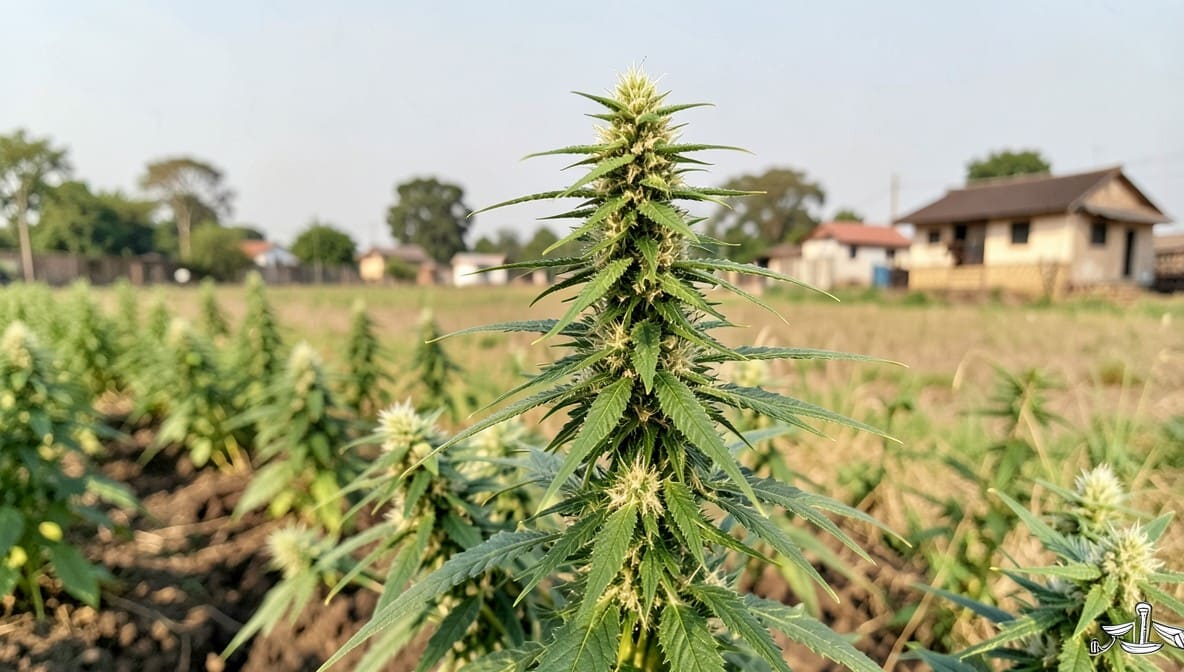
The petitioners - Chanda Devi, Rameshwar, and Teeja Devi - were arrested in connection with FIR No. 0048/2026 dated 17.03.2026 registered at Police Station Amarsar, District Jaipur Rural. The FIR alleged offences under Sections 8 and 20 of the NDPS Act, 1985, following the recovery of cannabis plants from their agricultural land.
Key Facts
- 17.03.2026: FIR registered for cultivation of cannabis plants
- Recovery Details: Police seized:
- 232 cannabis plants from Khasra No. 2718, weighing 29 kgs and 300 grams
- 429 cannabis plants from Khasra Nos. 2715 and 2720, weighing 57 kgs and 150 grams
- Total weight claimed: 86 kgs and 450 grams
- Weight Determination Issue: The entire plants, including seeds, roots, stems, leaves, and soil, were weighed. The petitioners contended that only the flowering or fruiting tops should have been considered, as per the definition of ganja under Section 2(iii)(b) of the NDPS Act
- Commercial Quantity Threshold: Under S.O. 1055(E) dated 19.10.2001, the commercial quantity for ganja is 20 kgs
- Petitioners' Profile: No criminal antecedents under the NDPS Act. Petitioners No. 1 and 3 are females
Procedural History
- 17.03.2026: FIR registered; petitioners arrested
- 07.05.2026: Bail application rejected by Additional Sessions Judge No. 1, Shahpura, District Jaipur
- Post-07.05.2026: Petitioners filed this bail application under Section 483 of the Bharatiya Nyaya Sanhita (BNS), 2023 before the Rajasthan High Court
Relief Sought
The petitioners sought bail on the grounds that:
- The recovered substance did not qualify as commercial quantity under the NDPS Act, as only the flowering/fruiting tops should have been weighed
- They had no criminal antecedents
- Petitioners No. 1 and 3 are females, and their age was a mitigating factor
The Legal Issue
The central question was whether the entire cannabis plant, including seeds, leaves, stems, and soil, should be weighed for determining commercial quantity under the NDPS Act, or whether only the flowering or fruiting tops - as defined in Section 2(iii)(b) - should be considered.
Arguments Presented
For the Petitioners
- Definition of Ganja: Relied on Section 2(iii)(b) of the NDPS Act, which defines ganja as the flowering or fruiting tops of the cannabis plant, excluding seeds and leaves when not accompanied by the tops
- Weight Determination: Argued that the police erred by weighing the entire plants, including non-relevant parts, which inflated the total weight beyond the commercial quantity threshold
- Precedent: Cited Vinod Kumar v. State of Rajasthan (S.B. Criminal Mis. Bail App. No. 9279/2022, order dated 07.07.2022), where a coordinate bench of the Rajasthan High Court held that only the flowering/fruiting tops should be considered for weight determination
- No Criminal Antecedents: Emphasized that the petitioners had no prior convictions under the NDPS Act
- Mitigating Factors: Highlighted that petitioners No. 1 and 3 are females, and their age should be considered for bail
For the Respondent
- Commercial Quantity: Contended that the total weight of 86 kgs and 450 grams clearly exceeded the commercial quantity threshold of 20 kgs under the NDPS Act
- Strict Bail Provisions: Argued that Section 37 of the NDPS Act imposes strict conditions for bail in cases involving commercial quantities, and the petitioners did not meet these conditions
The Court's Analysis
The Court conducted a detailed analysis of the NDPS Act, focusing on the definition of ganja and the methodology for determining commercial quantity.
Definition of Ganja Under NDPS Act
The Court relied on Section 2(iii)(b) of the NDPS Act, which defines ganja as:
"the flowering or fruiting tops of the cannabis plant (excluding the seeds and leaves when not accompanied by the tops), by whatever name they may be known or designated."
The Court emphasized that this definition explicitly excludes seeds and leaves unless they are accompanied by the flowering/fruiting tops. Thus, the entire cannabis plant - including stems, roots, and soil - cannot be considered for determining the weight of ganja.
Commercial Quantity Threshold
The Court referred to S.O. 1055(E) dated 19.10.2001, which specifies that the commercial quantity for ganja is 20 kgs. Since the police weighed the entire plants (86 kgs and 450 grams), the Court noted that:
"In the absence of any bifurcation of seeds and leaves from the flowering or fruiting tops before weighing the recovered contraband, it is safe to infer that the actual weight of recovered ganja would be less than the claimed weight and therefore, below the stipulated commercial quantity."
The Court observed that if only the flowering/fruiting tops had been weighed, the recovered quantity would likely have fallen below the commercial quantity threshold.
Precedent Application
The Court relied on its earlier judgment in Vinod Kumar v. State of Rajasthan, where a similar issue was addressed. In that case, the Court had held:
"For the purpose of determining the total weight of the recovered contraband ganja, only the flowering or fruiting tops of the cannabis plants should have been taken for weighing... As there was no bifurcation of seeds and leaves from the flowering or fruiting tops before weighing the recovered contraband and the total weight of the recovered contraband is just 2 kgs and 700 gms above the commercial quantity, it is safe to infer that the actual weight of recovered ganja would be less than the claimed weight and therefore, below the stipulated commercial quantity."
The Court applied this reasoning to the present case, noting that the total weight of 86 kgs and 450 grams was significantly above the commercial quantity threshold, but this was due to the erroneous inclusion of non-relevant plant parts.
Bail Jurisprudence Under NDPS Act
The Court examined Section 37 of the NDPS Act, which imposes strict conditions for bail in cases involving commercial quantities. However, the Court noted that Section 37 applies only to offences under Sections 19, 24, or 27A, or where the recovered quantity is commercial. Since:
- The offence in this case fell under Section 8(b) (cultivation of cannabis plant) and Section 20(a)(i) (punishment for cultivation), and
- The recovered quantity did not qualify as commercial due to the improper weighing methodology,
the rigours of Section 37 did not apply, and bail could be granted.
Mitigating Factors
The Court also considered:
- The absence of criminal antecedents under the NDPS Act
- The fact that petitioners No. 1 and 3 are females
- The overall facts and circumstances of the case
The Verdict
The Court allowed the bail application under Section 483 of the Bharatiya Nyaya Sanhita (BNS), 2023. The petitioners were directed to be released on bail, subject to the following conditions:
- Each petitioner must execute a personal bond of ₹1,00,000
- Each petitioner must furnish two sureties of ₹50,000 each
- The petitioners must appear before the Trial Court on every date of hearing and whenever called upon
- The petitioners are prohibited from cultivating cannabis plants on their agricultural land. Non-compliance will result in automatic cancellation of bail
- The petitioners must not misuse their liberty or take undue advantage of the bail
- If the petitioners are found involved in any other NDPS Act case during the trial, the Public Prosecutor may apply for cancellation of bail
The Court clarified that its observations would not affect the trial of the case.
What This Means For Similar Cases
Strict Interpretation of Ganja Definition
- Only Flowering/Fruiting Tops Count: Practitioners must argue that only the flowering or fruiting tops of cannabis plants - as defined in Section 2(iii)(b) of the NDPS Act - should be considered for determining commercial quantity. Seeds, leaves, stems, roots, and soil must be excluded
- Burden on Prosecution: The prosecution must prove that the recovered substance includes flowering/fruiting tops and that their weight exceeds the commercial quantity threshold. Weighing the entire plant is insufficient
Bail Eligibility in NDPS Cases
- Section 37 Not Always Applicable: Bail cannot be denied solely on the grounds of Section 37 if:
- The offence does not fall under Sections 19, 24, or 27A, or
- The recovered quantity does not qualify as commercial due to improper weighing
- Mitigating Factors Matter: Courts may consider gender, age, and lack of criminal antecedents when deciding bail applications
Precedential Value of Vinod Kumar
- Binding Precedent: The judgment in Vinod Kumar v. State of Rajasthan is binding on lower courts in Rajasthan. Practitioners should cite this case to argue for proper weight determination in cannabis-related offences
- Strategic Litigation: Defence counsel can use this precedent to challenge the prosecution's weight calculations and argue for bail or reduced charges based on the actual weight of flowering/fruiting tops
Compliance Directions for Accused
- Strict Conditions: Courts may impose strict conditions on bail, such as:
- Prohibition on cultivation of cannabis plants
- Automatic cancellation of bail for non-compliance
- Regular appearance before the Trial Court
- Risk of Bail Cancellation: Accused must strictly adhere to bail conditions, as any involvement in fresh NDPS Act cases during the trial may lead to cancellation of bail