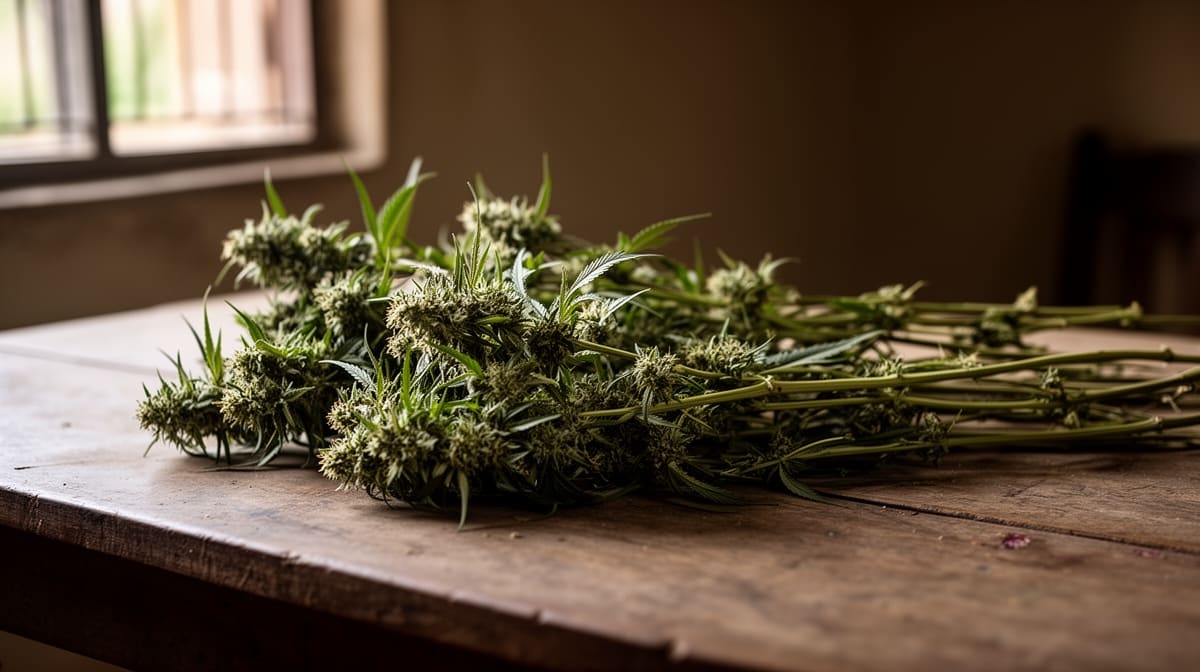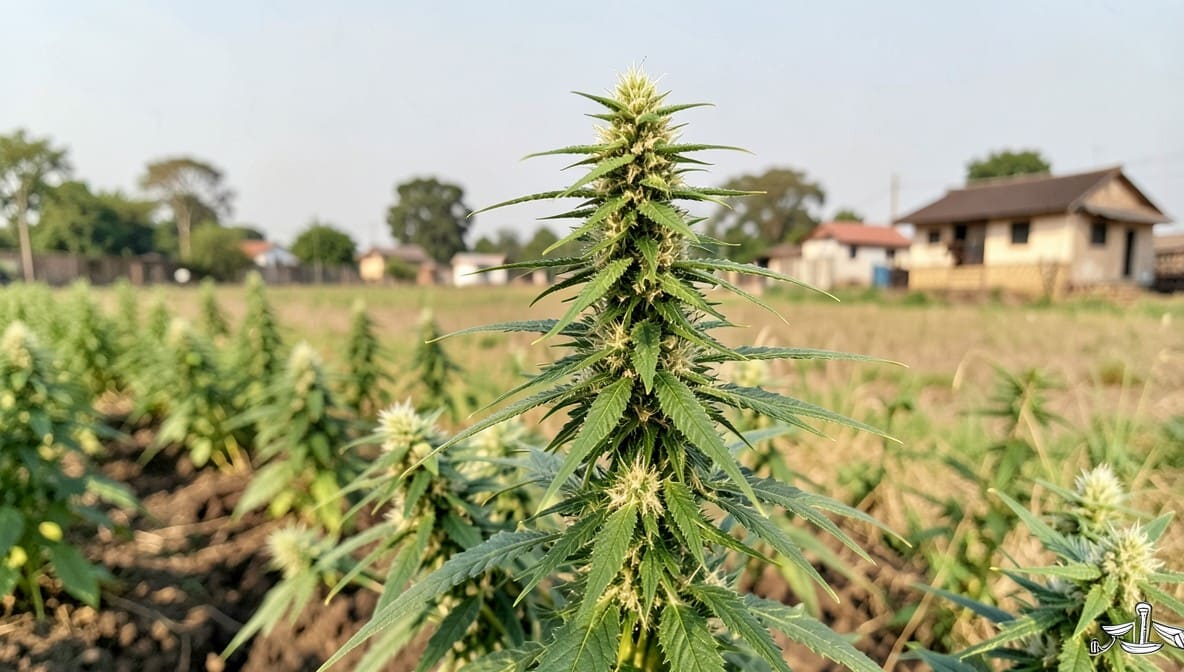
The Rajasthan High Court has clarified that bail cannot be denied under Section 37 of the NDPS Act merely because contraband was recovered from a field where the accused is a joint khatedar, if the net weight of the seized ganja, after proper exclusion of non-qualifying plant parts, falls below the statutory commercial threshold.
Background & Facts
The Dispute
The petitioner, Lungia @ Lukiya, was arrested in connection with FIR No. 169/2025 registered at Police Station Kotra, Udaipur, for alleged possession of 26.250 kg of ganja under Section 8/20 of the NDPS Act. The contraband was recovered from open agricultural land where the petitioner and three others were joint khatedars. The prosecution alleged conscious possession, but the petitioner contends he had no exclusive control over the land or the plants.
Procedural History
- 09 December 2025: Petitioner arrested and lodged in Central Jail, Udaipur
- 19 February 2026: Bail application filed under Section 483 of the BNSS
- No chargesheet filed at the time of hearing; trial yet to commence
Relief Sought
The petitioner sought regular bail, arguing that the seized material did not constitute "ganja" as defined under Section 2(iii)(b) of the NDPS Act, and that the total weight, once leaves, stems, and roots were excluded, fell below the commercial quantity threshold, thereby excluding the application of Section 37.
The Legal Issue
The central question was whether Section 37 of the NDPS Act, which imposes stringent conditions for bail, applies when the seized cannabis material, after proper exclusion of non-qualifying parts under Section 2(iii)(b), amounts to less than the commercial quantity.
Arguments Presented
For the Petitioner
Learned counsel argued that Section 2(iii)(b) defines ganja strictly as the flowering or fruiting tops of the cannabis plant, excluding seeds, leaves, stems, and roots. The prosecution’s method of weighing the entire plant without separation rendered the quantity inaccurate. Once the non-ganja portions were excluded, the net weight of the qualifying material was below the commercial threshold. Counsel relied on judicial precedents requiring strict adherence to statutory definitions and submitted that Section 37 does not apply to offences involving non-commercial quantities. The petitioner had no prior criminal record and had been in custody since December 2025.
For the Respondent
The Public Prosecutor opposed bail, asserting that the recovery from shared land did not negate possession, and that the weight recorded in the seizure memo was prima facie valid. He contended that the defence’s technical argument about plant parts was speculative and not supported by forensic analysis. He argued that the gravity of NDPS offences warranted continued custody pending trial.
The Court's Analysis
The Court declined to adjudicate the merits of guilt or innocence but focused squarely on the statutory definition of ganja under Section 2(iii)(b). It observed that the NDPS Act is a penal statute and must be interpreted strictly. The definition explicitly excludes leaves, stems, and roots unless they are accompanied by the flowering or fruiting tops. The Court noted that the prosecution had not demonstrated that the seized material consisted exclusively of qualifying parts.
"The definition of ganja under Section 2(iii)(b) is precise and excludes seeds and leaves. If the seized material includes non-qualifying portions, their weight cannot be aggregated to reach commercial quantity."
The Court held that the petitioner’s argument raised a plausible legal ground that, if proven, would render Section 37 inapplicable. Since bail under Section 37 is contingent on the offence involving commercial quantity, and the weight calculation was legally questionable, the petitioner was entitled to the benefit of doubt. The Court emphasized that prolonged pre-trial detention without a clear statutory basis violates the principle of personal liberty under Article 21.
The Verdict
The petitioner won. The Court held that Section 37 of the NDPS Act does not bar bail when the seized cannabis material, after excluding non-qualifying parts under Section 2(iii)(b), does not meet the commercial quantity threshold. The petitioner was granted bail on personal bond of Rs. 50,000 with two sureties of Rs. 25,000 each.
What This Means For Similar Cases
Weight Calculation Must Follow Statutory Definition
- Practitioners must demand forensic separation and weighing of seized cannabis material to isolate only flowering/fruiting tops
- Prosecution must prove the seized material meets the definition in Section 2(iii)(b) before invoking Section 37
- Any bulk weighing of entire plants without segregation is legally insufficient to establish commercial quantity
Section 37 Does Not Apply to Non-Commercial Quantities
- Bail applications under Section 483 BNSS can succeed even in NDPS cases if the quantity falls below commercial threshold
- Courts must conduct a preliminary assessment of whether the offence attracts Section 37 before denying bail
- The burden shifts to the prosecution to establish that the seized material qualifies as ganja under the Act
Pre-Trial Custody Requires Statutory Justification
- Prolonged detention without proof of commercial quantity violates Article 21
- Courts must not defer to prosecution’s unverified seizure reports when statutory definitions are clear
- Defence counsel should routinely challenge the methodology of weight determination in NDPS cases at the bail stage