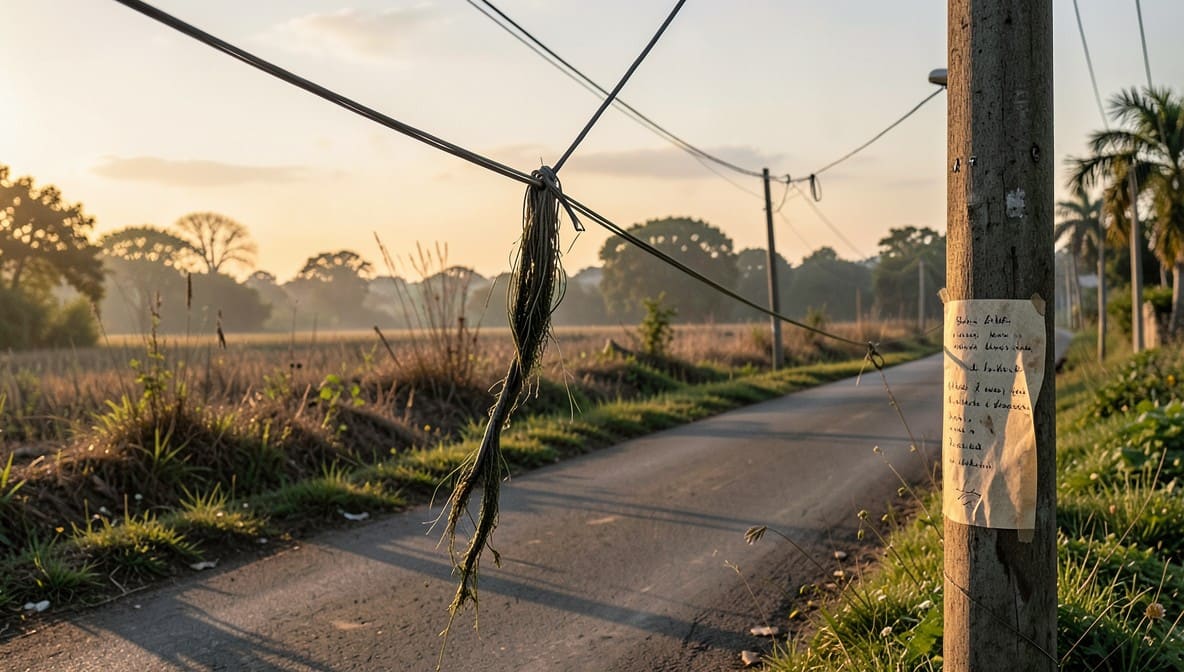
The Gauhati High Court has clarified that public servants cannot invoke statutory protection under Section 197 CrPC when their failure to act on known hazards results in death by electrocution. The judgment underscores that dereliction of duty, not its discharge, negates immunity and permits criminal prosecution under Section 304(A) IPC for culpable negligence.
Background & Facts
The Dispute
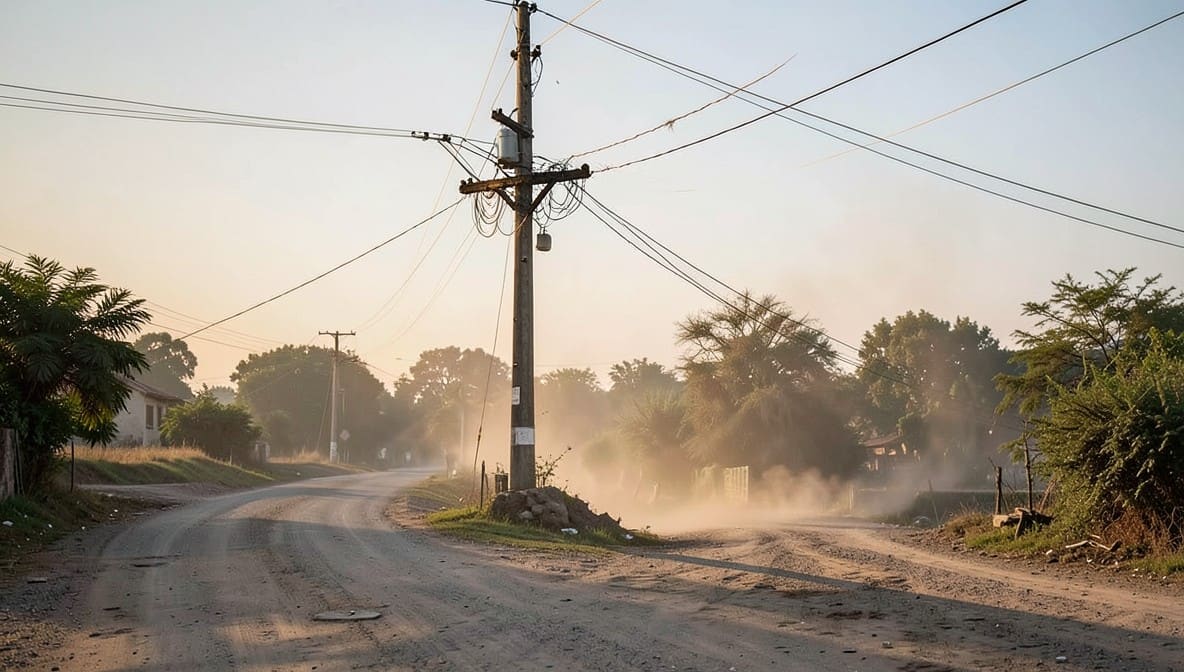
The case arises from the death of Ansarul Hoque Mazumder, a 22-year-old resident of Alakulipur, Karimganj, Assam, who was electrocuted on 06.05.2019 while attempting to lift a dangerously low-hanging high-voltage overhead electric wire on the PWD road near his workplace. The wire had sagged due to heavy thunderstorm and hailstorm the previous night, creating a visible hazard. The deceased’s father, Anwarul Hoque Mazumder (Respondent No. 2), lodged a complaint with the Badarpur Police Station, alleging that the petitioners, Pratyush Pratim Debnath (SDE) and Pran Krishna Mahanta (Junior Manager) of APDCL, had ignored repeated warnings about the hazardous condition of the wire.
Key Facts
- The incident occurred on 06.05.2019 at approximately 10:30 AM near Debendranagar, Badarpur.
- The deceased was pronounced dead on the spot and later transported to Railway Hospital, Badarpur, where death was confirmed.
- An autopsy was conducted on 06.05.2019 at Civil Hospital, Badarpur, confirming death due to electrocution.
- The complainant alleged that local residents had expressed long-standing concerns about the sagging wire.
- A written representation dated 29.11.2018 was submitted to the APDCL, Badarpur Sub-Division, requesting relocation of a PSC pole due to the dangerously low wire running over private land.
- The FIR dated 07.05.2019 (Badarpur P.S. Case No. 121/2019) explicitly states: "There was a long pending panic in the local people about the said dangerously hanging electric wire and one of them made written complaint to the authority of APDCL, Badarpur Sub-Division, in that regard, but the authority concerned did not pay any heed to his complaint."
- The petitioners, as SDE and Junior Manager, were responsible for maintenance and safety of the distribution network in the area.
- No prior inspection, repair, or warning was recorded by the petitioners despite the prior representation and visible condition of the wire.
Procedural History
- 06.05.2019: Death of Ansarul Hoque Mazumder due to electrocution.
- 07.05.2019: FIR registered at Badarpur Police Station under Section 304(A) IPC (Case No. 121/2019).
- 10.05.2019: Post-mortem report submitted.
- 20.07.2022: Charge Sheet No. 177/2022 filed against both petitioners by the police.
- 05.08.2022: Magistrate took cognizance and issued summons to the petitioners.
- 15.11.2022: Petitioners filed application under Section 482 CrPC before the Gauhati High Court seeking quashing of FIR and charge sheet.
- 11.03.2026: Judgment reserved.
- 07.04.2026: Judgment pronounced.
The Parties' Positions
Petitioners (Debnath & Mahanta): Argued that they were public servants acting in their official capacity and that Section 197 CrPC required prior sanction before prosecution. They contended that the death resulted from the deceased’s own negligence in touching a visible wire, not from any act of theirs. They further claimed no specific allegations tied them to the incident and that the FIR lacked mens rea or criminal negligence.
Respondent (State & Informant): Maintained that the petitioners had been repeatedly informed of the hazard through written representation and public complaints, yet took no action. They argued that the petitioners’ inaction constituted criminal negligence under Section 304(A) IPC and that Section 197 CrPC protection does not extend to dereliction of duty.
Relief Sought
The petitioners sought quashing of FIR No. 121/2019, Charge Sheet No. 177/2022, and all proceedings under Section 304(A) IPC, invoking the inherent powers under Section 482 CrPC.
The Legal Issue
The central question was whether Section 197 CrPC bars prosecution of public servants under Section 304(A) IPC when their alleged negligence stems from failure to act on known hazards, and whether such inaction constitutes a criminal act committed "while acting or purporting to act in the discharge of official duty."
Arguments Presented
For the Appellant/Petitioner
The petitioners relied on Narendra Kumar A. Baldota v. State of Karnataka (2022 SCC OnLine SC 1880) and Pepsi Foods Ltd. v. Special Judicial Magistrate (1998) 5 SCC 749 to argue that summoning must be preceded by judicial scrutiny and specific allegations of personal involvement. They contended that mere positional responsibility without direct causation cannot sustain a charge under Section 304(A). They further invoked D.T. Virupakshappa v. C. Subhash (2015) 12 SCC 231 and Manorama Tiwari v. Surendra Nath Rai (2016) 1 SCC 594 to assert that Section 197 CrPC requires prior sanction for prosecution of public servants, which was not obtained. They argued that the incident occurred during the performance of their duties and that Section 151 of the Electricity Act, 2003 barred ordinary courts from taking cognizance of such matters.
For the Respondent/State
The State countered that Section 197 CrPC applies only when the act is performed in discharge of official duty. Here, the petitioners’ failure to act on prior complaints constituted dereliction, not discharge, of duty. The State relied on State of Haryana v. Bhajan Lal (1992 Supp (1) SCC 335) to argue that the FIR disclosed a prima facie case of criminal negligence. The photocopy of the 29.11.2018 representation and the FIR’s explicit reference to prior complaints established knowledge and inaction. The State further argued that Section 151 of the Electricity Act applies only to offences under Sections 135 - 142 (theft, tampering, etc.), not to offences under IPC like Section 304(A).
The Court's Analysis
The Court undertook a detailed analysis of the interplay between Section 197 CrPC and Section 304(A) IPC, distinguishing between acts performed in discharge of duty and acts of dereliction. It held that the protection under Section 197 CrPC is not a blanket shield but is conditional on the act being reasonably connected to official duty.
"The protection given under Section 197 is to protect responsible public servants against the institution of possibly vexatious criminal proceedings for offences alleged to have been committed by them while they are acting or purporting to act as public servants. ... The question is not as to the nature of the offence... but whether it was committed by a public servant acting or purporting to act in the discharge of his official capacity."
The Court examined the FIR and the representation dated 29.11.2018, noting that the petitioners, as officials responsible for electrical safety, had been put on notice of a known, life-threatening hazard. Their failure to inspect, repair, or warn the public constituted a gross omission, not an act performed in the course of duty. The Court emphasized:
"It cannot be said that the incident had happened or the offence was committed by the accused petitioners while discharging their official duty... rather it is seen that the incident had happened purely on the negligent act of the accused petitioners for which a person lost his life."
The Court also rejected the argument that Section 151 of the Electricity Act, 2003 barred prosecution. It held that Section 151 applies only to offences under Sections 135 - 142 (e.g., theft of electricity, unauthorized connections), not to offences under IPC such as culpable homicide not amounting to murder. The death was not caused by tampering or theft, but by systemic negligence.
The Court further relied on Daljith Singh Ghai v. State (2004 2 Crimes(HC) 34) to affirm that Section 304(A) IPC requires more than mere carelessness - it demands rash or negligent conduct with a causal link to death. The Court found that the petitioners’ prolonged inaction despite prior complaints met this threshold prima facie.
Finally, the Court applied the Bhajan Lal test and concluded that the allegations, if accepted at face value, constituted a cognizable offence under Section 304(A) IPC. The case did not fall into any of the categories warranting quashing under Section 482 CrPC.
The Verdict
The petitioners’ application under Section 482 CrPC was dismissed. The Court held that the FIR and charge sheet shall proceed to trial. The prosecution is not barred by Section 197 CrPC as the alleged negligence constituted dereliction of duty, not its discharge. The Special Court under the Electricity Act, 2003, is not the exclusive forum for this case, as the charge is under IPC, not the Electricity Act. The trial court shall proceed with recording evidence and determining whether the petitioners’ conduct amounted to criminal negligence under Section 304(A) IPC.
What This Means For Similar Cases
Dereliction of Duty Nullifies Section 197 CrPC Protection
- Practitioners must now argue that Section 197 CrPC applies only when the act is a legitimate exercise of official authority, not when it is a failure to act.
- In cases involving public utilities (electricity, water, roads), prior complaints and documented knowledge of hazards will be decisive in defeating claims of immunity.
Criminal Negligence Under Section 304(A) IPC Requires Proactive Knowledge
- Mere absence of direct action is insufficient; the prosecution must establish that the accused had actual or constructive knowledge of the danger and failed to mitigate it.
- Written complaints, inspection logs, and public notices become critical evidence to establish mens rea in negligence cases.
IPC Charges Can Coexist with Statutory Violations
-
Prosecution under IPC (e.g., Section 304(A)) is not barred even if the incident involves a statutory body like APDCL.
-
Courts will look at the nature of the offence, not the identity of the accused, to determine jurisdiction.
-
Always verify whether the alleged act was a failure to act or an improper act in discharge of duty.
-
In public utility negligence cases, collect and preserve all prior complaints and internal communications as evidence of knowledge.
-
Do not assume statutory immunity applies - Section 197 CrPC is a conditional shield, not a blanket protection.