The Delhi High Court has delivered a stern reminder that public contractors cannot shield themselves behind corporate structures or insolvency proceedings when their negligence results in preventable loss of life. In a case arising from the death of a young motorcyclist who fell into an unmarked 14-foot-deep pit on a busy Delhi road, the Court denied anticipatory bail to two directors of the contracting firm, emphasizing that safety obligations under public contracts are non-delegable and carry criminal consequences.
Background & Facts
The Dispute
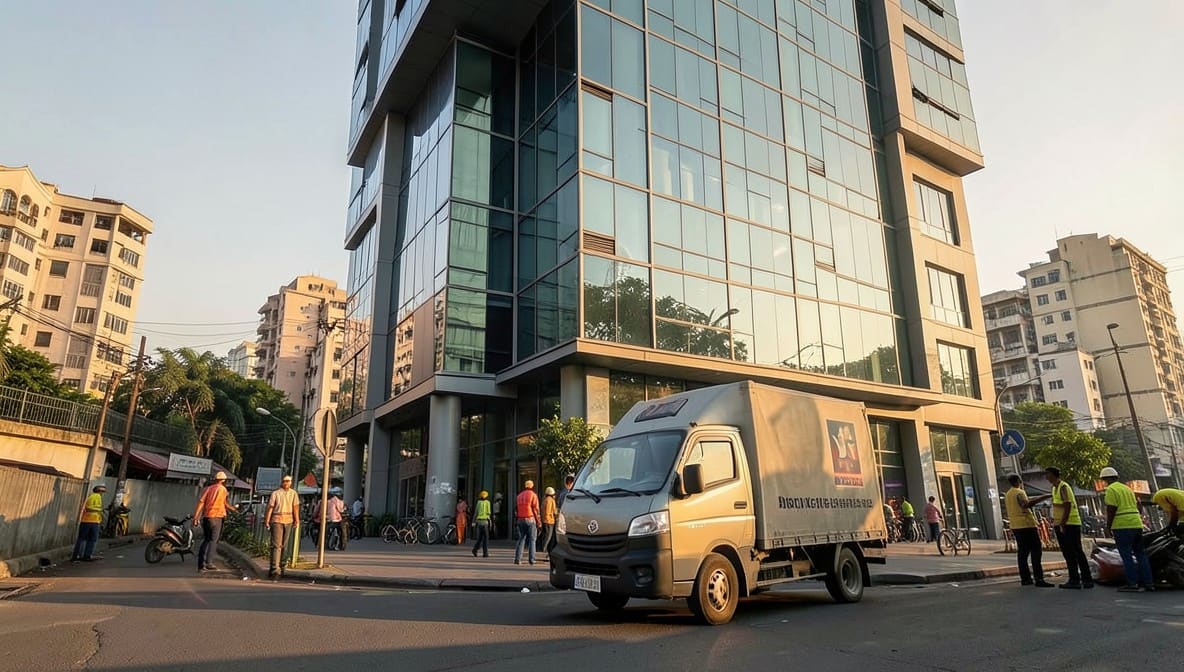
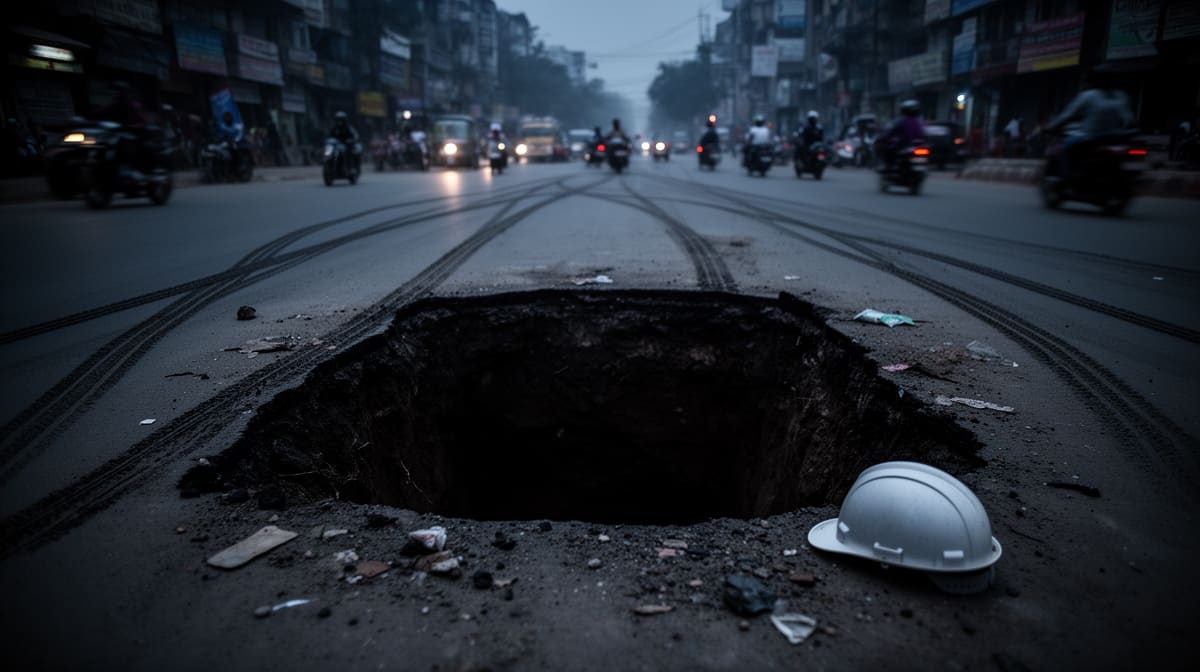
A young motorcyclist died after falling into a 20-foot-long, 13-foot-wide, and 14-foot-deep excavation pit on a public road in Janakpuri, Delhi. The pit had been dug by labourers engaged by a subcontractor, M/s Trimurti Associates, which had been engaged by KKSIL-O LINER JV, a joint venture led by M/s K.K. Spun Indian Limited. The applicants, Himanshu Gupta and Kavish Gupta, are directors of KKSIL and were named as accused under Sections 105, 238(b), 9(2), and 3(5) of the Bharatiya Nyaya Sanhita, 2023.
Procedural History
- 05.01.2026: Delhi Traffic Police granted conditional permission for excavation work, requiring barricades, signage, night-time operations, and safety measures.
- 05.02.2026: Excavation occurred during daytime, in violation of permission.
- 06.02.2026: At approximately 12:30 AM, the victim fell into the unguarded pit. No safety measures were present.
- 06.02.2026: Subcontractor Rajesh informed Himanshu Gupta via WhatsApp at 1:56 AM. Both remained in contact until morning.
- 06.02.2026: CCTV footage showed labourers covering the pit with barricades while the victim’s body remained inside.
- 09.02.2026: Non-bailable warrants issued against the applicants.
- 25.02.2026: Anticipatory bail applications filed and dismissed by the Delhi High Court.
The Parties' Positions
- Applicants: Claimed to be suspended directors under NCLT order dated 11.07.2025, asserting no operational control during the incident. Argued that the sub-contract was executed before the main work order and that they had no role in site management.
- State: Contended that the applicants continued to direct company operations, failed to disclose insolvency proceedings to DJB, and were directly involved in awarding the sub-contract. Highlighted breach of contractual safety obligations and post-incident cover-up.
Relief Sought
The applicants sought anticipatory bail under Section 438 CrPC, arguing that the allegations, even if true, did not establish criminal intent or personal involvement. They sought protection from arrest pending investigation.
The Legal Issue
The central question was whether directors of a contracting company can claim immunity from criminal liability under the Bharatiya Nyaya Sanhita for gross negligence resulting in death, when they allegedly retained operational control despite insolvency proceedings, and when the contractual duty to ensure public safety was non-delegable and violated with reckless disregard.
Arguments Presented
For the Petitioner
The applicants relied on the NCLT order dated 11.07.2025, which suspended their directorship during the Corporate Insolvency Resolution Process (CIRP). They argued that the work order was issued on 09.10.2025, after suspension, and that all operational decisions were handled by the Interim Resolution Professional. They contended that their communications with DJB were statutory obligations under Section 19 of the Insolvency and Bankruptcy Code, 2016, and did not constitute exercise of managerial control. They further argued that the FIR primarily imputes liability to the subcontractor and that the essential ingredients of Section 105 BNS - criminal negligence with knowledge of probable death - were not made out.
For the Respondent
The State relied on the General Conditions of Contract of the Delhi Jal Board, which mandated that core functions including project management, planning, monitoring, and quality assurance could not be subcontracted. It presented CCTV footage showing post-incident cover-up, CDR records proving continuous communication between Himanshu Gupta and the General Manager, and show-cause notices issued to KKSIL without disclosure of insolvency. The State argued that the applicants’ conduct demonstrated active control over the company’s operations and that their failure to ensure safety measures, coupled with deliberate silence after the incident, amounted to criminal negligence under Section 105 BNS.
The Court's Analysis
The Court undertook a rigorous examination of the contractual obligations, statutory duties, and the applicants’ conduct before and after the incident. It held that the duty to ensure public safety during excavation work is non-delegable and remains with the primary contractor regardless of subcontracting. The Court emphasized that Clause 3.2.1 of the DJB contract explicitly prohibited subcontracting of project management, planning, and quality assurance - functions central to safety oversight.
"The responsibility for signage, barricading, monitoring and safety during execution of the work was squarely upon the contractor. Further, the contractor bears absolute and exclusive responsibility for any accident, injury, or damage to persons or property arising during the execution and progress of the work, and that such liability rests entirely upon the contractor at his own risk and cost."
The Court rejected the applicants’ claim of suspension under CIRP as a shield against criminal liability. It noted that despite the NCLT order, the applicants continued to correspond with DJB, received show-cause notices, and were listed as signatories to the JV agreement. The General Manager’s testimony, corroborated by CDR analysis, confirmed that he took daily instructions from Himanshu Gupta.
The Court found the post-incident conduct - covering the pit while the victim lay inside, failing to inform police or arrange medical aid, and maintaining continuous contact with the subcontractor - demonstrated not mere negligence but a conscious effort to conceal culpability. The Court observed that the excavation was carried out during daytime in violation of explicit traffic police conditions, and no barricades, blinkers, or warning signs were installed.
The Court distinguished between civil liability under contract and criminal liability under Section 105 BNS, holding that the latter arises when there is a reckless disregard for human life. The Court concluded that the applicants’ actions met the threshold for criminal liability, and that granting anticipatory bail would undermine public trust and encourage impunity among contractors entrusted with public infrastructure.
The Verdict
The applicants’ bail applications were dismissed. The Delhi High Court held that directors cannot evade criminal liability for gross negligence resulting in death by invoking insolvency proceedings, especially when they retained operational control and failed to discharge non-delegable safety duties under public contracts. The Court affirmed that the investigation must proceed without interference, and that the applicants are not entitled to anticipatory bail.
What This Means For Similar Cases
Criminal Liability Survives Corporate Insolvency
- Practitioners must now argue that CIRP does not extinguish criminal liability for acts committed prior to or during insolvency proceedings.
- Directors who continue to influence company operations post-suspension risk personal criminal exposure under Section 105 BNS.
- Evidence of post-suspension communication, decision-making, or receipt of official notices can rebut claims of non-involvement.
Non-Delegable Safety Duties Are Criminal in Nature
- Public contractors cannot shift responsibility to subcontractors for core safety functions like barricading, signage, and monitoring.
- Failure to comply with statutory or contractual safety norms in public works may attract criminal negligence charges, even without proof of intent.
- Courts will treat reckless disregard for public safety as equivalent to knowledge of probable harm under Section 105 BNS.
Post-Incident Conduct Can Be Decisive
- Covering up evidence, failing to assist victims, or delaying police notification can be treated as evidence of mens rea.
- CDR analysis and CCTV footage of post-incident actions are now critical tools for prosecutors in public safety cases.
- Legal counsel must advise clients to immediately report accidents to authorities - delay or concealment may convert civil liability into criminal prosecution.