The Delhi High Court has reaffirmed that conviction under Section 304A IPC requires more than a general assertion of rashness or negligence - it demands precise, corroborated evidence establishing both the accused’s culpable conduct and his identity as the driver at the time of the fatal incident. This judgment underscores the non-negotiable burden on the prosecution to prove every essential element beyond reasonable doubt, particularly in cases where the sole eyewitness testimony is riddled with inconsistencies.
Background & Facts
The Dispute
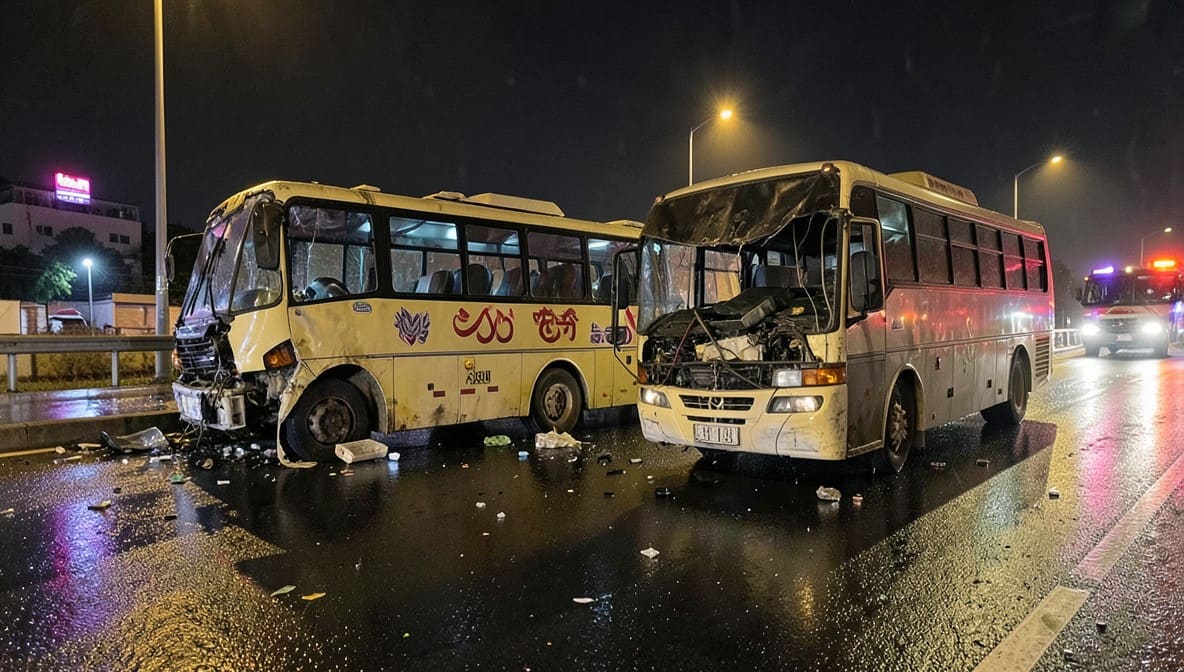
The State of NCT of Delhi appealed against the acquittal of Mahavir Singh, the driver of a tanker lorry bearing registration no. HR-47-5860, for offences under Sections 279 and 304A of the Indian Penal Code, 1860. The prosecution alleged that on 22.02.1999 at approximately 11:15 P.M., Mahavir Singh drove the tanker in a rash and negligent manner at Nangloi Chowk, Najafgarh Road, striking and killing Constable Chander Pal, who was crossing the road with another constable, PW6. The deceased was declared "brought dead" upon arrival at DDU Hospital.
Key Facts
- The incident occurred on 22.02.1999 at approximately 11:15 P.M. at Nangloi Chowk, Najafgarh Road, Delhi
- The deceased, Constable Chander Pal (PW7’s brother), was on patrol duty with PW6
- The tanker was registered in Haryana (HR-47-5860)
- PW6, a constable, claimed to be the sole eyewitness who witnessed the collision and chased the tanker on a private vehicle to apprehend the driver near a water tank on Najafgarh Road
- PW6 admitted in cross-examination that he did not see the driver at the time of impact
- The accused was apprehended approximately 10 - 15 minutes after the incident
- The vehicle was inspected by PW2, an Automobile Engineer, who found no fresh damage on the tanker’s body
- No skid marks, blood stains, or other physical evidence were recorded at the scene
- The site plan (Ext. PW8/B) did not indicate the width of the road, positions of the deceased or the vehicle, or any other contextual details
- The police station was located within two minutes’ reach of the scene, yet PW6 did not seek immediate assistance or inform the station
Procedural History
- 22.02.1999: Incident occurs at Nangloi Chowk
- 23.09.1999: FIR (Ext. PW6/A) registered under Sections 299 and 304A IPC (later amended to 279 and 304A IPC)
- 22.09.1999: Crime No. 1025/1999 registered at Nangloi Police Station
- 11.08.2015: Trial Court acquits the accused under Section 255(1) Cr.PC, holding prosecution failed to prove rashness, negligence, or driver identity
- 16.05.2026: Delhi High Court dismisses the State’s appeal under Section 378 Cr.PC
The Parties' Positions
For the State (Appellant):
- Argued that the trial court erred in rejecting the application of res ipsa loquitur
- Contended that the accused’s high-speed driving and sudden turn were sufficient to infer rashness and negligence
- Asserted that the absence of damage on the tanker was irrelevant since the deceased was hit, not crushed
- Claimed PW6’s testimony was credible and consistent
For the Accused (Respondent):
- Maintained that the prosecution failed to prove his identity as the driver at the time of the incident
- Highlighted inconsistencies in PW6’s testimony regarding the vehicle used to chase the tanker
- Emphasized the lack of physical evidence and failure to establish the exact circumstances of the accident
Relief Sought
The State sought reversal of the acquittal, conviction of the accused under Sections 279 and 304A IPC, and imposition of appropriate punishment.
The Legal Issue
The central question was whether the prosecution established beyond reasonable doubt that the accused was driving the tanker in a rash or negligent manner, and that he was the driver at the time of the incident, thereby satisfying the essential ingredients of Section 304A IPC.
Arguments Presented
For the Appellant
The Additional Public Prosecutor contended that the trial court misapplied the legal principle of res ipsa loquitur, which, in cases of fatal accidents involving motor vehicles, permits an inference of negligence from the very occurrence of the accident. It was argued that the accused’s high-speed driving, sudden turn, and flight from the scene were sufficient to establish criminal negligence. The absence of physical damage on the tanker was dismissed as immaterial since the deceased was not crushed. The testimony of PW6, the sole eyewitness, was deemed reliable and consistent throughout the trial.
For the Respondent
The defence argued that the prosecution failed to prove two indispensable elements: (1) that the accused was the driver at the time of the incident, and (2) that his driving was rash or negligent as defined by law. PW6 admitted he did not see the driver during the collision and could not explain how he obtained access to a private vehicle to chase the tanker at 11:15 P.M. The lack of corroborative evidence - no skid marks, no blood stains, no eyewitnesses other than PW6, and no record of the vehicle’s speed - rendered the case speculative. The trial court’s acquittal was therefore legally sound.
The Court's Analysis
The Court began by affirming the foundational principle that in criminal trials, the burden of proving every essential ingredient of an offence rests squarely on the prosecution, and the accused is presumed innocent until proven guilty (Partap v. State of U.P., Vijayee Singh v. State of Uttar Pradesh). The Court emphasized that Section 304A IPC requires proof of three elements: (i) death of a person, (ii) causation by the accused’s act, and (iii) that the act was rash or negligent and did not amount to culpable homicide.
The Court noted that while the death of the deceased was established, the prosecution failed to prove the remaining two elements. The sole eyewitness, PW6, admitted he did not see the driver at the time of impact. His claim that he chased the tanker on a private vehicle and apprehended the accused near a water tank raised serious questions: What vehicle did he use? Where did it come from? Why did he not alert the nearby police station? These omissions were not explained.
"Mere use of the expressions ‘rash’ and ‘negligent’ is in law, insufficient unless supported by concrete facts demonstrating the manner of driving."
The Court further held that the term "high speed" is relative and cannot be equated with criminal negligence without contextual evidence - such as speed limits, road width, traffic density, or expert testimony. The site plan lacked critical details: no skid marks, no positions of the deceased or vehicle, no indication of road conditions.
The Court rejected the State’s reliance on res ipsa loquitur, citing State of Karnataka v. Satish, and held that this maxim cannot be invoked in criminal cases to shift the burden of proof. The Court observed:
"In a criminal trial, the burden of proving everything essential to the establishment of the charge against an accused always rests on the prosecution and there is a presumption of innocence in favour of the accused until the contrary is proved."
The Court concluded that the trial court’s acquittal was neither perverse nor unreasonable. The doubts raised regarding PW6’s credibility and the absence of corroborative evidence were legitimate and warranted the benefit of the doubt.
The Verdict
The appeal was dismissed. The acquittal of Mahavir Singh under Sections 279 and 304A IPC was upheld. No conviction was ordered. No sentence, fine, or compensation was imposed. The State’s request for reversal of the trial court’s judgment was rejected in its entirety.
What This Means For Similar Cases
Identity of the Driver Must Be Proven Beyond Doubt
- Practitioners must ensure that eyewitness testimony identifying the driver includes direct observation at the time of the incident, not merely apprehension afterward
- Appellate courts will not accept circumstantial identification where the witness admits he did not see the driver during the act
- In cases with no CCTV, no forensic evidence, or no independent corroboration, identity becomes a critical vulnerability for the prosecution
Rashness Cannot Be Presumed from Speed Alone
- Prosecutors must present objective evidence of speed - speedometer readings, skid marks, expert analysis, or traffic conditions - not subjective terms like "very high speed"
- The absence of physical damage to the vehicle does not negate the need to prove negligence; it merely shifts the focus to conduct, not consequence
- Courts will not infer criminal negligence from the mere fact of an accident, even if fatal
Res Ipsa Loquitur Has No Place in Criminal Negligence Cases
- The doctrine cannot be used to reverse the burden of proof or substitute for evidentiary proof
- Prosecution must still prove all elements of the offence; the accident itself is not evidence of guilt
- This judgment closes a potential loophole where prosecutors relied on res ipsa to secure convictions in motor accident cases without adequate evidence