The High Court of Himachal Pradesh has reaffirmed that a conviction under Sections 279, 337, and 338 of the Indian Penal Code cannot rest on vague assertions of 'high speed' without concrete evidence of breach of duty or objective measurement of recklessness. This judgment clarifies the evidentiary threshold required to establish criminal negligence in road accident cases.
Background & Facts
The Dispute
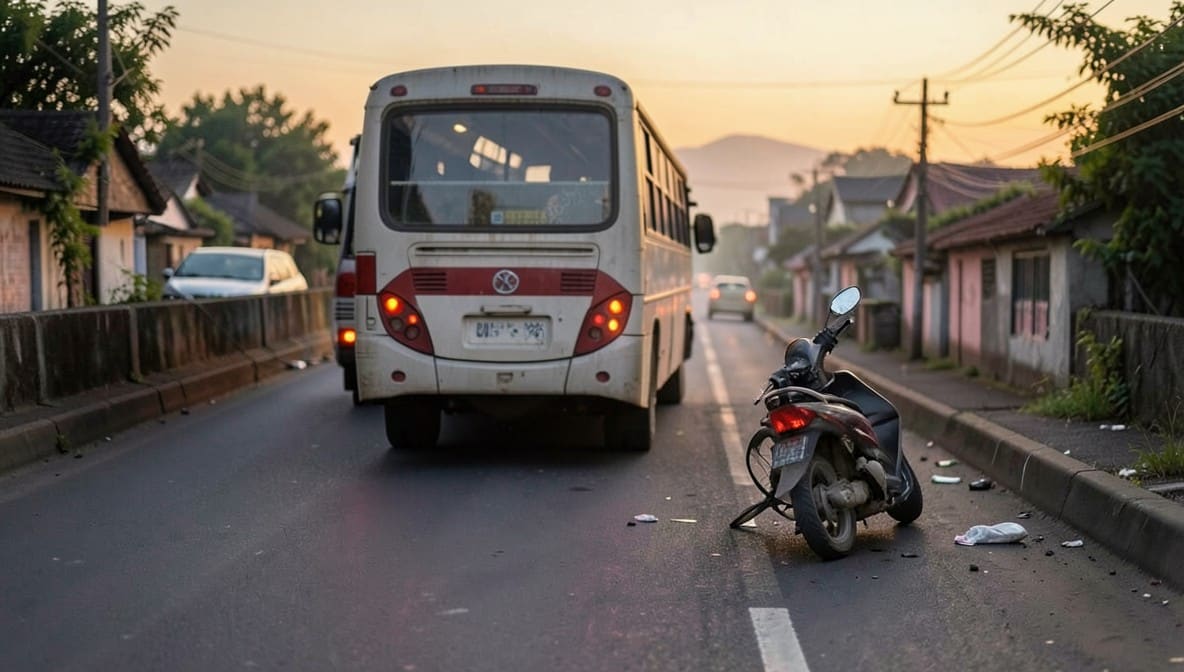
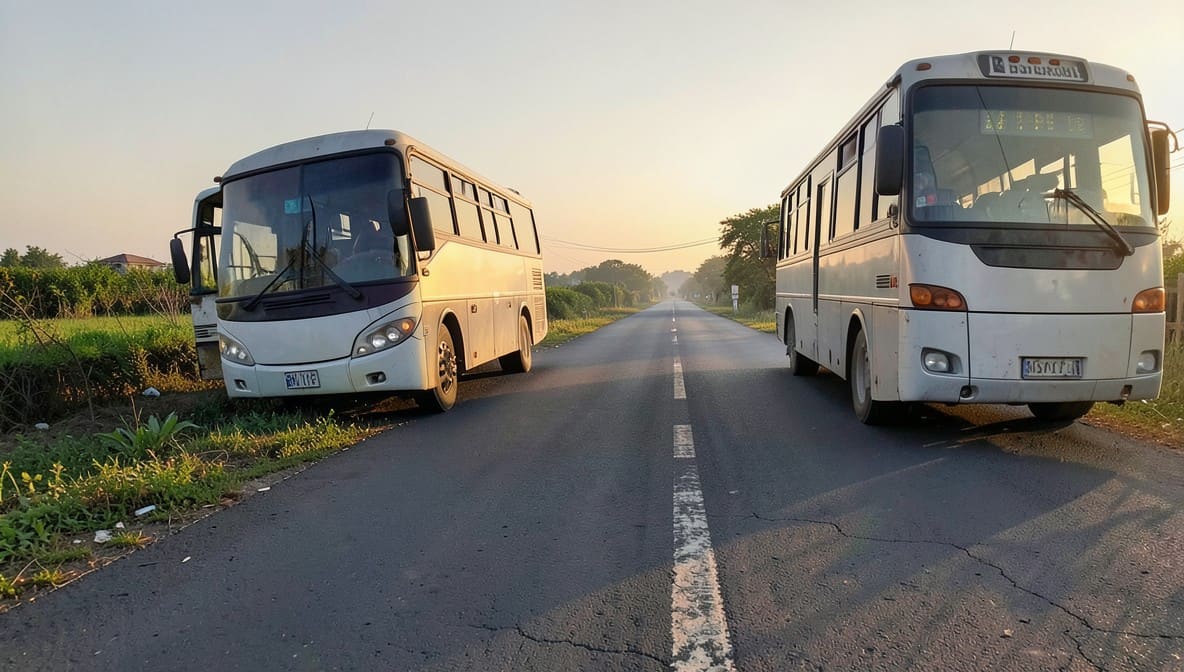
The State of Himachal Pradesh appealed against the acquittal of Iqwal Singh, accused of causing injuries to passengers and the driver of a Haryana Roadways bus through rash and negligent driving. The prosecution alleged that Iqwal Singh, driving a tourist bus bearing Registration No. RJ-31P-0049, collided head-on with the Haryana Roadways bus (HR-55B-7409) near Hatwas Petrol Pump on an unspecified date in 2013, resulting in multiple injuries.
Key Facts
- The accident occurred near Hatwas Petrol Pump on the highway connecting Gurgaon and Baijnath
- The Haryana Roadways bus was driven by Kulveer Singh (PW2), with Mahaveer Singh (PW1) as conductor
- The tourist bus was owned by Babu Lal (PW14), who testified that Iqwal Singh was employed as its driver
- No mechanical defects were found in either bus after examination by HC Rajinder Kumar (PW5)
- Medical reports (Ex.PA to Ex.PG) documented injuries to passengers and drivers
- Site plan (Ex.PW7/B) prepared by SI Mohinder Gill (PW7) showed 9 feet of road on the Haryana bus side and 10 feet metalled + 2.5 feet unmetalled on the tourist bus side
- No witness provided a numerical estimate of the speed of the tourist bus
- No expert testimony or skid mark analysis was presented to establish speed or braking distance
Procedural History
- Date of Accident: Unspecified, but occurred prior to FIR registration
- Date of FIR: Registered at Police Station, Kangra (Ex.PW7/A)
- Date of Investigation: Completed by SI Mohinder Gill (PW7)
- Date of Charge Sheet: Filed before the Additional Chief Judicial Magistrate, Kangra
- Date of Trial Commencement: Not specified, but concluded on 19.11.2023
- 19.11.2023: Trial Court acquitted Iqwal Singh of offences under Sections 279, 337, and 338 IPC
- 20.03.2026: Appeal heard before the High Court of Himachal Pradesh
- 08.05.2026: Judgment delivered by Justice Rakesh Kainthla
The Parties' Positions
For the State (Appellant)
- Argued that multiple prosecution witnesses consistently identified Iqwal Singh as the driver of the tourist bus
- Relied on the unchallenged testimony of Babu Lal (PW14), the owner, who confirmed Iqwal Singh’s employment as driver
- Contended that the Trial Court erred in rejecting the collective testimony of PW1, PW2, PW3, PW10, and PW12, who all stated the accident occurred due to the high speed and negligence of the tourist bus
- Asserted that the Trial Court misapplied the standard of proof by requiring excessive precision in witness testimony
For the Accused (Respondent)
- Argued that the prosecution failed to establish the identity of the driver with certainty
- Highlighted contradictions in witness statements, including PW4 (sleeping during accident) and PW12 (incorrectly identifying the bus as Rajasthan Roadways)
- Emphasized that no witness defined what they meant by 'high speed'
- Relied on binding precedents from the same High Court and Supreme Court holding that 'high speed' alone cannot infer rashness or negligence
Relief Sought
The State sought reversal of the acquittal, conviction of Iqwal Singh under Sections 279, 337, and 338 IPC, and imposition of appropriate punishment. The accused sought dismissal of the appeal and confirmation of acquittal.
The Legal Issue
Can a conviction under Sections 279, 337, and 338 IPC be sustained solely on the testimony of witnesses who describe the accused’s vehicle as moving at 'high speed' without any objective measurement, expert opinion, or proof of breach of duty of care?
Arguments Presented
For the Appellant
The State contended that the cumulative testimony of five prosecution witnesses - Mahaveer Singh (PW1), Kulveer Singh (PW2), Hari Singh (PW3), Dharam Pal (PW10), and Gaurav (PW12) - established a consistent narrative that the tourist bus, driven by Iqwal Singh, collided due to excessive speed and negligence. It argued that the owner’s unchallenged testimony (PW14) confirmed the accused’s identity as driver, and that the Trial Court’s rejection of this evidence was unreasonable. The State further submitted that the site plan showed the tourist bus encroached on the opposite lane, implying fault.
For the Respondent
The defence argued that the term 'high speed' is subjective and legally meaningless without contextual definition. It cited Mohanta Lal v. State of West Bengal, State of Karnataka v. Satish, and multiple HP HC judgments to show that speed alone cannot establish rashness or negligence. It emphasized that witnesses cannot opine on negligence, as per Hollington v. Hawthorn, and that the prosecution failed to prove any specific act of breach - such as lane violation, failure to brake, or over-speeding beyond permissible limits. The defence also pointed to internal contradictions in witness accounts, including misidentification of the bus as Rajasthan Roadways.
The Court's Analysis
The Court began by recalling the settled principle that appellate interference with an acquittal is permissible only if the judgment is patently perverse, based on misreading of evidence, or if no reasonable person could have acquitted the accused (Surendra Singh v. State of Uttarakhand). It emphasized that where two views are possible, the appellate court must uphold the acquittal.
The Court then examined the evidentiary foundation of the prosecution’s case. While acknowledging that Babu Lal’s (PW14) testimony regarding the accused’s employment as driver was unchallenged and thus accepted, it held that this alone did not prove rash or negligent driving.
"The use of the term 'high speed' by a witness amounts to nothing unless it is elicited from the witness what is understood by the term 'high speed'. To one man, the speed of even 10 or 20 miles per hour may appear to be high, while to another, even a speed of 25 or 30 miles per hour may appear to be a reasonable speed."
The Court cited Mohanta Lal and State of Karnataka v. Satish to underscore that 'high speed' is a relative term and cannot substitute for proof of rashness or negligence. It further held that witnesses cannot testify to legal conclusions such as negligence, as per Hollington v. Hawthorn and State of H.P. v. Niti Raj. The Court observed:
"Negligence is an inference from the fact. A witness can only depose about the fact which had occurred in his presence, and he is not permitted to draw inferences from the facts. The inferences have to be drawn by the Jury or the Judge."
The site plan (Ex.PW7/B) was analyzed and found inconclusive: 9 feet of road on one side and 10 feet on the other indicated no clear encroachment or violation of road regulations. No skid marks, brake tests, or speed estimation reports were produced. The Court concluded that the prosecution had failed to discharge its burden of proving the essential ingredients of rash and negligent driving beyond reasonable doubt.
The Trial Court’s acquittal was not based on a misreading of evidence but on a correct application of evidentiary standards. The Court held that the prosecution’s case was speculative and lacked the necessary factual precision required in criminal trials.
The Verdict
The appeal was dismissed. The acquittal of Iqwal Singh under Sections 279, 337, and 338 IPC was upheld. The Court directed the respondent to furnish bail bonds of ₹25,000 with one surety of like amount to the satisfaction of the Trial Court within four weeks. The bail bond shall remain effective for six months, with the stipulation that if a Special Leave Petition is filed against this judgment or leave is granted, the respondent shall appear before the Supreme Court upon receipt of notice.
What This Means For Similar Cases
Speed Alone Cannot Prove Criminal Negligence
- Practitioners must now ensure that prosecutions under IPC 279, 337, 338 include objective evidence such as speedometer readings, skid mark analysis, expert testimony on braking distance, or traffic camera footage
- Vague witness statements using terms like 'high speed', 'fast', or 'reckless' are legally insufficient without contextual substantiation
- Prosecutors must avoid relying on conclusory statements from lay witnesses regarding negligence
Identity Must Be Corroborated Beyond Owner’s Testimony
- While unchallenged testimony of a vehicle owner can establish driver identity, it cannot substitute for proof of culpable conduct
- In cases where multiple witnesses contradict on material facts (e.g., bus registration, location of impact), acquittal becomes inevitable absent independent corroboration
- Defence counsel should aggressively challenge the reliability of witness identification in accident cases
Prosecution Bears Full Burden of Proof
- The presumption of innocence remains absolute in cases of rash driving
- The doctrine of res ipsa loquitur does not apply to criminal negligence under IPC
- Prosecutors must prove not just causation but also the mental element - rashness or negligence - as a distinct legal ingredient
- Failure to prove the precise act constituting breach of duty will result in acquittal, even if the accident was clearly caused by the accused’s vehicle