The Bombay High Court has reaffirmed that concurrent findings of conviction based on credible eyewitness testimony, even from persons related to the deceased, cannot be disturbed in revision unless perversity or illegality is established. The judgment underscores the weight accorded to consistent ocular accounts in cases of fatal road accidents.
Background & Facts
The Dispute
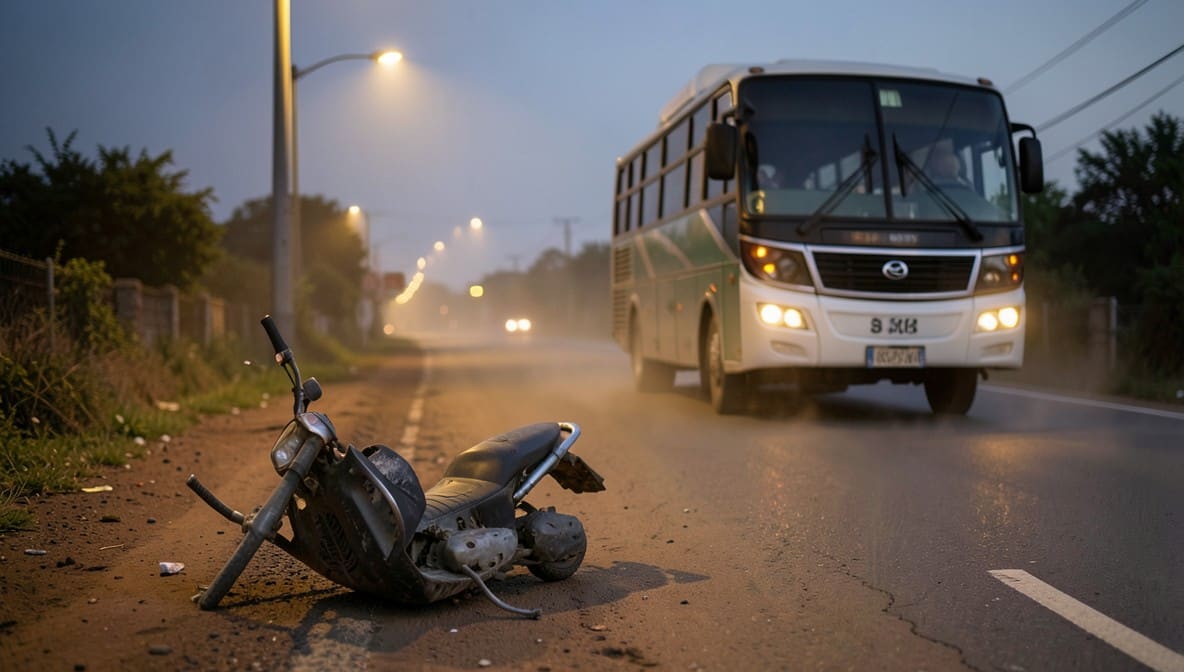
The applicant, a driver of a State Transport (ST) bus, was charged with causing the death of two individuals, Ganesh Gawde and Mahesh Jadhav, through rash and negligent driving on 19.09.1999. The incident occurred near Pune when the ST bus, allegedly driven on the wrong side of the road while overtaking a truck, collided head-on with a scooter being ridden by the deceased. Both victims died instantly. The applicant was charged under Sections 279, 338, 304(A), and 427 of the Indian Penal Code, 1860, and Section 184 of the Motor Vehicles Act.
Key Facts
- The accident occurred on 19.09.1999 at approximately 4:30 PM near Pune.
- The deceased were traveling on a scooter, accompanied by two friends, PW-1 (Ravindra Patil) and PW-2 (Sudam Nawale), who were riding motorcycles behind them.
- The applicant’s ST bus was traveling from Pune to Nagar.
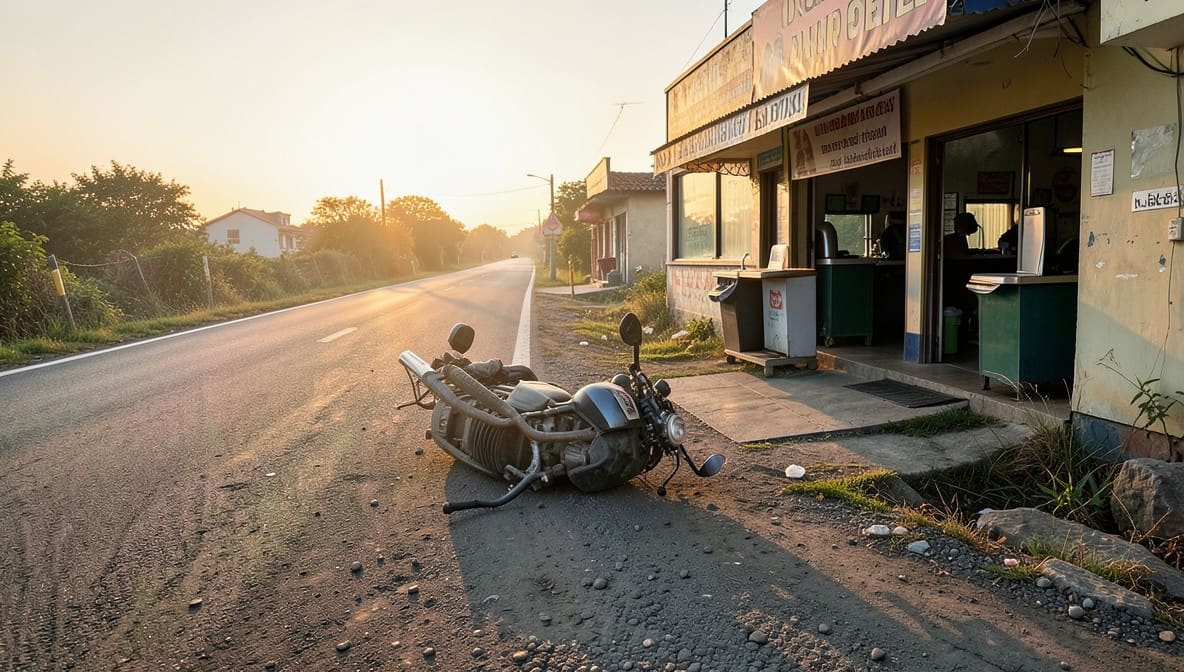
- The scooter was thrown approximately 200 feet from the point of impact.
- The headlight of the ST bus was found broken, and there was a dent on its tin body.
- The applicant reported the accident to the police station immediately after the incident.
- C.R. No. 104 of 1999 was registered on 19.09.1999.
- The prosecution examined four witnesses: PW-1 (eyewitness), PW-2 (eyewitness), PW-3 (Assistant Sub-Inspector, Investigating Officer), and PW-4 (panch witness).
- The applicant’s defense was that a truck, not his bus, had struck the scooter first and then collided with the bus.
Procedural History
- 19.09.1999: Accident occurred.
- 19.09.1999: C.R. No. 104/1999 registered.
- 28.08.2002: Judicial Magistrate, First Class, Pune, convicted the applicant under Section 279 IPC (simple imprisonment for one month, fine of Rs. 500) and Section 304(A) IPC (simple imprisonment for three months, fine of Rs. 1,000).
- 21.09.2010: Additional Sessions Judge, Pune, dismissed the applicant’s appeal (Appeal No. 286/2002), confirming the conviction.
- 07.05.2026: Criminal Revision Application No. 467 of 2010 decided by the Bombay High Court.
The Parties' Positions
For the Applicant
The applicant contended that:
- The eyewitnesses were friends of the deceased and therefore biased.
- The broken headlight and dent on the bus indicated impact by a truck, not a scooter.
- The prosecution failed to examine independent witnesses.
- There were material contradictions between the evidence of PW-1 and PW-2.
- The possibility of a third vehicle causing the accident created reasonable doubt.
- Relied on Parvat Singh v. State of Madhya Pradesh, Shyam Kali Dubey v. State of Madhya Pradesh, and Kannaiya v. State of Madhya Pradesh to argue for benefit of doubt.
For the Respondent-State
The State contended that:
- The testimony of PW-1 and PW-2 was consistent and credible.
- Both witnesses clearly identified the applicant and described the bus coming from the wrong side while overtaking a truck.
- The suggestion of a third vehicle was categorically denied by both eyewitnesses during cross-examination.
- The concurrent findings of two lower courts should not be disturbed absent perversity.
- The applicant’s own admission of the accident indicated accountability.
Relief Sought
The applicant sought quashing of the conviction under Sections 279 and 304(A) IPC, setting aside the orders dated 28.08.2002 and 21.09.2010, and acquittal on grounds of reasonable doubt.
The Legal Issue
The central question was whether the concurrent findings of conviction under Section 279 and Section 304(A) of the IPC can be set aside in revision merely on the ground that eyewitnesses were friends of the deceased, or where the defense raises speculative possibilities of third-party involvement without corroboration.
Arguments Presented
For the Appellant/Petitioner
The applicant’s counsel, Senior Advocate Sanjeev P. Kadam, argued that the prosecution failed to prove guilt beyond reasonable doubt. He emphasized that the broken headlight and dent on the bus could not have resulted from a collision with a scooter, suggesting instead that a truck had struck the scooter first and then the bus. He contended that the eyewitnesses, being close associates of the deceased, were inherently biased and that their testimony lacked independent corroboration. He further argued that the prosecution’s failure to examine passengers on the bus or other independent witnesses created a fatal lacuna. He relied on Parvat Singh v. State of Madhya Pradesh to assert that contradictions in eyewitness accounts must lead to acquittal, and Shyam Kali Dubey to argue that benefit of doubt must be given where alternative explanations exist.
For the Respondent/State
The Additional Public Prosecutor, Mr. Tanveer Khan, countered that the testimony of PW-1 and PW-2 was consistent on material points: the bus was on the wrong side, overtaking a truck, and struck the scooter directly. Both witnesses identified the applicant in court and denied suggestions of liquor consumption, collusion, or fabrication. The Investigating Officer confirmed the absence of any third-party vehicle report. The State emphasized that the lower courts had meticulously evaluated the evidence and found no material contradiction. It relied on the principle that the relationship of witnesses to the deceased does not automatically invalidate testimony, and that speculative defenses based on uncorroborated physical evidence cannot override ocular accounts.
The Court's Analysis
The Court undertook a detailed review of the deposition of PW-1 and PW-2, comparing their statements with the defense version and the physical evidence. It found no material inconsistency between the two eyewitnesses. Both described the bus coming from the opposite direction, overtaking a truck, and striking the scooter on the wrong side of the road. Both denied the suggestion that a third vehicle was involved, and both withstood cross-examination on allegations of bias or fabrication.
"I do not find any contradiction or inconsistency in the statements of both eye-witnesses."
The Court noted that the broken headlight and dent on the bus were not sufficient to establish the involvement of a truck. The applicant’s theory was speculative and unsupported by any independent evidence. The Court held that the prosecution was not obligated to prove the negative - that no other vehicle was involved - and that the burden of raising reasonable doubt lay with the defense, which failed to discharge it.
The Court further observed that the relationship of PW-1 and PW-2 to the deceased was not a legal ground for rejection of testimony. The lower courts had correctly applied the principle from State of U.P. v. Krishna that proximity to the victim does not equate to bias, especially where the witnesses provide consistent, detailed, and unimpeached accounts.
The Court also rejected the applicant’s reliance on Parvat Singh and Kannaiya, distinguishing those cases on the basis that they involved clear contradictions and unexplained discrepancies in eyewitness accounts. Here, the evidence was coherent and corroborated by the physical circumstances: the scooter being thrown 200 feet, the immediate reporting of the accident, and the absence of any third-party report.
The Court concluded that the concurrent findings of the Magistrate and Sessions Judge were neither perverse nor illegal. The revisional jurisdiction under Section 401 CrPC was not a forum for re-appreciation of evidence, and no exceptional circumstance warranted interference.
The Verdict
The Criminal Revision Application was dismissed. The conviction under Section 279 IPC and Section 304(A) IPC was upheld. The applicant was directed to surrender within four weeks to serve the sentence of one month’s simple imprisonment for Section 279 IPC and three months’ simple imprisonment for Section 304(A) IPC, with the fines of Rs. 500 and Rs. 1,000 respectively, to be paid in default of the stipulated additional imprisonment.
What This Means For Similar Cases
Eyewitness Consistency Trumps Speculative Defenses
- Practitioners must avoid relying on speculative theories (e.g., third-party vehicle) unless supported by independent evidence or forensic data.
- A broken headlight or dent alone cannot create reasonable doubt if eyewitnesses provide a consistent narrative of the incident.
Relationship to Victim Does Not Invalidate Testimony
- Witnesses who are friends or relatives of the deceased are not ipso facto unreliable.
- Courts will assess credibility based on consistency, detail, and ability to withstand cross-examination - not familial ties.
Revision Jurisdiction Is Not a Second Appeal
- Revision under Section 401 CrPC is not meant for re-appreciation of evidence.
- Convictions based on concurrent findings of two lower courts will be upheld unless there is a patent illegality or perversity.
Burden of Raising Doubt Lies with the Defense
- The prosecution need not disprove every alternative theory.
- If the defense raises a possibility without evidence, the court is not obligated to entertain it as reasonable doubt.