The Karnataka High Court has reaffirmed that the credibility of eyewitness testimony, even from relatives of the deceased, is not automatically invalidated by interest alone. In a significant ruling under Sections 279 and 304A of the Indian Penal Code, the Court upheld a conviction for rash driving causing death, emphasizing that judicial scrutiny must focus on the reliability of the evidence, not merely the relationship of the witness to the victim.
Background & Facts
The Dispute
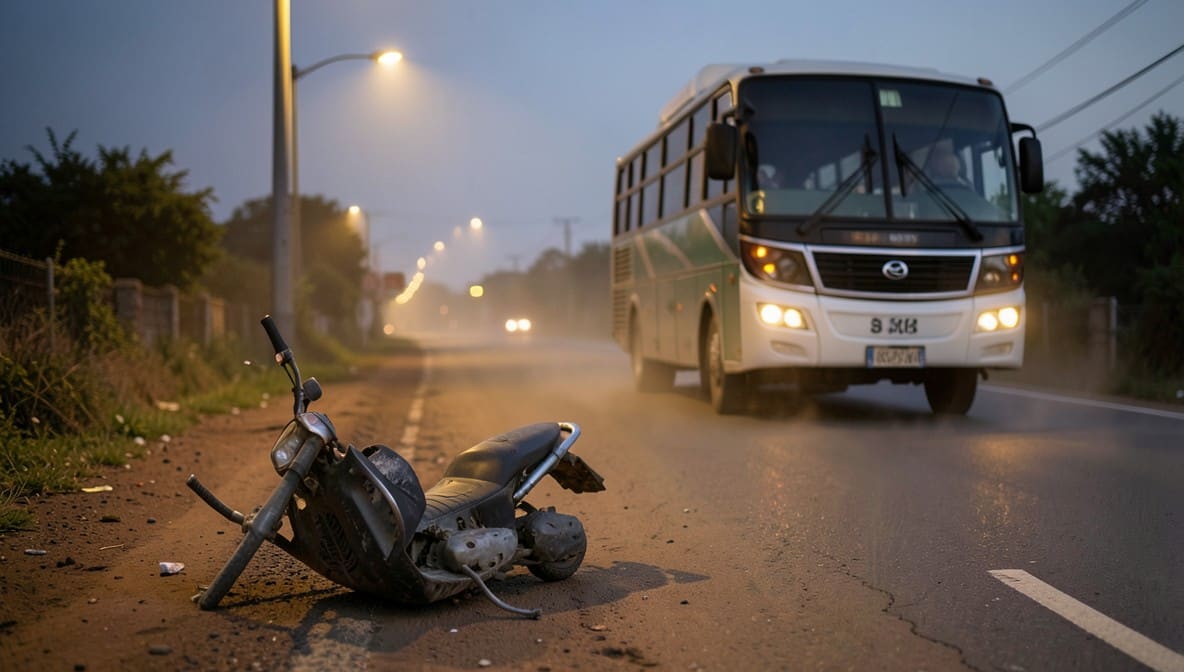
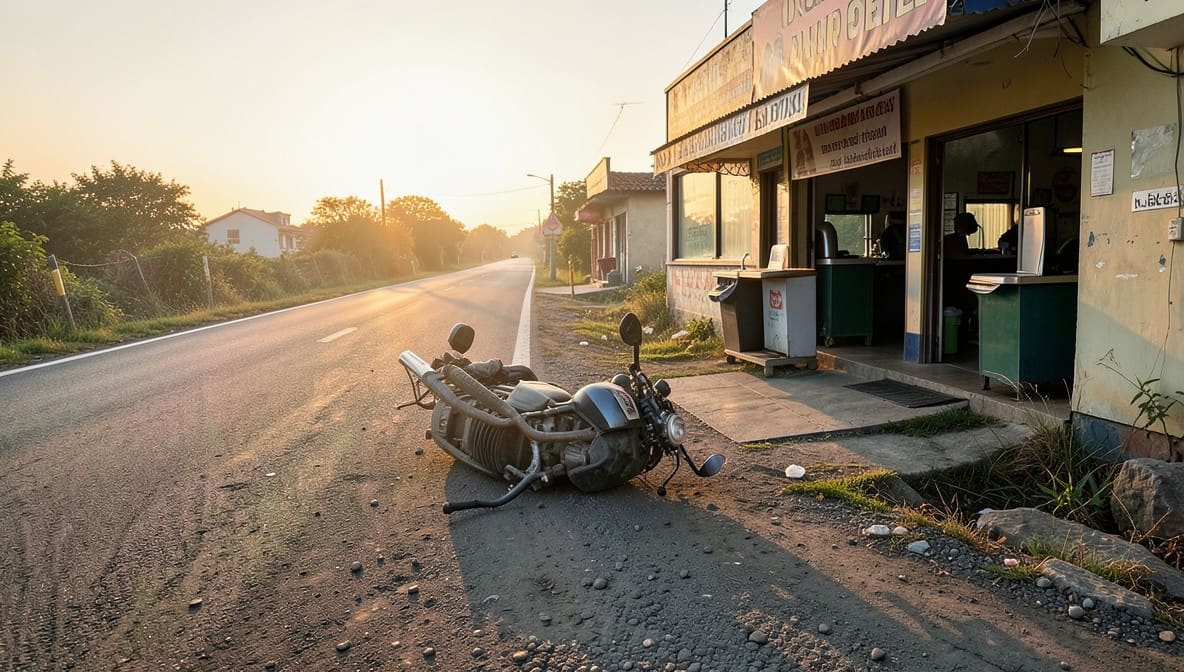
The case arose from a fatal road traffic accident that occurred on 20.01.2010 at approximately 08:45 a.m. on the Sulibele-Hosakote National Highway, near Sadappanahalli Gate. The revision petitioner, Sri P.M. Shankar, was riding a Hero Honda motorcycle bearing registration number KA-43/J-6773 when he collided with Sri Ramaiah, who was standing on the left side of the road. Ramaiah sustained severe injuries and died en route to the hospital.
Key Facts
- The accident occurred in broad daylight on a national highway.
- The victim, Sri Ramaiah, was a local resident with no known prior conflict with the accused.
- The accused was the sole rider of the motorcycle involved.
- A complaint was lodged by a bystander, leading to registration of FIR on the same day.
- The police conducted a thorough investigation, including preparation of an inquest report, postmortem report, and an Independent Mechanical Vehicle (IMV) report.
- Ten documentary exhibits were marked: P-1 (FIR), P-2 (inquest report), P-3 (postmortem report), P-4 (IMV report), P-5 (rough sketch), P-6 (reply notice), P-7 (indemnity bond), P-8 to P-10 (voluntary statements and other records).
- The prosecution examined eight witnesses: P.W.1 to P.W.8.
- The accused pleaded not guilty and did not offer any defense evidence or testify under Section 313 CrPC.
Procedural History
- 20.01.2010: Accident occurred at 08:45 a.m.
- 20.01.2010: FIR registered by Sulibele Police Station.
- 28.08.2018: Trial Court (Principal Civil Judge and JMFC, Hosakote) convicted the accused under Sections 279 and 304A IPC.
- 28.08.2018: Sentencing: 6 months simple imprisonment and Rs.1,000 fine for Section 279; 1 year simple imprisonment and Rs.5,000 fine for Section 304A; Rs.5,000 compensation to legal heirs of deceased under Section 357 CrPC, with default imprisonment of 3 months.
- 06.02.2021: First Appellate Court (Criminal Appeal No.111/2018) dismissed the appeal, upholding conviction and sentence.
- 28.03.2021: Criminal Revision Petition No.338/2021 filed before the Karnataka High Court.
- 30.04.2026: Judgment delivered by the High Court.
The Parties' Positions
For the Petitioner
The revision petitioner, through counsel Sri N.S. Sriraj Gowda, contended that:
- P.W.1, P.W.2, P.W.3, and P.W.6 were interested witnesses as close relatives of the deceased.
- P.W.6, the son of the deceased, was not present at the scene and his testimony was hearsay.
- P.W.2, a barber, was inside his shop shaving a customer at the time of the accident, as evidenced by Exhibit D-1 (cross-examination transcript), and could not have witnessed the incident.
- The Trial Court failed to consider Exhibit D-1, leading to a miscarriage of justice.
- The entire prosecution case was based on unreliable, biased testimony.
For the Respondent
The State, represented by Sri K. Nageshwaraappa, High Court Government Pleader, argued:
- The accused admitted to being the rider of the motorcycle involved.
- The accident occurred in daylight on a public highway, making eyewitness accounts plausible.
- P.W.1 and P.W.3 were independent eyewitnesses who directly observed the collision.
- P.W.2, though inside the shop, rushed to the spot immediately after the accident and provided relevant testimony.
- No prior enmity or motive to falsely implicate the accused was established.
- The accused chose not to testify or present any defense, which weighed heavily against him.
Relief Sought
The petitioner sought quashing of the conviction and sentence under Sections 279 and 304A IPC, arguing that the evidence was insufficient and tainted by bias. He requested the revision petition be allowed and the conviction set aside.
The Legal Issue
Can a conviction under Section 279 and Section 304A IPC be sustained solely on the testimony of eyewitnesses who are relatives of the deceased, where the accused has not offered any defense?
Arguments Presented
For the Appellant/Petitioner
The petitioner’s counsel relied on the principle that interested witnesses are inherently unreliable and their testimony must be corroborated. He cited the cross-examination record (Exhibit D-1) to show that P.W.2 was inside the barber shop at the time of the accident and could not have witnessed it. He further argued that P.W.6’s testimony was hearsay since he arrived after the incident. The absence of independent corroboration, he submitted, rendered the prosecution case speculative and legally unsustainable.
For the Respondent/State
The State countered that interest alone does not invalidate testimony. It emphasized that P.W.1 and P.W.3 were independent eyewitnesses who provided consistent accounts of the accused’s rash driving. The State highlighted that the accused did not dispute his presence at the scene or the fact of the collision. The failure to offer any defense under Section 313 CrPC, combined with the absence of any motive to falsely implicate, strengthened the prosecution’s case.
The Court's Analysis
The Court undertook a meticulous review of the evidence and applied well-established principles of criminal jurisprudence. It observed that while the testimony of relatives of the deceased may be viewed with caution, it is not ipso facto unreliable. The critical inquiry is whether the testimony inspires confidence and is free from fabrication.
"It is settled principles of law and requires no emphasis that merely on the ground of interestedness, the testimony of the eyewitness cannot be brushed aside in toto. All that the Courts are required to find out is whether there is false implication of the accused on the ground of interested testimony of the prosecution witnesses."
The Court noted that P.W.1 and P.W.3, though related to the deceased, provided consistent, detailed accounts of the accused’s reckless riding, the point of impact, and the immediate aftermath. Their testimony was corroborated by the postmortem report, IMV report, and the location of the accident as per the rough sketch.
The Court rejected the argument that P.W.2’s testimony was inadmissible. While Exhibit D-1 showed he was shaving a customer at the moment of impact, he arrived at the scene immediately afterward and described the condition of the victim and the motorcycle. His testimony was not of the incident itself but of its immediate consequences - a permissible and relevant observation.
Regarding P.W.6, the Court held that his testimony regarding the victim’s condition after the accident and his arrival at the scene was not hearsay but a statement of fact based on personal knowledge of the aftermath.
The Court emphasized that the accused, despite being given an opportunity under Section 313 CrPC, denied the entire incident without offering any alternative version. This silence, in the face of a strong prosecution case, was a significant adverse factor.
The Court also relied on Ranjit Singh and others v. State of Madhya Pradesh (2011 4 SCC 336), which holds that the testimony of a single eyewitness, if credible and unshaken, is sufficient to sustain a conviction.
The Court concluded that the Trial Court and the Appellate Court correctly appreciated the evidence. No material irregularity or error of law was found warranting interference.
The Verdict
The revision petition was dismissed. The conviction under Section 279 IPC (rash driving) and Section 304A IPC (causing death by negligence) was upheld. The petitioner shall surrender before the Trial Court on or before 05.06.2026 to serve the remaining sentence of 1 year simple imprisonment and 6 months simple imprisonment, respectively. The fine of Rs.5,000/- for compensation to the legal heirs of the deceased shall be paid; in default, an additional 3 months simple imprisonment shall be served. The fine of Rs.1,000/- shall be paid to the Government.
What This Means For Similar Cases
Eyewitness Interest Does Not Automatically Invalidate Testimony
- Practitioners must argue credibility, not just relationship, when challenging eyewitness testimony.
- Courts will examine whether the testimony is internally consistent, corroborated by physical evidence, and free from motive to fabricate.
- Mere familial connection to the victim is not a ground for automatic rejection.
Silence Under Section 313 CrPC Is a Critical Factor
- Failure to offer a defense under Section 313 CrPC, especially when the prosecution case is prima facie strong, weighs heavily against the accused.
- Defense counsel should advise clients to provide a plausible explanation even if denying guilt - silence is not neutral.
Single Eyewitness Can Sustain Conviction
-
Following Ranjit Singh, a conviction under Sections 279 and 304A IPC can rest on the testimony of one credible eyewitness.
-
Corroboration by medical and forensic reports (postmortem, IMV, sketch) strengthens the case but is not mandatory if the eyewitness account is inherently trustworthy.
-
In traffic accident cases, the timing and location of witnesses must be assessed contextually - proximity to the scene after the event is relevant.
-
Defense challenges based on alleged contradictions in witness statements must be specific and supported by documentary evidence, not speculative.