The Chhattisgarh High Court has affirmed that the issuance of a possession warrant under Section 250 of the Chhattisgarh Land Revenue Code, 1959, cannot proceed when a statutory appeal has been filed and remains pending before the appellate authority. The Court emphasized that procedural fairness demands preservation of status quo until the appellate forum adjudicates the merits and any stay application.
Background & Facts
The Dispute
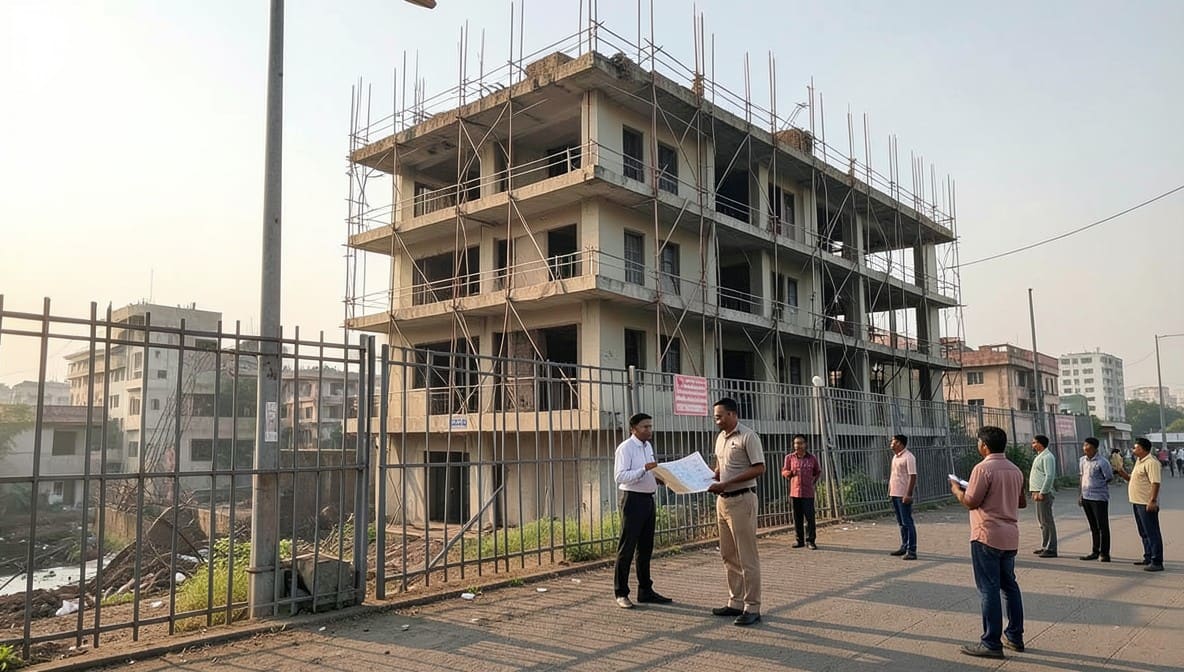
The dispute concerns ownership and possession of a property in Raipur, Chhattisgarh, claimed by respondent No. 5, Rajendra Singh Chawla, and currently occupied by petitioners Balbir Singh Monga and Daljeet Kaur Monga. The Tehsildar, Raipur, passed an order on 13.04.2026 under Section 250 of the Chhattisgarh Land Revenue Code, 1959, directing the petitioners to vacate the property in favor of respondent No. 5. The order was based on alleged non-entitlement of the petitioners to continued possession.
Key Facts
- The petitioners have been in continuous possession of the property for over a decade.
- Respondent No. 5, the original owner, filed an application under Section 250 CLRC seeking vacant possession.
- The Tehsildar passed the impugned order on 13.04.2026 without recording detailed evidence or conducting a full hearing.
- A notice for execution of the possession order was issued on 16.04.2026 (erroneously dated as 16.04.2025) and again on 23.04.2026.
- Petitioner No. 2, Daljeet Kaur Monga, was undergoing medical treatment, and Petitioner No. 1 was assisting her, rendering them unable to immediately file an appeal.
- On 29.04.2026, the petitioners applied to the Tehsildar for time to file an appeal and for stay of execution pending appeal; this application was rejected.
- The Tehsildar ordered issuance of a possession warrant and fixed 06.05.2026 for submission of the compliance report.
- The petitioners filed their first appeal before the Sub Divisional Officer (Revenue), Raipur, on 04.05.2026.
- The SDO’s office orally informed the petitioners that the appeal would be heard on 11.05.2026, but no formal receipt or order sheet was issued.
Procedural History
- 13.04.2026: Tehsildar passes order under Section 250 CLRC directing vacant possession.
- 16.04.2026: Notice of execution issued to petitioners (date erroneously recorded as 16.04.2025).
- 23.04.2026: Second notice issued for execution.
- 29.04.2026: Petitioners’ application for stay and time to file appeal rejected by Tehsildar.
- 04.05.2026: Petitioners file first appeal before SDO (Revenue), Raipur.
- 05.05.2026: Writ petition filed before Chhattisgarh High Court under Article 227.
- 06.05.2026: Scheduled date for execution of possession warrant (pending).
Relief Sought
The petitioners sought an interim stay on the execution of the possession warrant until their appeal before the SDO (Revenue) is heard and decided. They also requested that the status quo of possession be maintained pending adjudication of their appeal.
The Legal Issue
The central question was whether the Tehsildar could proceed to issue a possession warrant and enforce dispossession under Section 250 CLRC while a statutory appeal under Section 44 of the Code was pending and had been duly filed, without first considering an application for stay under Section 52.
Arguments Presented
For the Petitioner
Learned counsel argued that the petitioners had exercised their statutory right to appeal under Section 44 CLRC within the 60-day limitation period, as amended w.e.f. 24.04.2023. The appeal was filed on 04.05.2026, well within the limitation period. The Tehsildar’s refusal to stay execution despite the pending appeal violated principles of natural justice and rendered the remedy of appeal illusory. The petitioners’ medical condition justified the delay in filing, and the rejection of their stay application was arbitrary. The High Court must intervene under Article 227 to prevent irreparable harm.
For the Respondent
The State counsel contended that the petitioners had an adequate alternative remedy under Section 44 CLRC and that the High Court should not interfere in pending appellate proceedings. The Tehsildar had passed a lawful order after hearing, and the appeal process was already underway. The writ petition was therefore not maintainable. Execution of the possession warrant was a legitimate step to enforce a valid order.
The Court's Analysis
The Court acknowledged that Section 44 of the Chhattisgarh Land Revenue Code, 1959, provides a clear statutory right of appeal against orders passed by the Tehsildar under Section 250. The limitation for filing such an appeal is 60 days, as amended in 2023. The petitioners filed their appeal on 04.05.2026, within this period.
"Without considering the said period of limitation, the Tehsildar has directed to issue warrant of possession vide its order dated 29.04.2026."
The Court noted that the Tehsildar’s order of 29.04.2026, which directed issuance of the possession warrant, was passed despite the petitioners’ pending application for stay and their imminent filing of appeal. This created a situation where the remedy of appeal would be rendered nugatory if dispossession occurred before the appellate authority could hear the matter.
The Court emphasized that the High Court’s supervisory jurisdiction under Article 227 is not barred merely because an alternative remedy exists. When the alternative remedy is rendered ineffective by the imminent enforcement of an order that causes irreparable loss, the Court may intervene to preserve the status quo.
The Court further observed that Section 52 of the Code empowers the appellate authority to stay execution of the impugned order pending appeal. The petitioners had already filed such an application. Denying them interim protection while the appellate forum was yet to hear the matter would defeat the very purpose of the statutory appeal mechanism.
The Verdict
The writ petition was disposed of with directions. The Sub Divisional Officer (Revenue), Raipur, was directed to hear the petitioners’ application for stay under Section 52 of the Code, along with their appeal filed on 04.05.2026, within 15 days from the date of judgment (i.e., by 20.05.2026). The SDO was directed to decide the application on its merits after affording a hearing to both parties. Until then, the status quo of possession of the subject property as it existed on 05.05.2026 was to be maintained. The State was directed to communicate this order to the SDO (Revenue).
What This Means For Similar Cases
Stay of Execution Is Not Discretionary When Appeal Is Pending
- Practitioners must immediately file an appeal under Section 44 CLRC upon receipt of a possession order under Section 250.
- Simultaneously, file an application under Section 52 for stay of execution, even if the appellate forum has not yet been constituted.
- Courts will intervene under Article 227 if execution is threatened before the appellate authority can act.
Statutory Appeals Cannot Be Rendered Illusory
- Revenue authorities cannot enforce possession warrants before the appellate forum has had a reasonable opportunity to consider a stay application.
- The 60-day limitation period under Section 47 CLRC must be respected; enforcement during this period without stay is procedurally invalid.
- Medical hardship or other justifiable delays in filing appeal do not invalidate the remedy if the appeal is filed promptly thereafter.
Procedural Compliance Is Non-Negotiable
- Oral communication of hearing dates by revenue offices is insufficient; formal receipt and order sheet entries are mandatory.
- Rejection of stay applications must be reasoned and recorded; blanket rejections without consideration violate natural justice.
- High Courts will not hesitate to enforce status quo where dispossession would cause irreversible harm pending appellate adjudication.